Oymotion Advances Toward a Global-Leading Brain-Computer Interface Platform with Multi-Modal Integration and Ecosystem Expansion

OYMotion
Provider of Rehabilitation Medical Technology Solutions

June 12,Zhang Qi, Director and Vice President of OYMotionInvited to Attend“2026 Shanghai International Conference on Innovative Development of the Brain-Computer Interface Industry”In his speech, he reviewed OYMotion’s ten-year journey—starting with peripheral nerve interfaces and building a tripartite technological framework integrating embodied intelligent robots, non-invasive neural interfaces, and artificial intelligence. Standing at the threshold of a new decade, OYMotion Technology has defined its new strategic objectives, aiming toBuilding a World-Leading Brain-Computer Interface Platform。
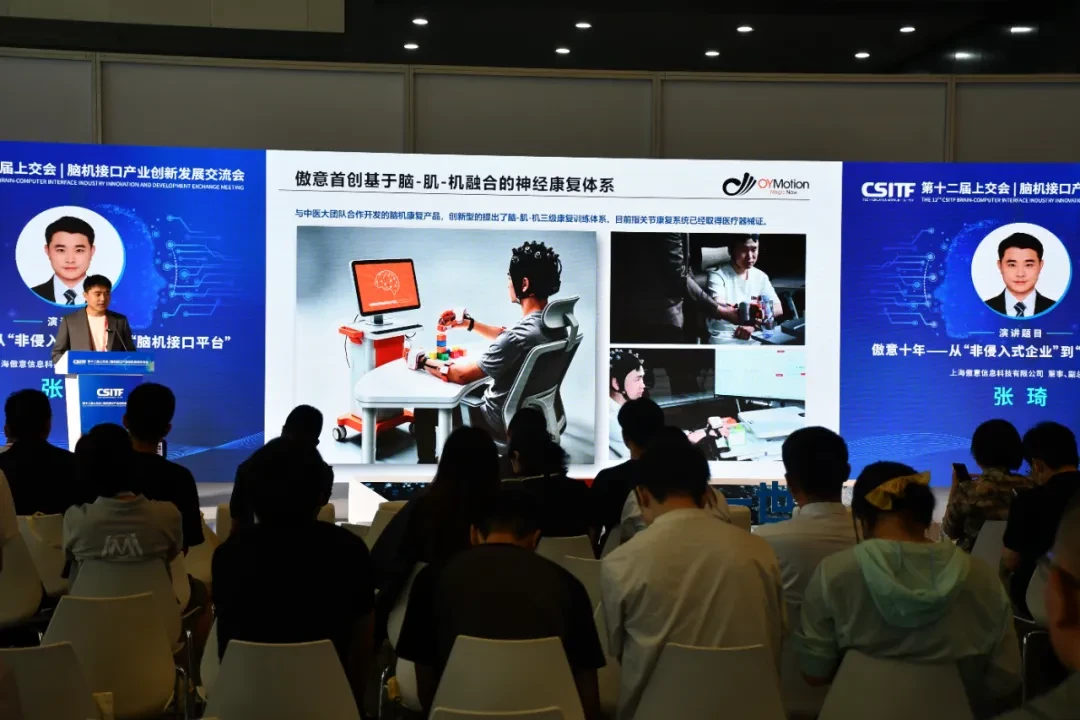
Brain-Computer Interfaces Take Center StageCurrently, brain-computer interfaces (BCIs) are emerging as a major technological frontier. In 2026, this technology was included for the first time in the Government Work Report, explicitly identified as one of the future industries to be cultivated and developed. The market size in China is projected to exceed RMB 5 billion within the year, a milestone industry insiders have dubbed the “first year of large-scale application.” As a key component of the China Hi-Tech Fair (Shanghai), this conference, themed “Brain-Computer Integration: Leading the Future with Intelligence,” has gathered top domestic and international research institutions and industry-leading enterprises, serving as an important window for observing trends in this sector. OYMotion stands out as the first company in the field to propose a platform-based strategy. Why did it choose this moment to deploy its platform strategy, and through which specific directions will it implement this vision? Zhang Qi provided the answers in his speech.
Anchored by Three Major Strategies, Building a World-Class Brain-Computer Interface Platform
Zhang Qi stated that the company’s transition into a brain-computer interface (BCI) platform enterprise is primarily underpinned by three strategic directions.
First, the integration of multimodal technologies accelerates the commercialization of the brain-computer interface industry.Single signal sources each have their limitations, whereas the fusion of multi-source physiological signals enables complementary advantages, significantly enhancing system robustness and practicality. Taking the fusion of electroencephalography (EEG) and electromyography (EMG) as an example, EEG reflects “intent,” while EMG reflects “execution.” Combining the two not only captures the user’s motor intent but also acquires residual muscular execution signals, substantially improving the accuracy and response speed of command recognition. Furthermore, the integration of invasive and non-invasive approaches combines the high precision of invasive electrodes with the safety and convenience of non-invasive devices. In this hybrid architecture, implanted electrodes capture fine-grained signals in core regions, while peripheral modalities such as EEG, eye tracking, and speech provide contextual information. This “high-precision + broad-coverage” framework ensures decoding quality while reducing reliance on surgical interventions.
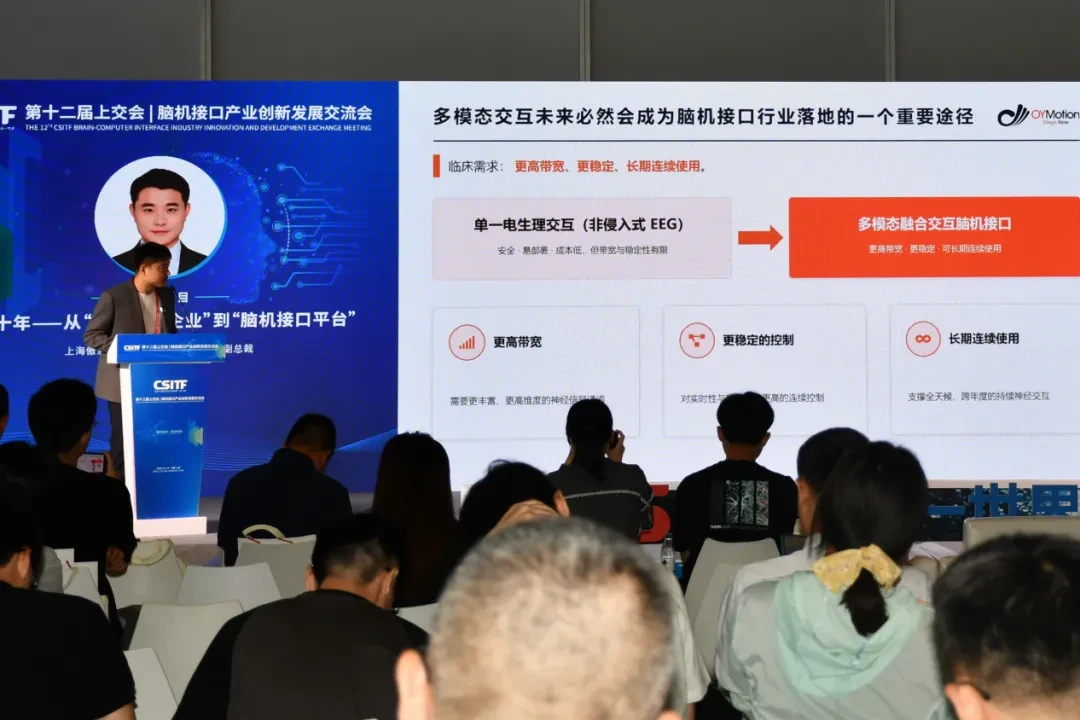
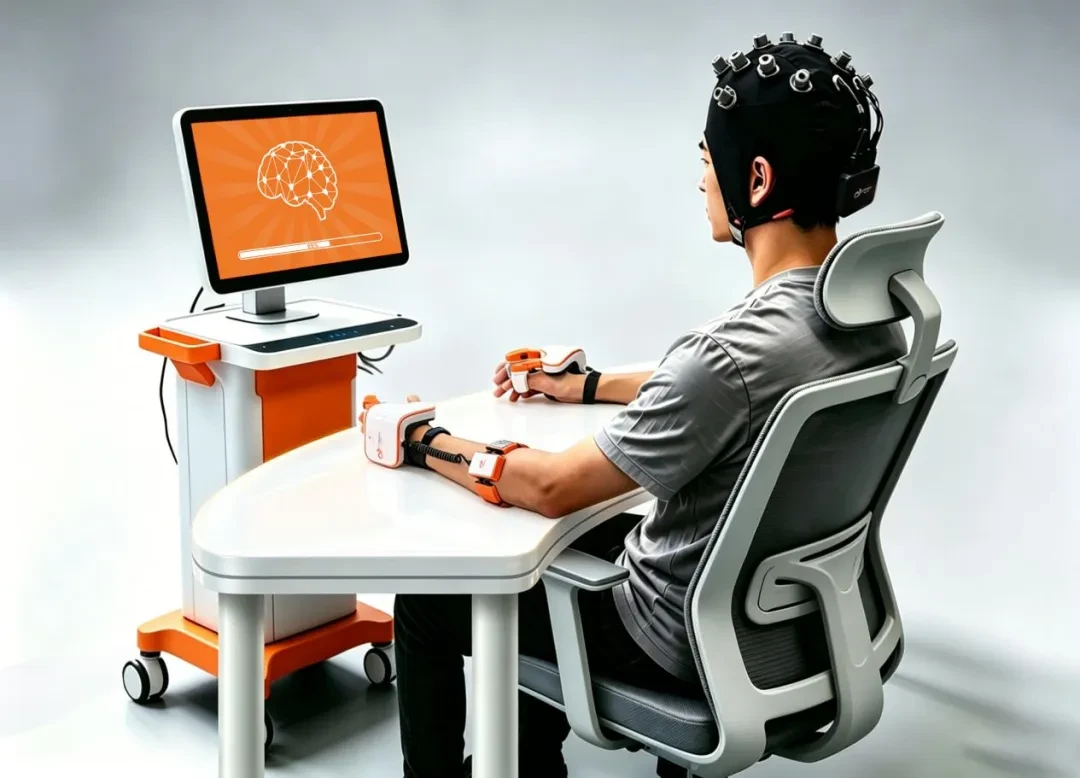
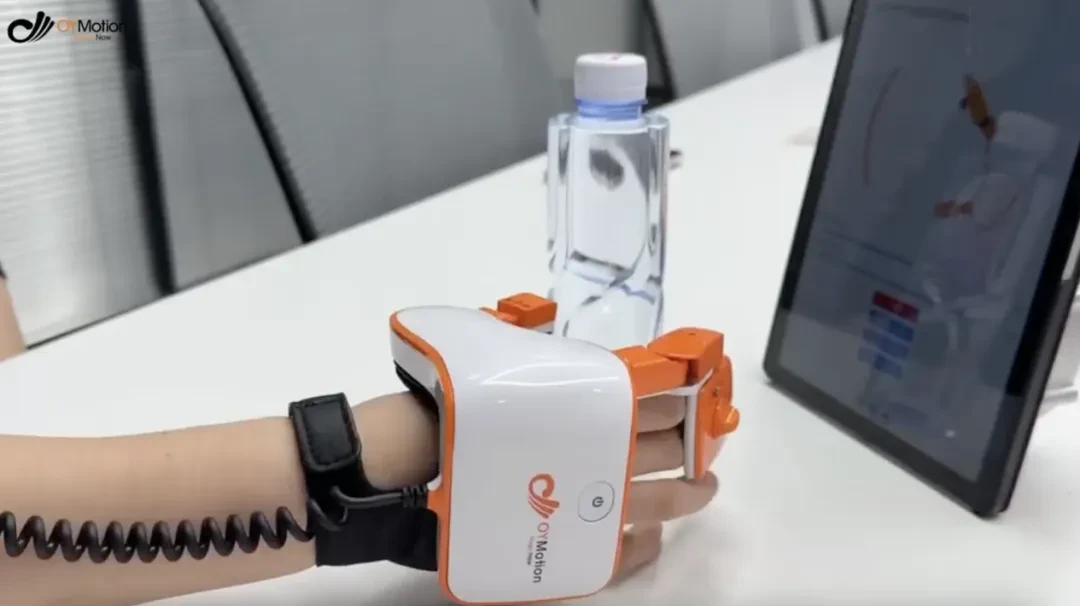
Currently, both fusion pathways have been implemented and are advancing. Taking the integration of electroencephalography (EEG) and electromyography (EMG) as an example, OYMotion pioneered the “Brain-Muscle-Machine” neurorehabilitation system, which combines EEG, EMG, and exoskeleton devices to establish a complete “intention-execution” closed loop, thereby enabling active rehabilitation for patients. In terms of integrating invasive and non-invasive approaches, OYMotion has partnered with MicroPort NeuroTech to jointly develop interventional brain-computer interfaces (BCIs). This collaboration will further expand interventional EEG acquisition methods and continue to drive the iterative implementation of related multimodal fusion technologies.
Second, breakthrough from a single disease to multi-indication coverage.OYMotion’s current product portfolio primarily focuses on motor function reconstruction after stroke, providing corresponding clinical solutions. Furthermore, in the field of motor function, the company has progressively advanced research into the application of neuromodulation for motor function reconstruction in patients with spinal cord injury. Building on this foundation, OYMotion will further expand into multiple indication scenarios, including cognitive function and psychiatric disorders. Transitioning from single-point breakthroughs to multi-indication and multi-disease coverage, OYMotion is driving brain-computer interface (BCI) and neuromodulation technologies toward more profound solutions for clinical challenges.
Third, open up industrial cooperation to build an upstream and downstream ecosystem for brain-computer interfaces, spanning from research and development to application.R&D: OYMotion has developed a full series of open-source EEG acquisition systems(OB Series), covering high-, mid-, and low-channel products, providing a one-stop hardware and data acquisition and playback system for the scientific research market, thereby lowering the barrier to brain science research. On the application side, OYMotion is one of the few companies with mass delivery capabilities and fully independent intellectual property rights for dexterous hands, serving over 100 embodied AI and humanoid robotics companies downstream. Empowering R&D and opening up applications—OYMotion is building a full-chain solution from "brain reading" to "execution."
Why Did OYMotion Choose to Launch Its Platform Strategy Upgrade at This Juncture? Zhang Qi Provides Insights.
“The brain-computer interface (BCI) industry has gradually emerged since 2020 and has now completed its first stage of development,” stated Zhang Qi. In this initial phase, various technologies have demonstrated their unique advantages, yet their limitations have also become increasingly recognized within the industry. Next, BCI will enter its second stage—the eve of commercial deployment. During this phase, the focus will shift from technology alone to the integration of technology with application scenarios, the convergence of different technologies, and the alignment of technology with business models. OYMotion believes that multimodal interaction will serve as the key pathway for the practical implementation of BCI technology, and is therefore firmly advancing joint research and development with MicroPort NeuroTech, an industry leader.
Zhang Qi further pointed out that OYMotion’s expansion toward becoming a brain-computer interface (BCI) platform enterprise is underpinned by clear commercial logic and robust industrial resources.
First, OYMotion possesses self-sustaining revenue capabilities and financial reserves.OYMotion’s commercialization of several products over the past few years has been thoroughly validated, establishing self-sustaining revenue generation as a critical foundation. Meanwhile, its rapid fundraising pace in the last two years has accumulated substantial capital, enabling OYMotion to expand from single-point solutions to a comprehensive platform.
Secondly, the unique shareholder lineup aggregates and integrates core resources for the commercialization of brain-computer interfaces.OYMotion is the only brain-computer interface (BCI) enterprise in China to have secured investments from two specialized neuroscience-themed funds. OYMotion’s shareholder group not only includes professional neuroscience funds such as CICC Capital and Heying Capital, but also strategic resources from listed medical industry players like Sanbo Brain Hospital and MicroPort NeuroTech. In Zhang Qi’s view, OYMotion has essentially acquired nearly all the core upstream and downstream resources required for the commercialization of brain-computer interface technology.
Finally, OYMotion spans the two major sectors of brain-computer interfaces and embodied intelligence, possessing unique advantages in its technological ecosystem.In the brain-computer interface (BCI) domain, OYMotion possesses end-to-end capabilities ranging from brain/muscle electrical signal acquisition to AI-based intent decoding, and its “brain-muscle-machine” integrated rehabilitation devices have obtained medical device certification. In the realm of embodied intelligence, OYMotion is one of the few companies in the market capable of mass production and delivery of dexterous hands, while maintaining fully independent intellectual property rights and a self-contained supply chain. Furthermore, OYMotion has established long-term collaborative relationships with multiple universities and clinical institutions, creating a comprehensive pathway from scientific research cooperation to clinical implementation.
As the brain-computer interface industry moves from the “technology validation phase” to the “eve of commercial deployment,” the focus of competition is shifting from individual technologies to platform ecosystems.OYMotion’s Choice: Open Up Its Capabilities to Become a Platform-Level Enterprise in Brain-Computer Interfaces. From Decoding Electromyographic Signals to Becoming a Leading Player in the Non-Invasive Segment, OYMotion Has Traveled This Path for Eleven Years. In the Next Decade, Can This Company, Spanning Brain-Computer Interfaces and Embodied Intelligence, Truly Realize Its Ambition of Being “Globally Leading”? The Answer Lies Not in Slogans, but in Its Three Major Strategies, and Even More So in the Speed at Which It Races Along This Track.
Image and text source: OYMotion