

VisitPay Files for IPO: Revolutionizing Healthcare Payments with 70% Cost Reduction

VisitPay
Medical Payment Platform Provider
On April 3, 2019, U.S. healthcare payment company VisitPay announced that Henry Ford Health System (hereinafter referred to as HFHS) had become its new client. HFHS will utilize the company’s patient financial management platform to streamline payment processes and enhance the patient experience.
 VisitPay’s Partners (Source: VisitPay Official Website)
HFHS, a non-profit organization founded in 1915 by automotive pioneer Henry Ford (founder of Ford Motor Company), operates six hospitals and 48 medical and health centers. The company employs more than 30,000 staff members, including over 1,200 attending physicians, and handles 4.2 million patient visits annually (data as of 2018).
“Through VisitPay’s platform, we are able to provide patients with convenient and flexible medical expense management services, enhancing payment transparency. Patient payment efficiency has increased by 30%, and satisfaction has risen by 40%,” said Kevin O’Neill, Vice President of HFHS. How exactly has VisitPay earned sustained recognition from its customers?
Company Profile: Breaking the Norms of Healthcare Payments
VisitPay, founded in 2010, is a company that provides online payment services for hospitals and patients. The company integrates data from health insurance, hospitals, and patient health plans, giving patients clear visibility into their out-of-pocket costs. Patients can then set up automatic payment options for convenient and efficient transactions. Additionally, VisitPay offers personalized installment plans to alleviate the short-term financial burden of high-cost surgeries and treatments.
VisitPay’s senior management team consists of eight members, including Kent Ivanoff, Chief Product Officer Vincent Martino, and Chief Revenue Officer Conrad Coopersmith, most of whom have experience in consumer finance, operations, and sales.
Kent Ivanoff holds an MBA from Stanford University and a Bachelor of Science in Chemistry from the University of Idaho. Prior to founding VisitPay, he served as Executive Vice President at Capital One Financial, where he led the transformation of the company’s largest business unit. Within five years, he more than doubled the unit’s profits while reducing both the bad debt rate and customer churn rate by 50%.

Kent Ivanoff (Source: VisitPay Official Website)
Vincent Martino graduated from the Wharton School and has nearly 20 years of experience in product development, operations, and marketing. He previously served as Chief Operating Officer of Balihoo, a venture capital firm headquartered in Idaho. Prior to that, he was the Director of Operations for Capital One Financial’s Credit Services division, where he oversaw one of the company’s largest consumer debt portfolios.
Conrad Coopersmith oversees marketing at VisitPay, bringing twenty years of healthcare marketing experience. He spearheads VisitPay’s commercial initiatives, with a focus on driving the company’s performance growth. Prior to joining VisitPay, he served as Chief Sales Officer at Intermedix, which was acquired by R1 RCM in May 2018. Before his tenure at Intermedix, Conrad worked at RelayHealth.
Discussing the reasons for founding VisitPay, Founder and Chief Operating Officer Kent Ivanoff stated, “While managing revenue cycle management (RCM) for large healthcare systems, I discovered that the entire industry was using outdated and inefficient systems to manage patient revenue, which hindered the progress of the healthcare sector. This led me to establish the company.”
After founding VisitPay, Kent Ivanoff and his team spent four years developing a patient financial management platform, with the primary effort focused on migrating Revenue Cycle Management (RCM) to the Epic SBO billing system. The company launched the VisitPay patient financial management platform in early 2014.
To date, VisitPay has raised a total of over $22 million in funding. Its most recent round occurred in November 2017, when the company completed a $15 million Series A financing led by venture capital firm Flare Capital Partners, with participation from Norwest Venture Partners and Ascension Ventures.
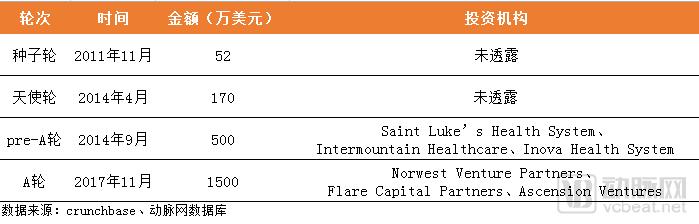 VisitPay Funding History (Source: Crunchbase, VCBeat Database)
Business Model: Simplified Payment Process + Medical Installment Plans
VisitPay provides a comprehensive suite of workflow and payment services in the field of revenue cycle management, enabling hospitals to efficiently manage accounts payable. Additionally, it offers self-service process management solutions, including inventory management, workflow automation, payment estimation, and vendor management.
1. Simplify the payment process
VisitPay is dedicated to helping healthcare institutions streamline the billing process with insurance companies and patients, enabling patients to understand the categories of charges they are responsible for, clarify their insurance coverage, and determine their exact out-of-pocket costs. Unlike traditional fee-for-service billing and settlement, VisitPay allows for the establishment of unified family accounts with monthly settlements. Two administrative agents can manage 50,000 users, reducing payment processing costs by 70%.
VisitPay Consolidated Financial Statements: | Patients will receive: |
|
|
|
|
|
|
|
|
|
Payment options are convenient and flexible. Patients can set up a VisitPay account to pay in full or in installments. Accepted payment methods include credit cards, debit cards, Google Pay, Apple Pay, Health Savings Accounts (HSA), eCheck (ACH), and more. All payments can be completed online via web or mobile devices.
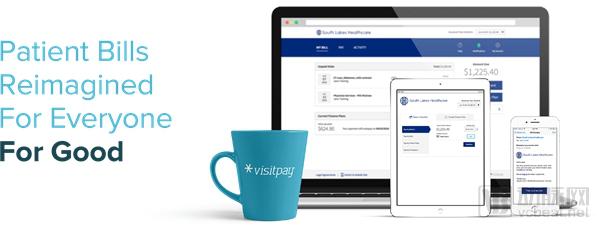
Promotional Image for Payment Platform (Source: VisitPay Official Website)
2. Personalized Financing Solutions
In March 2018, VisitPay partnered with J.P. Morgan to launch the “Balance Transfer” service. When patients opt for installment payments:
Step 1: Develop a personalized financing plan based on the patient’s specific circumstances, including the financing amount, purpose, interest rate, and repayment schedule;
Step 2: The healthcare institution transfers the accounts receivable (creditor’s rights) to the patient’s account opened at JPMorgan Chase. Upon the effectiveness of the agreement, JPMorgan Chase pays the full amount to the healthcare institution and becomes the patient’s creditor;
Step 3: Patients set up their accounts on VisitPay and view their bills via mobile phone or computer. Once the repayment plan is established, VisitPay automatically communicates with the billing system to handle all payments, loan adjustments, and refunds in a fully compliant manner.
3. Rapid Deployment
Once a contract is signed with a healthcare institution, VisitPay’s third-generation platform can be installed and put into operation within 60 days. During subsequent operations, the company’s analysts, consumer finance experts, and healthcare billing system specialists will remain available to assist the institution in conducting tests and optimizing platform configuration.
VisitPay can connect to multiple EMR billing systems, including EPIC, Cerner Millennium, Cerner Siemens, Meditech, Allscripts, McKesson, and GE Centricity (commonly used medical billing systems in the United States).
Peer Competition: Diversified Services
The U.S. healthcare system is relatively comprehensive, with health insurance for the general population primarily consisting of Medicare, Medicaid, Health Insurance Exchanges, the Children’s Health Insurance Program (CHIP), and employer-sponsored insurance. In the face of such a complex landscape, there is also fierce competition in the field of payment innovation in the United States.
Currently, there are numerous innovative companies in the U.S. payment sector. VCBeat has compiled a list of 10 representative enterprises. Although these companies differ in their specific service orientations and product features, as payment platforms, they generally include the following basic functions and services:
1. Personal Information. The payment platform integrates with other systems, providing patients with a clear overview of their personal information, including billing details, electronic health records (EHRs), and electronic medical records (EMRs). This facilitates better management, tracking, and payment of their medical expenses.
2. Payment Management. The payment platform offers secure and diverse payment options, such as bank cards, medical insurance cards, and third-party platforms.
3. Reimbursement Management. The payment platform must be capable of integrating with the social security system, ensuring compliance with identity verification requirements (matching person, ID, and card) and information security standards, thereby enabling medical insurance payments.
4. Analysis and Communication. By analyzing data, healthcare providers offer personalized advice and timely communication to patients, helping them resolve issues encountered during the payment process.
5. Customer Relationship Management. Healthcare organizations can use this system to manage patient engagement, review patients’ prior billing history, monitor their financial behavior, track key metrics in a timely manner, and optimize all interactions with patients.
“As the saying goes, ‘Some learn earlier than others, and each has their own area of expertise.’ Some early-established companies (such as CareCloud) have grown into industry unicorns, while some rising stars (such as Cedar) are rapidly catching up. VCBeat has compiled their financing histories and respective product features.”
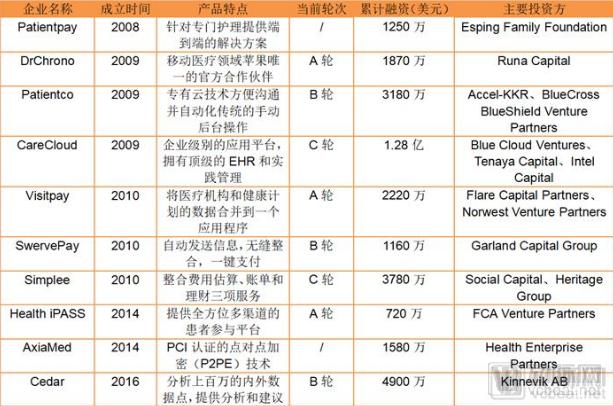
10 Innovative U.S. Companies in Healthcare Payments (Source: VCBeat)
CareCloud raised the highest amount of funding, reaching $128 million. The company’s product, Black Book, was ranked first in 2017 for practice management software and cloud-based electronic health record (EHR) SaaS platforms. Currently, CareCloud serves more than 4.5 million patients and manages over $2 billion in accounts receivable.
In addition to CareCloud, Simplee and Patientco are also strong competitors. Simplee serves more than 900 U.S. hospitals and physician organizations, covering approximately 5 million patients, with annual bill payments exceeding $1 billion. Patientco’s SmartFinance™ patient self-service financial management platform integrates diverse financial products with Patientco’s multichannel consumer communication and payment tools. Healthcare providers can leverage SmartFinance™ to tailor financial solutions to different patient needs, thereby accelerating the patient payment process and improving collection rates. Currently, the platform has 10 million patient users, serves more than 2,000 healthcare organizations across the United States, and involves $1 billion in medical expenses.
Cedar, the most recently established company, is poised to become an emerging competitor in the mobile health sector. Its product portfolio includes a financial management platform for patients and a customer relationship management (CRM) system for healthcare providers. Healthcare institutions using this platform have achieved a 35% increase in collection rates, a 50% reduction in days sales outstanding (DSO), a 95% customer satisfaction rate, and a 60% increase in the number of self-service payments.
Healthcare Reform: Payment First
Globally, the success of healthcare reforms has largely been driven by payers. Service providers have relatively weak incentives for self-initiated reform; only when payers change payment rules can service providers adjust their operational models in accordance with these new guidelines. This trend is clearly evident in the transformation of the U.S. hospital market following the implementation of the Affordable Care Act (ACA).
Under the value-based payment model, particularly with performance metrics tied to readmission rates, hospitals have seen a decline in inpatient volumes and a rise in outpatient visits. This trend has driven hospitals to control their healthcare costs and shift toward an industry chain centered on outpatient care, rehabilitation, and nursing services. Similarly, China’s payment reform, having clarified its direction and tools, will guide healthcare institutions to transform their focus, thereby improving medical quality and controlling costs more effectively.
 Product Promotional Image (Source: Zhongnuo Puhui Official Website)
A large number of third-party medical payment platforms have also emerged in China, such as Zhongnuo Puhui, which specializes in medical installment plans, Alipay’s “Future Hospital,” and WeChat’s “Smart Healthcare.” These platforms are continuously innovating within their respective niche markets and improving the efficiency of medical payments, yet they all face common challenges.
First, there is the issue of cross-regional social security. Reimbursement for medical expenses incurred across different regions involves time lags and complex procedures, such as pre-treatment registration, seeking care at designated institutions, and upfront payment followed by reimbursement.
Second is the issue of information security. Medical insurance settlements are all conducted through the private networks connecting designated medical institutions with local social security bureaus. Therefore, any internet-based app seeking to participate in the transaction chain of medical insurance payments must obtain approval from the social security authorities; in some more progressive regions, social security bureaus even permit direct database connectivity for such apps. Opening up medical insurance payments to the internet carries substantial risks.
Third, the issue of hospital-side interests. This involves the renovation of hospital systems such as HIS, LIS, and PACS, the interests of system developers, and the integration of offline medical service processes with online APP workflows. These aspects depend on the depth of the hospital’s understanding of “Internet+” and the magnitude of its investment in internal informatization construction.
Zhongnuo Puhui: There’s Also a “Huabei” for Buying Medicine and Treating Illnesses
Currently, there are numerous installment payment companies in China’s medical aesthetics sector, but few high-quality providers specializing in general medical care. Established in 2018, Zhongnuo Puhui aims to alleviate patients’ short-term financial burden by offering supplementary payment solutions beyond health insurance and out-of-pocket expenses, thereby enabling more patients to access affordable and quality healthcare. In layman’s terms, it serves as the “Huabei” of the medical payment industry.
Currently, Zhongnuo Puhui has established partnerships with dozens of pharmaceutical companies, medical device manufacturers, healthcare institutions, and over one hundred pharmacies, providing an integrated solution that combines installment payment plans for treatment costs, advance payment for medical insurance reimbursements, and customized coverage. The company’s services cover more than ten disease categories and have benefited thousands of patients, earning widespread acclaim from users.
Currently, Zhongnuo Puhui primarily offers three core product modules: installment-based financial support for medications, customized insurance services, and advance payment services for medical insurance reimbursements. In the future, it plans to tailor diverse financial solutions to individual patient needs, striving to benefit a broader patient population.
“The high cost and difficulty of accessing medical care” represent the current dilemmas facing the healthcare industry. How to enable patients to enjoy a better medical service experience through reform is a question that the entire industry needs to consider. In addition to existing models such as “Internet Plus Healthcare” and reforms in pharmaceutical procurement, changing healthcare payment methods is also an effective approach.
By Yang Shaobo
Reference Link:
https://www.visitpay.com/
https://www.henryford.com/
http://znpuhui.com/
https://www.prnewswire.com/news-releases/visitpay-announces-henry-ford-health-system-as-a-new-customer-of-its-patient-financial-experience-platform-300823767.html
https://www.modernhealthcare.com/article/20180308/TRANSFORMATION04/180309910/jpmorgan-and-visitpay-launch-financing-option-for-hospitals