Almonertinib Granted New Indication in China for First-Line Treatment of EGFR-Mutated NSCLC in Combination with Chemotherapy

Hansoh Pharma
Pharmaceutical Research, Production, and Sales
Latest Medical Insurance Prices for EGFR-Targeted Drugs (Reimbursement as of January 1)
January 8,NMPA official website shows,Hansoh Pharma's Aumolertinib Mesylate Tablets Approved for New Indication in ChinaIn combination with pemetrexed and platinum-based chemotherapy, it is indicated for the first-line treatment of adult patients with locally advanced or metastatic non-small cell lung cancer (NSCLC) harboring epidermal growth factor receptor (EGFR) exon 19 deletions or exon 21 (L858R) substitution mutations.
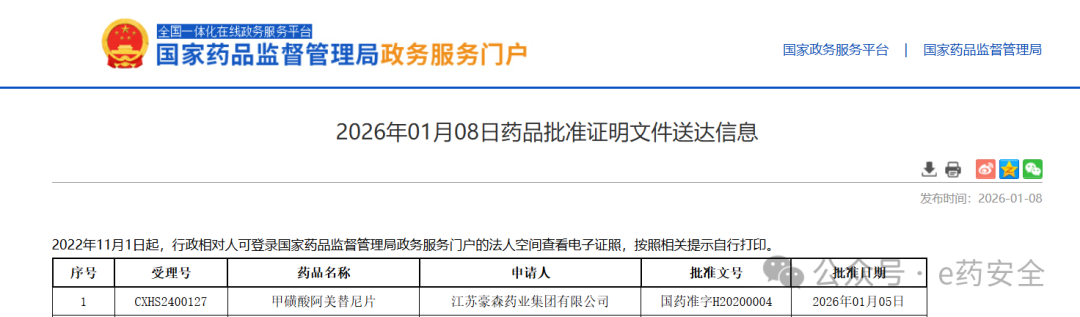
Screenshot source: NMPA official website
Ameitinib is a third-generation EGFR-TKI developed by Hansoh Pharma. It has previously been approved for four indications in China: 1) For second-line treatment of patients with locally advanced or metastatic NSCLC who have progressed after prior EGFR-TKI therapy and are positive for the T790M mutation; 2) First-line treatment of adult patients with locally advanced or metastatic NSCLC positive for EGFR 19del or L858R mutations; 3) For the treatment ofNo disease progression after platinum-based radical radiochemotherapyAdult patients with unresectable locally advanced EGFR 19del or L858R mutation NSCLC; 4)For Stage Ⅱ-ⅢB withEGFR 19del or L858R mutationThe treatment is for adult patients with NSCLC who have previously undergone surgical resection and whose receipt of adjuvant chemotherapy is determined by their physician.
2024 WCLC | Summary of the Latest Advances in Targeted Immunotherapy for Lung Cancer(Maintenance with Almonertinib After Chemoradiotherapy)
2025AACR丨Latest Advances in Lung Cancer: Targeted and Immunotherapy(Ametinib Postoperative Adjuvant)
2025 AACR | ARTS Study: Aumolertinib as Adjuvant Therapy for EGFR-Mutant Post-Surgical Patients
01
AENEAS2 Study
AENEAS2 Study:It is a randomized, open-label, multi-center Phase III clinical trial designed to evaluate the efficacy and safety of Aumolertinib in combination with chemotherapy versus Aumolertinib monotherapy as first-line treatment for EGFR mutation-positive locally advanced or metastatic NSCLC.
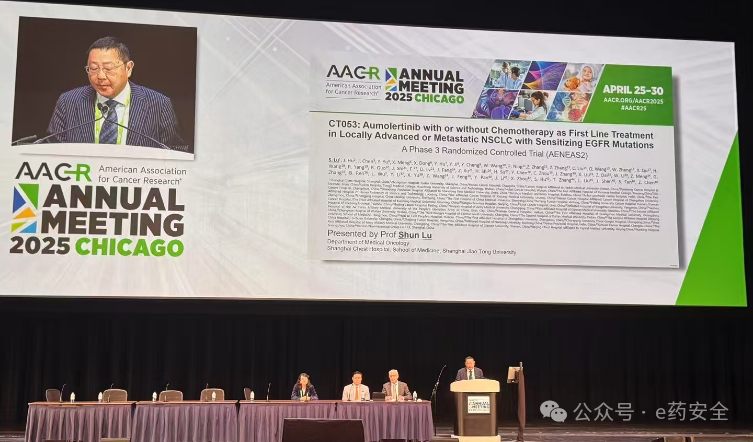
Professor Lu Shun Reports Research Results
As of June 18, 2024, a total of 624 patients were enrolled (310 in the amivantamab plus chemotherapy group and 314 in the amivantamab monotherapy group), stratified by EGFR mutation type (Ex19del vs. L858R) and baseline CNS metastasis status. The primary endpoint was progression-free survival (PFS) assessed by an Independent Review Committee (IRC) based on RECIST v1.1.
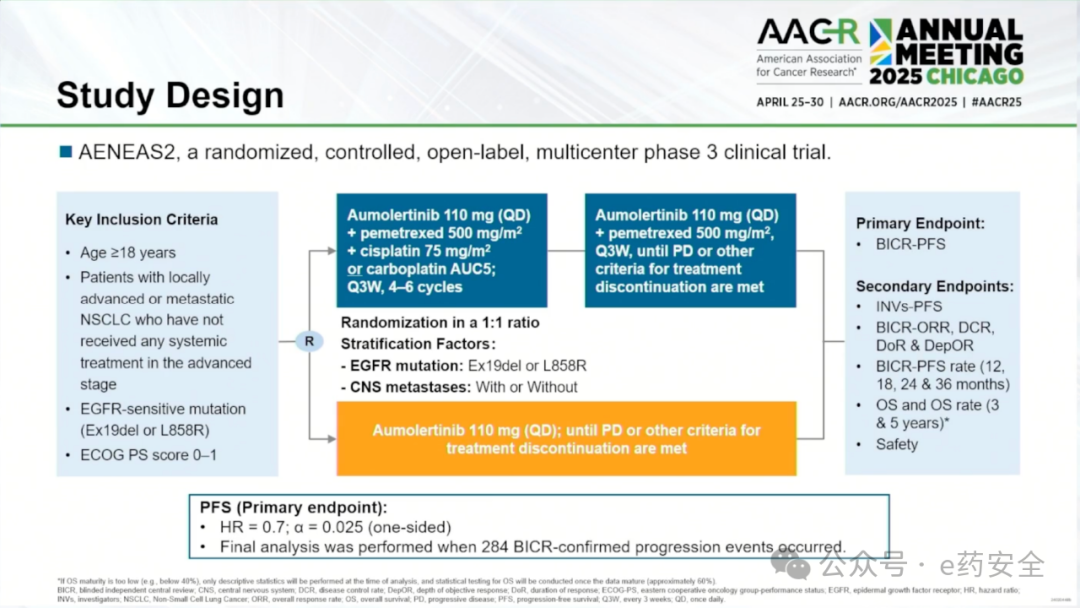
Study Design
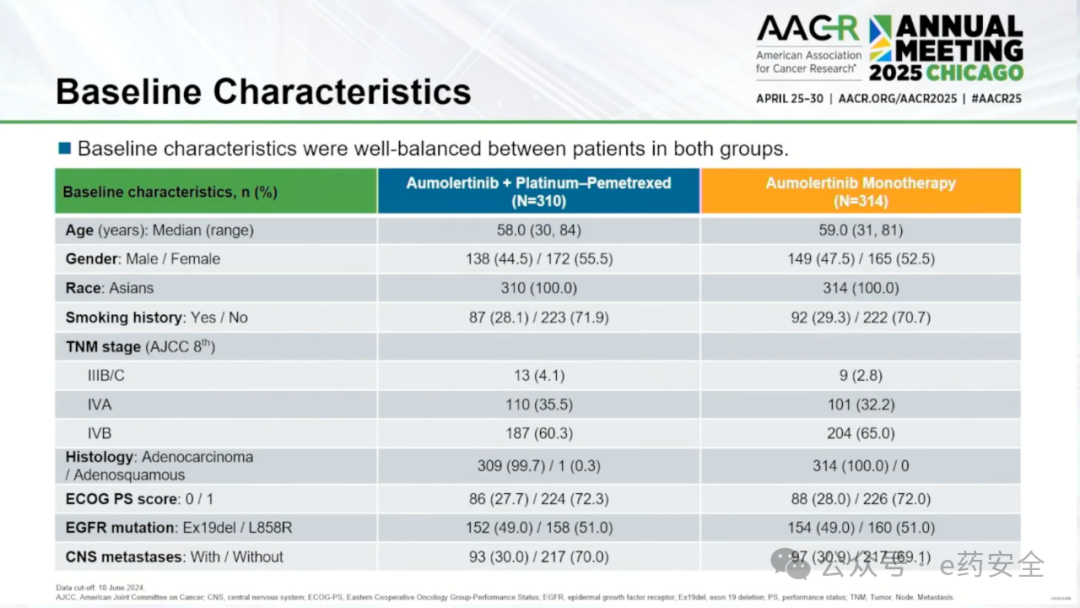
Baseline Characteristics
Research Results:The median follow-up time was 23.4 months, with a median PFS of 28.9 months (95% CI 26.3-NA) in the combination chemotherapy group and 18.9 months (95% CI 17.8-21.1) in the monotherapy group. The hazard ratio was 0.471 (95% CI 0.371-0.598; P<0.0001), showing consistent benefits across all predefined subgroups. OS data are not yet mature, with an HR of 0.442 (95% CI 0.308-0.636; P<0.0001).
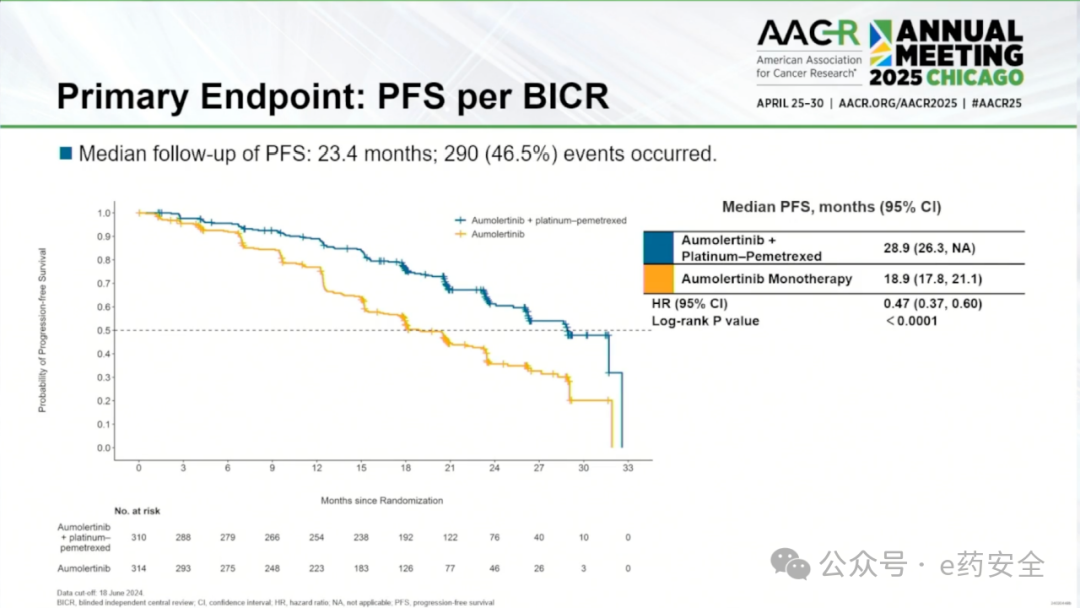
PFS
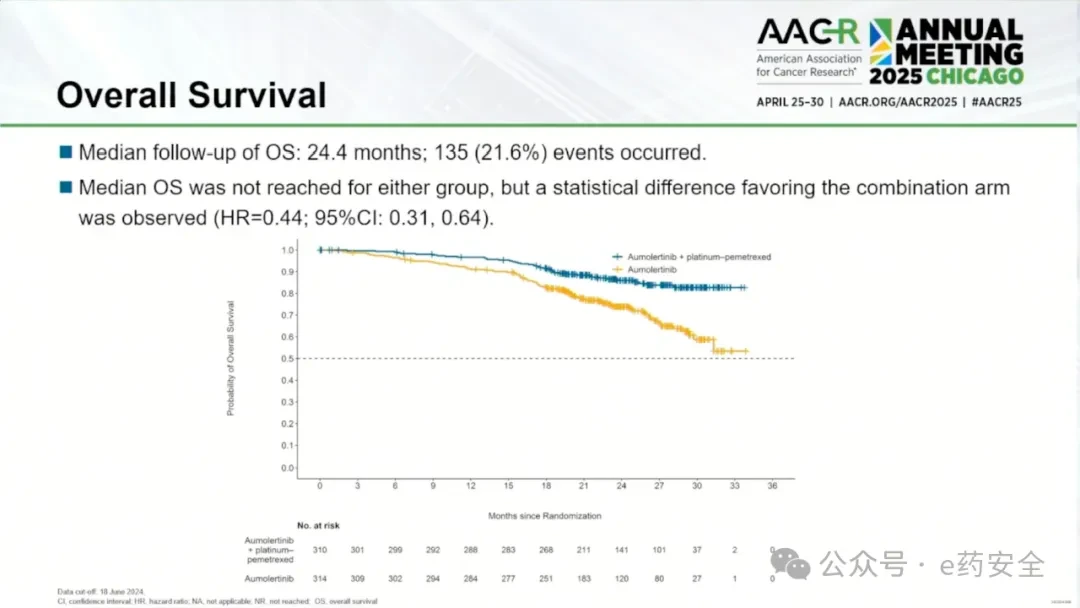
OS
In terms of safety, the incidence rates of ≥Grade 3 adverse events in the combination chemotherapy group and the monotherapy group were 75.7% vs. 23.7%, respectively; the incidence rates of adverse events leading to the discontinuation of Almonertinib were 3.0% vs. 1.3%. The safety profile of the combination regimen was consistent with the known safety profile of monotherapy.

eDrug Safety
Join the Organization
Add Friend
EGFR Lung Friends Consultation and Exchange
Disclaimer:The information in this article is for general reference only and should not be directly used as decision-making content by doctors, patients, or any entities. "ePharm Safety" assumes no responsibility for any losses incurred by any party due to the use of the content in this article.
WelcomeJoinTumor (Lung Cancer) Knowledge Base, access more tumor-related materials