

NK Cells Emerge as Promising Collaborators to T Cells in Next-Gen Cancer Immunotherapy
From March 19 to March 21, 2019, at the Innate Killer Summit held in San Diego, scientists from industry and academia presented their latest research findings on cell therapies. Among these, some researchers are exploring how genetic modification can enable natural killer (NK) cells to express chimeric antigen receptors (CARs), creating CAR-NK cells analogous to CAR-T cells, thereby achieving targeted therapy. VCBeat has compiled and translated information on frontier oncology therapies featured at the Innate Killer Summit, focusing on NK cell immunotherapy.
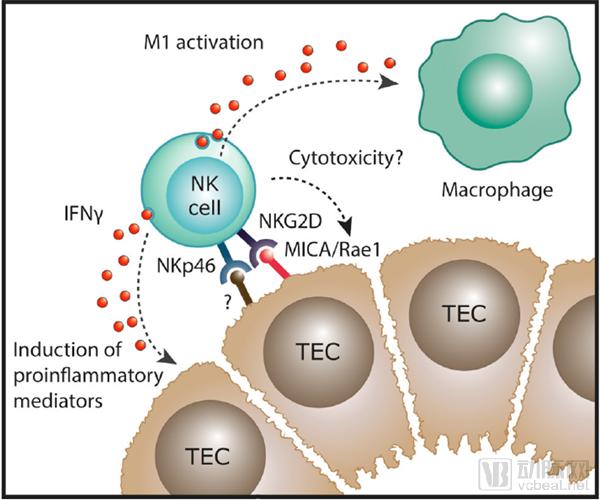
The American Society of Gene and Cell Therapy defines cell therapy as “the use of living cells to treat patients’ diseases.” In the field of oncology, cell therapy primarily refers to specific immunotherapy using T cells that are either genetically engineered or unmodified. With a deeper understanding of the innate immune system, the focus of cell therapy has expanded from T cells to natural killer (NK) cells. NK cells will serve as synergistic agents or alternatives to T cells, targeting and eliminating tumor cells.
Robin Parihar, M.D., Assistant Professor of Pediatric Hematology-Oncology at Baylor College of Medicine, pointed out: “The reason CAR-T cells have demonstrated significant efficacy in the treatment of hematologic malignancies is that tumor cells and their antigens are present in the bloodstream. In contrast, in solid tumors, antigens are often hidden within the body and difficult to detect. Consequently, all cell therapies have shown limited efficacy against solid tumors.”
On the other hand, the tumor microenvironment of solid tumors contains endogenous immunosuppressive cells, including myeloid-derived suppressor cells (MDSCs), inhibitory macrophages, and regulatory T cells (Tregs), which collectively suppress the activity of all T cells, including CAR-T cells.
Initially, the Parihar laboratory attempted to modify the tumor microenvironment by alleviating endogenous immunosuppression, thereby enabling CAR-T cell therapy to take effect. However, during their research, the Parihar laboratory discovered a novel method for preparing CAR-NK cells. These CAR-NK cells express a fusion protein composed of two parts: NKG2D (an activating transmembrane receptor protein on the surface of NK cells) and the cytotoxic T-cell receptor ζ chain. In an allogeneic tumor microenvironment—specifically, in tissue cultures of human neuroblastoma cells—these NKG2D.ζ cells can target and kill myeloid-derived immunosuppressive cells.
Unlike previous approaches that modify the tumor microenvironment, these NKG2D.ζ cells exhibit no off-target toxicity and can sustainably alleviate immunosuppression for two weeks after a single administration. Therefore, NKG2D.ζ cells will facilitate the recruitment of CAR-T cells into tumor tissues, thereby exerting antitumor activity.
Dr. Amir Horowitz, Assistant Professor of Oncological Sciences at the Icahn School of Medicine at Mount Sinai, studies NK cells through HLA (human leukocyte antigen) molecule crystals. HLA genes are the most morphologically diverse genes in the genome, and it is well known that they can stimulate CD8+ T cells. However, it is less well known that HLA genes can regulate NK cell function. Dr. Horowitz states that this may be because NK cells are part of the innate immune system rather than the adaptive immune system. They do not have inherent specificity, but in the bone marrow, NK cells are regulated by the gene expression of HLA-I.
Horowitz used mass cytometry to reclassify HLA alleles, defining new categories of cancer. HLA-E (human leukocyte antigen) is the primary ligand for the receptor complex formed by NKG2A. Unlike the activating receptor NKG2D, NKG2A is an inhibitory receptor expressed on NK cells. NK cell function is suppressed upon stimulation by HLA-E; therefore, in patients with lower levels of HLA-E in the tumor microenvironment, NK cell function remains uninhibited. These “hot” tumors are suitable for treatment with PD-1 inhibitors and other immunotherapies. Conversely, tumor microenvironments with high levels of HLA-E are immunosuppressive, characterized by inhibited NK cells and low cellular infiltration. This may explain why only approximately 10–20% of patients exhibit an initial response to PD-1 therapy. By using HLA molecules as biomarkers to reclassify patients, it is possible to “stratify individuals who are most likely to benefit from existing therapies.” Horowitz stated, “This represents a personalized treatment approach, but unlike CAR-T cell therapy, it is not highly specific and does not require lengthy preparation times.”
Dr. Emily M. Mace, Assistant Professor of Pediatrics at Columbia University, also presented her research, which investigates the nature of intercellular interactions and the role of cell migration in shaping functionally mature NK cells.
Emily M. Mac points out that the development of NK cells is insufficiently driven, as their generation is rarely constrained by immune tissues. Ideally, investigating contact-dependent factors that promote NK cell maturation would enable the better design of NK cell-based immunotherapies. Studies have shown that as NK cells mature in vivo, they become increasingly active, with their developmental stage depending on the formation of “synaptic development” between NK cells and supportive stromal cells. However, she also emphasizes that significant differences exist between the innate immunity of mice and humans, making direct comparisons challenging. This is because the innate immune system is shaped by its environment and is closely linked to the microbiome and virome within that environment. Consequently, findings from studies conducted in germ-free mice may not be applicable to humans.
Dr. Robert Igarashi, Co-founder and Chief Scientific Officer (CSO) of CytoSen Therapeutics, argues that for cell therapies aiming to harness the therapeutic potential of NK cells, the most critical factor is the production and maintenance of substantially high doses. Dr. Igarashi stated, “A healthy adult has one to two billion circulating NK cells; our dose is ten times that amount.” CytoSen employs IL-21 stimulation to expand NK cells, a method that generates NK cells with enhanced immune activity more rapidly compared to previous approaches.
CytoSen stimulates rather than cultures NK cells by conjugating specific nanoparticles with IL-21 and embedding them, along with extracellular proteins, into pre-fabricated sterile biofilms. This approach avoids the ethical concerns and contamination risks associated with cell culture methods, which typically rely on live tissue biopsies from tumor sites.
“This is a novel method for activating NK cells,” said Igarashi. “This approach mimics the cell membrane of NK cells, yet avoids the risks associated with cell culture, offering enhanced safety and compliance with European regulations. It also eliminates the need for gallons of cell culture media, thereby providing greater cost-effectiveness and advantages in downstream processing. Furthermore, the nanoparticles are easy to store.”
In the early 1990s, during his postdoctoral research, Lawrence Lamb discovered that approximately one-quarter of leukemia patients exhibited elevated levels of γδ T cells after undergoing bone marrow transplantation depleted of αβ T cells. Furthermore, these patients demonstrated varying survival rates following the transplantation.
Lamb is the Chief Scientific Officer (CSO) of Incysus Therapeutics. Early in his career, he identified this phenomenon and conducted follow-up research, ultimately confirming that γδ T cells can kill blood cancer cell lines in laboratory settings. However, γδ T cells are extremely rare and difficult to directly target blood cancer cells. It took Lamb approximately ten years to develop a method for expanding γδ T cells in vitro, enabling their large-scale production for clinical applications.
“γδ T cells are very similar to NK cells,” said Lamb. “The advantage of γδ T cells is that they do not rely on the major histocompatibility complex (MHC), enabling them to recognize many targets that NK cells cannot. γδ T cells also possess a distinct repertoire of activating and inhibitory receptors, which may grant them greater adaptability across different environments than NK cells.” Incysus has developed γδ T cell therapies in combination with the chemotherapy drug temozolomide (Temodar). Chemotherapy sensitizes the tumor microenvironment to γδ T cells, which then recruit other innate immune cells to further attack the tumor. Incysus plans to investigate the efficacy of this approach in glioblastoma later this year. Lamb predicts that γδ T cell therapy is moving closer to mainstream cancer treatment. Rather than replacing CAR-T therapy, it serves as an “immune system boost” to eradicate disease completely after other tumor treatments have reduced tumor burden to undetectable levels.
Dr. Harvey Lodish, a Professor of Biology at the Massachusetts Institute of Technology (MIT) and a pioneer in the field of erythropoiesis, also delivered a research breakthrough: the production of mature red blood cells (RBCs) from hematopoietic stem cells in the laboratory. Dr. Lodish brought his RBC technology to Flagship Pioneering, which discovered a method for producing nucleated precursor cells that express therapeutic proteins. This approach provided new insights into cell therapy and marked the origin of Rubius Therapeutics.
Five years after its founding, Rubius Therapeutics has developed a mature Red Cell Therapeutics™ (RCTs) platform. Rubius extracts CD34+ progenitor cells from non-O-type blood, achieving an extraction success rate of up to 95%. Genetic material is then delivered into precursor cells via lentiviral vectors, followed by cultivation and expansion in bioreactors. Upon maturation, the cells lose their nuclei, constituting the RCTs therapy. This approach holds several potential applications, including the treatment of rare enzyme deficiencies, cancers, and autoimmune diseases.
Dr. Torben Straight Nissen, President of Rubius, firmly believes that “the future of cell therapy is allogeneic.” All of Rubius’s red blood cells are derived from precursor cells of universal donors, endowing the company’s products with allogeneic characteristics. Furthermore, Rubius’s red blood cells can be stored for on-demand use and administered at low frequencies and low doses. The circulation lifespan of these red blood cells extends up to 120 days.
Rubius’s primary objective is the treatment of the rare disease phenylketonuria (PKU). Rubius has recently designed a clinical trial in which PKU patients will receive RTX-134, a therapy that expresses phenylalanine ammonia-lyase (PAL) on its RCT platform to break down phenylalanine.
In addition, Rubius is investigating the application of RCTs in other enzyme deficiency disorders, such as homocystinuria and refractory gout, as well as in cancer and autoimmune diseases.
Overall, cell therapy has long since moved beyond T cell-based modifications or engineering, expanding into therapeutic areas involving NK cells, γδ T cells, red blood cells, and more. In the field of NK cell therapy, NantKwest in the United States has already become an industry giant.
NantKwest was founded in 2002 and is headquartered in California, USA. In July 2015, NantKwest went public on the Nasdaq with only 11 employees and three pre-revenue technology platforms. The IPO raised $207 million, with shares surging 40% on the first day of trading, bringing the company’s market capitalization to $2.7 billion. NantKwest is dedicated to using natural killer (NK) cells for the treatment of cancer, infectious diseases, and inflammatory diseases, and possesses three technology platforms: haNK, taNK, and t-haNK. Currently, NantKwest’s oncology pipeline has initiated Phase I clinical trials in the United States, Canada, and Europe.
In China, few companies are involved in the field of NK cell therapy. Among them, Nuokangde Biotechnology focuses on the research and development of novel immune checkpoint inhibitors targeting NK cells and macrophages. Leveraging NK cells as a vector, the company has pioneered a non-viral glycochemical cell therapy platform (Sugar Cell). Its CECT-NK therapy induces apoptosis in cancer cells by modifying NK cells with neuraminic acid to achieve targeted delivery.
Image Source:Jan-Eric Turner,Constantin Rickassel,et al.Natural Killer Cells in Kidney Health and Disease.Frontiers in Immunology.10,587(2019).
Reference Link:https://www.genengnews.com/insights/natural-killer-cells-emerge-as-an-anticancer-alternative-to-t-cells/