

VLink Dynamics Powers Remote Healthcare with V2V-Based National Medical Network Covering Over 5,000 Institutions
From April 11 to 14, the “2019 China Hospital Information Network Conference (CHINC),” hosted by the Hospital Management Institute of the National Health Commission, was held in Chongqing. Themed “Jointly Building Smart Hospitals and Sharing Intelligent Healthcare,” the conference aimed to innovate healthcare service models, improve the quality and efficiency of medical services, promote smart services in healthcare institutions, enhance patients’ sense of gain when seeking medical care, and timely summarize and exchange the latest achievements in the research and application of health information technology in China, thereby advancing the level of hospital informatization and intelligent applications as well as management capabilities.
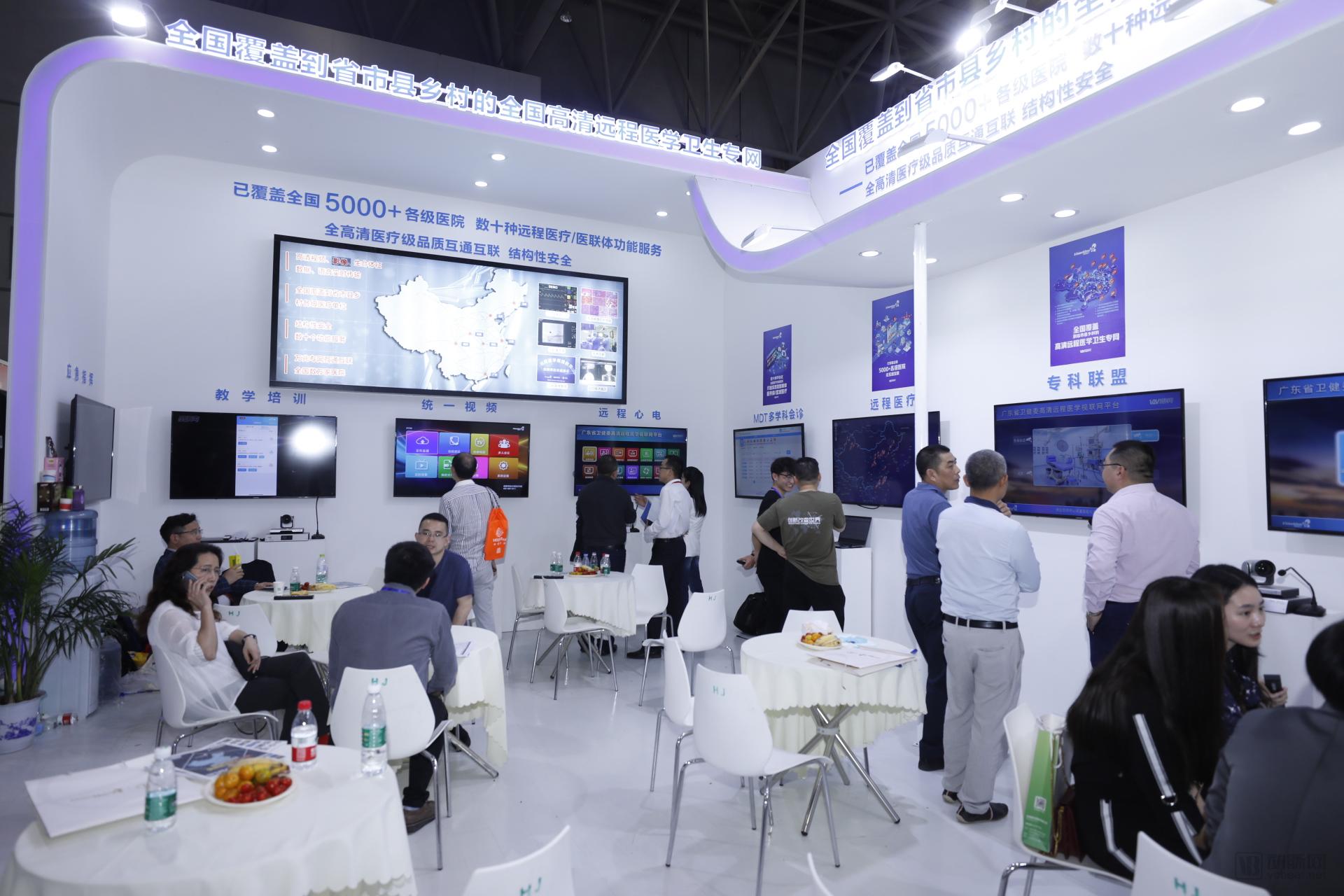
As a high-definition video communications enterprise that has focused for ten years on the research, development, and application of HD video communication protocols and related technologies, VisionVera has adopted fully independent innovative technology to develop the “V2V” protocol for its Video Internet. In the healthcare sector, leveraging this independently developed network protocol technology, the company is building a secure, reliable, and autonomously controllable national HD remote medical and health private network. This network currently connects thousands of medical institutions across China, including the National Health Commission, local health commissions at various levels, leading general hospitals, specialized hospitals, and medical associations, covering Beijing, Tianjin, Guangdong Province, Shaanxi Province, Zhejiang Province, Fujian Province, Hebei Province, and other regions.
Currently, the national high-definition dedicated telemedicine network can horizontally integrate every grassroots medical institution across each province and vertically connect multi-level medical resources spanning provinces, cities, counties, townships, villages, and households, achieving an integrated application of interoperability. This network enables real-time cross-regional transmission of large-scale high-definition video, static and dynamic imaging, pathological slides, vital signs, medical data, and voice communications. It also provides diverse telemedicine services tailored to various scenarios, such as hospital-to-hospital, hospital-to-grassroots, and hospital-to-home remote consultations, remote surgical guidance, remote intensive care monitoring, ICU visitation, teaching and training, health counseling, and health management. By facilitating resource integration and interoperability with concurrent network-wide access, it delivers innovative technical and operational services for fields including telemedicine, medical consortia, and specialized medical alliances.
The independently innovated Visual Networking technology has received strong national support and has been established as a new national standard. With particular endorsement from the National Health Commission, most provinces across China have now adopted the nationwide high-definition remote healthcare private network based on Visual Networking technology for the development of their telemedicine systems.
To date, V2V Technology has partnered with medical institutions across China to build an interoperable platform based on telemedicine. At the new campus of Beijing Tiantan Hospital, the system provided by V2V Technology covers bedside services for all 1,800 hospital beds, provides intra- and extra-hospital surgical guidance and remote teaching services for all 65 operating rooms, and also covers nearly 100 doctors’ offices and nurse stations, as well as 20 conference rooms.
This system delivers value-added services for patients at the bedside, including digital television access, billing and medical record inquiries, remote consultations, hospital-operated channels, family visits, adjunctive therapy support, health education, and appointment-based nursing and meal ordering. In Tianjin, a “Smart Health” video networking platform has been established, covering 1,000 medical institutions of all levels across the city. The platform achieves comprehensive coverage down to the community level and extends to key hospital wards, encompassing more than 100 healthcare organizations—including the Municipal Health Commission, tertiary hospitals, secondary hospitals, and relevant public health institutions—as well as the health and family planning commissions of 18 districts and counties, their affiliated 250 community health service centers and community health clinics, and 604 primary care sites.
In addition, VisionVera has participated in the implementation of various projects, including the Guangdong Provincial Health Commission’s Medical Consortium and Telemedicine Vision Network Platform Project, the Fujian Provincial Regional Telemedicine Project, the Tongzhou District Health Commission Telemedicine Platform System Project, the Tianjin “Smart Health” Vision Network Platform Project, the Shaanxi Provincial Vision Network Telemedicine Project, the Beijing Tiantan Hospital Digital Hospital Unified Video Project, the China-Japan Friendship Hospital Telemedicine Platform Operation Project, the Construction Project of the Digestive Internal Medicine Collaborative Development Center at Beijing Friendship Hospital, and the Respiratory and Medical Oncology Specialist Alliance Construction Project at the General Hospital of Coal Industry.
Through the comprehensive solutions provided by VisionVera, local Health Commissions can enhance the overall management of various medical institutions within their jurisdictions and obtain practical data support for the formulation of policies and standards. Various Medical Consortiums can improve their overall medical service capabilities and efficiency, while implementing national requirements for telemedicine services within these consortiums. Medical institutions at all levels can not only expand their medical services, enhancing their brand image and influence nationwide, but also seamlessly connect with other medical institutions to continuously improve their service capabilities and standards. Furthermore, in terms of transmission convenience, information security, and the comprehensiveness of supporting various medical services, this technology fully complies with national policies and regulatory requirements.
It is important to note that, unlike other medical communication technologies, Visual Internet Protocol (VIP) technology supports triple-play network convergence. As a millisecond-level real-time network, it eliminates the need for pre-buffering or downloading and achieves data transmission with a packet loss rate as low as one in a million. Combined with its inherent structural security and comprehensive data exchange capabilities, VIP technology is better suited for application across diverse healthcare scenarios.
Relevant officials stated that the national high-definition remote medical and health private network, which is expanding its coverage to provinces, cities, counties, townships, and villages across China, will provide stronger support to healthcare industry users in areas such as telemedicine and healthcare informatization, thereby promoting and accelerating the development and implementation of nationwide telemedicine and tiered diagnosis and treatment systems.