

CareVoice Files IPO Prospectus: Empowering Health Insurance with Integrated Medical Services Platform
The application of technology in the insurance sector is a key component of insurance innovation, not only enhancing insurers’ operational efficiency but also significantly improving customer experience. A recent study by Accenture shows that by streamlining administrative processes, insurance companies can leverage artificial intelligence to save $7 billion within 18 months. Specifically, for every 100 full-time employees, health insurers can save $15 million simply by automating routine tasks. In addition, big data and blockchain technologies have become other innovations eagerly embraced by the insurance industry.
Health insurance companies have recognized the potential of artificial intelligence (AI) technology and have already taken action. According to a survey by Accenture, 72% of health insurance executives stated that investing in AI would be one of their top three strategic priorities for 2019.
While leaders in the health insurance industry remain focused on long-term cost savings and improving patient health, technology has already made a significant impact across the sector. Specifically, technological advancements are playing a crucial role in areas such as automated customer service, claims processing, predictive analytics, and data services.
In China, the main participants in insurtech fall into two categories: one comprises teams incubated by insurance companies themselves, such as ZhongAn Technology; the other consists of external companies serving the insurance industry, such as Zhisuan Technology and Duobaoyu. In recent years, some medical big data companies have also come to regard insurance companies as key clients, including LinkDoc Technology and Yidu Cloud.
VCBeat (WeChat ID: vcbeat) reporters recently interviewed CareVoice, an innovative company in the insurtech sector. Its development path clearly illustrates the insurance industry’s appeal to technology firms. Founded in 2014, CareVoice initially aimed to create a Dianping-style platform for the healthcare sector, establishing a medical evaluation system through broad user participation to assist patients in making informed healthcare decisions.
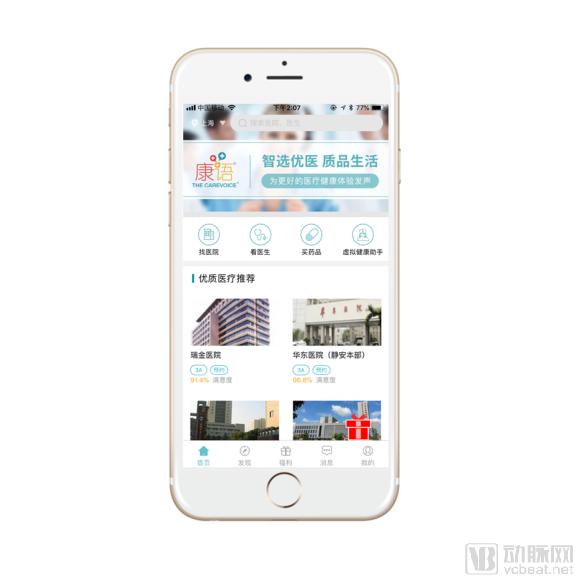
CareVoice App interface, image provided by the company
Throughout its development, CareVoice has served numerous clients from insurance institutions, enabling them to recognize the potential of the commercial health insurance market. This opportunity stems from two key factors: first, the health insurance market is experiencing rapid growth and possesses sufficient payment capacity; second, health insurers seek to enhance overall customer experience through technological means. However, as technology is not a core competency for insurance companies, they need to collaborate with specialized technology firms to refine their service systems.
Currently, CareVoice offers an integrated service combining healthcare and insurance. Non-insured users can use CareVoice to search for hospital and physician information, make appointments, and leverage the hospital rating system to support their healthcare decision-making. Users insured by CareVoice’s partner insurance companies can search for covered healthcare providers through the platform and file claims online after receiving care, a model similar to third-party administration (TPA) services.
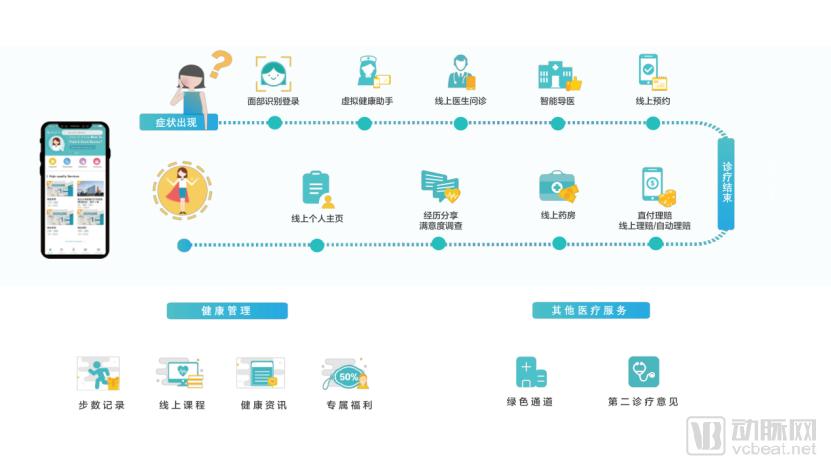
CareVoice Service System, Image Provided by the Company
Furthermore, comprehensive health management throughout the entire user journey is a key focus of CareVoice’s service ecosystem. In the early stages of diagnosis and treatment, users can consult with a virtual doctor on the CareVoice platform. This virtual doctor was jointly developed by CareVoice and the U.S. company Sensely, leveraging professional medical data from the Mayo Clinic. It supports over 200 disease symptoms, incorporates more than 20,000 diagnostic case records, and draws upon over 5 million customer service call cases to generate professional preliminary diagnostic assessment reports. To incentivize healthy behaviors, the platform also offers complementary features such as pedometers, health tips, popular science courses, and membership benefits.
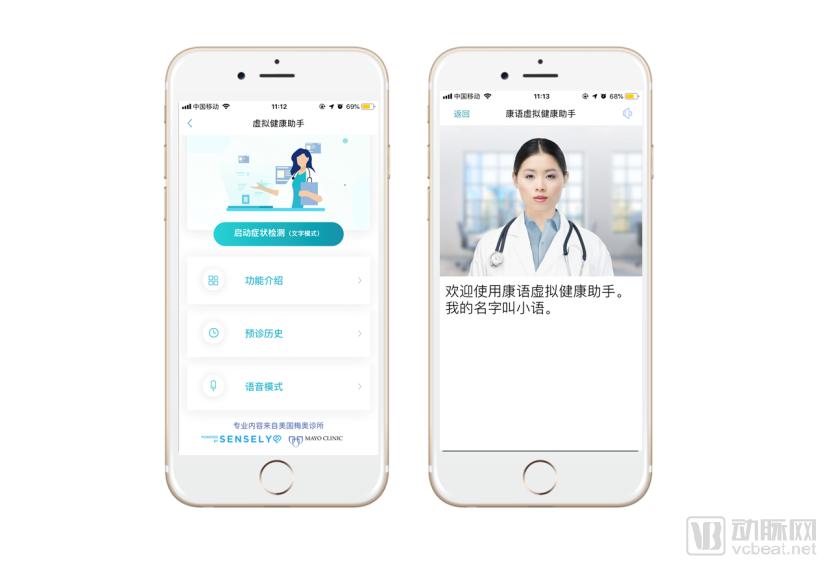
CareVoice Virtual Health Assistant, image provided by the company
Gao Sai, founder and CEO of CareVoice, is from France. In 2011, he joined Sanofi China in a management role, focusing on the field of diabetes treatment, which later inspired him to embark on an entrepreneurial journey. Other team members also bring professional and diverse work and management experience, with substantial expertise in artificial intelligence and big data technologies.
Gao Sai told VCBeat that, based on global experience, China’s commercial health insurance market still has significant room for growth. In particular, when compared with the United States, where commercial health insurance is well-developed, there is enormous potential in terms of coverage scope and protection capacity. However, whether in European or U.S. markets, insurance operations require innovation, leveraging technology and digital capabilities to enhance the customer service experience and improve insurers’ operational efficiency.
To date, CareVoice has established partnerships with more than 10 insurance clients, including Ping An Insurance, AXA Tianping, and Chubb Insurance, serving over 100 employers and more than 300,000 insurance members. Its medical review services cover 2,000 public and private healthcare institutions and over 100,000 physicians across six cities. In late 2018, CareVoice expanded into the Hong Kong market, officially launching its platform and services there and securing its first insurance client in the region, Generali Life. The company’s goal for 2019 is to expand its network of insurance partners to more than 20 and serve over one million insurance members.
Previously, CareVoice completed two rounds of financing. In early 2016, it secured a RMB 5 million angel round, and in early 2018, it closed a USD 2 million Pre-A round led by investors including the SOSV venture capital fund and Haitao Group. The previous funding was primarily allocated to technology upgrades, team expansion, and market development. A new round of financing is currently underway; upon completion, the company will continue to enhance its team and technology while expanding into markets such as Southeast Asia.