

Medtronic China Fund and BV Baidu Ventures Launch First-Ever Medical Robotics Innovation Competition in China
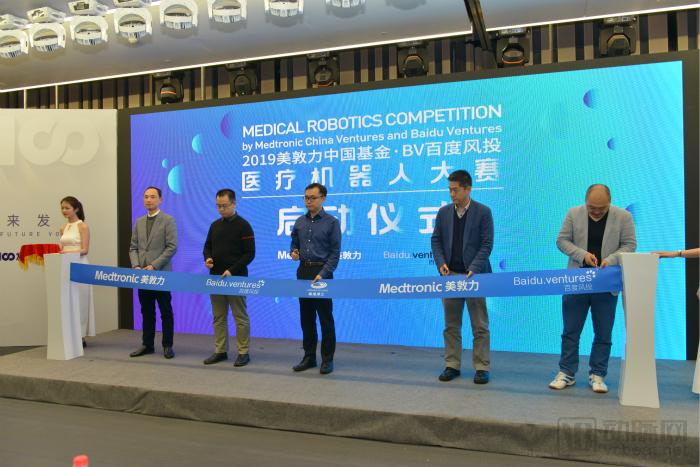
The 1st China Medical Robot Innovation Competition
On April 16, 2019, the inaugural 2019 Medtronic China Fund & BV Baidu Ventures Medical Robotics Competition, co-hosted by the Medtronic China Fund and BV Baidu Ventures, was officially launched at the Lingang Pujiang Technology Plaza in Shanghai.
This competition will focus on medical robots and related fields, targeting startups, teams, universities, and research institutions. It seeks innovative application solutions for medical robots in specific scenarios, promoting the integrated development of “technology + capital + talent + applications” in the medical robotics sector. The event aims to provide high-quality projects with robust incubation opportunities, industrial collaboration, and financial support, thereby encouraging and advancing innovation in China’s medical robotics industry. By leveraging intelligent manufacturing in China, it strives to contribute to the progress of medical technology and benefit a wide range of patients.
Medical robots are primarily service robots designed for healthcare settings such as hospitals and rehabilitation centers. Examples include surgical robots, rehabilitation robots, therapeutic assistance robots, and non-therapeutic support robots. These systems assist physicians by extending their capabilities and are characterized by medical utility, clinical adaptability, and robust human-robot interaction.
Technically, medical robots predominantly employ MEMS sensing technology, novel materials, and intelligent algorithms to achieve development toward smaller size, greater intelligence, and higher precision, thereby providing higher-quality medical services. To date, more than 600,000 robot-assisted surgeries have been successfully performed in over 800 hospitals across 33 countries worldwide, covering specialties such as urology, obstetrics and gynecology, cardiac surgery, thoracic surgery, hepatobiliary surgery, gastrointestinal surgery, and otolaryngology.
In China, medical robots are a crucial component of the nation’s Industry 4.0 strategy and the upgrading of intelligent manufacturing. Since 2015, the Chinese government has successively issued a series of key policy documents to support the development of the medical robot industry, including Made in China 2025, the National Standardization System Development Plan (2016–2020), and the Robot Industry Development Plan (2016–2020).
“Robotics Industry Development Plan (2016–2020)” explicitly states: breakthroughs should be achieved in ten landmark products, including surgical robots and intelligent nursing robots, with targeted promotion and application across industrial sectors as well as service domains such as disaster relief and medical rehabilitation. In the future, robotics companies will focus on rehabilitation robots, assistive robots for the elderly and people with disabilities, and surgical robots as their main development lines, advancing advanced medical robotic products such as upper-limb rehabilitation robots, lower-limb rehabilitation robots, intelligent rehabilitation robots, nursing robots, companion robots, and smart wheelchairs.
By the end of 2017, there were 7.94 million hospital beds in medical and health institutions across China, representing a 7.15% increase from the previous year. Meanwhile, since 2010, both the number of outpatient visits and hospital admissions in Chinese medical institutions have shown an upward trend. Demographically, China has entered an aging society, with the elderly population growing at an annual rate of 3.54%. In addition, the number of people losing their labor capacity due to stroke, trauma, and other causes is also rising steadily. These populations are driving increased demand for minimally invasive, efficient, and high-quality clinical services, and this substantial market demand will propel the rapid development of the medical robot market in China.
Driven by the convergence of policy, demand, and technology, China’s medical robot market holds immense potential. According to PwC data, the global medical robot market size is projected to reach $7.6 billion in 2020.
In 2014, China began introducing surgical robots. At present, the medical robotics industry chain is continuously improving, with new technologies from interdisciplinary fields increasingly permeating the sector, giving rise to a growing variety of novel forms: ranging from ultra-microscopic DNA nanorobots and microscopic in vivo sampling robots to macroscopic surgical robots for various disease conditions; from extracorporeal sensing technologies to novel delivery and feedback systems and portable external monitoring; and from intelligent preoperative planning to minimally invasive, automated, and personalized intraoperative execution, as well as innovative postoperative repair and medication regimens.
Overall, the application of medical robots in China’s healthcare sector is still in the introductory phase. With both technology and market conditions having reached maturity, the industry is currently experiencing rapid development and cultivation. In terms of practical outcomes, the large-scale adoption of medical robots will be a key trend in the future of medical technology.

Professor Zhao Xu, Institute of Medical Robotics, Shanghai Jiao Tong University
Regarding the current state and future development trends of the medical robotics industry, Professor Zhao Xu from the Institute of Medical Robotics at Shanghai Jiao Tong University stated: “From a technological perspective, medical robotics is a highly interdisciplinary field, integrating engineering, medicine, materials science, artificial intelligence, and other disciplines. It can be categorized into surgical, rehabilitation, patient transport, and logistics robots, covering the entire healthcare process. The sector is exceptionally complex, and it is no exaggeration to call it the ‘crown jewel’ of the industry. Building and scaling this industry requires the convergence of talent from various fields, making it particularly challenging. Over the past few decades, global efforts in this area have intensified, which forms the background for the establishment of the Institute of Medical Robotics at Shanghai Jiao Tong University. The challenges facing the medical robotics industry can be summarized in two key aspects: First, automation—currently, these systems primarily serve as assistive tools for physicians, but devices need to evolve to make diagnostics more intelligent. Second, miniaturization—implantable devices must be biocompatible for long-term placement within the body to achieve ultimate clinical application. Centered on precision medicine and minimally invasive techniques, these areas present enduring opportunities and challenges.”
In the future, medical robots are likely to emerge as innovative solutions, with system integration, human-robot interaction, structural design, sensory perception and recognition, and cognitive learning capabilities becoming key focus areas for the development of the medical robotics industry.
As an innovative leader in the global medical technology sector, Medtronic boasts nearly 70 years of experience in healthcare, with operations spanning 150 countries worldwide and coverage across more than 70 disease areas, offering extensive expertise and unique insights into the healthcare market. Medical robotics represents a key strategic direction for Medtronic’s research and development and innovation efforts. Globally, Medtronic is actively expanding its presence in the fields of surgical and orthopedic robotic systems. In China, Medtronic has undertaken numerous local R&D initiatives in recent years focused on surgical robots and artificial intelligence, fostering the application and rapid translation of these technologies through joint university research projects and medical accelerator platforms.
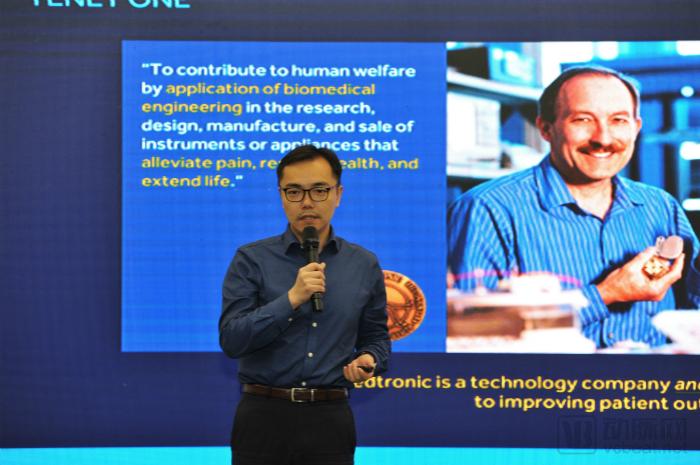
Shi Yonghui, Managing Director of Medtronic China Fund
At the conference, Shi Yonghui, Managing Director of the Medtronic China Fund, stated, “China’s current medical technology landscape is a fertile ground for innovation. The Medtronic China Fund was established to leverage Medtronic’s market insights and professional expertise in medical technology to identify and support innovative projects with clinical and commercial potential, thereby meeting local healthcare needs through accelerated technology translation. Medical robotics and artificial intelligence are key directions in the advancement of medical technology. We look forward to discovering outstanding projects that combine technological leadership with clinical translation value through this competition co-hosted with Baidu Ventures.”
Biomedical technology has long been a key focus of BV Baidu Ventures’ in-depth investment strategy. From AI-driven drug discovery to next-generation surgical robots, and from single-cell sequencing to implantable sensors, BV has visited countless laboratories across China and the United States since its establishment two years ago. The firm has invested in more than 30 cutting-edge biomedical companies and is pleased to have witnessed their rapid growth.

Ren Bobing, Vice President of BV Investment
Ren Bobing, Vice President of BV Investment, stated, “We believe that medical robots are not merely devices, but new business systems in the AI era. Although there are some large companies in certain directions, we believe that with high-granularity or multi-data-axis perception, along with stronger computing and cognitive capabilities in the AI era, the device forms and business models of medical robots will undergo significant changes. We hope to identify innovative solutions with imagination and technical strength through this competition, and more importantly, to find the teams behind these solutions who will transform the future of healthcare, accelerate the development of an entrepreneurial ecosystem for medical robotics, promote cross-disciplinary integration and resource aggregation in this emerging field, and provide support to entrepreneurs in this sector.”
In subsequent guiding documents such as “Made in China 2025,” the State Council has proposed prioritizing the development of high-performance diagnostic and therapeutic equipment, including medical robots, and actively encouraging innovation in domestic medical devices. We anticipate that surgical and rehabilitation robots will become a key national focus over the next five years. To this end, national ministries and local governments have issued policy guidance on establishing testing and application platforms for medical robots, deploying key Industry 4.0 projects, and setting up demonstration bases and standards for the robotics industry, signaling a clear policy direction.
Against this broad industrial backdrop, the 2019 Medtronic China Fund-Baidu Ventures Medical Robotics Competition was officially launched. The competition was guided by the Minhang District Science and Technology Commission, hosted by the Medtronic China Fund and Baidu Ventures, strategically supported by Shanghai Lingang Pujiang International Science and Technology City, and organized by VCBeat.
About This Competition:
Eligible Participants
Startups, teams, universities, and research institutions engaged in applying artificial intelligence to the medical field, capable of proposing innovative solutions with breakthrough creativity to better address challenges in healthcare scenarios. Business areas include, but are not limited to: surgical robots (ophthalmology, orthopedics, otology, etc.), rehabilitation robots, and advanced sensors. Application directions include, but are not limited to: early risk warning, preoperative planning, flexible intraoperative execution, medication management and postoperative monitoring, as well as rehabilitation and nursing care. Technical directions include, but are not limited to: cutting-edge scientific technologies such as in vivo sensing technology, delivery systems (navigation, carriers), feedback systems, operational systems, and in vitro monitoring technology.
Competition Topics
The goal of this competition is to discover innovative solutions with breakthrough creativity that leverage technologies such as AI, sensors, robotics, and 3D imaging to better address challenges in healthcare settings. The themes cover surgery, rehabilitation, medical assistance, and related intelligent hardware and software, as detailed below. Submissions may include mature products or innovative design concepts and proposals backed by certain technical reserves. This competition is open to all university teams and startups.
Micro-robots:Centimeter, micrometer, and nanometer scales, used for monitoring, diagnosis, treatment, etc.
Soft Tissue Surgical Robot:Lungs, prostate, heart, stomach, liver and gallbladder, eyes, ears, nose, throat, cardiovascular and cerebrovascular systems, etc.
Hard Tissue Surgical Robot:Knee joint, spine, craniocerebral region, etc.
Surgical Assistance Technologies and Equipment:Preoperative Planning, Intraoperative Guidance, Intelligent Assistive Devices, etc.
Rehabilitation Robots/Intelligent Postoperative Rehabilitation:Medical training, daily life assistance, surgical repair, medication regimens, etc.
Medical Assistance Robots:Robotic Video Medical Systems, Patient Navigation Guides, Hospital Logistics and Transport, Training, Medication Dispensing, etc.
Other Software/Devices:Feedback systems (mechanical, visual, etc.), in vitro monitoring technologies (wireless sensing, wearable sensing), control and imaging systems, AI analysis systems, AR/VR, intraoperative data collection and analysis technologies, etc.
Participant Benefits
1. Projects that reach the finals and secure the top three positions will receive: direct entry to the Grand Finale of the Medical Track of the 2019 Global AI Entrepreneurship and Innovation Competition, hosted by Baidu Ventures (BV), where they will compete against global medical robotics solutions and have the opportunity to win substantial cash prizes.
2. Finalist projects are expected to receive:
Investment Opportunities with BV Baidu Ventures and the Medtronic China Fund;
Medtronic Medical Innovation Accelerator Priority Incubation Opportunities;
Opportunities for Collaboration and Liaison with Medtronic China’s Core Business Divisions.
3. Enterprises or projects advancing to the semi-finals are poised to be included in the watchlist for the “Future Healthcare 100” ranking. VCBeat will closely monitor developments in their team composition, product evolution, market expansion, and financing progress. Outstanding projects may earn a spot on the “Future Healthcare 100” list.
Competition Rules
Preliminary Round:An online screening process will be adopted, whereby participating enterprises or teams submit their business plans. The Organizing Committee will review the project materials; those passing the review will advance to the preliminary round, receive the competition prompts, and submit their solutions. The top 30 projects will qualify for the semi-final round. The list of semi-finalists and the results will be announced on the event’s official website on May 18, with the registration deadline being before this date.
Semifinal Stage:Two competition zones, Beijing and Shanghai, have been established, with evaluations conducted through offline, closed-door interviews. Each project will undergo a 20-minute interview. The jury panel will score the projects on a 100-point scale based on their presentation performance during the interviews. The top 10 projects from the combined rankings of both zones will advance to the finals.
Final Round: The primary evaluation format is offline roadshows, with each project allocated 10 minutes for presentation and 5 minutes for Q&A, totaling 15 minutes. Presentations should focus on the solution’s entry perspective, approach, scope of service, service capabilities, technologies employed, resource reserves, feasibility, and team introduction. Judges will score projects on-site based on their innovative value, application prospects, and commercial value. The top three projects will be selected to advance to the Grand Finals of the China Healthcare Track of the 2019 Global AI Innovation and Entrepreneurship Competition. The remaining seven projects will receive Excellence Awards.
ClickLink/Scan the QR code to register or obtain more event information:

About BV Baidu Ventures
BV is an independent venture capital firm initiated by Baidu and managed by a professional team, with investors including Baidu and other leading industrial and financial institutions. BV currently manages three U.S. dollar and RMB funds totaling $500 million, operating simultaneously in Beijing and San Francisco, and is committed to becoming a world-class VC in the AI era.
BV is investing to build a more efficient, intelligent world: enabling finer-grained perception, more precise decision-making, reduced labor costs, and improved efficiency models. BV has invested in over 100 AI companies—spanning from chips and sensors to human data acquisition and space-based observation networks, and from smart industry to smart cities—backing both the foundational technologies underlying AI and the various industry transformations driven by AI. In the frontier field of medical biotechnology, BV has currently invested in nearly 20 companies, covering areas such as gene editing, AI-driven drug discovery, single-cell sequencing, and innovative health insurance.
About the Medtronic China Foundation
In 2016, the Medtronic China Fund was established in Suzhou, dedicated to investing in early-stage domestic medical technology innovation enterprises in China as well as overseas innovative technologies that meet the needs of the Chinese market. The fund aims to accelerate the translation and implementation of innovative technologies, providing innovative solutions to address pressing unmet medical needs in the local market.
Founded in Minnesota, USA, in 1949, Medtronic is currently the world’s leading medical technology company. Its products and therapies cover more than 70 disease areas, with operations in over 150 countries worldwide. In fiscal year 2018, Medtronic reported revenue of nearly $30 billion. Dedicated to collaborative innovation, Medtronic focuses on helping patients alleviate pain, restore health, and extend life. Every second, more than two patients around the globe benefit from Medtronic’s medical technologies or therapies.
In 1989, Medtronic established its first office in China. Currently, the company maintains offices in 14 Chinese cities, with one R&D center, one medical innovation center, four major production bases, and a workforce of over 5,000 employees. The China R&D Center, established in 2012, houses 20 R&D laboratories and nearly 300 employees, making it Medtronic’s largest R&D center globally outside the United States.
In March 2019, the Medtronic Medical Innovation Accelerator was officially launched in Shanghai, dedicated to empowering early-stage medical technology startups with clinical and market potential, and facilitating the rapid translation of their technological achievements into valuable medical products and services. Leveraging the platform’s investment, incubation, and acceleration capabilities, Medtronic has further refined its medical technology innovation value chain in China.