

Seizing Opportunities in a RMB 76 Billion Market: 'Special Report on Third-Party Sterile Processing Centers' Released in Shanghai
On April 16, 2019, the VB100 Launch Day event, hosted by VCBeat, was held at the Lingang Pujiang Technology Plaza in Shanghai. At the conference, VCBeat Eggshell Research Institute prominently released the “Special Report on Third-Party Sterile Supply Centers.”
At the event, Xu Jing, General Manager of Julikang, took the stage to deliver a speech as a key participant and promoter in the industry. Founded in 2010, Julikang is a leading third-party sterile supply service provider in China. It has established operations in seven cities, with eight operational centers currently serving over 200 hospitals. The company helps hospitals reduce the operating costs of their sterile supply departments by 20–30%, and achieves a 100% annual contract renewal rate, becoming the first third-party sterile supply center to achieve nationwide chain operations in China.
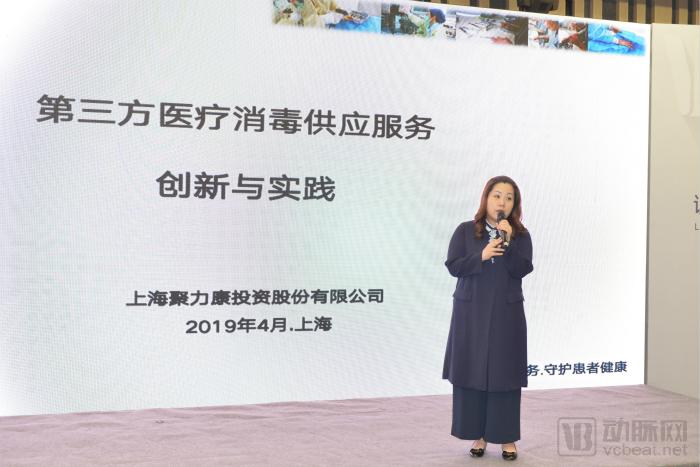
Xu Jing, General Manager of Julikang
Julikang has established a comprehensive management and control system through six key pillars: standardized layout, professional equipment, scientific training, quality control systems, intelligent processes, and end-to-end monitoring. This approach enhances operational efficiency, ensures the quality and safety of disinfection and sterilization services, and builds a strong corporate brand.
Xu Jing provided an interpretation covering the definition of third-party medical sterilization centers under the new policy, the new business and service models under the new standards, and the implementation status of related projects. The “Special Report on Third-Party Sterile Supply Centers” discusses the macro-industrial environment, market demand, market supply, and case studies of typical enterprises. Written from the perspective of an independent observer, the report aims to clear up industry ambiguities and provide reference and insights for entrepreneurs in formulating strategies and for investors in making investment decisions.
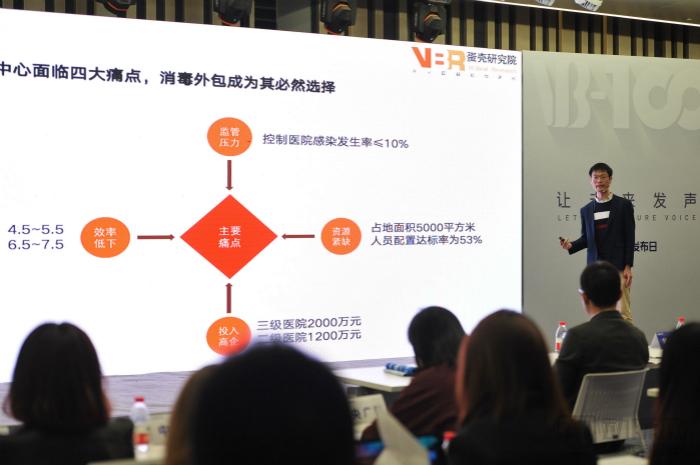
Shi Anjie, Researcher at VCBeat
China’s third-party sterile supply services started relatively late and are still in a growth phase. The national government has issued relevant policies explicitly supporting the development of the third-party sterile supply services market, thereby creating a favorable macro-policy environment for enterprises. Coupled with the rising demand for outsourced hospital sterilization services, the market is now presented with significant opportunities for growth.
In terms of domestic demand for disinfection and sterilization, according to data published by the global growth consulting firm Frost & Sullivan, the market size of third-party sterile supply centers in China has achieved a compound annual growth rate (CAGR) of 70.2% over the past six years, increasing from RMB 1.44 billion in 2013 to RMB 17.47 billion in 2018. This is primarily because China’s third-party sterile supply center sector started relatively late with a low base; the gradual liberalization of policies has promoted the development of third-party medical disinfection service enterprises, thereby yielding a high CAGR.
Frost & Sullivan projects that the market size of third-party sterile supply centers will continue to experience rapid growth in the coming years, potentially reaching RMB 76 billion by 2020. Driven by emerging opportunities and market demand, these centers are expected to gradually assume responsibility for over 70% of the sterilization and supply of medical devices. This thematic report primarily focuses on the following core insights:
1. The industry has moved beyond its initial phase and is currently in the growth stage, representing a golden period for industrial development;
2. Hospitals face four major pain points: regulatory pressure, resource scarcity, high costs, and inefficiency;
3. North America dominates the market, while the Asia-Pacific region holds the greatest growth potential;
4. The market size of third-party sterile supply centers in China is expected to reach RMB 76 billion in 2022;
5. Five types of enterprise entities—infection control equipment manufacturers, chain third-party centers, supply chain platform providers, pharmaceutical distributors, and large state-owned pharmaceutical enterprises—are positioning themselves in the third-party sterile supply center market;
6. Third-party sterile supply centers possess advantages in management efficiency, operational costs, service radius, and scalable expansion, making them the most promising business model for medical sterilization services.
Four Types of Institutions Drive Market Demand Growth
The demand for third-party sterile supply services originates from four types of medical institutions: hospitals, dental clinics, medical aesthetics institutions, and community health centers.
Hospitals: As of the end of 2017, there were a total of 31,056 hospitals in China. In major departments such as operating rooms, dental clinics, ophthalmology departments, gynecology departments, treatment rooms, intensive care units (ICUs), interventional radiology suites, and endoscopy centers, a large number of surgical instruments, diagnostic and therapeutic devices, and equipment are used. Most of these items are reusable instruments that require rigorous cleaning, disinfection, and sterilization after each use.
Dental Outpatient Clinics: In 2017, there were 89,000 dental outpatient clinics in China. The oral cavity is the most susceptible entry point for bacterial introduction. Currently, the specialty of dental implantology is developing rapidly, imposing stringent requirements on sterile supplies. Therefore, sterilization of dental instruments must be given high priority. Instruments requiring cleaning, disinfection, and sterilization in dental departments include endodontic instruments, dental handpieces, extraction instruments, and others.
Medical Aesthetic Institutions: In 2017, the number of medical aesthetic institutions in China exceeded 9,000, with an average annual growth rate of over 20%. These institutions primarily utilize instruments for plastic surgery, including microsurgical instruments, needle holders, retractors, suction devices, emulsifiers, cannula brushes, and more.
Community Health Centers: According to data released by the National Health Commission, the number of community health centers in China reached 35,000 in 2018, basically covering major residential areas, and disinfection services at these centers have become one of the sources of demand. On March 15, 2019, the National Health Commission issued a document stating that 20 provinces would pilot the upgrading of community hospitals, allowing them to perform surgeries below Level 3, with department setup and medical equipment configuration being key focuses.
95% of the demand for third-party sterile supply services stems from hospitals outsourcing their sterilization processes. As previously mentioned, hospitals establishing in-house sterile supply centers face four major pain points: regulatory pressure, resource scarcity, high costs, and low efficiency. According to publicly available market data, the fixed asset investment for a sterile supply center at a tertiary hospital is approximately RMB 20 million, while that at a secondary hospital is around RMB 12 million. Based on the number of newly established hospitals in China in 2017, the fixed asset investment for building new sterile supply centers in secondary and tertiary hospitals reached RMB 7.9 billion, excluding the fixed asset investments required for renovating or expanding existing sterile supply centers in current hospitals.
Operating room instruments from hospitals constitute the primary source of items for sterilization at third-party sterile supply centers. According to publicly available data, the top 20 hospitals in 2017 performed an average of 104,000 surgeries annually, with hospital surgical volumes showing a continuous upward trend.
Therefore, whether viewed from the perspective of global market share distribution or the growth rate of domestic demand, third-party sterile supply centers hold significant market potential, with hospitals emerging as the most critical customer base. Moreover, third-party sterile supply centers currently account for less than 1% of the total medical sterile supply services market.
Analysis of Business Models
Based on differences in business models, domestic sterile supply centers can be categorized into hospital-owned sterile supply centers, hospital-enterprise joint venture sterile supply centers, and third-party sterile supply centers. These entities differ in various aspects, including investment structure, leading party, hospital reputation, equipment sourcing, staffing strategies, and service pricing.
Hospital-Built Sterile Supply Center
Hospital-Self-Built Sterile Supply Centers refer to sterile supply centers established by regional benchmark hospitals under the guidance of health authorities, providing sterilization services for themselves and their subordinate medical institutions. Benchmark hospitals can play a leading role throughout the process from construction to management and operation. By signing contracts with surrounding hospitals, they can provide services to contracted hospitals while meeting their own needs for disinfection and sterilization of medical supplies. Examples include the Sterile Supply Center of West China Hospital, the Sterile Supply Center of Shenzhen Luohu District People's Hospital, the Sterile Supply Center of Wujiang Shengze Hospital, and the Sterile Supply Center of Liyang City People's Hospital. Benchmark hospitals are typically regional Grade A tertiary general hospitals, which can effectively support the management and operation of sterile supply centers in terms of technology, talent, and funding.
The Liyang Model in Jiangsu Province: In response to the call from local government authorities and under the guidance of relevant policy documents, the People’s Hospital of Liyang City, Jiangsu Province, expanded its Sterile Supply Department (SSD) to establish it as the Regional Sterile Supply Center for Liyang City, providing sterilization services to surrounding medical institutions. The funding for the expansion was primarily sourced from the hospital’s own funds and matching fiscal appropriations.
Hospital-built Sterile Supply Departments (SSDs) primarily rely on fiscal investment, with hospitals responsible for construction, operation, and equipment procurement. Service pricing is formulated in accordance with local price regulations, and the hospital’s brand serves as the brand of the SSD. By utilizing owned land for construction, these facilities require relatively less capital and have shorter project cycles. They serve the host institution and nearby hospitals, benefiting from short logistics distances; however, this also limits their service radius. Furthermore, the adoption of administrative management approaches constrains operational efficiency, increases operating costs, and hinders market-oriented, large-scale expansion.
Hospital-Enterprise Jointly Built Sterile Supply Center
A Sterile Supply Center co-established by a hospital and an enterprise refers to a collaborative model in which the hospital provides the premises, while the enterprise is responsible for investment and daily operations. This model is generally adopted by large, benchmark-setting Grade A tertiary hospitals in various regions. Enterprises are willing to collaborate with such hospitals because the hospitals’ local influence can help attract other hospitals as clients for the sterile supply center, while also strengthening the partnership with the host hospital and laying the foundation for expanding other business lines. In addition, the enterprise incurs no land acquisition costs, being responsible only for facility construction, equipment investment, and participation in management. For instance, Sinopharm Jienuo has attempted to co-build sterile supply centers with partner hospitals to compete for market share.
Under this model, the hospital provides the premises while the enterprise is responsible for investment. This allows the hospital to save on construction expenses and equipment procurement costs, while the enterprise can reduce land acquisition costs. The daily management and operations of the center are determined through consultation between the hospital and the enterprise. Service pricing is based on the hospital’s relevant standards, with the enterprise retaining a certain degree of autonomy in setting prices. As this is a collaborative project jointly developed by the hospital and the enterprise, it requires moderate capital investment and has a moderate construction timeline. It primarily serves the host hospital and nearby facilities, resulting in short logistics distances but a limited service scope. The hospital also participates in daily operations, which subjects it to administrative pressures, thereby affecting management efficiency and operational costs to some extent.
Third-Party Sterile Supply Center
Third-party sterile supply centers refer to facilities that are not reliant on hospital premises; instead, enterprises independently select and acquire land, assuming full responsibility for construction and operations to provide services to medical institutions. This constitutes a purely market-driven activity, wherein enterprises choose locations rationally and plan scientifically to establish regional sterile supply centers, aligning with market demand and their own development strategies. Such enterprises bear all investment costs, procure equipment independently, and set pricing for sterilization services at their discretion. Their market competitiveness is determined by their scale of development and brand influence. Julikang is a typical representative of this model.
Although this model requires numerous administrative approvals, involves cumbersome procedures, and entails high investment costs from project planning to implementation, it avoids administrative interference, improves management efficiency, reduces daily operational costs, facilitates scalable expansion and rapid replication of its business and operational models, and extends its service radius.
Currently, the sterilization cost per surgical instrument at tertiary hospitals ranges from RMB 4.5 to 5.5, while at secondary hospitals it is approximately RMB 6.5 to 7.5. Higher-tier hospitals typically operate with relatively saturated capacity and achieve better utilization of equipment and facility resources, thereby reducing the fixed asset depreciation and amortization allocated to each individual instrument.
In contrast, third-party sterile supply centers can reduce the sterilization cost per instrument set to just RMB 3–4, enabling specialized public hospitals at tertiary and secondary levels with high surgical volumes to save 20–30% of their comprehensive operational costs annually. Consequently, an increasing number of hospitals are expected to outsource sterilization services in the future, making third-party sterile supply centers a potentially dominant model.
Analysis of Future Trends in Third-Party Sterile Supply Services
Third-party sterile supply centers are currently in a growth phase, with various enterprises racing to establish their presence. Market participants are leveraging their respective strengths to actively expand within regional markets. Direct project-level competition has not yet emerged, and overlap in service areas remains insignificant. So, in which directions will third-party sterile supply centers evolve in the future? The following three characteristics will define their development trends.
Outsourced Hospital Sterilization Will Gradually Replace In-House Sterilization Centers
Healthcare reform has become a hot topic in recent years, with cost containment emerging as a major challenge for hospitals. As previously mentioned, the management efficiency and operational costs of self-built sterile supply departments (SSDs) have become significant pain points for hospitals. The promulgation of new standards implies greater difficulties in establishing SSDs, which will undoubtedly constitute a substantial cost burden for hospitals.
The development of third-party sterile supply centers effectively addresses the pain points faced by hospitals, reducing construction and operational management costs, thereby allowing these funds to be redirected toward enhancing other medical services. Furthermore, regulatory policies permit hospitals to outsource sterilization services, paving the way for widespread adoption across major hospitals.
A Comparison of Disinfection and Sterilization Costs Across Hospital Tiers: Hospitals Below Tier III Bear Significantly Higher Costs, Leading to a Stronger Willingness to Outsource. According to data published in the China Health Statistics Yearbook, the number of hospitals in China had reached 31,056 by the end of 2017. This vast hospital market has created substantial demand for third-party sterile supply centers. Therefore, enterprises should seize the opportunity presented by the outsourcing of hospital disinfection services, conduct thorough preliminary market research, and fully consider factors such as regional population size, the number of hospitals, and surgical volumes. By strategically selecting optimal locations nationwide for early deployment, companies can position themselves as leaders in regional medical disinfection services.
Standardization, Chain Operation, and Branding Will Become the Distinctive Features of Third-Party Sterile Supply Centers
Standardization encompasses not only the standardization of business processes, but also that of facility construction, equipment procurement, staffing, management and operations, customer service, and other aspects.
Currently, third-party sterile supply centers are primarily regional, standalone projects, plagued by issues such as fragmented investment, extensive rather than intensive management, high costs, and significant staff turnover. As various enterprises gradually increase their investments and establish a nationwide network of facilities, chain operation will become an essential strategic choice. Implementing chain management for sterile supply centers allows for the adoption of unified management protocols and operational systems across all facilities. Furthermore, it facilitates the cross-boundary flow of regional advantageous resources and achieves internal complementary strengths, ultimately helping to reduce management and operational risks while realizing economies of scale.
A brand serves as the external manifestation of a company’s value. Higher brand awareness correlates with greater commercial credibility, facilitating customer trust and recognition, which in turn supports business expansion. In the future, third-party sterile supply centers will strengthen their brand building, cultivate brand influence, provide corporate endorsement, and enhance market competitiveness through this brand power.
Industry Chain Integration May Become the Priority for Enterprises’ Strategic Breakthroughs
As the industry matures and the number of enterprises increases, consolidation across the industrial chain inevitably occurs. Companies acquire advantageous resources through horizontal or vertical integration to enhance their market competitiveness, thereby better expanding their business operations and increasing their market share. STERIS, the largest manufacturer of infection prevention and control equipment in the United States, acquired Synergy, the world’s second-largest outsourced sterilization service provider. This move enabled STERIS to establish an integrated service model spanning R&D, manufacturing, and sales of equipment, as well as sterilization services, engineering planning, and infection prevention and control management, positioning it as the world’s leading comprehensive provider of medical sterilization solutions.
Juli Kang, a leading third-party sterile supply service provider in China, has partnered with medical device manufacturer Xinhua Medical and Haiwang Biology, a leading private regional pharmaceutical distribution enterprise. This collaboration aims to integrate complementary advantages and facilitate Juli Kang’s transformation from a sterilization service provider into a comprehensive operating room collaborative management service provider. Industrial chain integration not only accelerates corporate growth but also promotes the rapid maturation of the industry. By consolidating resources through integration, the market can eliminate laggards and channel resources toward companies with high growth potential, thereby strengthening the strong and weakening the weak.
Driven by factors such as policy support, market demand, and technological innovation, third-party sterile supply centers have entered a favorable period of development. From the perspective of the industry’s overall development stage, this sector is currently in its growth phase. While some companies have recognized early opportunities and established strategic positions ahead of competitors, most are leveraging their respective strengths to actively cultivate regional markets. These enterprises typically operate as standalone projects, with no direct competition arising between them.
Through a comprehensive comparison of business models for sterile supply centers, third-party sterile supply centers demonstrate greater development potential. In the future, standardization, chain operations, and brand building will become the defining characteristics of third-party sterile supply centers. Enterprises should seize industry development opportunities, align with market trends, and strive to become industry leaders through internal enhancement and external integration.