

Philips Connected Care: Driving Value in Healthcare Through Integrated Solutions and Digital Innovation
Over the past three years, Philips has successfully transformed into a customer-centric solutions company. Its innovative offerings—comprising integrated systems, smart devices, software, and services—help customers achieve the “Quadruple Aim”: improving patient experience, enhancing population health, improving the work life of healthcare providers, and reducing healthcare costs.
Building on a deep understanding and fulfillment of stakeholder needs, Philips has reorganized its Connected Care business group, aiming to make the world healthier and more sustainable through innovation and value-creation models. The Connected Care business will seamlessly connect patients, healthcare professionals, and end consumers both inside and outside hospitals, establishing a comprehensive healthcare network. To enable measurable health outcomes, Philips will lead the transition from traditional “workstation” thinking to “workflow”-based solutions.
Philips Connected Care focuses on precision diagnosis and care management in both hospital and home settings. What was the background behind the establishment of its business group? What challenges does it aim to address? What are its flagship solution case studies, and what are its future development goals? Dr. Carla Kriwet, Member of the Executive Committee and Global Leader of the Connected Care Business Group at Royal Philips; Mr. He Guowei, Member of the Executive Committee and CEO of Greater China at Royal Philips; and Mr. Liang Jianqiu, Head of the Connected Care Business Group for Greater China, Head of Group Strategy and Partnerships for Greater China, and Vice President, provided their insights on these matters.
Medical Big Data: How to Achieve Interconnectivity?
Philips develops and delivers intelligent, integrated data management and analytics to provide a comprehensive view of patient conditions, empowering healthcare professionals to make more informed decisions and deliver better care to patients across hospitals, post-acute care settings, and the home.
By 2020, China’s data holdings will account for 20% of the global total. The convergence of massive datasets, government support, capital, technology, and talent has laid a solid foundation for China to achieve leapfrog innovations in AI-driven healthcare and become a global hub for the medical revolution. How can big healthcare data empower industrial upgrading and achieve interoperability? Mr. He Guowei and Ms. Carla provide their insights.
He Guowei:The establishment of medical databases involves two key issues. The first is how to organize data in a standardized manner, and the second is the collection of data outside the hospital setting. Philips’ advantages in these areas include:
First, our monitoring devices can collect a large amount of clinical data that is accurate, continuous, and clinically relevant;
Second, we have a large team of data scientists with clinical backgrounds who design data models to facilitate further analysis and quality control.
Third, we have a robust population health management system. In 2017, Philips acquired VitalHealth, a cloud-based population health management company. This platform offers configurable health programs that facilitate various out-of-hospital management services, enabling seamless coordination among physicians, patients, and care institutions. As a result, we can more effectively collect patient data outside the hospital setting through health management approaches and apply it using appropriate and well-suited models.
The difficulties are also imaginable. This matter will require a considerable amount of time to advance, and it needs the participation of talents from various fields.
Carla:This involves issues regarding the operability and functionality of data across hospitals, as well as interoperability among information systems. This is not unique to China; it is a challenge faced in other countries and regions, including the United States and Europe. That is why we acquired Forcare, a company that integrates readable data from healthcare institutions, functioning similarly to Google’s search engine.
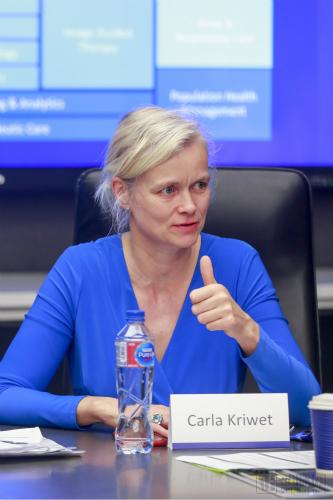
Dr. Carla Kriwet, Member of the Global Executive Committee of Royal Philips and Global Leader of the Connected Care Business Group
We can extract data from various databases at a high level, including in-hospital and out-of-hospital sources, as well as data from pharmacies and radiology departments. The purpose of this approach is to address the limited time available to physicians. By integrating these high-level data into a single system, we aim to present information that clinicians can fully comprehend within a short timeframe, such as one minute. Only data that meets this criterion is truly valuable to clinical practitioners.
From a development principle perspective, we now adopt open interfaces, enabling all our developed products to integrate with devices provided by third-party participants.
Of course, from a privacy perspective, any data involving the medical institution itself requires authorization from the institution concerned. This requirement applies not only at the regulatory level but also at the hospital and individual levels.
Connected Care Business Group: What Challenges Does It Address?
Philips Connected Care practices encompass in-hospital care, precision diagnosis, care management, and home care. These practices integrate comprehensive, intelligent enterprise-level systems, devices, software, and services, highlighted by the following solutions: Philips IntelliSpace Advanced Visualization Center, eICU, interoperability solutions, chronic obstructive pulmonary disease (COPD) management, Philips IntelliSpace Precision Medicine, PerformanceBridge, and population health management.
Philips is dedicated to developing comprehensive solutions for high-prevalence conditions such as heart disease, stroke, cancer, and respiratory diseases. These solutions encompass integrated systems, intelligent devices, software, and services, designed to meet the diverse needs of Chinese customers. This approach aligns closely with the “Healthy China 2030” initiative. Furthermore, Philips has actively responded to the Chinese government’s strategic plans by establishing strategic partnerships, thereby expanding its influence and capturing a larger market share in China. What opportunities and challenges does the Connected Care business face in the Chinese market? Mr. He Guowei, Mr. Liang Jianqiu, and Carla provide their insights.
He Guowei:Currently, trends in China, such as tiered diagnosis and treatment, aim to classify diseases based on their severity, urgency, and the complexity of treatment, with medical institutions at different levels assuming responsibility for treating different conditions. Additionally, China’s aging population is leading to a gradual increase in chronic diseases, which further drives the development of the connected care business group.
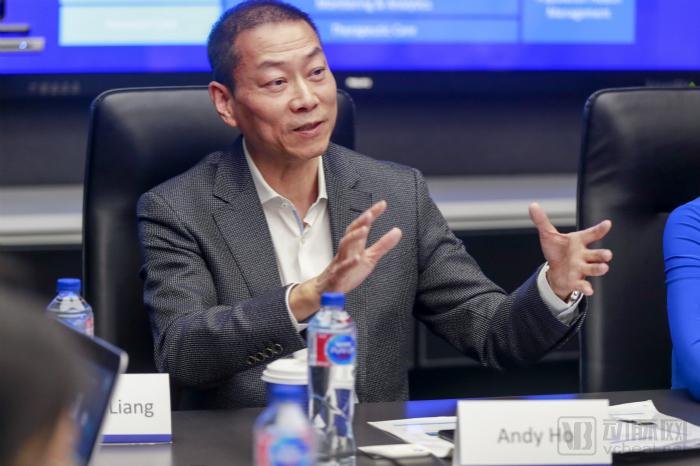
He Guowei, Member of the Global Executive Committee and CEO of Greater China, Royal Philips N.V.
From a governmental perspective, it is not feasible for the government to concentrate all elderly patients in hospitals; they require alternative care settings. Therefore, the overarching trend essentially involves connected care. What Philips is currently doing will have a significant impact on the health of Chinese people in the future.
Liang Jianqiu:Successfully extending connected care beyond hospital walls is by no means a mere technical issue; it also involves regulatory knowledge. The implementation of connected care hinges on the maturity of relevant laws and regulations, which is why many regions are adopting an approach of pilot programs and gradual exploration.
China's advantage lies in its large population base, and the prospects for this industry are enormous, especially as China's entire healthcare sector is currently undergoing a period of adjustment.
In many countries, a significant portion of nursing care is delivered at home. From the perspective of Philips’ Connected Care business alone, a substantial share of our overseas revenue comes from remote ICU services for out-of-hospital care. This segment has not yet been launched in China, primarily due to the absence of relevant industry regulations. Therefore, the current strategy should be to initiate pilot programs on a trial basis. Nevertheless, we remain highly optimistic about the future prospects of Connected Care.
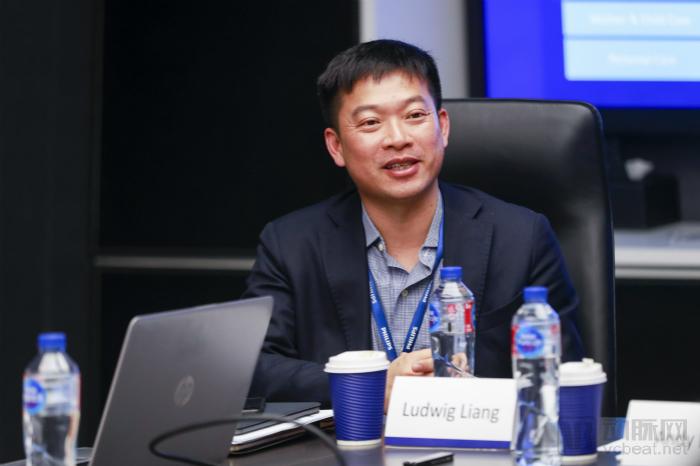 Liang Jianqiu, Vice President, Head of Greater China for the Connected Care Business Group, and Head of Greater China for the Group Strategy and Partnerships Department
Based on the rapid development of digitalization in China, we believe that the country possesses the necessary conditions for developing connected care. The final hurdle lies in policies related to public medical insurance and commercial health insurance, which are currently in a phase of mutual exploration and promotion within China.
Carla:The “connected care” we refer to actually has “fourfold objectives”: improving patient experience, enhancing health outcomes, improving the work-life balance of healthcare professionals, and reducing healthcare costs. Where should the focus of care ultimately lie? We should no longer dwell on the distinction between services delivered within hospitals versus those provided outside hospital settings; instead, our ultimate focus should be on achieving favorable treatment outcomes.
Leading countries are already implementing this approach. They begin by establishing a timeframe for all disease categories to assess whether the new treatment methods, following adjustments, can achieve improvements across various dimensions of system goals relative to the original baseline. The advantage of this practice is that it provides greater impetus to the entire healthcare and care delivery system, encouraging our medical system to consider how to prevent diseases, as early intervention and prevention can reduce healthcare costs.
It reflects changes in the incentives or stimuli for the entire healthcare system. Therefore, if you continue to adhere to the traditional mindset, home care and out-of-hospital care will remain persistent challenges.
How Is Technology Reshaping the Healthcare System?
Philips has clearly identified AI in healthcare as a key direction for innovation, leveraging AI to transform vast amounts of data into actionable insights and deliver seamless care throughout the entire health journey. AI in healthcare holds significant potential in four areas: 1) optimizing diagnostic and therapeutic outcomes while improving operational efficiency; 2) supporting high-quality, comprehensive clinical decision-making; 3) empowering patients and consumers to proactively manage their personal health; and 4) enabling population health management.
China is actively adopting digital technologies to reshape its healthcare system. Not only is the Chinese government advocating for the use of the internet, big data, and AI to redefine the future of healthcare, but the general public in China is also embracing the digital technologies transforming the healthcare system with greater openness. How does connected care create value for the healthcare system through technology-driven approaches? Ms. Carla, Mr. Liang Jianqiu, and Mr. He Guowei provide their insights.
Carla:From an industry perspective, the escalating costs of the entire healthcare system have become unsustainable. Factors such as rapid population growth, aging demographics, and the high prevalence of chronic diseases have increased the healthcare burden, yet individuals’ ability to pay has not improved correspondingly, creating a significant gap. The most effective way to narrow this gap is to leverage technology to drive truly meaningful innovations. Consequently, the global healthcare sector faces immense challenges in addressing this issue, with the United States, Europe, and China all moving toward similar strategic adjustments.
Technology can alleviate the burden on physicians, allowing them more time to sit down with patients. Currently, many hospital physicians are occupied with repetitive, administrative tasks. Therefore, we aim to free up their high-value time for patient care. Our vision is to present all critical information to physicians at a glance, including patient medical histories and big data-driven recommendations for optimal treatment plans. This approach saves physicians’ time, enabling them to devote themselves to more creative and impactful work.
Next, I will present a case study illustrating the innovation of our eICU. The eICU architecture features a hub-and-spoke model, where the hubs may consist of university medical centers or affiliated hospitals located in cities such as Shanghai, Beijing, or even New Delhi. These hubs are connected via telemedicine links to smaller hospitals and even nursing stations, which do not necessarily need to be full-fledged hospitals. Through video connectivity, physicians at the university center can view medical images and access real-time data, thereby enabling remote training and guidance for local hospital physicians.
Such an approach aims to achieve interconnected care. First, it improves the efficiency of medical resource allocation, eliminating the need for patients to travel to large central hospitals in major cities for certain conditions. Second, it reduces both medical and equipment costs. Third, it enhances medical efficiency and increases job satisfaction among healthcare professionals.
All these technologies, including AI, are not pursued for technology’s sake. Their ultimate goal is to optimize the allocation of time for doctors and nursing staff, freeing up physicians’ time so they can focus more on patients, while simultaneously leveraging technology and connected care to better mobilize overall healthcare resources.
Liang Jianqiu:Our technology is designed to alleviate the burden on caregivers. The primary application scenario for AI is to replace repetitive tasks, while also assisting healthcare professionals in making better decisions. From the perspective of connected care, AI can leverage big data to facilitate early screening for many chronic diseases in out-of-hospital settings.
For in-hospital settings, such as intensive care units (ICUs), nurses and caregivers bear a heavy workload. They must closely monitor patients’ clinical progression and remain vigilant for warning signs. Philips’ monitoring devices offer automated alarm capabilities, which can transform nursing workflows and alleviate their burden. Thus, AI demonstrates significant applicability across diverse healthcare scenarios.
He Guowei:Here are a few specific, practical use cases: Philips offers solutions capable of predicting the status of elderly individuals living alone, such as estimating the probability of a fall within the next few hours. These predictive capabilities are powered by AI. Historically demonstrated across several domains, the system achieves relatively accurate predictions after collecting and analyzing substantial statistical data. Furthermore, for patients suffering from chronic sleep disorders, we collect their data and provide corresponding analytical insights and recommendations.
It is worth mentioning the “Shenfei Yun” initiative, which is essentially a platform for computer-aided intelligent diagnosis and AI-driven medical big data applications. With advanced image processing capabilities, it was originally deployed exclusively in hospital radiology departments but has now been extended to a broader range of clinicians and remote healthcare scenarios, such as medical consortiums.
In fact, we have adopted a phased approach. Initially, we leveraged technological upgrades to enable the delivery of traditional in-hospital services via online platforms. Following this, we began piloting these solutions across various hospitals. Beyond their conventional use in radiology and imaging departments, we made significant strides last year by deploying specific applications in clinical departments. This yielded valuable insights for us, including effective communication strategies with physicians, identifying the tools they genuinely prefer, and establishing what we term a “pay-per-use” workflow within hospitals, as well as learning how to streamline these processes. We gained substantial experience last year. This year, provided that the technology and operational environment are ready, we aim to upgrade our business model and scale up our promotion efforts.
Future Prospects
Philips works closely with clinical partners worldwide and, to date, has participated in more than 4,000 clinical studies. By actively engaging and collaborating with experts across various regions, Philips gains deep insights into the needs of diverse patient populations. This approach sets Philips apart from competitors, particularly startups that develop AI tools using limited datasets.
Leading healthcare systems worldwide share a common trait: they leverage integrated solutions to deliver precise diagnosis and treatment, thereby achieving multiple objectives—enhancing patient experience and health outcomes, improving the work-life balance of healthcare professionals, and reducing medical costs. What is Philips’ promising vision for connected care? Ms. Carla and Mr. He Guowei are both filled with anticipation for the future.
Carla:From Philips’ perspective, we do not view our entire connected care business as individual products from separate departments, but rather as an integrated capability. If you examine our connected care offerings through the lens of capabilities, our strategic logic becomes clear.
To cite a few examples, regarding consumer insights: as current data increasingly centers on individualized patient care, our Healthy Living business has developed a profound understanding of the entire consumer demographic. We view each consumer holistically—whether children, the elderly, or oncology patients—and look beyond the patients themselves to assess the needs of their surrounding family units. Therefore, our recommendation is to serve consumers through a deep and comprehensive understanding of their needs.
Our key insight lies in medical informatics: the architecture of medical information systems must be built on broad platforms that are fully integrated and capable of supporting a wide variety of patient types, thereby enabling the creation of truly comprehensive healthcare solutions.
The third aspect involves workable solutions and strategic approaches. By focusing on every stage of the diagnostic and treatment journey for patients with different conditions—whether within or outside the hospital, and across departments such as diagnostics, radiology, or the emergency room—we can horizontally integrate patient data to enhance overall efficiency.
He Guowei:In fact, we established the Interconnected Care Business Group in China to jointly seek partners, and I hope to achieve significant growth over the next few years.
Philips was once perceived as a company solely focused on medical devices, meaning our colleagues were more accustomed to selling large and medium-sized imaging equipment. Now, we leverage new products and technologies to support the development of platforms and out-of-hospital industries. Those who start earlier will have greater opportunities to win in niche markets.
I am highly confident about the future of the connected care market. From 2016 to the present, three core beliefs have remained critically important.
First and foremost, our primary responsibility is to bring the world’s leading technological products to China. For instance, with our Piix product line, we showcased the IQON CT at the China International Import Expo late last year. If Philips China has achieved notable success in recent years, it is partly attributable to having a more comprehensive product portfolio than before.
Second, our team has introduced foreign technologies to China over the past period. However, many clinical pathways and data interfaces proved incompatible. Consequently, we dedicated significant time and effort to transforming these fragmented approaches into comprehensive solutions for broader adoption, which has further deepened our understanding and insights into the overall solution.
Third, I also hope that over the past three years, you have witnessed Philips’ transformation from a pure product company. Today, many customers engage with Philips through integrated solutions, and our partnerships have become more stable and long-term.