

Hainan Stomatological Hospital Files IPO Prospectus After Over Two Decades of Regional Brand Building
The dental industry is a highly marketized and mature vertical segment within the healthcare sector, which has achieved rapid and stable development in recent years under the guidance of multiple national policies.
According to the "Report on Market Prospects and Investment Strategic Planning for China's Oral Healthcare Industry," the market size of oral healthcare services in China reached RMB 88 billion in 2017, with a compound annual growth rate (CAGR) of approximately 18% from 2008 to 2017. Based on a conservative CAGR estimate of 15%, the market size of oral healthcare services in China is projected to exceed RMB 100 billion by 2020.
Public data from the American Dental Association (ADA) shows that the U.S. oral care services industry is valued at $124.4 billion, with per capita oral health expenditure amounting to $384. By comparison, China’s oral healthcare industry is approximately one-seventh the size of that in the United States, and per capita oral health spending in China is merely 3% of the U.S. level. Given China’s vast population base and steadily growing economy, the oral healthcare sector still holds substantial untapped potential.
Faced with such a vast market, industry practitioners are continuously exploring new business models. This has opened up greater possibilities for sector development, with one significant trend being the shift of healthcare service delivery from large, comprehensive medical institutions to specialized, regionalized healthcare companies. Specialty healthcare firms that focus deeply on specific geographic areas are also garnering increasing attention from both the government and investors.
Of course, the deeper one delves into a field, the more there is a need for systematic and specialized operational models. When building a regional brand, how can an effective service system be established, and what kind of operational mindset is required? To address these questions, VCBeat conducted an exclusive interview with Hainan Stomatological Hospital, a dental healthcare company that has been deeply rooted in the local market for over two decades.
Hainan Stomatological Hospital, established in 1994, is a leading dental institution in Hainan Province. It boasts a comprehensive system of specialized dental disciplines and has developed a number of high-quality, distinctive key specialties. For four consecutive years, it has ranked first in the nominations for the Fudan University Annual China Hospital Regional (South China) Specialty Reputation Ranking (Stomatology). The hospital operates as a corporate, for-profit medical institution.
As a vice-presidential unit of the Hainan Provincial Stomatological Association, Hainan Stomatological Hospital holds 15 expert seats within the association and has signed a strategic cooperation agreement with Wuhan University Stomatological Hospital, serving as a member of the Stomatological Medical Consortium in Central and Southern China. Currently, Hainan Stomatological Hospital has initially established a grid-based stomatological healthcare system centered on its tertiary-level specialized hospital, with peripheral coverage provided by three secondary-level branch hospitals in Qionghai, Danzhou, and Wenchang, along with five dental outpatient clinics. Its diagnostic and treatment services cover the northern Hainan region, having served over 1.5 million patients cumulatively over the past 25 years.
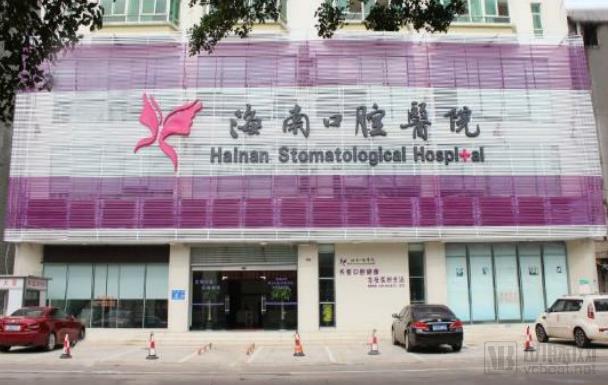
Yuhe Road Flagship Store (Image source: Provided by the interviewee)
“The competitive landscape of private dental services is gradually bifurcating into two directions: national chain expansion and deep regional penetration,” Che Daochuang, Chairman and General Manager of Hainan Stomatological Hospital, told VCBeat. “Although China’s dental industry started relatively early, constrained by the growth rate of dentist resources and the pace at which public awareness of oral health has improved, the overall chain-based expansion of the dental market began late and has developed rather slowly.”
Unlike fast-food chains such as McDonald’s and KFC, dental healthcare institutions have a relatively limited service radius. Consequently, for brands operating across multiple regions, maintaining consistent quality control of medical services at each clinic becomes highly challenging. Given the unique characteristics of the industry, Che Daochuang believes that focusing on deep penetration in specific local markets and building regional brands represents a viable strategy. This approach not only helps ensure the quality of medical services but also enhances brand recognition.
Certainly, deep regional cultivation demands a highly favorable market environment in the enterprise’s location. According to Che Daochuang, Hainan Stomatological Hospital, which has been developing in Hainan Province for over two decades, possesses background advantages in three aspects:
First, Hainan Province has sustained steady growth in both population and economy. According to the Hainan Statistical Yearbook 2018, the permanent resident population of Hainan Province was approximately 9.25 million in 2017, with the average natural growth rate in recent years remaining at 8.7‰. The permanent resident population is projected to reach approximately 9.96 million by 2020 and around 12.48 million by 2030. Economically, Hainan’s GDP for the first three quarters of 2018 amounted to approximately RMB 354.692 billion, representing a year-on-year increase of 5.4%. Over the past 30 years, the province’s overall GDP has grown more than 20-fold.
Second, the private dental services market in Hainan Province is fragmented and lacks standardization, presenting opportunities for regional consolidation in the future. “The private dental services market in Hainan is relatively disordered, still dominated by individual or standalone clinics that lack standardized services and chain-based operations. Moreover, most chain-operated clinics consist of only one or two locations, resulting in weak competitiveness. Therefore, there is significant room for the development of dental hospitals in Hainan.”
Third, the dental services sector is showing a trend toward tiered development, with regional brands demonstrating significant advantages. Data compiled by Probe Capital (as shown in the figure) indicates that China’s dental services industry has entered a phase of consolidation and mergers and acquisitions, wherein brands deeply rooted in specific regions outperform cross-regional brands in terms of revenue quality.
Clearly, Hainan Stomatological Hospital had already positioned itself at the forefront before the major trend emerged.
As Jack Ma once said, “When the wind dies down, it’s the pigs that fall.” A company without core competitive advantages will inevitably fail to withstand market tests.
Since its establishment in 1994, Hainan Stomatological Hospital has made a positive impact on the stomatological industry in Hainan Province with every step of its development. Public records show that the hospital has repeatedly introduced advanced dental diagnostic and treatment technologies to Hainan Province: In 1995, it pioneered the introduction of dental implant technology, which was just emerging in China at the time; in 2011, it performed the first cases in the province involving microscopic root canal therapy, warm vertical compaction of gutta-percha, and rubber dam isolation; in 2012, it initiated the first invisible orthodontic treatment and clear aligner therapy in the province; and in 2015, it carried out the first 3D-milled denture fabrication in Hainan Province. Over more than two decades of focusing on clinical stomatological techniques and diagnostic and treatment services, Hainan Stomatological Hospital has cumulatively served approximately one million patients.
A key factor behind these achievements is that Hainan Stomatological Hospital has assembled a team of renowned domestic elites in the field of stomatology.
The entire core team of Hainan Stomatological Hospital possesses extensive industry resources and management experience:
Che Daochuang, Chairman and General Manager of the company, serves as Vice President of the Hainan Provincial Stomatological Association. With over two decades of experience in oral surgery and prosthodontics, he is the first person to introduce dental implant technology to Hainan Province.
Dr. Niu Huiyan, the Dean, is an Executive Director of the Hainan Provincial Stomatological Association. She previously served as a Chief Physician and Associate Professor at the Affiliated Hospital of Shanghai Tongji Medical University.
Honorary Director Liao Tian’an is a Standing Committee Member of the Chinese Stomatological Association and President of the Hainan Stomatological Association;
Niu Zhongying, Deputy Dean, is a doctoral and postdoctoral supervisor, Fellow of the International College of Dentists (ICD), Standing Committee Member of the Chinese Stomatological Association, recipient of the State Council Special Allowance, and Chief Expert for National Community Oral Health Science Communication.
Vice President Zhang Xianhuai previously served as Chief of the Publicity Section of the Directly Affiliated Branch of the General Logistics Department of the Chinese People's Liberation Army (PLA), and as Chief of the Publicity Section, Political Coordinator, and Director of the News Center at the First Affiliated Hospital of the PLA General Hospital (304 Hospital). He was honored as an “Outstanding News Figure in Various Industries for Practicing the Scientific Outlook on Development.”
Hainan Stomatological Hospital has reformed its talent recruitment and training mechanisms to overcome the bottlenecks of “difficulty in recruiting, utilizing, and retaining staff” commonly faced by private hospitals. By introducing urgently needed talent, making full use of existing personnel, and cultivating future professionals, the hospital is pursuing a path of self-incubation and self-improvement. In addition to regularly organizing internal academic lectures, the hospital has established collaborations with top-tier (Grade A Tertiary) stomatological specialty hospitals in China, such as the School and Hospital of Stomatology at Wuhan University and Peking University School and Hospital of Stomatology. Each year, it systematically selects young doctors and nurses for external advanced study and training.
Currently, the hospital is establishing connections with overseas dental institutions, such as those in Japan, and annually selects outstanding young physicians to study and receive advanced training abroad. Through its internal talent development initiatives, the hospital has independently cultivated 12 attending physicians, two associate chief physicians, and more than ten department directors and deputy directors. Addressing future workforce development, Che Daochuang stated, “In the future, Hainan Stomatological Hospital will consider partnering with other institutions to establish joint educational programs, thereby achieving an integrated ‘medical care, education, and research’ system within the organization to address the shortage of medical talent in Hainan.”
While strengthening its technological infrastructure and talent development, Hainan Stomatological Hospital also places particular emphasis on enhancing the patient care experience.
In traditional dental restoration workflows, most dental clinics outsource denture fabrication, with shipping and processing taking 1–2 weeks, resulting in relatively low clinical efficiency. Furthermore, the quality of outsourced work depends on the skills of individual technicians at the manufacturing facilities, making it difficult to ensure consistent quality.
To address this pain point, Hainan Stomatological Hospital has independently established a digital denture processing center and technical team, encompassing two key aspects: first, the digitization of clinical dental practice, characterized by the extensive use of optical impression systems, intraoral scanners, and digital software for design and nesting; second, the digitization of manufacturing equipment and processes in the laboratory, marked by the widespread application of 3D printing and automated lathes.
Through comprehensive digitalization, Hainan Stomatological Hospital has achieved seamless integration between clinical requirements and dental technicians, minimizing unnecessary adjustments and errors, and reducing the total time for full-mouth dental restoration to as little as one day.
Hainan Stomatological Hospital adheres to a customer-need-oriented approach, with customer satisfaction as its primary goal. The hospital closely monitors and continuously improves patients’ healthcare experience, fosters a company-wide culture of reputation management, and strives to build a loyal customer base. These efforts have earned the hospital a strong social reputation and recognition in the local market. In recent years, the hospital’s annual patient volume has grown steadily at a rate of 30%, reaching nearly 100,000 visits per year. Notably, over 70% of new patients are referred through word-of-mouth recommendations from existing customers.
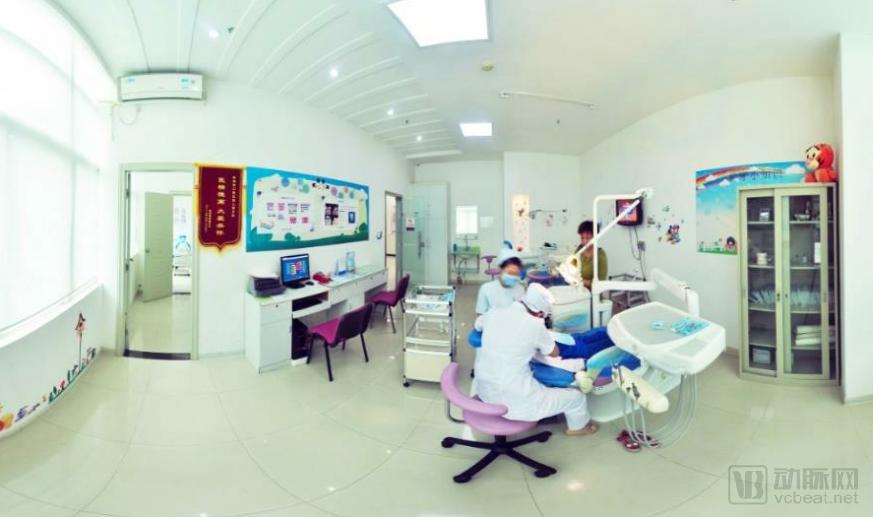
Department Overview (Image source: Provided by the interviewee)
“We believe that with the continuous introduction of national healthcare policies, the dental industry in Hainan Province will continue to improve. This presents an opportunity for Hainan Stomatological Hospital, so we will proceed step by step, focusing on quality and strengthening our internal capabilities, to make the hospital larger, stronger, and better, and to ensure our services are well-delivered and solid.” Che Daochuang expressed confidence when looking toward the future.
Hainan Stomatological Hospital is currently seeking its first round of financing, with Probe Capital serving as the exclusive financial advisor for this round. The proceeds from this financing will be used to supplement capital, construct new outpatient clinics, attract talent, and support daily operations and working capital reserves at Hainan Stomatological Hospital.