

Lifotronic Secures STAR Market IPO Acceptance with 2018 Revenue Exceeding RMB 320 Million
On the updated list of the STAR Market released on April 16, medical device company Shenzhen Lifotronic Technology Co., Ltd. successfully had its listing application accepted.
According to VCBeat (WeChat Official Account: vcbeat), Lifotronic Technology is an R&D-driven medical device company. The company focuses on the development and technological innovation of treatment and rehabilitation solutions and in vitro diagnostic (IVD) product lines. Its current core business involves the R&D, manufacturing, and sales of treatment and rehabilitation products, as well as IVD instruments and supporting reagents.
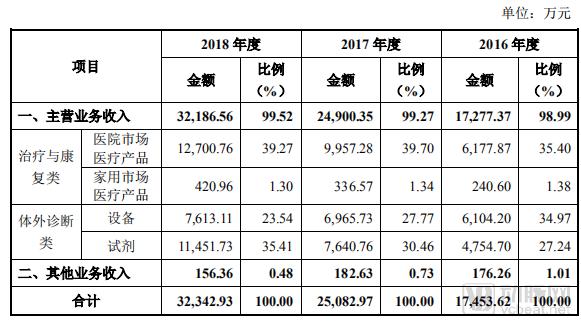
During the reporting period, Lifotronic Technology’s main business revenue was RMB 172.7737 million, RMB 249.0035 million, and RMB 321.8656 million, respectively, with the specific composition as follows:
Source: Prospectus of Shenzhen Lifotronic Technology Co., Ltd.
Leveraging Technological Advantages to Break Foreign Monopolies
Currently, Lifotronic has established six medical device innovation and R&D platforms approved by provincial or municipal government authorities. In the field of medical devices, it has formed core competencies comprising eight key technologies, 67 patented technologies, 52 software copyrights, and 69 Class II medical device registered products. It holds first-mover advantages in areas such as wound care, enhanced recovery after surgery (ERAS), electrochemiluminescence immunoassay, specific protein analysis and testing, and high-performance liquid chromatography (HPLC) for glycated hemoglobin analysis.
In the field of wound care, Shenzhen Lifotronic Technology Co., Ltd. collaborates with institutions such as the First Affiliated Hospital of the Chinese PLA General Hospital, the Third Military Medical University of the Chinese People's Liberation Army, and Ruijin Hospital affiliated with Shanghai Jiao Tong University School of Medicine. As the sole enterprise in the project application team, Lifotronic was awarded the First Prize of the 2015 National Science and Technology Progress Award by the State Council, making it the only company in China’s medical device industry to have ever received this top honor. Leveraging core technologies in wound care and other areas, Lifotronic independently developed a phototherapy device, filling a market gap in clinical phototherapy for wounds in China.
In the field of chemiluminescence detection, Shenzhen Lifotronic Technology Co., Ltd. has successfully developed a new generation of fully automated immunoassay platforms, including testing instruments and supporting reagents, based on the direct electrochemiluminescence immunoassay technology route using tris(bipyridine)ruthenium. This achievement has broken the global monopoly held by international industry giants in the field of electrochemiluminescence immunoassay, filled a gap in the domestic market, and made it the first company in China to obtain registration certification for an electrochemiluminescence immunoassay system.
In the field of treatment and rehabilitation, Shenzhen Lifotronic Technology Co., Ltd. has established seven major product series comprising more than 50 models, with the phototherapy device as the core. Its products are installed in over 1,500 Grade III hospitals across China, widely distributed among various clinical departments.
In the field of in vitro diagnostics (IVD), Shenzhen Lifotronic Technology Co., Ltd. has mastered core technologies based on four major testing platforms: electrochemiluminescence, immunoturbidimetry, liquid chromatography, and immunofluorescence. The company has independently developed specialized and differentiated IVD equipment and supporting reagent product lines, offering nearly 50 clinical test items. Its installed base covers more than 4,700 hospitals at all levels across China, with applications in hospital clinical laboratories and health examination centers.
Flagship Products: Phototherapy Device, Fully Automated Electrochemiluminescence Immunoassay Analyzer
Since its establishment in 2008, Shenzhen Lifotronic Technology Co., Ltd. has been engaged in the research and development of photonic wound therapy technology, and has successively established R&D platforms such as an Academician Workstation, the Shenzhen Point-of-Care Treatment Equipment Engineering Technology Research Center, and the Guangdong Provincial Point-of-Care Treatment Equipment Engineering Technology Research Center, to promote continuous research and innovation in related technologies.
The jointly conducted research project titled "Study on the New Characteristics of Chronic Non-healing Wounds on the Human Body Surface in China and Key Prevention and Control Measures" was awarded the First Prize of the 2013 Beijing Science and Technology Award. The independently conducted project titled "Research on Photobiomodulation Technology and Development of Phototherapy Devices Based on This Technology" received the Second Prize of the 2014 Shenzhen Science and Technology Progress Award. The jointly conducted project titled "Study on Innovative Theories and Key Measures for the Prevention and Control of New Characteristics of Non-healing Wounds on the Human Body Surface in China" was awarded the First Prize of the 2015 National Science and Technology Progress Award, conferred by the State Council. As a drafting entity, the company participated in the joint formulation of the industry standard for "Red Light Therapy Devices" (No.: YY/T 1496-2016).
In the field of wound care, the company employs photonic technologies to mitigate “occult damage” in wounds, performs complete excision of fibrous plates, and implements expanded debridement to reduce progressive wound deterioration, thereby significantly improving the healing rate of hard-to-heal wounds.
Lifotronic’s phototherapy device has filled a market gap in the clinical field of photon therapy for wounds in China. Its installed base includes over 2,000 hospitals at various levels across the country, featuring renowned institutions such as the Chinese PLA General Hospital (301 Hospital), Beijing Anzhen Hospital, Xijing Hospital of the Air Force Medical University of the Chinese People's Liberation Army, the General Hospital of the Southern Theater Command of the Chinese People's Liberation Army (formerly Guangzhou General Hospital of the Guangzhou Military Region), Jiangsu Province Hospital, and West China Hospital of Sichuan University.
Technical Features of Lifotronic's Phototherapy Device:
① Pioneering the Clinical Application of Multifunctional Photonic Wound Therapy Technology in the Treatment of Ulcers and Wounds
Through research on specific monochromatic light wavelengths, spectral ranges, light power density thresholds, and irradiation times, the company has obtained data on the differential phototherapeutic effects and clinical outcomes of various light wavelengths on human tissues, thereby enabling the identification of spectra and specific therapeutic wavelengths that promote rapid healing of wounds and ulcers. The company’s scientific achievements in the field of photonic wound therapy demonstrate that the innovative application of photonic therapy devices for chronic, hard-to-heal wounds of diverse etiologies has reduced the overall amputation rate for diabetic foot from 11.5% to 7.2%, a figure significantly lower than those in Europe and Japan. Furthermore, the overall cure rate at typical institutions has increased from 60% to approximately 94%, effectively reducing disability rates and substantially improving the healing outcomes for refractory wounds.
② Design of an Innovative Adaptive Intelligent Photonic Wound Therapy Module with Temperature Detection and Dose Control
The company utilizes optical computer-aided simulation design technology to develop temperature detection and dose control modules. The infrared thermometry module automatically senses the temperature of the wound area and adjusts the optical power accordingly. This design achieves high-power-density, large-area irradiation and optimal therapeutic effects on lesion wounds, ensuring treatment safety and patient comfort.
③ Proprietary red and blue light wound therapy solution, designed for the treatment of large-area wounds
The Company’s Red and Blue Light Wound Therapy Device consists of a high-power light source, a high-efficiency heat dissipation system, a high-stability power supply, and a control system. The high-power light source employs large-scale chip integration and packaging to ensure the optical power density threshold required for therapeutic efficacy, while accounting for factors such as light scattering, attenuation, and absorption over the irradiation distance. Meanwhile, the high-efficiency heat dissipation system effectively dissipates the substantial heat generated by the light source, ensuring its optimal performance.
④ Proprietary Design of Dynamic Light Intensity Adjustment Unit for Therapy
Photonic therapy requires the therapeutic light intensity to exceed a certain threshold; therefore, the output intensity of photonic therapy devices should be maintained within an optimal range. The company’s photonic therapy devices are equipped with light source components featuring a dynamic intensity adjustment unit, which monitors and adjusts the light intensity in real time during treatment. This ensures that the therapeutic light intensity remains consistently within the optimal range, thereby maximizing treatment efficacy.
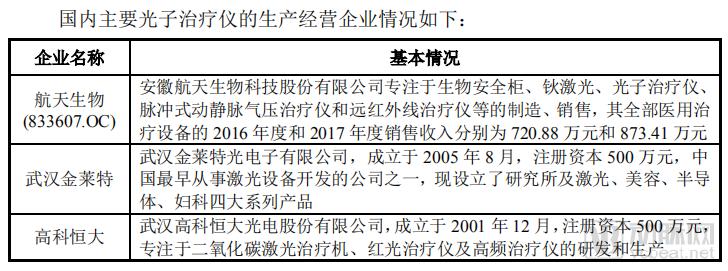
From a market perspective, Lifotronic’s phototherapy devices include red light therapy, blue light therapy, and combined red-blue light therapy, forming a full-spectrum product line of phototherapy equipment alongside infrared and ultraviolet therapy devices. These products are widely used in most clinical departments across hospitals at all levels. Other domestic manufacturers of phototherapy devices are characterized by small operational scales and limited application areas, and thus do not pose significant competition to Lifotronic in the clinical sector.
Source: Prospectus of Shenzhen Lifotronic Technology Co., Ltd.
Shenzhen Lifotronic Technology Co., Ltd. innovatively adopted its independently synthesized luminescent label, tris(bipyridine)ruthenium(II), to develop a new generation of fully automated immunoassay systems, including instruments and supporting reagents. This breakthrough shattered the global monopoly held by foreign giants in the field of electrochemiluminescence (ECL) analyzers and associated reagents, filled a gap in the domestic market, and made Lifotronic the first company in China to obtain registration certification for an ECL immunoassay system.
The company’s reagent R&D technology platform has developed more than 40 electrochemiluminescence immunoassay (ECLIA) reagents, covering test items such as thyroid function, sex hormones, cardiac markers, glucose metabolism, bone metabolism, liver fibrosis, inflammation, and gastritis. Among these, 23 reagents have obtained product registration certificates, while the remaining items are in the process of registration application. Meanwhile, in response to customer feedback and aligned with its development strategy, the company is actively developing a broader range of high-quality new reagents to further enrich its product portfolio.
Lifotronic’s electrochemiluminescence technology has achieved multiple independent innovations in the development of instruments and reagents, with its technical level ranking among the leading positions in China. The specific details are as follows:
① Equipment:
A. Controllable Electroluminescent Electrohydraulic Control Timing Technology
The electrochemical analysis process involves the participation of various liquids, including buffers, cleaning solutions, and reaction complexes to be tested. The liquids involved in the reaction must be precisely aspirated into or discharged from the electrochemical measurement cell at different flow rates according to the strict requirements of the fluidic control timing sequence. As the liquids flow through the measurement cell, the potentiostat circuit system should accurately output various excitation voltages to achieve a series of complex control actions, such as electrode initialization, electro-oxidation, electrochemiluminescence, cleaning, and electro-reduction.
Shenzhen Lifotronic Technology Co., Ltd.’s controllable electroluminescent electrohydraulic timing control technology resolves the complex challenge of synchronizing liquid and circuit operations, ensuring high consistency between each light emission event and electrode status, thereby guaranteeing the accuracy of test results.
B. Controllable Flow-Through Magnetic Separation Technology
Electrochemiluminescence employs flow-through magnetic separation technology, which imposes stringent requirements on the retention position, distribution pattern, and retention rate of the target magnetic bead complexes within the detection zone, thereby ensuring that the analytes are fully and uniformly distributed across the electrode surface in the detection zone.
Lifotronic’s flow-through magnetic separation technology employs a parallel magnetic field design to achieve more precise positioning of magnetic beads. Meanwhile, its cushioned flat-channel design ensures that the magnetic bead complexes under test flow uniformly and smoothly into the electrochemiluminescence (ECL) detection zone, thereby guaranteeing uniform distribution. This highly controllable flow-through magnetic separation technology addresses challenges such as uneven magnetic bead distribution and high loss rates, ensuring consistent bead distribution and high retention rates.
② Reagents:
A. Self-synthesized Electrochemiluminescence Labels
Lifotronic Technology utilizes its independently synthesized electrochemiluminescence (ECL) label, tris(bipyridine)ruthenium(II), which features low background noise, high luminescence intensity, a wide dynamic range, high sensitivity, and immediate light emission. By employing this self-developed ECL label to conjugate antibodies or antigens, the company minimizes the impact on antibody activity, thereby maximizing the retention of high affinity and selectivity. Tris(bipyridine)ruthenium(II) is characterized by its low molecular weight, chemical stability, and good water solubility, ensuring the reagents' high sensitivity, specificity, and low interference.
B. Heterogeneous Enrichment Technology on Magnetic Microparticle Surfaces
Lifotronic Technology employs a heterogeneous enrichment technique on the surface of magnetic microparticles, enabling the binding of a large number of streptavidin molecules. These particles are then magnetically attracted to the electrode surface to form a localized enrichment zone, resulting in more concentrated luminescence, higher light intensity, and an improved signal-to-noise ratio.
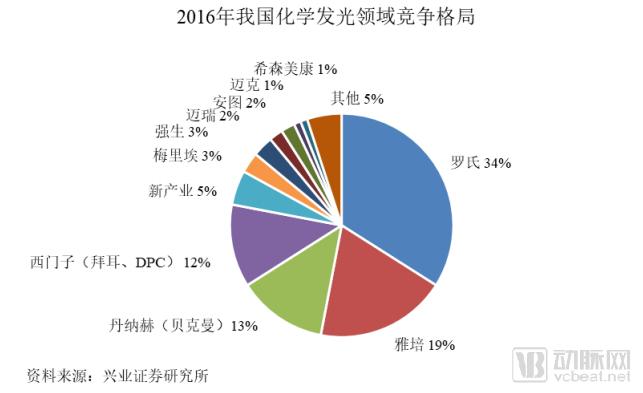
From a market perspective, chemiluminescence immunoassay technology has a high entry barrier. The reagents mostly consist of modified antibodies, and the equipment involves core technologies such as micro-volume dispensing, non-destructive separation, and optical signal detection, making research and development highly challenging. Foreign chemiluminescence products are characterized by earlier market introduction, high technological maturity, and a wide range of test items. Roche, Abbott, Siemens (Bayer and DPC), and Danaher (Beckman) have essentially formed a monopolistic landscape. Major domestic chemiluminescence companies include Mindray Medical, Autobio Diagnostics, and Maccura Biotechnology, but their market shares remain relatively low. Shenzhen Lifotronic Technology Co., Ltd. adopts the same technical route as Roche and is the first manufacturer in China to produce electrochemiluminescence assays.
R&D Expenses Account for Over 22%
Shenzhen Lifotronic Technology Co., Ltd. places great emphasis on investment in technological innovation and product research and development (R&D). During the reporting period, the Company’s annual R&D expenses were RMB 39.4381 million, RMB 49.9735 million, and RMB 66.6707 million, respectively, accounting for 22.60%, 19.92%, and 20.61% of its operating revenue, respectively.
Shenzhen Lifotronic Technology Co., Ltd. has established an innovative R&D system that spans from customer needs to specific products, implementing a matrix management structure with product lines and projects as the horizontal axis and specialized disciplines as the vertical axis. The specific processes include new product planning management, new product portfolio management, new product development management, and product lifecycle management.
During the new product planning and management phase, the company conducts market research to gather and analyze customers’ actual needs, and evaluates the likelihood of commercial success from perspectives such as market size and competitive landscape, thereby strategically selecting products with a high probability of commercial success.
During the new product portfolio management phase, Shenzhen Lifotronic Technology Co., Ltd. focuses on analyzing its existing technology platforms, product lines, financial strength, and supply chain. It plans its new product portfolio from the perspective of customer solutions to effectively meet customer needs.
Following the formal approval of R&D projects, Shenzhen Lifotronic Technology Co., Ltd. officially advances its processes into the stages of new product development management and product lifecycle management. During this phase, guided by the principle of R&D efficiency, cross-functional teams collaborate and share information. Departments including strategic planning, marketing and sales, manufacturing, supply chain, and other functional units participate in the R&D management process. By rationally allocating resources such as management oversight, personnel, and capital, the company has enhanced the success rate of new product development.
Regarding R&D incentive mechanisms: Shenzhen Lifotronic Technology Co., Ltd. has established a goal-oriented R&D performance evaluation system to maximize the innovation enthusiasm of its technical R&D personnel. The company guides and encourages product and technological innovation by offering various awards across different dimensions and directions, such as the Outstanding Contribution Award, Technological Innovation Award, and Patent Contribution Award.
In addition, Shenzhen Lifotronic Technology Co., Ltd. has established an employee stock ownership platform to provide equity incentives to core R&D personnel. Meanwhile, the company implements targeted individual career development plans for innovative employees, continuously enhancing the professional capabilities of its R&D team and broadening promotion pathways.
Sales-driven, with direct sales as a supplement
In terms of sales, Shenzhen Lifotronic Technology Co., Ltd. adopts a sales model dominated by indirect sales, supplemented by direct sales. Direct sales refer to the Company’s direct sales to end customers or consumers, such as selling products directly to medical institutions through bidding and government procurement. Indirect sales refer to the sale of products to end customers through distributors and other general indirect sales clients.
① Analysis of the Reasons for Predominantly Indirect Sales
The Company primarily adopts an indirect sales model, driven by two key factors. First, given that the Company’s end customers—medical institutions—are numerous and widely dispersed across China, indirect sales enable rapid and cost-effective expansion of nationwide distribution channels, facilitating timely product promotion and after-sales service. This approach also aligns with the prevailing sales model within China’s medical device industry.
On the other hand, in view of the long payment collection cycles associated with medical institutions’ procurement of medical devices, the Company has adopted a prepayment sales settlement model for its indirect sales customers, requiring “payment before delivery.” This approach ensures sufficient net operating cash flow, thereby sustaining a virtuous cycle of “high investment and high output” in technological innovation and product research and development.
② Specific Cooperation Models with Indirect Sales Customers
The Company’s indirect sales adopt a buyout sales model, under which indirect sales customers purchase products from the Company on a buyout basis and then resell them independently. During the indirect sales process, the Company provides support such as product documentation, technical assistance, and personnel support. The Company’s indirect sales customers consist primarily of distributors, with their share of total sales showing a year-on-year increase during the reporting period.
Shenzhen Lifotronic Technology Co., Ltd. has established rigorous dealer qualification review and performance evaluation management systems. The Company assesses whether indirect sales customers possess the qualifications to serve as dealers based on factors such as their customer resources, sales teams, financial strength, and willingness to cooperate. For indirect sales customers that meet the dealer qualification criteria, the Company enters into exclusive distribution agreements with them, stipulating sales targets for the exclusive distribution period and conducting quarterly assessments of sales performance.
If a distributor’s sales targets meet the performance assessment criteria, Shenzhen Lifotronic Technology Co., Ltd. will provide a certain percentage of sales rebates in accordance with the contractual agreement, with the rebate amount credited against future purchase payments; if the sales targets fail to meet the performance assessment criteria, the Company will re-evaluate and adjust the distributor’s qualifications and authorized territories based on the assessment results.
During the reporting period, as Shenzhen Lifotronic Technology Co., Ltd. continuously expanded its business, diversified its product portfolio, and extended its sales channels and geographic coverage, the number of its distributors increased from 172 in 2016 to 314 in 2018.