AI-Powered Single-Disease Quality Control by HuiMei Recognized with CHINC 2019 Award
From April 12 to 14, the annual domestic “HIT feast”—the 2019 China Hospital Information Network Conference (CHINC)—was held in Chongqing, the “Mountain City.” The theme of this year’s conference was “Jointly Building Smart Hospitals and Sharing Intelligent Healthcare,” with all key topics closely centered on “smart” initiatives. Leaders from the National Health Commission, local health administrative departments, as well as experts and scholars from hospitals at all levels, engaged in in-depth discussions on policies, technological hotspots, and development trends in healthcare informatization. The event attracted more than 12,000 attendees and exhibitors from across China.
China’s healthcare service development is at a critical stage of transition from “informatization” to “intelligentization.” To further enhance the level of intelligent applications and management capabilities in hospitals, the Organizing Committee has issued a call for papers on artificial intelligence and big data applications from medical institutions at all levels and enterprises, aiming to encourage the use of informational technologies to improve healthcare quality and efficiency. A total of 689 submissions were received from 27 provinces and municipalities. Following expert peer review and on-site evaluation, the final awards included no first prize, five second prizes, and 23 third prizes.
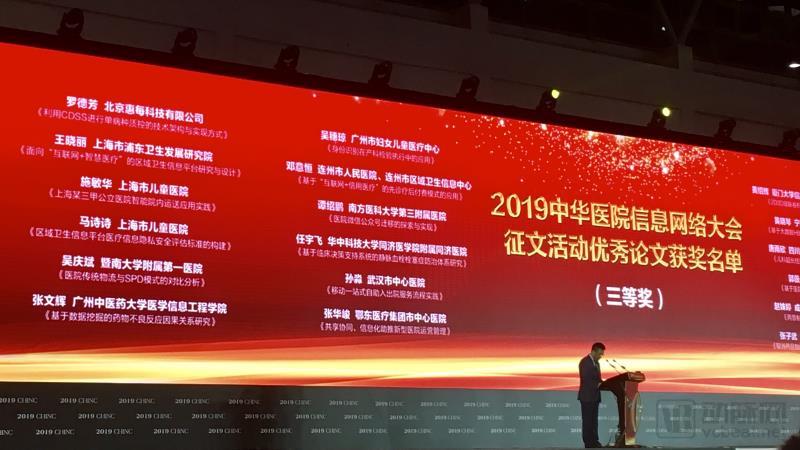
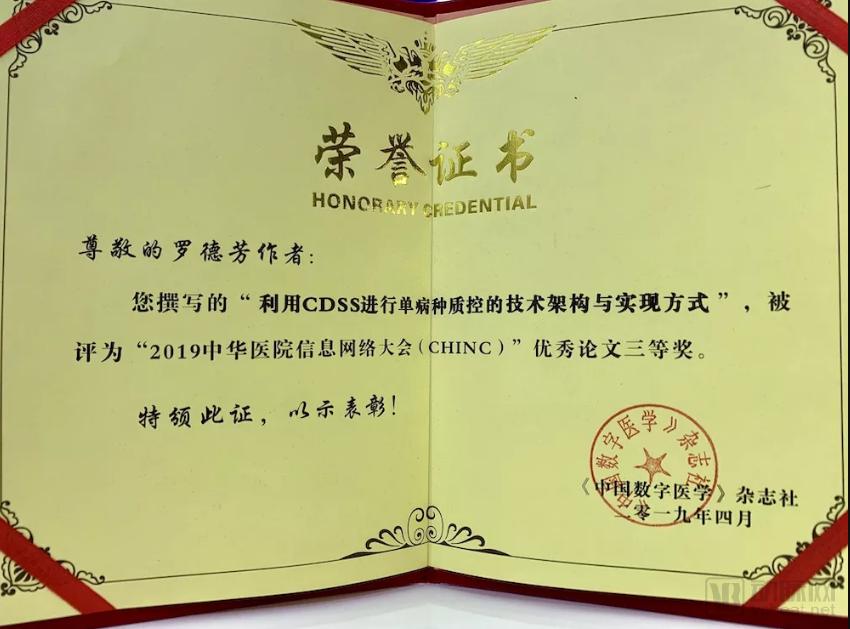
The paper “Technical Architecture and Implementation of Single-Disease Quality Control Using CDSS,” jointly researched and authored by Huimei Technology and Taizhou Hospital of Zhejiang Province, won the Third Prize for Outstanding Papers at the 2019 CHINC. This marks the third time that Huimei Technology’s clinical applications of medical artificial intelligence have received academic recognition.
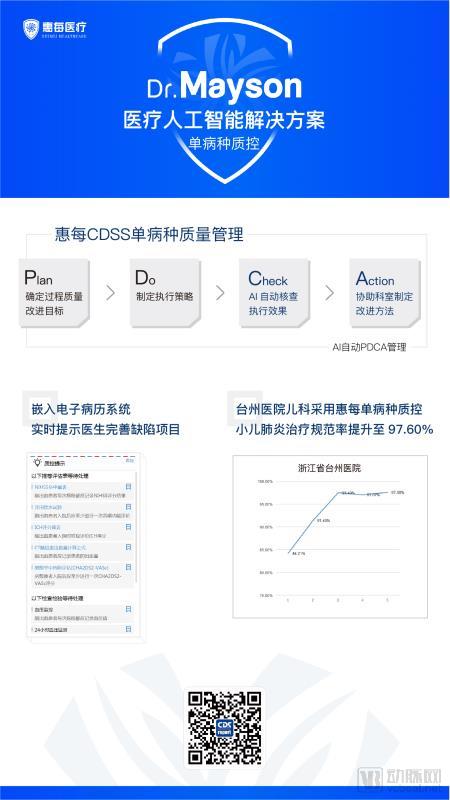
This paper discusses the clinical application of automated single-disease quality control using the AI-based Huimei Clinical Decision Support System (CDSS) at Taizhou Hospital in Zhejiang Province, and explores the managerial efficacy of medical artificial intelligence in real-time stream data processing and process quality control.
Single-Disease Quality Control is one of the internationally recognized effective tools for improving healthcare quality. Since China officially implemented single-disease quality control in 2009, the overall compliance rate has continued to rise. However, challenges remain, including suboptimal physician adherence to clinical guidelines, insufficient emphasis on intrinsic care quality, and reliance on manual statistical analysis, which raises concerns about data authenticity and timeliness.
Huimei CDSS integrates cutting-edge artificial intelligence technology with Mayo Clinic clinical pathways, adhering to the National Health Commission’s quality control requirements for single-disease entities. It enables real-time monitoring and control of medical practice behaviors. The system automatically audits medical records for diagnostic and therapeutic quality deficiencies during physician documentation, prompts timely corrective actions, and generates real-time quality control data, thereby providing data support for departmental management and clinical quality improvement.
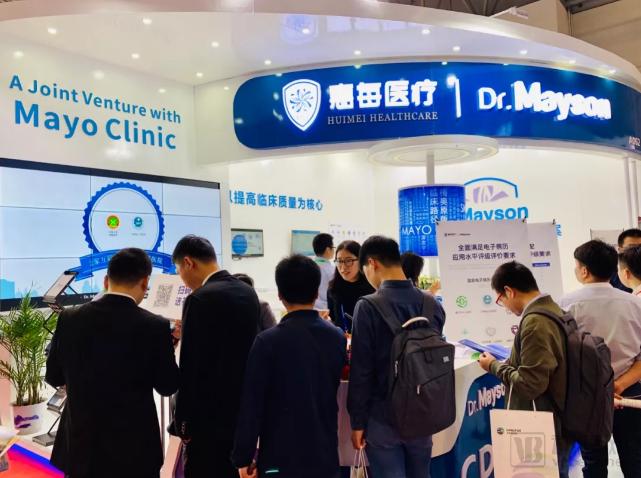
Huimei CHINC Booth
Taizhou Hospital in Zhejiang Province implemented Huimei’s Clinical Decision Support System (CDSS) for single-disease quality management of pediatric community-acquired pneumonia (CAP). Within one month, the department’s overall quality control compliance rate increased by 15.9 percentage points and has since been sustained at a high level above 95%. This case also won first place in the Pediatric CAP category of the inaugural “AI-Based Clinical Decision Support and Treatment Adherence Competition,” serving as a model example of how hospitals can leverage artificial intelligence to optimize clinical decision-making and enhance healthcare quality.