BioSense (Suzhou) Limited Files IPO Prospectus Highlighting Global Clinical Development Expertise and Dual-Market Pipeline Strategy

Hygeia Capital
Healthcare Investment Company
One night in March this year, Dr. Du Jiangbo of Hygeia Capital sent a WeChat message saying, “Andy has returned to China.”
The “Andy” referred to by Dr. Du is Dr. Li Yongan, founder of Baishan Pharmaceuticals (hereinafter referred to as “Baishan”), whom we have been eagerly awaiting an opportunity to interview. Established in 2016, Baishan is an innovative biopharmaceutical company with offices and laboratories in New Jersey and the Suzhou BioBAY (Suzhou Industrial Park Biomedical Industry Base).
Dr. Li Yongan has set Baishan’s corporate vision to effectively integrate global resources, establishing a biopharmaceutical company rooted and growing in China with influence in the international market, providing doctors and patients both domestically and abroad with more innovative and affordable medicines.
Since its inception, Baishan has secured over $9 million in cumulative venture capital funding. During this period, Dr. Li Yong’an and his team have conducted in-depth research and evaluation of numerous projects and technology platforms, aiming to gain a comprehensive understanding of drug development trends in major disease areas within the international market, thereby laying a solid foundation for the company’s strategic development and pipeline planning.
“Now we can finally say that Baishan has entered a brand-new stage,” Dr. Li Yong’an told VCBeat New Pharma. Baishan has completed the formation of its core team, and its laboratory and offices in Suzhou have been fully renovated and put into operation, with its unique kinase inhibitor screening platform now officially up and running. Within this year, an anti-tumor new drug from Baishan’s pipeline, currently undergoing Phase II clinical trials in the United States, is planned to initiate clinical trials in China. “The entire team has entered its busiest yet most exciting period.”
Dr. Li Yong’an’s distinctive résumé, which sets him apart from most returnee entrepreneurs in the biopharmaceutical sector, had already left a deep impression on VCBeat New Medicine before the interview began.
He holds a Ph.D. in Microbiology and Immunology from the Albert Einstein College of Medicine in New York, USA. After completing his doctoral studies, driven by the aspiration to more effectively translate laboratory knowledge into products and by a long-standing interest in business operations, he enrolled in Duke University’s Fuqua School of Business to pursue an MBA. During his time at business school, he interned in GSK’s marketing department and subsequently joined GSK’s R&D management division, embarking on a nearly 20-year career in new drug development management at multinational pharmaceutical companies.
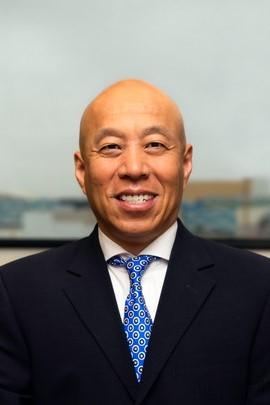
Dr. Li Yongan, Founder of Baishan Pharmaceutical
Prior to founding Baishan, Dr. Li Yong'an worked at the U.S. headquarters of multinational pharmaceutical companies including Glaxo (now GlaxoSmithKline), Abbott (now AbbVie), and Daiichi Sankyo. Unlike most returnee entrepreneurs who primarily engage in early-stage drug R&D technology, Dr. Li’s career path has focused mainly on management and business development. During his tenure at these multinational pharmaceutical firms, he spent the majority of his time serving as a project manager or project lead, overseeing project team management.
Project Team is a management organizational structure commonly adopted by multinational pharmaceutical companies for drug development. According to Dr. Li Yong’an, due to the long development cycles and substantial investments required in drug development, as well as the complexity of tasks necessitating the involvement of professionals from multiple disciplines, multinational pharmaceutical companies typically form project teams by drawing experienced personnel from various specialized departments. These teams are fully responsible for formulating, executing, and delivering the final outcomes of all strategic objectives and action plans related to the development of their products.
Typically, a project team is established around the time of lead compound selection, comprising 10–15 members and jointly managed by a Project Leader and a Project Manager. The team’s activities typically consume approximately 80% of the total drug development budget and 70–80% of the timeline, serving as the critical link between Discovery efforts and commercialization. The team’s responsibilities range from defining the product’s global market positioning to detailing animal study protocols. Its operational effectiveness and success or failure directly determine the rise or decline of a company’s product portfolio, making it central to the pipeline management strategy of large pharmaceutical companies. In essence, each project team functions as a small-scale biotechnology company.
Driven by multifaceted considerations and requirements, project management positions are typically held by individuals with extensive experience who have been with the company for many years. Dr. Li Yongan expressed his gratitude for the opportunity to manage project teams at a multinational pharmaceutical company, which enabled him to gain profound insights into the drug development process through dozens of real-world cases. This experience deepened his understanding of the interplay between marketing and R&D, as well as the key technical focus areas at each stage, while also equipping him with effective strategies for team communication and successful management.
Over the years working at multinational pharmaceutical companies, Dr. Li Yongan has participated in and led more than 30 new drug R&D projects spanning multiple therapeutic areas, including the global development and regulatory approval of blockbuster drugs such as adalimumab (Humira), olmesartan, and Seretide.
His extensive project experience enables him to comprehensively grasp the key elements and risk points involved in all stages of drug development (from preclinical research to post-marketing product lifecycle management) and at all levels (from technology to market) from a managerial perspective. Furthermore, Dr. Li Yong’an’s years of experience in overall R&D pipeline assessment and business development at the headquarters of multinational pharmaceutical companies have allowed him to remain calm and composed throughout the entire process, from due diligence in project evaluation to negotiation and decision-making for project in-licensing.
Another source of excitement for Dr. Li Yongan in managing global project teams has been his ability to maintain close ties with the Chinese market. Over the past two decades, Dr. Li has led his team in successfully launching blockbuster drugs, including adalimumab (Humira) and olmesartan, into multiple Asian markets, including China. He has been involved in every aspect of this process, from formulating clinical registration strategies to their concrete implementation.
Confronted with the significant gap between China’s pharmaceutical innovation capabilities and those of developed markets such as Europe and the United States, Dr. Li Yong’an recognized that this disparity reflected an urgent domestic demand for innovative drugs, signaling immense potential and substantial business opportunities in China’s innovative drug market. Meanwhile, he keenly perceived the ongoing momentum toward pharmaceutical regulatory reforms within China. Motivated by these insights, Dr. Li founded Baishan, aiming to rapidly make more affordable innovative medicines accessible to the Chinese public.
At its inception, Dr. Li Yong’an established the development strategy of “global in-licensing plus in-house R&D” for Baishan. When discussing the formulation of the company’s development strategy, Dr. Li provided VCBeat New Medicine with a straightforward cost analysis: It typically takes approximately 4 to 8 years and costs around USD 20–50 million to advance a project from late discovery to Phase II clinical trials, with a success rate of roughly 5–20%.
In contrast, licensing in a project that has already completed Phase I clinical trials in China typically requires an upfront payment ranging from several hundred thousand to several million US dollars, allowing the project to proceed directly into Phase II clinical trials. Therefore, although developing a drug from the discovery stage may offer a higher absolute ceiling for potential future returns if successful, such “distant rewards” cannot address “immediate needs.” To accelerate product commercialization and meet urgent market demand, licensing in more mature late-stage products is clearly a relatively low-risk, preferred short-term strategy.
Dr. Li Yongan stated that in-licensing and collaboration have become a critical component of product portfolio management and the new drug development value chain within the global industry. Forty percent of biotechnology companies abroad operate under this business model, and more than half of the products in the portfolios of multinational pharmaceutical companies (such as Merck & Co.) are in-licensed. Globally, innovative drug R&D has been gradually shifting from multinational pharmaceutical companies to small and medium-sized biotech enterprises, and this trend is expected to continue.
Of the 59 new drugs approved in 2018, fewer than half were submitted by large pharmaceutical companies. Moreover, over 60% of these approved new drugs originated from initial R&D activities at emerging biopharmaceutical companies. Therefore, in-licensing and mergers and acquisitions will become the norm in the industry and play an increasingly important role.
From the perspective of integrating resources across society, allowing experts to focus on their areas of expertise and leveraging collaborative partnerships to exchange complementary assets represents a more rational approach to resource allocation and risk sharing in the lengthy, costly, and high-risk process of drug development. “Effective and well-structured collaborations are not at odds with innovation from a systemic standpoint; rather, they foster innovation and accelerate the discovery of more new drugs.”
As the core of its short-term development strategy, Baishan introduces relatively mature projects with clear market demand from overseas to expedite product entry into the Chinese market. This approach aims to meet market needs while accelerating the company’s industrialization, thereby laying a solid foundation for its medium- to long-term development.
Meanwhile, as part of its long-term development strategy, Baishan has established a unique kinase inhibitor screening platform, with the expectation of developing candidate compounds with global rights within 18 months. This will support Baishan’s future expansion beyond China into major European and American markets.
Amid a market saturated with various “innovative” drugs and fueled by a constant influx of hot money, many entrepreneurs find it difficult to resist the urge to make aggressive, high-risk innovation attempts. In contrast, Dr. Li Yong’an’s approach has been calm and pragmatic. He believes that businesses should strive to balance risk and seize commercial opportunities to the greatest extent possible. The purpose of innovation is to meet market demand and create value, rather than to gamble with capital and time.
“For instance, we will not focus on developing first-in-class innovative drugs at this stage.” With a businessman’s rationality, Dr. Li Yongan believes that the severe shortage of domestic innovative drug products and the substantial market demand for such products will present unprecedented opportunities for the development of China’s innovative drug market over the next decade. “If we can seize this opportunity and rapidly introduce high-quality products to the domestic market to meet existing demand, our company’s value can achieve rapid growth. Baishan’s strategy is to capitalize on this opportunity first, establishing a foothold and fostering growth in the Chinese market, thereby laying a solid foundation for future expansion into major global markets.”
Dr. Li Yongan told VCBeat New Medicine that Baishan’s integrated short-, medium-, and long-term strategy will support the company in building and maintaining a balanced, tiered product pipeline, aiming to bring its first drug to market within three to five years while maintaining multiple investigational products at various clinical stages. Next, VCBeat New Medicine will provide an in-depth analysis of this uniquely insightful biopharmaceutical company from the perspective of product positioning.
To date, Baishan has built a product pipeline comprising four drug candidates at various stages of development, leveraging its global sourcing and kinase inhibitor screening platforms. Additionally, two early-stage clinical projects are currently under due diligence. The therapeutic areas primarily focus on oncology and autoimmune diseases.
Drug introduction is a complex process. Regarding the selection criteria for introducing the Baishan project, Dr. Li Yong’an pointed out that he generally focuses on four key elements: market, science, collaboration terms, and project operation.
First, market considerations. On one hand, products should address clear market demands. This is a focus for many pharmaceutical companies. In this regard, Dr. Li Yong’an places greater emphasis on differentiation: “The problems we solve should be those that competitors cannot address, or ones we can resolve in a superior manner compared to our competitors.”
On the other hand, product characteristics must meet the Chinese market’s requirements for cost and pricing. Dr. Li Yongan places particular emphasis on a product’s cost and price, which reflects the practical application of his conclusion that “the Chinese pharmaceutical market exhibits greater price sensitivity” in R&D practices.
Since 2002, Dr. Li Yongan has been part of the global R&D management team for adalimumab (Humira), witnessing the drug’s sales Waterloo in China. Despite being a common-disease medication that topped global pharmaceutical sales for many years, with peak annual revenues approaching $20 billion, Humira’s contribution from the Chinese market to its global sales has been negligible.
Dr. Li Yong’an believes that if a new drug is to gain traction in the Chinese market, it should be positioned for inclusion in the national medical insurance scheme, adopting a strategy of low margins and high sales volume to compete on scale. “Under China’s medical insurance policy framework, cost reduction is critical for gaining reimbursement coverage.”
Second, scientific evaluation requires a clear mechanism of action supported by clinical data. Dr. Li Yongan emphasized that a promising project typically features a well-defined mechanism of action. In practice, driven by its short-term development strategy, Baishan is currently more focused on introducing projects with clinical trial data.
“While this may entail higher costs, clinical data, in most cases, serves as the most reliable predictor of a project’s ultimate success in reaching the market, based on industry big data and over two decades of direct experience with more than 100 projects.” Dr. Li Yong’an maintained his characteristic composure. “For preclinical projects, regardless of how compelling the mechanism of action (MOA) may sound, the risks remain substantial, and the majority fail to reach the market.”
Third, the rationality and value assessment of cooperation terms. In interviews, Dr. Li Yong’an mentioned that in 2017 and 2018, driven by speculative hot money, prices for introducing projects into the Chinese market rose significantly, with some even reaching exorbitant levels.
One of his remarks left a deep impression on VCBeat New Medicine: “The cost of in-licensing a drug must be commensurate with its potential return and risk profile. We will not pay any price to acquire a seemingly promising drug; on the other hand, if the pricing is appropriate, we are also open to considering projects with higher risk but potentially higher returns.”
Therefore, in negotiating collaboration terms, Dr. Li Yong’an strives to achieve a balance between the overall risks and returns of a project. He endeavors to structure the terms so that both parties reasonably share risks and benefits, thereby achieving a win-win outcome.
Fourth, considerations for project operation. Dr. Li Yongan believes that China’s new drug policy reforms have integrated domestic new drug R&D into the global pharmaceutical R&D landscape, bringing many policy dividends to domestic pharmaceutical companies in terms of new drug development. This is similar to the impact of China’s accession to the WTO on domestic industry and commerce at that time.
Effectively and rationally leveraging these new policies will accelerate the global drug development process in a manner that is “faster, better, more efficient, and cost-effective,” benefiting both collaborating parties and the market. Achieving synergies in project introduction and operational planning—including clinical trial design, indication selection, timing of Baishan’s involvement, and the specific responsibilities undertaken by Baishan—is also a key consideration for Baishan.
In terms of specific implementation, Dr. Li Yongan’s team comprehensively evaluates projects by taking various factors into account. Guided by a commitment to robustness, the company avoids blindly chasing market hotspots. These standards and considerations make Baishan appear somewhat unconventional yet more pragmatic amidst the fervent Chinese innovative drug market, where capital often flocks indiscriminately to trendy projects.
When asked about the company’s competitive advantages compared to other firms adopting similar strategies, Dr. Li Yongan stated that the key factors for success primarily include project execution capabilities and the ability to source and introduce projects. The core team at Baishan boasts extensive and successful experience in global R&D of blockbuster drugs, as well as cross-company expertise in project acquisition and collaborative management. Their pragmatic, win-win approach to cooperation and project operational planning further distinguishes them from competitors with similar business models.
Furthermore, Baishan’s faster decision-making speed and execution efficiency, its emphasis on equality in collaborations, and its practice of granting partners greater attention and autonomy have all become competitive advantages for Baishan in project acquisition.
As a cornerstone of its long-term development strategy, Baishan has established a kinase inhibitor screening platform based on the core molecular scaffolds of natural kinase inhibitors. By integrating synthetic biology with medicinal chemistry, the platform enables the rapid construction of extensive libraries of kinase inhibitor compounds that are difficult to synthesize through traditional organic chemistry methods, thereby laying a solid foundation for the discovery of novel kinase inhibitors.
Furthermore, the platform can accelerate the optimization process of lead compounds, yielding multiple highly selective and high-affinity PIM3 kinase inhibitor leads within just four months.
Dr. Li Yongan told VCBeat New Medicine that Baishan’s kinase inhibitor screening platform can more precisely and efficiently identify lead compounds with superior properties. It is expected that within 18 months, two to three candidate compounds will be identified for IND-enabling studies. “This will ensure that candidate compounds with global rights continue to support the company’s expansion into global markets and its long-term development.”
“At the same time, the company will also consider transferring some projects to other companies, creating a virtuous cycle of project in-licensing and out-licensing, as well as building and maintaining its product portfolio.” Finally, Dr. Li Yongan revealed that this platform has passed the internal technical assessment of a top-tier global pharmaceutical company and is scheduled to move into the company’s incubator within two months. This is good news for Baishan Biopharma, and also marks a promising start and impetus for its next phase of development.