

Lively Files for IPO: Disrupting the $435B Health Savings Account Market with Low-Cost, Tech-Driven HSA Platform

Lively, Inc.
Modern Health Savings Account (HSA) Platform Provider
“No one should sacrifice their physical health for the sake of their financial health.” This statement was made by Alex Cyriac, Co-founder and CEO of Lively.
At the time this statement was made, Lively had not yet been established, and Alex Cyriac was still the Chief Operating Officer at WorldPay. Motivated by his personal experiences and driven by the vision and philosophy of alleviating the burden of healthcare costs for Americans, he resigned to found Lively.
Lively is a modern Health Savings Account (HSA) platform designed for corporate employers and individuals, primarily focused on simplifying HSA management processes to help businesses and individuals reduce healthcare costs.
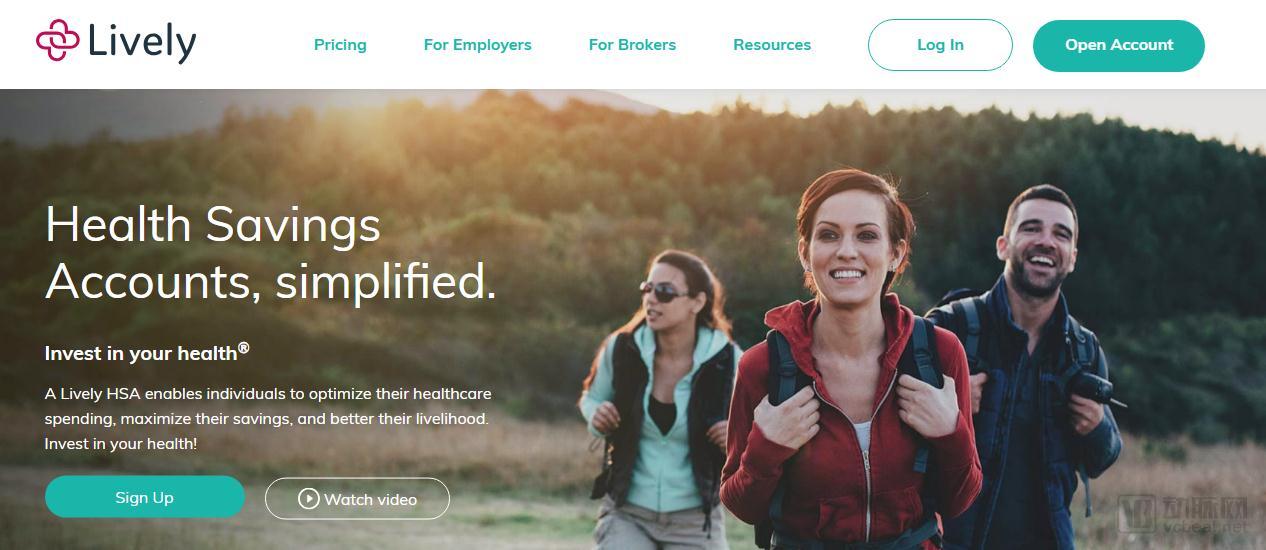
Screenshot of Lively, Inc.'s Official Website
Moved by His Mother’s High Medical Costs, Former WorldPay Employee Quits to Start a Business
Alex Cyriac’s previous work experience was entirely focused on payments. In January 2011, he began serving as Vice President of Business Development at WorldPay, a globally leading independent payment processing company. In May 2013, Alex Cyriac left WorldPay to become Chief Operating Officer at Justworks, a payroll management company, where he oversaw all business operations, including state licensing applications, compliance reviews, benefits infrastructure, employee compensation management and underwriting, accounting and finance, and legal affairs. In June 2015, Alex Cyriac returned to his former employer, WorldPay, as Director of Operations. By the end of 2015, less than six months after rejoining WorldPay, Alex Cyriac resigned from his position and proposed the idea of founding Lively to his old friend Shobin Uralil.
Alex Cyriac’s inspiration to found Lively largely stemmed from his mother.
Alex Cyriac’s mother suffers from complications following a bone marrow transplant, and he has been covering her medical expenses for years. However, out-of-pocket medical costs have risen annually, placing an increasingly heavy financial burden on him. In fact, it is not just Alex Cyriac; people across the United States are facing significant financial pressure related to healthcare costs.
He realized that establishing a Health Savings Account (HSA) could provide partially tax-exempt funds for his mother’s medical care.
HSAs were officially launched after the U.S. Congress passed the Medicare Prescription Drug, Improvement, and Modernization Act in 2003. Essentially, they are tax-advantaged health savings accounts available to U.S. taxpayers enrolled in high-deductible health plans (HDHPs).
HSAs offer triple tax advantages: pre-tax contributions can be deducted from wages, reducing taxable income; funds deposited into a Health Savings Account are exempt from federal income tax; and any interest or investment earnings generated by the account are tax-free, provided the funds are used for qualified medical expenses as permitted by insurance. Furthermore, an HSA is an individual account, so changing jobs does not affect its operation. Unused HSA funds roll over and accumulate year after year. Withdrawals made after retirement age enjoy tax benefits, whereas withdrawals made before retirement age are subject to penalties.
However, Alex Cyriac found that existing HSA service platforms are complex, and custodians often charge users fees when they withdraw funds. Most HSAs come with a long list of fees, including monthly maintenance fees, account opening fees, fund transfer fees, debit card fees, excess contribution fees, point-of-sale fees, minimum balance fees, reimbursement fees, and account closure fees. These fees directly undermine consumers’ ability to reduce out-of-pocket costs and maximize savings on medical expenses.
Moreover, to assume investment risks, corporate employers require their employees to save at least $1,000 before the account becomes operational, as a buffer against unforeseen circumstances. Furthermore, since salary growth has lagged behind the rise in medical costs, the majority of savings within Health Savings Accounts (HSAs) are spent on routine medical expenses in the current year, rather than being retained for future protection against the financial risk of serious illness.
Alex Cyriac stated that traditional HSA custodians charge their clients hidden fees, resulting in losses of thousands of dollars. Coupled with rising medical costs each year, this means clients are losing money on both fronts.
Guided by the principle that “no one should sacrifice their physical health for their financial health,” Lively was founded in San Francisco, United States, in January 2016, with Alex Cyriac serving as the company’s Chief Executive Officer.
Two Core Products, Creating a Unique Revenue Model
HSA is typically associated withcombined with high-deductible health plans.Lively’s goal is to enable users to open a Health Savings Account (HSA) alongside a high-deductible health plan, making it easier to use the funds in the account to pay for deductibles. Lively offers two primary products: one designed for employers and another for individuals. For employers, companies can register for free on Lively’s website and then invite their employees to enroll in an HSA. The registration process on Lively’s HSA platform takes less than five minutes, featuring payroll synchronization, paperless account management, and direct handling of payroll contributions to reduce the administrative burden on employers. For individuals, users can register for free on the Lively platform to open and manage their own Health Savings Accounts.
Upon successful registration, Lively provides users with a Lively debit card, which can be used at doctors' offices, pharmacies, or any other locations covered by medical reimbursement plans. For medical expenses not paid using the Lively debit card, users may subsequently submit reimbursement claims through the company’s official website.
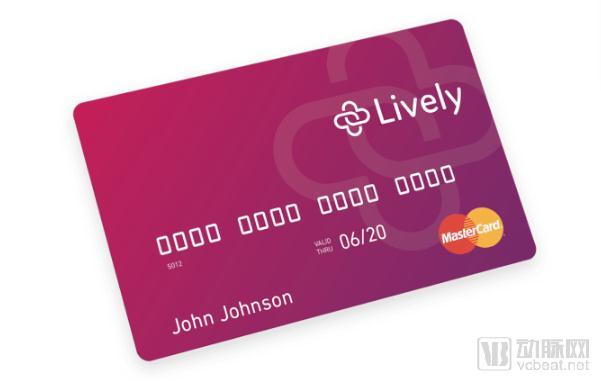
Lively Debit Card (Image source: company official website)
Lively has also integrated with the prominent U.S. online brokerage firm TD Ameritrade, enabling users to invest their Health Savings Account (HSA) funds in stocks, bonds, and exchange-traded funds (ETFs).
Lively allows users to invest without maintaining a minimum balance and provides basic HSA services free of charge. If users opt for the investment services offered through its partner, TD Ameritrade, Lively charges a flat monthly fee of $2.50 via the TD Ameritrade platform. Furthermore, unlike traditional HSA providers, Lively does not charge any service fees for individual withdrawals; however, it imposes a fixed monthly fee of $2.95 per employee on corporate employers with more than ten employees. Alex Cyriac aims to make the company’s fee structure a key selling point.
Lively offers an end-to-end solution. Alex Cyriac believes that the current health insurance industry is relatively concentrated, dominated by financial institutions, with thousands of banks, credit unions, and third-party administrators. This highlights the long-standing fragmentation among providers in this sector. He stated, “Historically, HSAs have been managed by banks or large financial institutions, with few products or technologies available to simplify HSA administration.” Lively aims not only to transform the front-end (customer) experience but also to streamline back-end (HSA platform) operational processes in ways most vendors have not considered.
HSAs are regulated by the U.S. Internal Revenue Service (IRS). Lively, Inc. stated that regulatory compliance is critically important to the company and that it meets all regulatory requirements. In addition to satisfying federal regulators, Lively is also obligated to comply with the regulations of its unnamed financial institution partners.
“Much of the heavy lifting is done on the operational and regulatory infrastructure front; we have built this infrastructure in the background, devoting significant effort to collaborating with banks at every level in compliance with applicable laws,” added co-founder Shobin Uralil. To fulfill its regulatory commitments, Lively has engaged the former general counsel of a prominent U.S. HSA administration company as an advisor.
Lively has also strengthened its integrated investment capabilities with TD Ameritrade, enabling all Lively HSA account holders to access services provided by TD Ameritrade. The company aims to introduce a more seamless investment approach compatible with traditional financial markets, positioning Lively as a one-stop shop for HSAs.
Endorsed by NBA Stars: The $435 Billion Health Savings Market
To achieve the aforementioned goals, Lively has completed three rounds of financing over the past three years, raising a total of $15.3 million. Investors include Streamlined Ventures, Transmedia Capital, Y Combinator, SV Angel, PJC, Liquid 2 Ventures, Haystack Partners, as well as individual investors such as Paul Buchheit, Isaac Oates, Frederic Kerrest, and Jeff Epstein. Notably, NBA superstar Kevin Durant is also among the company’s many investors.
In the summer of 2016, Kevin Durant and his agent Rich Kleiman established The Durant Company to manage his investment portfolio. In September 2017, Durant participated in Lively’s $4.2 million seed funding round. Although he did not disclose the specific amount of his investment, The New York Times reported that Durant’s investments typically range from $250,000 to $2 million. This marked the latest in a series of investments made by Durant.
“This investment may align more closely with Durant’s strategy than many people realize. He seems particularly interested in tools that help people plan and save,” explained Shobin Uralil, co-founder of Lively. Durant has previously invested in Acorns, a personal finance app company.
Currently, in the HSA niche, Lively does not view any existing tech companies as competitors; instead, it is directly competing with 2,000 HSA banks such as HealthEquity, Benefits Wallet (a Xerox subsidiary), and Optum Bank.
As health insurance costs continue to rise, optimizing Health Savings Accounts (HSAs) will become a key business focus for these companies. Lively stated that the company will continuously improve its services for individual users, corporate employers, and other organizations, aiming to capture a share of the $435 billion HSA market while promoting reductions in personal healthcare expenses, optimization of spending choices, and greater awareness of personal healthcare investment management.
Benchmarking Against U.S. HSAs: What Is the Future of China’s Medical Insurance Personal Accounts?
On February 6 this year, Lively released its first annual HSA spending report since its inception, presenting the breakdown of consumer healthcare expenditure shares for 2018.
Lively surveyed 15,000 randomly selected HSA holders and compared the findings with data from the Centers for Medicare & Medicaid Services to examine the similarities and differences between HSA spending and national healthcare expenditures in China.
Survey results indicate that, on average, HSA account holders allocate 93% of their savings to routine medical expenses, such as physician visits (41%), prescription drugs (25%), and dental care (9%). Only 7% of HSA funds are used to cover costly emergency and hospital visit expenses. In terms of healthcare spending per couple, after accounting for insurance coverage, the projected out-of-pocket medical costs during retirement amount to $280,000.
HSAs can serve as savings accounts to help offset future medical costs. However, most consumers spend their HSA funds on other services before retirement. This finding suggests that individuals are unable to consistently invest in HSA assets to reap long-term benefits. Lively, Inc. states that using the majority of HSA funds for routine medical care exposes individuals to the risk of high out-of-pocket costs for emergencies and hospital visits.
In response, Alex Cyriac, CEO of Lively, stated that rising healthcare costs continue to squeeze Americans’ finances. This forces individuals and families to use their HSA funds for daily necessities rather than saving them to build a financial safety net for future medical expenses and retirement.
Therefore, individual health savings accounts do not have a risk-sharing function. This is similar to the personal medical insurance accounts in China.
China’s Medical Insurance Personal Account refers to a dedicated fund account established by medical insurance agencies for individuals enrolled in basic medical insurance, used to record their medical insurance contributions and cover their medical expenses. In recent years, there have been ongoing calls to abolish the medical insurance personal account, primarily for the following reasons:
First, in China's urban employee basic medical insurance scheme, the pooled fund is centrally managed and uniformly allocated by the Provincial Medical Insurance Management Service Center to reflect its role in social mutual aid. However, the revenues of the pooled medical insurance fund fail to cover its expenditures.
Second, the abuse and cash-out of personal medical insurance accounts are severe, with diverse illegal manifestations and covert methods that persist despite repeated bans, resulting in adverse social impacts;
Third, people generally consider the funds in their individual medical insurance accounts to be their own property. Compared with bank accounts, these individual accounts can only be used for medical expenses, whereas personal savings are not subject to such usage restrictions. Therefore, the capital accumulation function of individual medical insurance accounts is far weaker than that of personal savings. More importantly, a substantial amount of funds remains idle in these individual medical insurance accounts, yielding an annual return lower than that of bank deposits. This results in inefficient use of capital and fails to leverage the risk-pooling function inherent in insurance.
To address the drawbacks of individual medical insurance accounts, China has primarily proposed outpatient pooling as an improvement measure. However, this initiative cannot comprehensively resolve the various issues arising in the operation of individual medical insurance accounts.
Addressing the shortcomings of U.S. Health Savings Accounts (HSAs), Shobin Uralil, co-founder of Lively, emphasized that raising HSA contribution limits, expanding the scope of qualified HSA expenses, and enabling more Americans to access HSAs will help boost national savings and further alleviate the financial burden posed by rising healthcare costs.
China may draw insights and inspiration for reforming its medical insurance personal accounts from the development and challenges of Health Savings Accounts (HSAs) in the United States.
Source:
https://livelyme.com/
https://www.businesswire.com/news/home/20181220005189/en/
https://www.inc.com/zoe-henry/kevin-durant-invests-in-lively-hsa.html
https://www.businesswire.com/news/home/20190206005142/en/Lively-Releases-2018-Data-Showing-HSAs-Short-Term
(By Nie Guanghong)