

Imbed Biosciences Secures $2M Series A Funding to Advance MicroLyte Ag Antimicrobial Wound Matrix

Imbed Biosciences
Medical Device Developer
VCBeat (WeChat Official Account: vcbeat) learned from foreign media that on April 18, U.S. local time, Imbed Biosciences, a medical device company based in Fitchburg, Wisconsin, announced the completion of a $2 million Series A financing round. The round was organized by the asset management firm Formidable, with specific investors yet to be disclosed. Additionally, renowned investment management expert Elizabeth B. Taylor will join the board of directors of Imbed Biosciences following the closing of this financing round.
According to the company, the proceeds from this round of financing will be used to commercialize MicroLyte Ag, an antimicrobial matrix. This matrix is a wound-healing antimicrobial dressing independently developed by Imbed Biosciences and has received FDA approval for the treatment of chronic ulcers, burns, and surgical wounds.
Imbed Biosciences is an FDA-registered medical device company with a quality management system certified to ISO 13485. The company focuses primarily on clinical wound care and is currently pursuing patents for embedding bioactive molecules into wound dressings and surgical implants. Imbed Biosciences was co-founded by six PhD holders from the University of Wisconsin, including Dr. Ankit Agarwal, Dr. Nicholas Abbott, and Dr. Michael J. Schurr, who collectively bring an average of approximately 20 years of clinical experience in the field of wound care.
Imbed Biosciences has leveraged its multifunctional polymer nanofilm technology to develop MicroLyte Ag, an antimicrobial wound matrix. This matrix consists of an ultra-thin silver-based substrate coated with a polymer containing both ionic and metallic silver. Compared to traditional antimicrobial dressings, MicroLyte Ag uses only one percent of the silver content while sustaining antimicrobial activity for up to 72 hours within the microenvironment of wound tissue. It eliminates 99.99% of clinically relevant microorganisms and reduces the risks of silver toxicity and staining.
ISO 10993 biocompatibility test results demonstrate that MicroLyte Ag is biocompatible and safe. MicroLyte Ag can closely adhere to wound bed tissues in pressure ulcers, venous ulcers, diabetic ulcers, first- and second-degree burns, abrasions, and lacerations, thereby facilitating wound healing. This matrix can also be applied for wound management at donor sites in transplant surgeries.
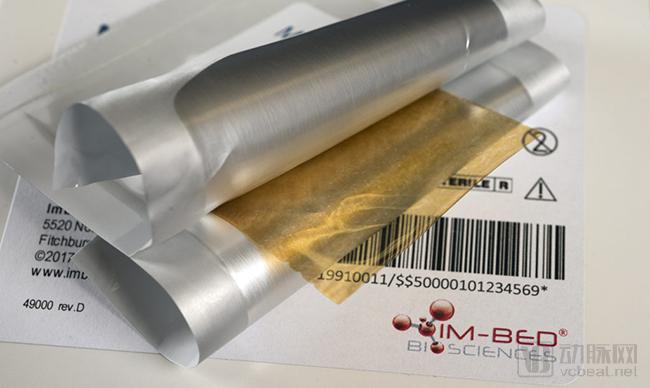
MicroLyte Ag Schematic (Image source: official website)
After the patient applies MicroLyte Ag, the matrix absorbs wound exudate to form a soft gel that conforms closely to the underlying wound bed, thereby maintaining a moist healing environment. While MicroLyte Ag is in contact with the wound, the matrix provides a scaffold for cell growth and is reabsorbed into the wound bed within three days, preventing the formation of bacterial biofilms on the wound bed and eradicating bacteria within established biofilms.
“Thousands of patients with chronic wounds have successfully recovered after using MicroLyte Ag, and this matrix has been adopted by multiple hospitals,” said Dr. Ankit Agarwal, CEO of Imbed Biosciences. “With this financing, we will expand our product distribution channels and broaden our business presence in the United States.”
“Formidable CEO William Brown stated, ‘We are delighted to partner with the Imbed Biosciences team to help them scale their business. We hope their surgical matrix technology will bring new therapies to patients for whom conventional treatments have failed, and set a new standard in wound care.’”
Imbed Biosciences was founded in 2010 and has completed six rounds of financing to date. Prior to this round, its most recent financing occurred on January 2, 2018, when the company closed a $1.6 million seed round.
(Compiled by Wang Chan)