

Baidu Lingyi and Zhongshan Ophthalmic Center Accelerate AI Transformation in Ophthalmology Through PALM Challenge
Recently, the International Symposium on Biomedical Imaging (ISBI), a top-tier global conference on medical imaging, concluded in Venice, Italy. Baidu Lingyi, Baidu’s AI healthcare brand, joined forces with the Zhongshan Ophthalmic Center of Sun Yat-sen University and the Medical University of Vienna to host the PALM Challenge on Pathological Myopia Detection from Retinal Images (PALM: Pathological Myopia detection from retinal images). Leveraging its leading algorithmic technologies and extensive repository of high-quality annotated data in AI ophthalmology, the initiative attracted hundreds of outstanding teams from China and abroad. The competition aims to advance research and development in intelligent ophthalmology and steer the rapid, healthy growth of the artificial intelligence sector in eye care.
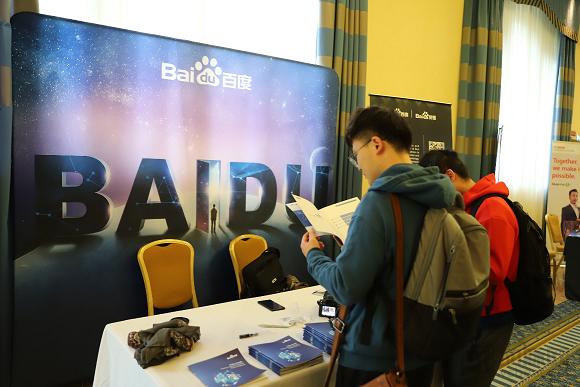
The PALM Challenge, held as part of the iChallenge series (iChallenge-PM), focuses on pathological myopia. It encompasses a comprehensive range of tasks, including qualitative disease classification, localization and segmentation of key structures, and detection and segmentation of major lesions. Currently, there are no publicly available datasets internationally for these purposes. The dataset for this challenge was jointly released by Baidu Lingyi and the Zhongshan Ophthalmic Center of Sun Yat-sen University, maximizing the balance among clinical foresight, algorithmic task specialization, and performance evaluation fairness.
The images in the PALM dataset were primarily sourced from the team led by Professors Zhang Xiulan and Zhang Shaochong at the Zhongshan Ophthalmic Center, Sun Yat-sen University. To ensure the accuracy of image-level disease labels and pixel-level annotations, the dataset was initially independently annotated by seven fundus specialists with more than ten years of experience, and finally reviewed and confirmed by at least one senior supervising physician.
Star-Studded Teams Converge: 345 Squads Rally for the PALM Competition
From the launch of the preliminary round on February 15 to its conclusion on April 1, PALM attracted a total of 345 teams from renowned ophthalmology institutions worldwide (including the Bascom Palmer Eye Institute at the University of Miami, ranked No. 1 in ophthalmology in the United States, and Johns Hopkins University School of Medicine), universities (such as the University of Illinois Urbana-Champaign, Carnegie Mellon University, The Chinese University of Hong Kong, and Tsinghua University), and active enterprises in the AI healthcare sector (including IBM and Ping An Technology).
At the Venice On-Site Challenge, Chinese enterprises and universities, represented by Ping An Technology and Shenzhen University, demonstrated strong enthusiasm for participation and achieved remarkable results. Ping An Technology secured the overall championship in the PALM category, the Vistalab team—a joint effort between Shenzhen University and the University of Nottingham (UK)—took second place, and the KUL_VITO team from KU Leuven in Belgium claimed third place.
Across the industry, within the technological paradigm of AI in healthcare, medical imaging represents both the most fundamental and the highest-demand application. At multiple academic conferences on computer vision and medical imaging, scholars consistently agree that high-quality datasets constitute the key barrier to advancing AI research in medical imaging.
To address the significant challenges in developing AI algorithms for ophthalmic image analysis, Baidu launched the iChallenge series of online and offline competitions in 2018. iChallenge aims to share large volumes of high-quality, finely annotated ophthalmic imaging data to strengthen communication among researchers and promote the advancement of AI algorithms in diagnosis and image analysis. It has evolved into the most influential and widely recognized competition in the field of AI-based ophthalmic image analysis, having hosted three fundus color photography competitions to date. The current PALM competition is the offline “live version” of the online iChallenge-PM competition, held in conjunction with the ISBI conference.
It is reported that the IEEE International Symposium on Biomedical Imaging (ISBI) is an international academic conference dedicated to biomedical imaging, jointly sponsored by the IEEE Signal Processing Society (SPS) and the IEEE Engineering in Medicine and Biology Society (EMBS). The annual competitions hosted by ISBI attract leading universities and research institutions from around the world to compete.
By hosting this PALM competition, Baidu Lingyi enables scholars from medical schools, universities, and enterprises—including but not limited to these institutions—to freely access data for various scientific research purposes without requiring additional permissions. This initiative is sure to attract a large number of researchers to this field, which benefits both the general public and government public health efforts. The successful holding of this competition also underscores Baidu Lingyi’s forefront position in AI medical imaging and its leading reserves of ecological resources as the organizer.
In fact, the industry has held this competition in high regard. On one hand, the results from the winning teams demonstrated that AI-based interpretation of pathological myopia from fundus images can achieve accuracy comparable to that of medical experts. Furthermore, in the detection and segmentation of key fundus structures, particularly the optic disc, AI technology has also approached the proficiency level of highly skilled medical specialists.
On the other hand, the results of the PALM competition not only help governments, relevant scholars, and AI medical device regulatory authorities assess the latest advancements and capabilities of related technologies, but also promote better integration among healthcare providers, academic institutions, and enterprises, thereby clarifying the trends and directions for further industry development.
Building a New Healthcare Ecosystem: Baidu Lingyi Empowers the Medical Sector with AI
As a pioneer among China’s AI enterprises, Baidu is well-positioned to host AI competitions. Through collaborations in both business and scientific research, Baidu has established strong partnerships with renowned domestic and international ophthalmic hospitals and research institutes, such as the Zhongshan Ophthalmic Center of Sun Yat-sen University. It has actively participated in and promoted a series of related academic and research activities, thereby accumulating substantial high-quality annotated data and algorithmic research achievements. Furthermore, Baidu possesses a solid foundation for organizing competitions, offering computational resources and prize funding through its BROAD research data-sharing platform and the one-stop AI development platform, Baidu Brain AI Studio. Since December 2018, Baidu Lingyi has sequentially launched three ophthalmic imaging competitions.
Certainly, Baidu’s determination and actions to help build the future healthcare ecosystem are by no means limited to hosting industry competitions. As a key “window” for Baidu’s push into AI + Healthcare, Baidu Lingyi has made extensive inroads and achieved phased results in three major areas: primary care screening, clinical decision support, and medical data structuring. For example, the Clinical Decision Support System (CDSS) developed by Baidu Lingyi provides every primary care physician with a real-time, professional, and accurate medical assistant for consultation. Currently, this product covers 27 standard specialties and more than 4,000 diseases, essentially encompassing common disease types, and achieves a 95% accuracy rate in its recommendations for the top three diseases.
Going forward, Baidu Lingyi will continue to actively organize on-site competitions at top-tier conferences, creating platforms for in-depth communication and technical exchange among industry peers, and co-authoring high-quality review papers on these competitions. Meanwhile, it will consistently promote and expand online competitions to enable participation from outstanding teams worldwide.
It is understood that following the ISBI-PALM competition, Baidu Lingyi will once again join forces with Professor Zhang Xiulan at MICCAI 2019, the premier conference on medical imaging held in Shenzhen in October 2019. iChallenge has been approved to host the world’s first competition focused on automated analysis of angle morphology in anterior segment OCT images, and will publicly release the associated dataset—a global first.