

Jianjian Home Doctor Aims to Empower 100,000 Family Physicians Nationwide Within Three Years
Implementing tiered diagnosis and treatment has been the top priority of China’s new healthcare reform. Its purpose is to optimize the allocation of medical resources, foster effective division of labor and collaboration among medical institutions at different levels, and alleviate the current imbalance in the supply of medical services. The family doctor contract system is a key task within the tiered diagnosis and treatment framework, holding significant importance for achieving initial consultations at the primary care level, implementing tiered diagnosis and treatment, and transforming the model of healthcare service delivery.
Currently, family doctor teams in primary healthcare institutions are gradually shifting their focus from enrollment rates to enhancing service quality. However, relying solely on the capabilities of primary healthcare institutions is clearly insufficient. Effective management of community patient records, improvement of doctor-patient communication, and delivery of public health services and health management require the involvement of market forces.
VCBeat has learned that companies currently providing services to primary healthcare institutions include those offering clinical decision support, physician training, telemedicine systems, point-of-care testing (POCT), and pharmaceutical distribution. Among them is “Jianjian Family Doctor,” a product of Guoan Guangchuan, the smart healthcare subsidiary under CITIC Group’s “Internet Plus” strategy.
“After multiple rounds of optimization and iteration, we have finally developed a nearly ‘perfect’ solution for family doctors. It effectively addresses issues such as low efficiency in primary care services, poor patient satisfaction, and difficulties in standardized management,” Jin Lei, founder of Jianjian Family Doctor, told VCBeat. According to the company’s plan, Jianjian Family Doctor aims to serve over 100,000 family doctors in the next three years.
Policy Drives Industry Growth, Products Directly Address Pain Points
In secondary and tertiary hospitals, the use of information systems facilitates the management and retrieval of patient medical records, medical imaging, laboratory reports, and prescriptions. However, in primary healthcare institutions, family doctors operate in a different environment, often requiring home visits to residents. Therefore, there is an urgent need to retrieve and enter patient historical data via mobile terminal devices, enabling data query and entry anytime and anywhere.
As Jin Lei delved deeper, he found that although the pain points in the services provided by primary healthcare institutions were complex, they could basically be summarized into three aspects: low service efficiency, poor sense of gain among residents, and difficulties in standardized management. To address these issues, Jin Lei led his team through a year of research and testing, successfully launching a family doctor work platform called “Jianjian Family Doctor.”
After establishing a presence in grassroots healthcare, Jin Lei has continuously identified pain points and needs, leading to the development of the Jianjian Family Doctor Smart Workstation product series, including follow-up kits, physical examination vehicles, the “Jianjian” Box (gateway), and AI notifications. The company has gradually repositioned itself as a “family doctor service provider.” Currently, the Jianjian Family Doctor Smart Workstation has been deployed in more than eight provinces across China, receiving positive feedback from both residents and physicians and earning the reputation of being a “burden-reduction tool.” Jin Lei confidently stated, “The Jianjian Family Doctor Smart Workstation is an essential asset for every family doctor.”
The R&D team accounts for over 60%.
The achievements of Jianjian Family Doctor were gradually attained only after navigating numerous pitfalls. Taking the development of the “Smart Workstation for Family Doctors” as an example, Jin Lei made smooth progress in the early stages across policy research, market analysis, and product design. However, at the application level, he received feedback stating: “Although your software is user-friendly, primary care physicians are reluctant to adopt it because the back-and-forth data entry is overly cumbersome.”
In response, Jianjian Family Doctor, leveraging resource synergy within CITIC Group, has developed the “Jianjian Family Doctor” Smart Workstation to address practical pain points such as low efficiency in primary care and difficulties in data interoperability. The workstation, comprising follow-up kits, mobile examination vehicles, the Jianjian Box, and an AI-powered examination notification system, comprehensively resolves efficiency challenges and data interoperability issues in family doctor contract services, patient follow-ups, physical examinations, and other health management tasks.
Jianjian Family Doctor has clearly defined team divisions, including teams for capital liaison, technology R&D, and market expansion.
Jin Lei, Founder and General Manager of Jianjian Family Doctor, brings nearly two decades of experience in software development and internet entrepreneurship, overseeing the overall operations of the project. In 2008, Jin joined the Alibaba ecosystem as one of its first third-party partners and was consecutively named a “Gold Taobao Partner” for multiple years. He was recognized as one of China’s Top 10 E-commerce Service Providers in 2011 and as one of China’s Top 10 Data Marketing Service Providers in 2012. In 2016, as a serial entrepreneur, Jin formally entered the healthcare sector, focusing on research and exploration in the field of “Internet + Primary Care.”
Zhao Jianlin, Deputy General Manager & Technical Director of Jianjian Family Doctor, graduated from Jiangsu University of Technology. He has participated in the research and development of multiple national-level projects, including the BeiDou Navigation Civilian Platform and the Ministry of Public Security’s Electronic Identity Authentication Platform, accumulating extensive experience in cybersecurity.
The marketing division is overseen by Liu Xingang, Deputy General Manager and Marketing Director. Mr. Liu graduated with a major in Integrated Traditional Chinese and Western Medicine Clinical Practice from Nanjing University of Chinese Medicine, pursued advanced studies in the Department of Basic Medical Sciences at Lomonosov Moscow State University, and previously worked at Changzhou Hospital of Traditional Chinese Medicine in Jiangsu Province. He has held management positions for nearly 20 years across the pharmaceutical distribution, medical device, and healthcare informatics sectors.
According to Jin Lei, Jianjian Family Doctor has currently assembled top-tier talent from the fields of IoT, big data, healthcare, and health management. Among them, the R&D team accounts for over 60%, with 50% holding master’s or bachelor’s degrees and 98% possessing an associate degree or higher. In the specific vertical domain of family doctor systems, few other companies in the industry allocate such a large proportion of their workforce to technical development.
Leveraging its extensive experience, the team has earned acclaim from government authorities—including the National Health Commission—and across society for its grassroots healthcare informatization solution centered on the “Smart Family Doctor Workstation” and the “Guo’an Model.” In 2018, it was awarded the CIMC Best Innovation Award by the Chinese Academy of Medical Sciences.
Business Model: Platform Development Fees + Third-Party Products and Services
In terms of its business model, Jin Lei’s strategy is pragmatic. Jianjian Family Doctor generates revenue from two sources: platform development and third-party products and services offered on the platform.
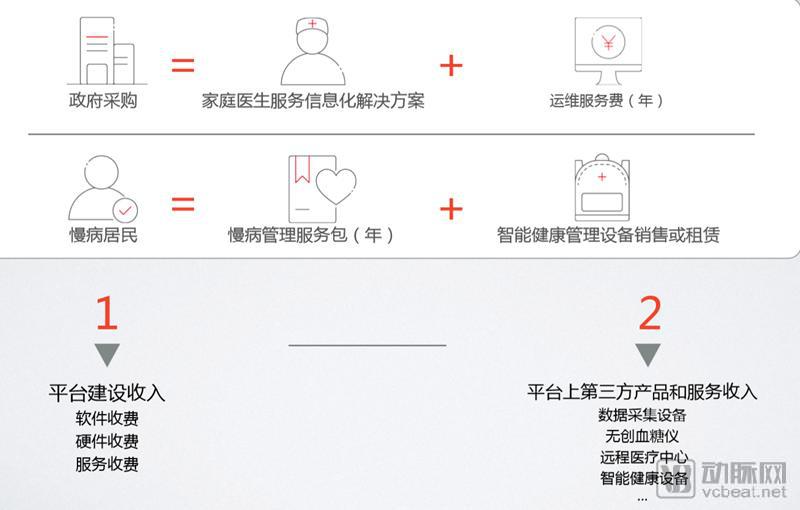
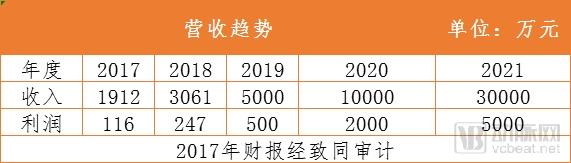
“Services that primary care institutions are willing to pay for are the ones they truly need,” said Jin Lei. He expressed no concern about whether his products would be accepted by managers of primary care institutions or about the lack of payers. Given that primary care institutions have dedicated annual funds for internal infrastructure development, the key lies in whether the products can genuinely meet their needs. Based on its revenue from 2017 to 2018, Jianjian Family Doctor doubled its profits, demonstrating strong practical utility. Nevertheless, to accelerate project growth and capture a larger share of the primary healthcare market, Jianjian Family Doctor has initiated its next round of financing.
The “Three Carriages” Drive Jianjian Family Doctor’s Nationwide Expansion
After three years of exploring the family doctor service platform, Jin Lei also realized: “No matter how sophisticated an internet application may be, if it lacks precise grassroots data, it is nothing but a rootless duckweed. To achieve ‘Internet + Primary Healthcare,’ the primary task is the collection of foundational data and the realization of network-wide interconnectivity.”
Currently, the core solution offered by Jianjian Family Doctor is the Smart Workstation. The Smart Workstation encompasses products such as the Smart Physical Examination Cart, Gateway Box, and Smart Follow-up Kit. Their development philosophy is centered on addressing three key objectives: enhancing operational efficiency, improving residents’ sense of benefit, and standardizing management processes.
These products are designed around the “smart hardware + software platform” concept, integrating public health, basic medical care, and health management. They incorporate the seven core functions of the Family Doctor Comprehensive Service Management Platform to enhance the service quality of primary healthcare institutions with family doctors as the main providers.
Taking the flagship product, the Smart Physical Examination Vehicle, as an example, it functions essentially as a compact clinical laboratory, integrating standard equipment such as ultrasound systems, blood biochemistry analyzers, urinalysis devices, complete blood count (CBC) analyzers, and electrocardiographs (ECG). The vehicle can be deployed in various scenarios, including family doctor contracted services, public health examination programs, specialized screening initiatives (e.g., HIV and cancer screening), remote medical diagnostics, and health management/education. Furthermore, Jin Lei’s team has enhanced the examination services by developing AI-powered intelligent voice notification systems and backend functionalities for work data statistics and monitoring.
Another product, the “Jianjian” Box (gateway), has two major functions: data acquisition and data forwarding, addressing the pain point of interoperability between devices and platforms.
Jin Lei told VCBeat that the “Jianjian” box connects to hospitals’ physical examination equipment. When residents undergo health checkups, data from ultrasounds, electrocardiograms (ECGs), routine urine tests, and other examinations are transmitted to the hospital’s public health platform. In this way, the “Jianjian” box enables family doctor teams to collect and forward data with high efficiency. “Currently, there are no similar products in China. Whenever I visit a new location and introduce this product to public health administrators, they consistently recognize its significant value,” said Jin Lei.
Smart Follow-up Kit, encompassing portable medical devices characterized by their compact and portable design, user-friendly operation, and rapid report generation, including blood pressure monitors, glucometers, portable automated external defibrillators (AEDs), portable ECG monitors, and simple respirators, making it highly suitable for home visits by family doctor teams.
According to the Administrative Measures for the Construction of National Demonstration Zones for Comprehensive Prevention and Control of Chronic Diseases, community health service centers and township health centers are required to provide services such as blood glucose testing, blood lipid profiling, simple pulmonary function testing, and fecal occult blood testing, so as to carry out screening and early diagnosis of major chronic diseases including cardiovascular and cerebrovascular diseases, key types of cancer, diabetes, and chronic obstructive pulmonary disease (COPD). To deliver these services at the primary care level without the widespread procurement of large-scale diagnostic equipment, the introduction of portable medical device follow-up kits or mobile examination vehicles can realize the value of early screening and subsequent evaluation.
Government Acclaim: Establishing Provincial-Level Demonstration Projects Across Multiple Regions
To date, Jianjian Family Doctor has extensively promoted the construction of regional family doctor platforms in provinces and municipalities including Hubei, Hunan, Chongqing, Sichuan, Guangdong, Guangxi, Yunnan, Jiangsu, Anhui, Henan, and Shaanxi, establishing multiple provincial-level demonstration projects and covering data for tens of millions of residents.
Taking Chongqing as an example, on April 4, 2019, Jianjian Family Doctor assisted Yubei District in Chongqing in enhancing the quality of health management services for key populations. It supported the family doctor team at the Shuangfengqiao Community Health Center in Yubei District to provide contract signing, health follow-ups, and physical examination services for local residents aged 65 and above, thereby improving the quality of health management services for the elderly in the area.
At the service site, medical personnel utilized the "Jianjian Family Doctor" smart workstation to register elderly residents and establish their electronic health records, while conducting various health examinations, including measurements of blood pressure, blood lipids, and body temperature. The elderly participants spoke highly of the service, noting that the process has become increasingly convenient—requiring only a swipe of their ID cards—and that their contracted physicians provided personalized guidance on health management and wellness based on the examination results, thereby enhancing their sense of well-being.
During the event, relevant leaders from the Yubei District Health Commission and the Center for Disease Control and Prevention in Chongqing visited the site to observe the workflow of the “Jianjian Family Doctor” Smart Workstation. They personally experienced the entire process of electronic contract signing and physical examination, fully affirming the advantages of the Jianjian Family Doctor Smart Workstation in terms of convenience, efficiency, and precision.
“Implementing basic public health services has long posed a significant challenge at the grassroots level, particularly in achieving efficient management and enhancing residents’ sense of gain from these services. Compared with traditional paper-based contracting, the ‘Jianjian Family Doctor’ Smart Workstation has essentially achieved fully automated data collection without manual intervention. This not only ensures the authenticity and validity of the data but also substantially improves the work efficiency of grassroots family doctors. Meanwhile, the collected health data can be directly integrated with the dedicated network of the health authorities, enabling data interoperability and sharing, thereby laying a solid foundation for resident health management services.” At the acceptance inspection site, relevant officials further expressed their hope that the ‘Jianjian Family Doctor’ Smart Workstation would be widely promoted and adopted to help grassroots physicians provide more convenient and higher-quality services.
In Hubei Province, the “Jianjian Family Doctor” public health examination vehicle launched this year’s first round of centralized health checkups for residents aged 65 and above in Shiyan City. Grassroots family doctor teams utilized the “Jianjian Family Doctor” smart workstation to conduct comprehensive examinations for the elderly participants, covering items such as cardiopulmonary function, blood pressure, complete blood count, and urinalysis.
“Once all the check-up items are completed, a detailed medical examination report can be obtained on the same day,” stated the resident physician on site. “Accurate resident health data forms the foundation for delivering high-quality family doctor contract services. The ‘Jianjian Family Doctor’ Smart Workstation has significantly enhanced the capability and efficiency of collecting resident health data. The collected data is objective, authentic, and valid, effectively supporting our delivery of contracted services and public health initiatives.”
According to VCBeat, the “Jianjian Family Doctor” smart workstations are now extensively conducting family doctor contract signings and health examinations in Maojian District, Shiyan City. Moving forward, Jianjian Family Doctor will continue to delve into grassroots towns and townships to assist local authorities in carrying out family doctor contract services and public health physical examinations, thereby enhancing the service capabilities of primary healthcare institutions across various regions and facilitating the effective implementation of family doctor contracting policies.
In Xiantao City, Jianjian Family Doctor has significantly improved the work efficiency of primary care family doctors by utilizing the follow-up packages from the Jianjian Family Doctor • Smart Workstation. On average, it takes only one and a half minutes to enroll each patient. The system comprehensively meets the practical needs of family doctors during the enrollment and service delivery processes in areas such as data collection, service documentation, and statistical analysis, thereby effectively ensuring that “enrollment translates into actual service commitments.”
Since the implementation of these projects, the Primary Healthcare Department of the National Health Commission and provincial leaders across China have highly recognized the Jianjian Family Doctor model at industry conferences. Jianjian Family Doctor also aims to promote this model to more provinces and cities nationwide through the establishment of these demonstration projects.
“Three-Step” Plan to Assist at Least 100,000 Family Doctors Across China
Regarding future plans, Jin Lei stated that through a three-pronged strategy of brand building, offline conferences, and channel partnerships, the Jianjian Family Doctor Initiative aims to help at least 100,000 family doctors across China provide comprehensive, full-cycle basic medical and health services to their contracted residents over the next three years.
Jin Lei believes that with increasingly advanced technological means, the long-standing issues plaguing primary care—such as low service efficiency, poor patient satisfaction, and difficulties in standardized management—are being overcome one by one.
It is reported that Jianjian Family Doctor is currently co-developing a data robot with Alibaba DAMO Academy, aiming to leverage technological solutions to make future primary healthcare services more efficient and intelligent.