

NeuroSigma's Monarch eTNS System Receives FDA Approval as First Non-Drug Treatment for Pediatric ADHD

NeuroSigma
Developer of TNS Neuroregulation Therapy
VCBeat (WeChat Official Account: vcbeat) has learned that biotech company NeuroSigma recently announced that its non-invasive medical device, the Monarch eTNS System, has received FDA approval for the treatment of attention-deficit/hyperactivity disorder (ADHD). This device is the first FDA-approved non-pharmacological product for ADHD, indicated for patients aged 7 to 12 years who are not currently taking prescription ADHD medications.
ADHD is a disorder commonly seen in childhood. Symptoms include difficulty concentrating, difficulty controlling behavior, and high levels of activity. The diagnosis of ADHD requires a comprehensive evaluation by healthcare professionals. For patients with ADHD, symptoms of inattention and/or hyperactivity-impulsivity are chronic or persistent, impairing physical functioning and resulting in physical development below the level expected for their chronological age.
NeuroSigma was founded in 2008 in Westwood, California. The company focuses on the development and commercialization of bioelectronic medicine and its unique Trigeminal Nerve Stimulation (TNS) technology, providing treatment solutions for epilepsy, depression, ADHD, Lennox-Gastaut Syndrome (LGS), Traumatic Brain Injury (TBI), and Post-Traumatic Stress Disorder (PTSD).
The newly approved Monarch eTNS System represents a novel, safe, and effective treatment for ADHD. The Monarch eTNS System is a non-invasive therapy invented and developed by NeuroSigma’s team of physicians and engineers at the University of California, Los Angeles (UCLA). Residents of the European Union, Canada, and Australia can access the system via physician prescription.
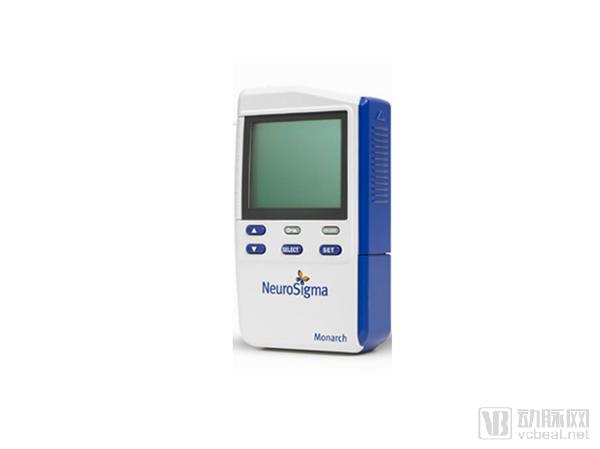
Monarch eTNS System Stimulator (Image from the official website)
The Monarch eTNS System consists of two components: a stimulator approximately the size of a mobile phone, and a gel electrode placed on the forehead. The device connects the stimulator via a wire to a gel electrode pad attached to the patient’s forehead, just above the eyebrows. Low-intensity electrical pulses generated by the stimulator are delivered to branches of the trigeminal nerve, which then transmit therapeutic signals to brain regions involved in ADHD. During treatment, patients may experience a tingling sensation on the skin. Although the exact mechanism of eTNS technology remains unclear, neuroimaging studies have shown that eTNS can activate specific brain areas that play a significant role in regulating attention, emotion, and behavior. It is important to note that the Monarch eTNS System must be used under the supervision of a home caregiver.
In a clinical trial involving 62 patients with ADHD, the efficacy of the Monarch eTNS System in treating ADHD was demonstrated. The clinical trial indicated that the response time to eTNS therapy is four weeks. After four weeks of use, patients should consult their healthcare professionals to evaluate treatment effectiveness.
The most common side effects of the Monarch eTNS System include drowsiness, increased appetite, difficulty sleeping, teeth grinding, headache, and fatigue. The system is contraindicated in the following patients: children under 7 years of age; patients with active implantable pacemakers or active implantable neurostimulators; and patients using wearable medical devices such as insulin pumps. Additionally, the Monarch eTNS System must not be used in the presence of radiofrequency energy, such as during magnetic resonance imaging (MRI), as the device has not been tested in MRI scanners. Low levels of electromagnetic energy from mobile phones may also interrupt therapy.
“Dr. Carlos Pena, Director of the Division of Neurological and Physical Medicine Devices at the FDA’s Center for Devices and Radiological Health, stated, ‘This new device offers a safe, non-pharmacological option. This approval reflects our collaborative approach with medical device companies. Together, we are advancing the development of pediatric medical devices to ensure that children have access to innovative, safe, and effective devices that meet their unique needs.’”
(Compiled by: Li Chengping)