WatMind Medical: Pioneering POCT 4.0 with Microfluidic Chemiluminescence Immunoassay Systems – A Case Study in Primary Healthcare
In vitro diagnostics (IVD) is one of the primary tools aiding physicians in clinical decision-making. However, the high-end IVD sector has long been dominated by multinational giants due to challenges such as significant R&D complexity, high entry barriers, and a scarcity of industry talent. The rise of a domestic startup in the point-of-care testing (POCT) field has brought hope for breaking this status quo.
Shenzhen Watmind Medical Technology Co., Ltd. (hereinafter referred to as “Watmind”), established in 2014, is a medical technology enterprise specializing in the field of chemiluminescence-based point-of-care testing (POCT) diagnostics, and possesses the world’s first microfluidic chemiluminescence system.
Its independently developed chemiluminescence POCT product is compact and lightweight (weighing only 5 kg), delivers high-precision test results, and consumes minimal samples and reagents. It can complete point-of-care testing within 10–15 minutes. Furthermore, it employs an automatically recognized, sealed chip cartridge to prevent cross-contamination and reduce human error.
Chemiluminescence + Microfluidics: Innovative Approaches to POCT
In recent years, the domestic POCT sector has experienced rapid development, maintaining a consistent annual market growth rate of 20%–30%. Industry experts predict that within the next 5 to 10 years, POCT applications will account for 70% of in vitro diagnostics. However, current mainstream fluorescence detection technologies still suffer from issues such as excessive background noise and insufficient detection accuracy.
In response, Watmind has adopted a solution combining chemiluminescent immunoassay with microfluidics technology. Li Quan, Chairman of Watmind, describes microfluidic chemiluminescence POCT as the fourth generation of POCT technology—termed POCT 4.0—following colloidal gold, lateral flow immunofluorescence, and fluorescence-enhanced technologies such as microfluidic fluorescence and quantum dots.

Image provided by the interviewee
“Chemiluminescence primarily addresses the insufficient accuracy of traditional POCT, while microfluidic chip platforms simplify the sample testing process and enable precise control over experimental procedures,” said Li Quan. “During our initial market research, we identified two major future trends: chemiluminescent immunoassay and POCT. The advantage of chemiluminescent analysis technology lies in its extremely high precision, making it mainly suitable for the development of large-scale fully automated equipment, with application scenarios in hospital clinical laboratories.”
However, the true market demand lies within clinical departments, yet there are currently no chemiluminescence-based POCT products available on the market. Therefore, Watmind aims to develop a product with high accuracy that can assist physicians in achieving rapid clinical diagnosis.
In 2017, watmind launched the world’s first chemiluminescence POCT device developed independently. At the recently concluded 16th China Association of Clinical Laboratory Practice (CACLP) Expo, watmind also unveiled its latest M5 four-channel chemiluminescence analyzer, which offers improved performance in testing channels compared to its previous single-channel M2 model.
Li Quan previously held positions at major medical device companies such as Mindray and Landwind, serving as Director of R&D for In Vitro Diagnostics (IVD) and Deputy General Manager of the IVD Business Unit. He has extensive hands-on experience in the system design of large-scale automated IVD equipment, pre-research on core key technologies, and mass production.
Diverse Product Portfolio, Exploring Multiple Clinical Application Scenarios
With the implementation of tiered diagnosis and treatment, primary healthcare has become the preferred market for many POCT companies to enter.
“In our marketing practice, we have identified another underserved customer segment for POCT: large hospitals,” Li Quan told VCBeat. Large hospitals are centers where complex and refractory cases are concentrated, leading to greater demand for laboratory testing in clinical decision-making. For patients with more complicated conditions, specialists often require immediate and precise test results to support adjustments to treatment plans and medication dosages. However, existing conventional laboratory testing methods often fail to meet this need.
Li Quan cited an example: a department director at the 301 Hospital once proactively expressed his desire to bring nurses along and carry watmind’s chemiluminescence POCT products for ward rounds.
“Our instrument requires only three steps to operate: power on via the touchscreen, load the capillary blood sample, and press the test button. The device automatically recognizes the test card information and delivers results within 10–15 minutes. Therefore, it can be operated even by general nursing staff. Typically, the test report is ready by the time the physician completes the patient’s medical history inquiry.”
Currently, watmind’s chemiluminescence POCT product portfolio comprises three main models, each targeting a distinct market segment. The single-channel M2 analyzer is primarily aimed at the primary healthcare market, such as laboratories in community health centers and township health centers. The four-channel M5 analyzer is mainly deployed in clinical departments of large hospitals. Meanwhile, the ten-channel D10plus analyzer, with its more pronounced throughput advantages, targets the laboratory medicine market in secondary hospitals and below.
Li Quan stated that in the future, watmind will advance in several directions, including product miniaturization, simplified operation, and chip functionality upgrades.
Watmind has completed three rounds of financing, totaling nearly RMB 100 million. VCBeat has learned that its latest round of financing will also be completed in the near future.
In 2019, New Opportunities and Challenges Coexist!
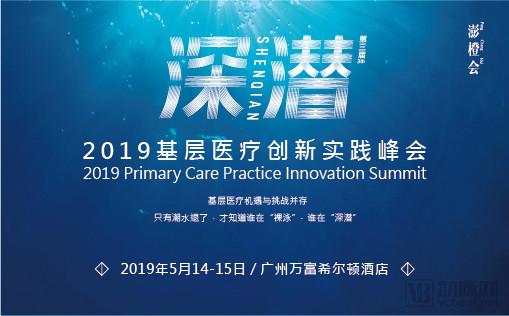
VCBeat Joins Forces with “Deep Divers” to Focus on the “Ocean” of Grassroots Healthcare Innovation
How to Thrive and Dive Deeper in the Vast “Deep-Water Zone”?
If you are also a “deep-dive enthusiast” of primary healthcare,
We welcome you to sign up and join us in conquering the vast “sea” of primary healthcare.