

Interview with SenseTime VP Zhang Shaoting on the 'Midgame Battle' of Medical AI
The wave of enthusiasm for medical artificial intelligence that surged in late 2016 appears to have entered its own cold autumn this early spring.
During this period, the more than 100 medical AI startups that emerged in rapid succession have gradually stratified into tiers, and the market has returned to rationality.
Nowadays, attention has shifted from endless speculation about the future to tangible, practical implementation—the medical AI industry has entered its “midgame.” It remains to be seen how many companies will survive to compete in the second half.
This does not mean that the medical AI battlefield has become stagnant and incapable of absorbing fresh talent. SenseTime has also been quietly strategizing in this field, preparing for a breakthrough built on long-term accumulation.
The SenseTime Smart Health team was established in 2018. However, as a leading enterprise in the field of computer vision, SenseTime had already deployed mature applications in scenarios such as smart cities, internet entertainment, and smartphones. After deciding to enter the healthcare sector, SenseTime rapidly built its own R&D and product capabilities. At the 2018 World Artificial Intelligence Conference held in Shanghai, it unveiled the prototype of SenseCare, a clinical-oriented smart diagnosis and treatment platform. During the same period, it won multiple world championships in competitions at MICCAI, the top conference on medical image computing.
As a rising star in the medical AI sector, what development path has it followed over the past year, and how does it plan to navigate this mid-game competition? To find out, VCBeat interviewed Zhang Shaoting, Vice President of Sensetime and Head of Sensetime Smart Healthcare. The following is a transcript of the interview:
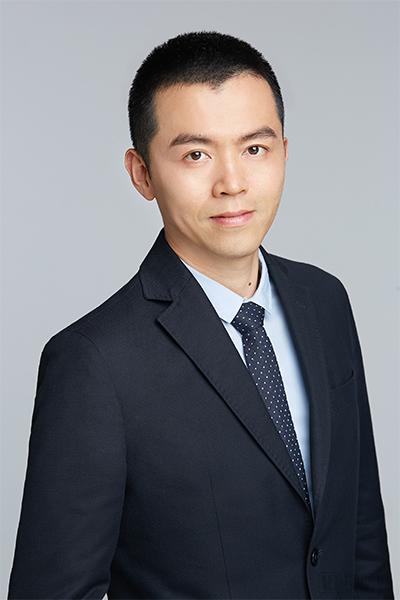
Zhang Shaoting, Vice President of SenseTime and Head of SenseTime Smart Healthcare
VCBeat: Why did SenseTime choose to enter the healthcare sector at this particular time?
Zhang Shaoting: First, the healthcare sector is a key application scenario for artificial intelligence, and it is definitely an area that SenseTime must pursue. In fact, at the research level, SenseTime began exploring healthcare-related directions relatively early, with relevant academic papers published two or three years ago. However, the company did not previously focus on product development or commercialization, nor did it engage in external publicity. With accumulated R&D expertise and the appointment of a suitable business leader, subsequent progress has followed naturally.
VCBeat: Moving from academia to the corporate sector, could you share your insights on the differences you have observed between the two?
Zhang Shaoting: In recent years, Chinese internet and AI companies have recruited numerous top professors in the field of artificial intelligence from overseas universities to lead teams back in China. I have also transitioned from a university professor to the head of business operations at a startup, which is quite a significant leap.
In fact, holding a faculty position at a North American university is remarkably similar to running a small startup. The university provides “angel investment,” which professors use to recruit team members and achieve initial results. Subsequently, they seek “financing” from major funding agencies. Throughout this process, they must engage in strategic planning, talent acquisition, and performance management. The most significant difference is that academics do not need to worry about revenue generation; instead, they secure funding by consistently publishing high-quality research papers.
In the corporate world, however, the situation is different. Beyond diligently refining products and advancing business operations, companies must also consider how to generate revenue and even profits, as well as how to sustain high-quality revenue growth. In other words, their offerings must deliver commercial value in the short, medium, and long term. As capital markets become increasingly rational, enterprises are expected not only to deliver products with practical utility to customers but also to provide accountability to investors and the market. In this process, product deployment does not necessarily equate to essential, high-demand utility; market share does not necessarily translate into revenue; and revenue does not necessarily guarantee cash collection or profitability. Therefore, balancing both product development and commercial viability is no easy task.
VCBeat: How do you view the current business model issues in medical AI? Has it reached the stage where we should be discussing revenue generation?
Zhang Shaoting: Compared with businesses such as smart cities, the smart healthcare sector indeed has higher entry barriers and regulatory certification requirements, making revenue generation more challenging. On the other hand, generating revenue is by no means impossible. In fact, apart from the consistent revenue streams enjoyed by GPS (GE, Philips, Siemens) in medical software, some pre-IPO AI healthcare companies also demonstrate self-sustaining profitability. As long as products or algorithms are well-developed and address precise clinical needs, revenue will follow naturally.
Returning to Sensetime, even our new team focused on smart healthcare achieved high-quality revenue in the first quarter of this year by selling the SenseCare smart diagnosis and treatment research platform and empowering upstream and downstream partners with AI medical algorithms. Relative to the current scale of our healthcare team, we have generated tangible profits. Of course, there will be greater investments in the future, but every step should yield solid business outcomes.
The underlying reason is that Sensetime has consistently maintained a serious and disciplined approach to corporate management. A company must first ensure healthy operations, balancing revenue and profitability with growth, rather than engaging in indiscriminate cash burning. Therefore, we are continuing to explore new business models capable of generating sustainable long-term revenue, thereby charting a path toward sustainable development.
VCBeat: What kind of products can both meet the rigid demands of pain points and generate healthy revenue?
Zhang Shaoting: In the field of medical imaging, radiologists involved in diagnosis are often accustomed to information systems and post-processing workstations from manufacturers such as Siemens. These vendors have accumulated over a decade of development experience, and their products are already highly mature.
We can continue to provide physicians with AI-assisted diagnostic capabilities in this phase to improve diagnostic efficiency, but we should not limit ourselves to this. For instance, many clinicians rely on personal experience when planning surgeries, lacking convenient and intelligent tool support, yet clinical treatment plans directly impact patient prognosis. We are more committed to leveraging artificial intelligence to assist clinicians who have historically lacked adequate tool support, thereby enhancing the overall quality of healthcare system resources. Therefore, we have consistently defined our product as a tool that empowers the entire clinical workflow—diagnosis, treatment, and recovery. Products that address critical, unmet needs will naturally find market demand.
VCBeat: How does Sensetime position its AI products?
Zhang Shaoting: At last year’s World Artificial Intelligence Conference, SenseTime unveiled the prototype of its SenseCare intelligent diagnosis and treatment platform. This platform-level product was designed to address physicians’ critical needs, capable of meeting high-concurrency demands for 3D medical image post-processing. It features an ultra-lightweight web application that supports access from various mobile devices at any time, and allows flexible development of vertical applications tailored to different clinical specialties on the platform.
Currently, SenseTime has been developing algorithms and derivative products across multiple verticals, including orthopedics, respiratory medicine, and cardiology. These products and algorithms are driven by clinical needs and designed for real-world application scenarios. This year, SenseTime will hold its Artificial Intelligence Summit on May 15, where it will announce its latest product advancements.
VCBeat: Sensetime has made empowering its upstream and downstream partners a business-oriented strategy. Why has it adopted this approach?
Zhang Shaoting: In my view, the biggest challenge in the healthcare + AI industry is not technological, but rather related to application scenarios. Without a highly suitable scenario for implementation, even companies with superior technology will struggle to sustain their operations.
The healthcare sector encompasses numerous segments, each characterized by complex scenarios that require long-term accumulation of expertise. As a result, the landscape is naturally diverse and fragmented, with no single player able to dominate the entire market. Although we consistently emphasize full-stack capabilities spanning diagnosis, treatment, and recovery, this refers to achieving deep specialization within a specific category or even a particular problem, rather than independently handling every link across all directions.
As an AI platform company, SenseTime boasts formidable technical barriers; however, it is challenging to surpass companies that have been deeply entrenched in specific verticals for many years in certain application scenarios within a short timeframe. Some outstanding companies have dedicated over a decade to addressing specific issues and have developed mature products. We are keen to embrace an open mindset to achieve win-win cooperation.
VCBeat: So how does Sensetime select its partners and determine its cooperation models?
Zhang Shaoting: SenseTime boasts strong industry resources and has established a solid brand reputation in the field of artificial intelligence, attracting numerous high-quality partners. When selecting partners, we prioritize their depth of business integration and product quality. For instance, SenseTime has engaged in deep collaboration with Shenzhen Yino Technology Co., Ltd. in the area of radiation therapy.
With over a decade of accumulated expertise, Yinuo has developed and refined its radiotherapy information systems, obtaining multiple CFDA certifications and deploying solutions in more than 400 hospitals, including the Chinese PLA General Hospital (301 Hospital), Sun Yat-sen University Cancer Center, and Zhejiang Cancer Hospital. Leveraging these systems, Sensetime Healthcare has developed a series of algorithms for organ and target volume delineation. Together with Yinuo, we aim to empower radiation oncologists by enhancing the productivity of this limited workforce, thereby extending benefits to a broader population of patients at the primary care level. This strong partnership and win-win framework is certainly something we are eager to pursue. We are also continuously expanding our collaborations into additional fields.
VCBeat: SenseTime Smart Healthcare has established several joint laboratories both domestically and internationally. What is the strategic intent behind this initiative?
Zhang Shaoting: Sensetime’s philosophy is to uphold originality, which is why we have consistently supported the work of universities. Frankly speaking, while academic research may sometimes diverge from corporate priorities, we share a common commitment to talent development and to exploring the future.
Having previously served as a university professor, I am better positioned to identify a win-win balance and foster in-depth collaboration. For instance, we will host multiple competitions at this year’s MICCAI, the premier academic conference on medical image computing. By channeling our accumulated data resources and expert knowledge back into the research community, we aim to advance the field as a whole—a shared objective of our joint laboratory.
VCBeat: Could you provide an outlook on the future of industrializing smart healthcare?
Zhang Shaoting: It is always easy to look back on the past, but difficult to predict the future. However, as previously mentioned, “smart healthcare” is not exactly an emerging concept. Rather than focusing on developments over the past two or three years, it may be more insightful to reflect on the ups and downs of the past one or two decades.
Some pragmatic companies that have been operating for over a decade are well worth attention and study. They have developed high-quality products, addressed critical pain points with essential needs, and obtained CFDA certification early on. However, these are only phased successes. What is their commercialization model? How is the bargaining power of their AI components demonstrated? Is market education necessary? Can they ultimately justify their current lofty valuations? These are the real challenges. In this regard, I remain cautiously optimistic. The road ahead is long and arduous; we must move forward with pragmatism.
About Zhang Shaoting
Vice President of SenseTime and Deputy Director of the SenseTime Research Institute. Previously served as a faculty member in computer science departments at North American universities. In 2016, he was recruited by Andrew Ng and Yuanqing Lin to join Baidu’s Deep Learning Laboratory (IDL) as Chief R&D Architect, where he led initiatives in smart healthcare. He joined SenseTime in 2018. During his academic career, his papers received multiple MICCAI Young Scientist Awards and nominations, including numerous cover articles and highly cited works. Notably, one of his papers ranked second in single-paper citations (and first among non-review articles) in the journal Medical Image Analysis between 2012 and 2017, accumulating nearly 5,000 total citations. He has also served on the editorial boards of several journals.