Liangdian Technology Files IPO Prospectus: Empowering Grassroots Healthcare with Intelligent POCT Platform
In recent years, POCT (point-of-care testing) has become one of the most capital-favored hotspots in the medical device industry, thanks to its advantages such as ease of operation, low cost, and short testing time.
Miniaturization, user-friendly operation, data interconnectivity, and grassroots-level application are the mainstream trends in the current development of POCT products.
In this somewhat crowded sector, where the "winner-takes-all" effect is beginning to emerge, Jiangsu Liangdian Technology Co., Ltd. (hereinafter referred to as "Liangdian Technology") has emerged as a dark horse by leveraging its proprietary intellectual property to develop an intelligent, portable iPOCT testing platform.
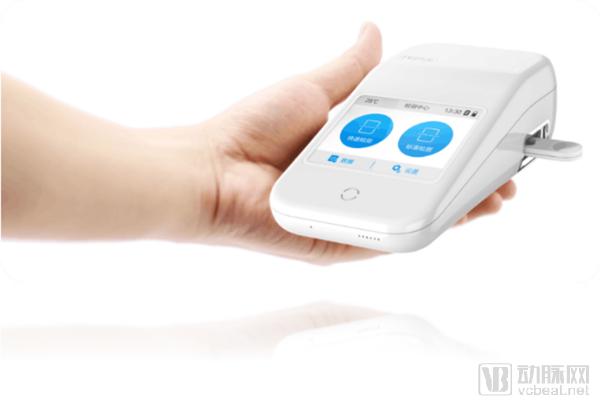
Image provided by the interviewee
Liangdian Technology is a biotechnology company integrating R&D, production, and sales, with a focus on medical in vitro diagnostic (IVD) products. Leveraging high-efficiency fluorescent quantum dots at an internationally leading level as its core technology and material, the company engages in the development and production of products in the fields of biological reagents, biodiagnostics, and biomedicine. It primarily develops multiple quantum dot immunofluorescence IVD reagents and testing equipment, and has established a proprietary smart interconnected technology platform.
"Acting at the Right Time, Entering the Primary Healthcare Market"
As a startup founded in 2014, Liangdian Technology did not enter the POCT field at an early stage. At that time, the domestic POCT sector had already undergone several years of rapid development, and earlier entrants had begun to distinguish themselves.
How to Overtake on the Curve in a Crowded Race Track and Make Your Products Meet the Broader Application Scenarios of POCT? Chai Xiangdong, the founder of Liangdian Technology, has set his sights on the underexplored grassroots healthcare and home healthcare markets.
Dr. Chai Xiangdong stated, “Constrained by hardware limitations, varying levels of physician expertise, and outpatient volume, point-of-care testing (POCT)—which is portable, cost-effective, and flexible in application scenarios—has become the preferred choice for primary healthcare institutions when procuring diagnostic equipment, as compared to large-scale medical devices.”
In 2017, the State Council, in its “13th Five-Year Plan for Deepening the Reform of the Medical and Healthcare System,” designated tiered diagnosis and treatment as the top priority among key reform tasks; it called for establishing a scientific and rational tiered diagnosis and treatment system to promote a new healthcare order characterized by initial consultations at primary care facilities, two-way referrals, separate management of acute and chronic conditions, and coordinated collaboration between upper- and lower-level medical institutions.
The implementation of this system has promoted the expansion of the primary healthcare market, bringing new opportunities for POCT.
Leveraging Proprietary Technology to Create Smart, Portable iPOCT
The market is substantial; how to enter it? Leveraging its independently developed high-efficiency fluorescent quantum dots as core materials, Liangdian Technology has created an intelligent, portable iPOCT platform and established a fully integrated supply chain encompassing quantum dot raw materials, diagnostic reagents, and equipment manufacturing.
Quantum Dots (QDs) are inorganic semiconductor materials at the nanoscale. Owing to their small particle size, strong luminescence, picogram-level sensitivity, excellent photostability, requirement for a single excitation source, and multicolor emission capabilities, they have emerged as one of the most promising fluorescent labeling materials for next-generation applications.

Image provided by the interviewee
According to Dr. Chai Xiangdong, the iPOCT platform developed by Liangdian Technology replaces the colloidal gold and organic fluorescent microsphere probes commonly used in the market with quantum dot fluorescent probes. Compared with traditional POCT products, this approach reduces errors, shortens detection time, and improves the accuracy of test results.
In terms of reagents, Liangdian Technology has adopted C-reactive protein (CRP), an inflammatory marker characterized by ease of use and rapid reaction, as its entry point. By incorporating additional inflammatory markers such as serum amyloid A (SAA) and procalcitonin (PCT), it provides auxiliary diagnostic support for common conditions like colds and fever in primary care settings. Meanwhile, the company is actively developing and promoting its product lines for cardiac and pregnancy-related tests to further meet the diverse needs of diagnosis and screening at the grassroots level.
He concluded that, in response to the common issues with testing equipment in primary healthcare settings—such as bulky size, poor portability, and the lack of network connectivity and data management modules—Liangdian Technology has “tailor-made” the following features for primary healthcare institutions during the development of its iPOCT platform:
1. Utilizes quantum dots with independent intellectual property rights as fluorescent labeling materials, offering high accuracy and enabling fully quantitative determination;
2. The testing device weighs approximately 440g, is compact and lightweight for easy portability, offers flexible application scenarios, and is better suited for primary care settings;
3. Intelligent interpretation, easy operation, and high sensitivity; only 5–20 μL of blood sample is required for testing (5–10 μL for inflammation detection, and 20 μL for other tests).
4. Short detection time: results for nearly 20 test items are available within 6–10 minutes;
5. The device can upload data to a PC, the hospital LIS system, and customer-designated servers via wired or wireless connections.
Beyond the inherent advantages of its technology and products, another strength of Liangdian Technology lies in its integrated model of independent R&D, manufacturing, and sales. “This model has significantly reduced our product costs, and cost-effectiveness is typically one of the primary criteria for primary healthcare institutions when procuring equipment,” said Dr. Chai Xiangdong, founder of Liangdian Technology.
It is reported that Liangdian Technology secured two rounds of financing in 2018, led by Pengrui Capital and Dingxin Capital, with participation from Zhongshi Dingcheng and CAS Star. In 2019, Liangdian Technology will increase its investment to continue focusing on the development and upgrading of convenient and smart point-of-care testing platforms.
The company is currently seeking a new round of financing.
In 2019, new opportunities and challenges coexist!
VCBeat Joins Hands with “Deep Divers” to Focus on the “Ocean” of Grassroots Healthcare Innovation
How to Survive and Thrive in the Vast “Deep Water Zone” by Diving Deeper?
If you are also a “deep-dive enthusiast” of primary healthcare,
We welcome you to sign up and join us in conquering the vast “ocean” of primary healthcare.