

What Investors Have Been Watching Since the Dawn of the Medical New Technology Era: Insights from the 2019 Healthcare Investment Summit

Baidu Ventures
AI Investment Firm
At the “2019 The 3rd Joyful List Summit on Healthcare Investment” hosted by Capital Plus, a medical technology roundtable discussion themed “The Future Is Here” brought together perspectives from the past, present, and future, featuring extensive discussions on how emerging medical technologies empower the industry. Panelists shared their vivid insights on frontier technological developments, implementation status, and associated risks.
The following is the full text of the guest's speech:
Roundtable Discussion: "The Future Is Here"
Moderator: Yang Ruirong (Founding Partner, Yuan Yi Capital)
Guest Speaker:
Zhao Chunlin (Founder of Anlong Fund)
Ren Bobing (Vice President, Baidu Ventures)
Bi Yuanfeng (Co-founder and Chief Operating Officer of VCBeat)
Huang Xin (Managing Partner, Kaifeng Ventures)
Cao Yuan (Vice President of Operations, Infervision)
Xu Yingqi (Founder of Yidianling)

Host Yang Ruirong: VCBeat, where Mr. Bi Yuanfeng is based, conducts in-depth research on emerging technologies. Could you please kick off this dialogue by addressing the following: What are new technologies? What does “the future is already here” mean? What has already arrived, and what still lies ahead?

Bi Yuanfeng, Co-founder and Chief Operating Officer of VCBeat
Bi Yuanfeng: Let me explain in two sentences what we consider to be “new technologies.” VCBeat has a core slogan: we focus on the transformation of the healthcare industry driven by technology. By “new technologies,” we refer to foundational or general-purpose technologies that did not previously play a significant role in the healthcare industry. These technologies were not originally part of the healthcare sector, but after five years of accumulation and research, we have roughly categorized new medical technologies into three types:
The first category is digital technology, which primarily encompasses the internet, mobile internet, Internet of Things (IoT), big data, artificial intelligence (AI), augmented reality (AR), and virtual reality (VR). Its core objectives are twofold: to enhance efficiency and to uncover new demands.
The second category is biotechnology, primarily centered on genes and current biotechnologies such as monoclonal antibodies, polyclonal antibodies, and nucleic acids. The main approach involves drug-like therapeutic solutions.
The third category comprises technologies centered on intelligent manufacturing and new materials. This category mainly consists of two parts: one is surgery-like solutions, such as surgical robots; the other is rehabilitation-focused technologies, such as exoskeleton robots.
Host Yang Ruirong: AI is a typical representative of new technologies. Mr. Cao Yuan from Infervision, what does the future hold for Infervision?
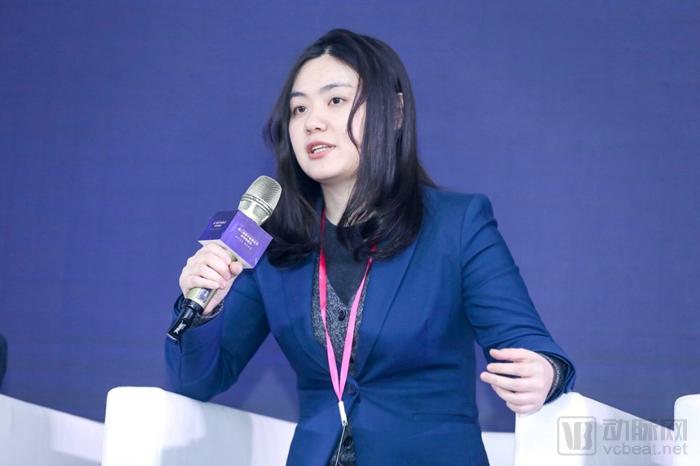
Cao Yuan, Vice President of Operations at Infervision
Cao Yuan: Across various industries, including in communications with investors, it is widely acknowledged within the healthcare sector that AI is a valuable asset. However, there remains considerable confusion about how to effectively penetrate this traditional industry. AI and healthcare exhibit diametrically opposed characteristics in terms of technology, industry entry points, and scale. Consequently, a frequent question arises: While AI is undoubtedly a powerful technology, how do you integrate it into the healthcare sector? Regarding market size, although we observe numerous possibilities for commercial implementation, the most critical question remains: How large is the addressable market?
If AI is viewed solely as a medical product, the market size may be limited to less than several billion yuan. However, if it is regarded as an enabler for the industry—for example, by integrating into the healthcare informatics sector and connecting the entire upstream and downstream supply chain—the market for healthcare informatics services could reach tens of billions of yuan.
Host Yang Ruirong: What is our current business model? And what will be the future business model?
Cao Yuan: The most critical point is that we cannot focus on AI in isolation; instead, we must integrate the entire upstream and downstream segments of the industry chain. This year, commercialization will undergo significant validation. Many business models are met with skepticism before their emergence, but once they arrive, people will come to regard them as a matter of course. A key strategic objective for Infervision this year is to fully connect the upstream and downstream aspects of commercialization and demonstrate to the market that its scale extends far beyond the tens of billions of yuan that many currently envision for a single product market.
Host Yang Ruirong: The human mind and psyche are among the most profound and enigmatic aspects of our being. Mr. Xu Yingqi, what direct new technological applications has Yi Dian Ling introduced in the field of mental health? And in a sector that may not appear to be advancing particularly rapidly, what role is your company playing in driving its progress?

Xu Ying, Founder of Yidianling
Xu Yingqi: We employ a data analytics methodology to assess clients’ personality traits and precisely match them with counselors based on the assessment results. Additionally, we are researching semantic analysis techniques to gauge clients’ current psychological states by analyzing their response patterns and speech rate. Third, we are conducting research on micro-expressions. One reason for the relatively slow development of psychological counseling in China is that a significant portion of the general population is reluctant to seek face-to-face consultations with mental health professionals. In the context of anonymous online interactions where visual cues are absent, counselors must rely solely on auditory information. It is challenging for ordinary counselors to deliver high-quality services under these circumstances, necessitating technological support. Semantic recognition technology can provide real-time backend guidance to counselors by analyzing parameters such as speech rate, pitch, and vocal pleasantness. The most significant challenge in the industry’s development is the slow pace of practitioner growth, given that 70%–80% of cases share similar characteristics. Our database accumulates extensive structured data from a large volume of cases, enabling counselors to retrieve solutions from past cases to assist and enhance their counseling practice.
Host Yang Ruirong: When will psychological assessment scales become more automated and objective?
Xu Yingqi: Current assessment scales are all questionnaire-based. Many people abroad answer based on their subjective perceptions, but Chinese respondents have a distinct tendency to guess the “correct” answer intended by the question designer. As a result, their responses may not be objective or truthful, even though many scales include lie-detection items. For example, in our interview assessment tools that measure physical and mental health, individuals with strong counter-reconnaissance abilities can often deduce the optimal answers. To address this, we have incorporated facial expression monitoring, along with analysis of psychological state, heart rate variability, behavior, and cognition during the response process, which largely achieves our intended objectives.
Moderator Yang Ruirong: Could Mr. Huang Xin of Kaifeng Venture Capital and Mr. Zhao Chunlin of Anlong Fund please share your views? Compared with China, is the United States still ahead in new medical technologies, or has it already been surpassed by China? What are the respective advantages of each side?

Huang Xin, Managing Partner of Kaifeng Venture Capital
Huang Xin: Kaifeng Venture Capital is an institution committed to early-stage technology investments, typically entering at the angel or Pre-A round and usually serving as the lead investor. From my perspective, we do not distinguish between China and the United States; rather, we evaluate global competitiveness at the technological level and assess whether a solution can address problems that existing traditional methods cannot.
Precision medicine is widely understood. In our view, it remains at the stage of matching patients with the right medications, lacking a critical dimension: how to administer drugs at the right time. We believe artificial intelligence empowers existing technologies to create a complete closed loop. From Kaifeng’s perspective, whether in China or the United States, we are concerned with future trends and whether the technology itself can bring about revolutionary advancements.

Zhao Chunlin, Founder of Anlong Fund
Zhao Chunlin: China’s scientific research and development directions have become quite similar to those in the United States, but I believe there is still a significant gap in medical innovation. The issue is not that new technologies are inadequate; rather, the primary reason is that physicians’ salaries are too low, given that all new medical technologies require endorsement and adoption by doctors. Personally, having spent 13 years in the United States and now having been back in China for 15 years, I remain quite excited when observing advancements in medical innovation. Since the 1980s, we have studied biology, gene editing, cell therapy, stem cells, genetic diagnostics, and other fields, and these technologies have all been successfully developed. We have also invested heavily in companies pioneering these new technologies. Initially, such innovations emerged primarily from the United States. For Chinese companies seeking to drive innovation with new technologies, it is advisable to first identify which overseas startups have recently secured successful financing rounds at valuations exceeding $100 million. If you launch a venture together with the team behind such a company, I am willing to invest.
Host Yang Ruirong: Throughout the evolution of internet healthcare from the 1.0 to the 2.0 era, Version 1.0 was driven by traffic as the entry point. Baidu is both an internet company and a healthcare services provider. As a relatively independent entity, how does Baidu Ventures view emerging developments in new medical technologies, such as AI and internet-based solutions?

Ren Bobing, Vice President of Baidu Ventures
Ren Bobing: New technologies in the AI era, particularly in the biomedical field, are evolving along the trajectory from AI perception and computation to the emergence of new life forms. In detail, this involves perceiving high-granularity data, compensating for new data dimensions, achieving low-power computation, and developing smaller sensors enhanced by integrated perception and computing capabilities. Regarding new life forms, this includes organoids, cellular robots, or novel bodily organs and components that can simulate organ functions while integrating perception and computation. Furthermore, when combined with brain-computer interfaces, these advancements may even give rise to a new form of humanity. This represents our research into new medical and biotechnological developments in the AI era.
We will bypass traditional investments in biopharmaceuticals and medical devices. Based on our research in this area, we will invest in biotechnology companies and innovative solution providers in the AI era. In China, we will focus more on innovative solution companies that address significant challenges by defining new technologies, new products, and new user segments, combined with insurance and novel service models. In the United States, our investments are more heavily weighted toward biotechnology. Meanwhile, in China, we continue to identify more technology-driven companies suited for the AI era, which remains a core component of our investment thesis.
Host Yang Ruirong: Disruptive new technologies and products inevitably face risks related to values, ethics, privacy, and regulation. Mr. Bi Yuanfeng, could you please share your perspective on these risks from a research standpoint, and discuss how they can be mitigated?
Bi Yuanfeng: According to statistics from the past few years, the risks we have observed in the field of new technology interventions are mainly concentrated in the following areas.
First, with regard to legislation, market observation indicates that regulation has never constrained or restricted the development of this industry; rather, the boundaries were initially undefined. Throughout this process, regulators have consistently adopted a post-hoc approach, which poses a risk. The key to mitigating this risk lies in whether such an approach can promote the overall development of the industry and generate social value.
The second risk is the conflict with vested interests. Over the past two to three decades, a group of vested stakeholders has become entrenched in this industry. For physicians, leveraging new technological means to disseminate their professional value and achieve a reconstruction of their self-worth is highly practical; such technologies enable them to attract patients even without relying on hospitals, despite being merely commonplace internet technologies. Thus, it is evident that conflicts with vested interests will remain a long-standing issue.
The third risk is a challenge inherent to all new models and technologies: there is always a probability of failure. Since failure is inevitable, the public needs to be tolerant, allowing innovators to experiment, fail, and rise again. This is the most critical factor.
Host Yang Ruirong: In the field of medical imaging, there is also the challenge of being unable to utilize vast amounts of data resources. Has Infervision encountered such difficulties?
Cao Yuan: In terms of inference, although the data does not belong to us but rather to hospitals and patients, the algorithms are ours. When we first began developing our models, foreign hospitals were indeed more open. If our products prove effective, foreign hospitals are willing to provide access to certain patient databases, but this will always be accompanied by strict confidentiality agreements, including data de-identification. The data we receive will not contain any personal information about patients.
Our primary objective is to optimize the model so that the algorithm can be deployed in hospitals. To this end, we have consistently focused on improving algorithms by leveraging cumulative data volumes. We provide only the algorithms and do not disclose any patient-specific personal data; furthermore, all our servers are deployed within the local infrastructure of the hospitals. For markets with stringent privacy regulations, such as the United States, Japan, and Europe, we simply deliver the algorithms to enable and empower healthcare providers without retaining or claiming ownership of the data.
Host Yang Ruirong: From a broader internet perspective, have any new business models emerged across the entire health and wellness sector?
Ren Bobing: When it comes to patient traffic and internet-based or mobile health services, our thinking remains centered on innovative solutions. In the past, the focus was more on acquiring patient data and traffic directly from healthcare institutions themselves. Tiered diagnosis and treatment still require disruptive innovation; however, such disruptive efforts have not been well executed and have failed to alter the existing landscape.
From the perspective of other industries, generating new traffic and launching a new theme do not necessarily require complete disruption. In the field of internet healthcare, we focus more on areas where insurance serves as an entry point. Insurance has traditionally been a financial instrument, but in the future, it will become an entry point for services and traffic. To support this role, it is essential to have judgment capabilities regarding new data and risk control, leverage new service chains and connect with new user groups, and acquire data through the integration of various resources. Therefore, insurance is merely an entry point, while the specific services constitute the actual solution.
Such companies have thrived in the United States, where we see a wide variety of themes targeting highly segmented populations—down to specific age groups, income levels, or geographic regions—many of which have grown into unicorn companies. This phenomenon remains rare in China. We aim to identify and nurture more entrepreneurs who can leverage China’s healthcare system to imagine or even disrupt existing models through innovative solutions. We are confident that significant opportunities will emerge in the future.