

Julikang's Rise as a Leading Chain Platform in China's Third-Party Sterilization Supply Industry Amid Rapid Growth Phase
Since the Spring Festival of 2018, Xu Jing, General Manager of Julikang, a leading third-party sterile supply center platform in China, has not taken a single weekend off, accelerating the rollout of new projects across the country with the goal of opening 13 additional sterile supply centers by 2019–2020, on top of the eight already in operation.
Third-party sterile supply centers are primarily responsible for the cleaning, disinfection, sterilization, and aseptic transport of reusable surgical instruments, diagnostic and therapeutic devices, clean surgical gowns, surgical drapes, and other items from healthcare institutions. They also conduct quality control throughout the processing workflow, issue monitoring and testing reports, and ensure full traceability of items to guarantee the quality of sterile supplies.
With high barriers to entry in the industry, driven by the combined forces of policy support, market demand, and technological advancements, the third-party sterile supply sector has entered a period of growth opportunities. By solidifying its presence in regional markets, Julikang continues to create replicable models. What are the underlying logics behind its development, chain expansion, and industrial layout? VCBeat (WeChat ID: vcbeat) conducted an exclusive interview with Xu Jing, General Manager of Julikang, to gain insights into the latest trends in industry development.
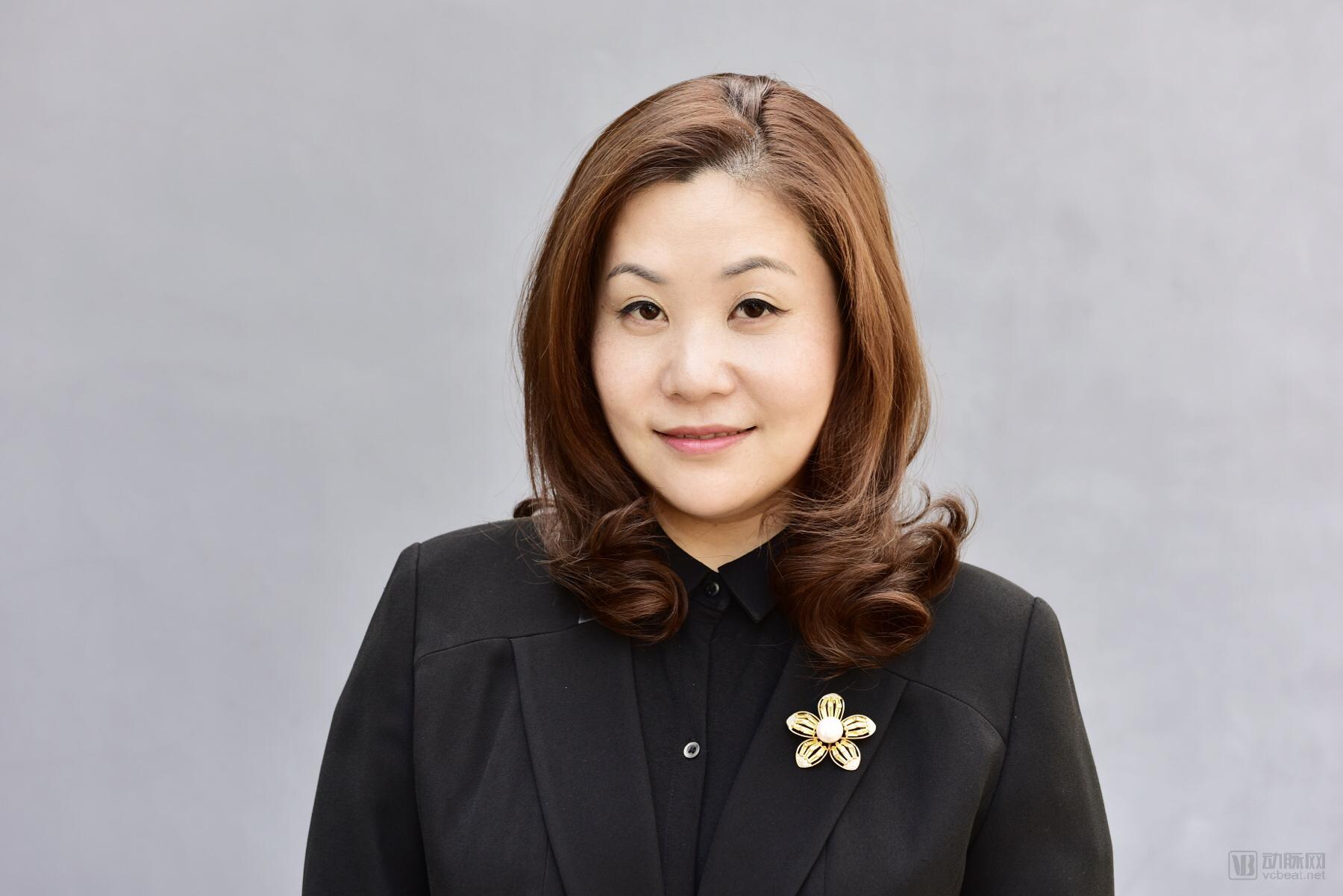
Xu Jing, General Manager of Julikang
Policy Tailwinds
From its inception in 2010 until 2017, the development of Julikang remained in a phase of continuous exploration. Each market entry required comprehensive market research, qualification approvals, and support from local governments. The most significant turning point occurred in August 2017, when the National Health Commission issued the "Notice on Deepening the Reform of Streamlining Administration, Delegating Power, and Improving Services to Stimulate Investment Vitality in the Medical Sector," which added five new categories of independently established medical institutions, including rehabilitation medical centers, nursing centers, sterile supply centers, small and medium-sized ophthalmic hospitals, and health examination centers.
As a result, third-party sterile supply services have transitioned from an “open unless prohibited” and filing-based model to a stage characterized by clear policies and regulations and strengthened administrative oversight. “The professional threshold for the entire industry has been raised. Capital that previously rushed in will become more cautious, as the industry is becoming increasingly specialized, requiring substantial accumulation of industrial expertise and compliance with qualification standards. Risk levels are rising, and investment costs are escalating accordingly.”
Following the favorable policy tailwinds, Julikang entered a phase of rapid growth. As Xu Jing described it, the company began to “stake out its territory,” expanding its partner network while continuously enhancing its capabilities in aggregating medical resources and integrating industry assets.
From another perspective, third-party sterile supply centers serve medical entities, while healthcare institutions are indeed facing a reality of increasingly stringent regulation of hospital-based sterile supply departments and growing emphasis on nosocomial infection control. They also grapple with thorny operational challenges, such as scarce medical land resources, shortage of specialized personnel, high construction and operating costs, outdated equipment, and low work efficiency. Consequently, the outsourcing of sterile supply services from hospitals has become a prominent trend.
From the perspective of the broader transformation in the healthcare industry, 2018 was a pivotal year. The establishment of the National Healthcare Security Administration, the implementation of the “4+7” volume-based procurement policy, the separation of prescribing from dispensing, and reforms on the payment side are reshaping the foundational landscape of China’s healthcare system.
Xu Jing told reporters that even top-tier tertiary hospitals in first-tier cities like Shanghai, which have relatively good operational performance, are currently “tightening their belts.” In the past, tertiary hospitals were generally perceived as well-funded and unconcerned about the costs of outsourcing their sterile supply centers. However, following the implementation of the policy separating drug sales from medical services, “comprehensive management evaluations now cover all levels of management, including the logistics support department to which the sterile supply center belongs. As an auxiliary department, the primary considerations for outsourcing are freeing up space and controlling costs. The separation of drug sales from medical services has indeed placed significant pressure on hospitals to control expenses.”
How can third-party sterile supply centers like Julikang undertake hospital outsourcing services, and what standards must they meet? Xu Jing believes that the primary requirement is for quality to align with hospital standards, ensuring the supply of sterile items through technical capabilities that cover both emergency and routine processing. Currently, Julikang has completed its Phase I layout in key provinces with abundant medical resources, such as Jiangsu and Zhejiang. For instance, hospitals affiliated with Shanghai Jiao Tong University and Fudan University are already utilizing Julikang’s services. After comprehensively evaluating factors such as economic benefits, hospital acceptance, service solution maturity, and logistics coverage, the company will gradually refine its Phase II network expansion, “as we have verified that the chain model is replicable.”
Chain and Regional Layout
When asked whether the chain operation model should prioritize rapid nationwide expansion or focus on deepening presence in a specific region to build a solid foundation, Xu Jing favors the latter. Regional intensification facilitates centralized waste disposal and environmental protection, while also enabling the sharing of regional medical resources, reducing investment in medical infrastructure, and lowering operational costs.
“In a given region, Julikang conducts thorough market research, covering medical resources, site selection, land costs, and the coverage of logistics and transportation networks. Two years ago, our service radius was approximately 50 kilometers; it has now been expanded to 80–100 kilometers. This expansion requires comprehensive consideration of various factors. For instance, site selection is often based on industrial parks, which must meet environmental protection requirements for wastewater discharge. There are relatively few industrial parks that satisfy the environmental impact assessment (EIA) criteria for healthcare facilities. Additionally, compliance with safety assessments and fire protection regulations must also be ensured.”
Xu Jing revealed to reporters that Julikang currently takes approximately 2–3 months to select a site location, with the construction period shortened to 3–3.5 months. “It takes nearly half a year before operations can commence. Immediately thereafter, Julikang will dedicate 1–1.5 years to trial operations, focusing on team integration and market penetration. As a healthcare institution, the expected timeframe for achieving market viability is longer; profitability is not anticipated immediately in the first year of establishment.” Currently, Julikang operates eight centers, has established connections with over 200 hospitals, and maintains a 100% annual contract renewal rate for its service agreements.
As the starting point for Julikang, Shanghai is already selecting a site to build a second standardized center in Minhang District, leveraging the comprehensive advantages of Pudong and Minhang Districts, particularly the areas surrounding Pujiang Town.
"Among the medical institutions partnered with Julikang, more than half of the business volume comes from Grade 3A hospitals, supplemented by Grade 2A hospitals, community health centers, and specialized outpatient clinics. 'Judging by current trends, an increasing number of tertiary hospitals are considering outsourcing their sterile supply departments. As long as we implement refined management and gain hospital recognition for our quality, the market potential is substantial. Moreover, Shanghai's chain-model pilot has already gained industry-wide recognition.'"
Has the chain model of third-party sterile supply centers been fully validated? In response to the reporter’s question, Xu Jing stated that Julikang has at least “secured the initial ticket to enter hospital facilities.” She further noted that even administrative regulatory authorities are likely to recommend that healthcare institutions and specialized outpatient clinics with non-compliant sterile supply centers outsource these services to professional medical service providers to mitigate infection control risks associated with sterilization and supply. With the professional qualifications of our sterile supply center ensuring compliance for healthcare institutions, and given the favorable trend of hospitals opening up to outsourcing, we are highly confident. Of course, Julikang’s subsequent expansion plans are also based on hospitals that have previously expressed interest; we will only proceed with new construction once there is clear market demand.
According to Xu Jing, the greatest challenge in chain expansion is talent development, a common issue across the entire third-party sterile supply center industry. Currently, each center requires a basic staffing complement of five nurses: one with an associate senior professional title, one nurse supervisor, and three staff nurses. Additionally, specialized personnel for operational coordination are required.
Julikang’s solution is to encourage existing staff to obtain senior professional titles, such as Associate Senior Professional or Nurse Supervisor, rather than hiring externally. “Once the software and hardware infrastructure are in place, Julikang requires talent with accumulated experience. On this basis, professionals should advance their expertise to earn associate senior or supervisory titles. As a company, we must have the capacity to cultivate individuals with enterprise management experience and capabilities, thereby establishing an internal talent development mechanism.”
Intelligence and the Three Major Initiatives
Currently, there are few enterprises in the market capable of undertaking professional Central Sterile Supply Department (CSSD) services. In Xu Jing’s view, this is a highly specialized industry with significant barriers to entry, requiring compliant, group-scale players to strike a balance between quality and cost control. “Over the past eight years, Julikang has accumulated valuable experience and learned hard lessons. By leveraging our professional sterilization and processing capabilities and refining our operational workflows, we have provided hospitals with reliable, professional services, thereby earning their sustained trust.”
Reporters learned that within the system of Shanghai Julikang Investment Co., Ltd., consistent service quality across all centers has been ensured through the implementation of unified standards. By exporting management via a standardized model, the company has achieved process control over personnel, equipment, materials, methods, and environment (4M1E), thereby providing healthcare institutions with guaranteed sterile supply services.
“Naturally, hospitals and departments of different types have personalized requirements for medical procedures and quality control processes. Julikang will customize holistic solutions for hospitals, gaining an in-depth understanding of their supplies and demonstrating the capability to manage the integration of all items. ‘We will spare no expense to resolve issues and ensure quality before considering cost control. The integration process for each project requires a prolonged period of mutual, in-depth understanding. This is by no means a project that can be approved by hospital administrators after just a few meetings.’”
Furthermore, Julikang is establishing intelligent centers and building an intelligent management system, which includes a group collaboration management platform, sterile item quality traceability management, a hospital sterile supplies collaboration management platform, and treasury management platforms for each center.
Shanghai Julikang Investment Co., Ltd. is currently the only third-party sterilization supplier whose sterile item traceability management software can achieve data integration with hospital information systems (HIS). By integrating with the hospital HIS, it truly accomplishes end-to-end traceability management of sterile items. Using sterilization packs as the unit and 12-digit barcodes for identification and management, hospitals can trace item processing information and integrate with the hospital HIS to enable tracking from item usage back to individual patients.
The first-generation intelligent center can integrate the processes of item reception, transfer, and storage and distribution of sterile items. For instance, an intelligent warehousing system can enable automated storage through barcode scanning and classification, as well as expiration date management for disinfected items. Why build an intelligent center? Xu Jing stated that this aligns with and synchronizes to global market trends. The intelligent industry in Europe is developing rapidly, while the demands from Chinese hospitals are also driving Julikang’s growth.
“For third-party sterile supply centers, such a large area would result in long turnaround times and high costs if manual processes were relied upon entirely for item circulation, classification, and warehousing. Given the current advancement of the Internet of Things (IoT) and internet technologies, mature integrated solutions—such as those adopted by JD.com and SF Express in their warehousing operations—can serve as valuable references. From a technical perspective, implementation is not particularly challenging; the key lies in having a clear understanding of item management workflows and precision requirements, along with a commitment to refined management,” disclosed Xu Jing. He revealed that Julikang’s first 6,000-square-meter smart center will soon be established in Xi’an.
“To some extent, the Intelligent Center’s solution may exceed hospitals’ actual needs. However, our objective is not to compete with hospitals for their core business; rather, we aim to enter the market with a service-oriented mindset, positioning ourselves as one of the optional solutions available to hospitals. Hospitals can leverage our services to enhance efficiency and reduce costs through outsourcing, or they may choose to build such capabilities in-house. The exact degree of efficiency improvement will ultimately be validated over time.”
In terms of its profitability model, Julikang derives revenue from two main sources. The first is its core business of sterilization services. The second consists of extended supporting services and products, such as medical device procurement, consumables supply, device leasing, and linen rental. “The business logic behind the latter is to add value to products through the supply chain platform built around our core sterilization services. Once hospitals outsource to Julikang, we manage the entire process—from kitting and processing new items to packaging and sterilization—before delivering them back to the hospitals. With professional standards fully met, hospitals can use the items provided on the platform with confidence, thereby effectively raising the ceiling of the supply chain.”
Throughout its journey, Julikang has continued to grow and systematically summarize its experiences. Regarding the plans for the remainder of 2019, Xu Jing summarized them into three major initiatives: first, ensuring that all operating centers obtain their Medical Institution Licenses in the first half of the year; second, accelerating the business uptake at centers that already hold Medical Institution Licenses in the second half; and finally, launching more new center projects.