

Leading Tertiary Hospital Executives Endorse Internet Hospitals as the Future Trend; Kingdee Healthcare Unveils Comprehensive Internet Hospital Solution
Recently, the 10th China Hospital Presidents Conference was grandly held at the Shaanxi Guest House in Xi’an. Themed “Focusing on a Decade of Healthcare Reform, Leading the Future of Hospitals,” the event attracted participation from more than 430 tertiary hospitals and drew over 3,500 attendees, including renowned hospital presidents and administrators, leaders from health administrative authorities, and experts and scholars in the field of healthcare management from across China.
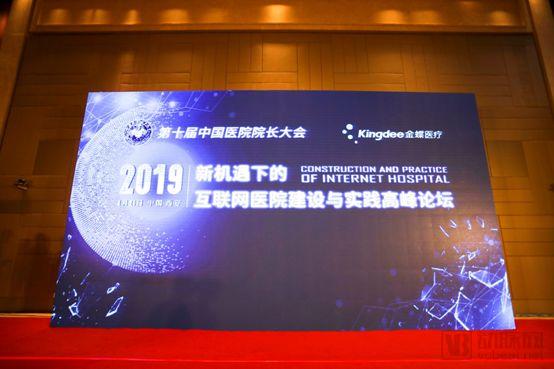
Kingdee Healthcare concurrently hosted the High-Level Summit on “Construction and Practice of Internet Hospitals under New Opportunities.” Attendees and keynote speakers included Wang Lili, Deputy Director of the Medical Resources Division of the Bureau of Medical Administration and Hospital Management of the National Health Commission; Zhang Kan, Vice President of Xijing Hospital; Li Xiaolong, Secretary of the Party Committee of Yan’an University Affiliated Hospital; Li Jieyun, Vice President of Peking University Shenzhen Hospital; Ren Xianqing, Vice President of the First Affiliated Hospital of Henan University of Chinese Medicine; Hu Tieli, Director of the Information Center of the First Affiliated Hospital of Hunan University of Chinese Medicine; Zhu Yuanyuan, Former Vice President of PLA No. 454 Hospital; Yin Zhiguo, General Manager of Kingdee Healthcare; and Liao Jun, General Manager of the Internet Hospital Business Department of Kingdee Healthcare. Starting from the perspectives of internet hospital construction and the practice of smart hospital services, they shared insights with over 200 hospital presidents and administrators present on the effective implementation of internet healthcare within physical hospitals. Additionally, the summit saw the major release of the “Kingdee Healthcare · Internet Hospital” product solution and the “2019 Internet Hospital Research Report.”
Deputy Director Wang Lili of the Medical Resources Division, Bureau of Medical Administration and Hospital Management, National Health Commission, began by emphasizing the State Council’s high regard for promoting the development of “Internet + Healthcare.” She then provided a detailed interpretation of recent policies related to internet-based healthcare, including the Outline of the Healthy China 2030 Plan, the Guiding Opinions on Promoting the Development of Internet + Healthcare, and the Administrative Measures for Internet-Based Diagnosis and Treatment (Trial). From six aspects—namely, Internet + medical services, Internet + public health services, and Internet + health management services—she further elaborated on the current status and challenges of “Internet + Healthcare,” and proposed new approaches across three dimensions: strengthening policy guidance, innovating regulatory models, and realizing health dividends.
Currently, as a core component of internet-based medical services, internet hospitals have gained recognition and encouragement from national policy. However, due to regulatory considerations, internet hospitals must be established in reliance on physical medical institutions.
In terms of development, Xijing HospitalVice President Zhang Kan designed the top-level architecture for an integrated information management system encompassing military operations, medical care, education, research, and administration. He progressively established five major platforms, including a medical management platform, a mobile service platform for patients under the military-civilian integration framework, and a medical Internet of Things (IoT) application platform. By innovatively integrating and restructuring healthcare with the internet, IoT, and big data technologies, he has pioneered a smart healthcare development path tailored to the hospital’s unique characteristics.
In terms of application,Li Xiaolong, Secretary of the Party Committee of the Affiliated Hospital of Yan’an University, placed particular emphasis on the development of the foundational platform for smart outpatient services and the external connectivity platform.,By implementing unified data standards, unified resource management, unified appointment scheduling, and unified payment processing, an intelligent platform has been established from the inside out. Since its launch in September 2017, the number of transactions has exceeded 300,000.
All along, JinDie Medical’s internet hospital product, built around a “hospital-centric” model, aligns perfectly with policy requirements; itsGeneral Manager: Yin ZhiguoDetailed Explanation ofKingdee Medical’s Latest Smart Hospital Integrated Solution: An Internet Hospital Centered on the Hospital, a Smart and Interconnected Digital Hospital, and an Integrated Hospital Comprehensive Operations Management System.
Its core components consist of a foundational platform for internet hospitals and five major application services: it assists each hospital in building an autonomous, exclusive, uniformly integrated, open, shared, secure, and reliable foundational platform for internet hospitals. Based on this platform, it constructs five categories of application services—online medical consultation services, online diagnosis and treatment services, medical consortium collaboration services, hospital mobile workforce services, and third-party public convenience services—thereby connecting patients, healthcare professionals, hospital administrators, medical consortium institutions, provincial regulatory platforms, and third-party health industry entities.
Thereby providing patients with a closed-loop healthcare and wellness service ecosystem encompassing pre-consultation, online follow-up visits, medication delivery, follow-up management, and health education. By expanding from a single hospital to a regional medical alliance, high-quality medical resources are extended to grassroots patients, while primary care institutions are supported through precise appointment scheduling, two-way referrals, remote consultations, assistance management, medical collaboration, and teaching guidance, ultimately achieving the goals of optimizing patient care pathways and advancing tiered diagnosis and treatment.
WithNovember 2017,Kingdee MedicalHelpXijing Hospital launched the Xijing Hospital Internet Hospital - Patient Mobile Service Platform, as an example. This platformProvides patients with a full spectrum of medical services, including intelligent triage, appointment scheduling, queue management for waiting, in-clinic payment, access to laboratory and diagnostic test reports, and patient feedback.
Currently, this platform'sOver 1.88 million users, with an average of 15,000 new electronic medical cards issued to patients daily; actual appointment registrations account for 90% of available slots, and in-clinic payment transactions exceed 3.91 million., saving patients an average of nearly 96 minutes in waiting time and providing stable and efficient "smart healthcare" services to patients.
Hu Tieli, Director of the Information Center at the First Affiliated Hospital of Hunan University of Chinese Medicine, stated that it is deeply felt that internet-based TCM hospitals represent an inevitable development trend. It is crucial for TCM hospitals to fully leverage information technology to transform from mass-oriented services to personalized services, from extensive services to precise services, and from fixed-location services to mobile services.
The First Affiliated Hospital of Henan University of Chinese MedicineVice PresidentRen Xianqing stated that, whether from the perspectives of policy direction, external environment, research needs, capacity building in primary healthcare institutions, or tiered diagnosis and treatment, the development of internet hospitals is imperative.
From 2009 to 2017, the market size of China’s internet healthcare sector surged from RMB 200 million to RMB 32.5 billion, representing a compound annual growth rate (CAGR) of 89%. The market growth rate is projected to stabilize at approximately 40% in the near term, and diagnostic and treatment activities conducted by internet hospitals are expected to constitute a substantial market over the next three to five years.