

MedBrain AI Fungal Identification System Achieves 95% Accuracy in Detecting Life-Threatening Fungi, Led by Academician Wanqing Liao
On April 28, Academician Liao Wanqing, a renowned expert in dermatology and medical mycology in China, pointed out at the 2019 China Integrative Medicine Conference that, after six months of research and development, the Shanghai Key Laboratory of Medical Fungal Molecular Biology, in collaboration with Yiku Cloud, successfully developed an AI-powered system to assist physicians in identifying lethal medical fungi. This innovation enables auxiliary diagnosis of medical fungal diseases wherever there is mobile phone or internet connectivity, pioneering the application of AI in the field of medical fungal detection.
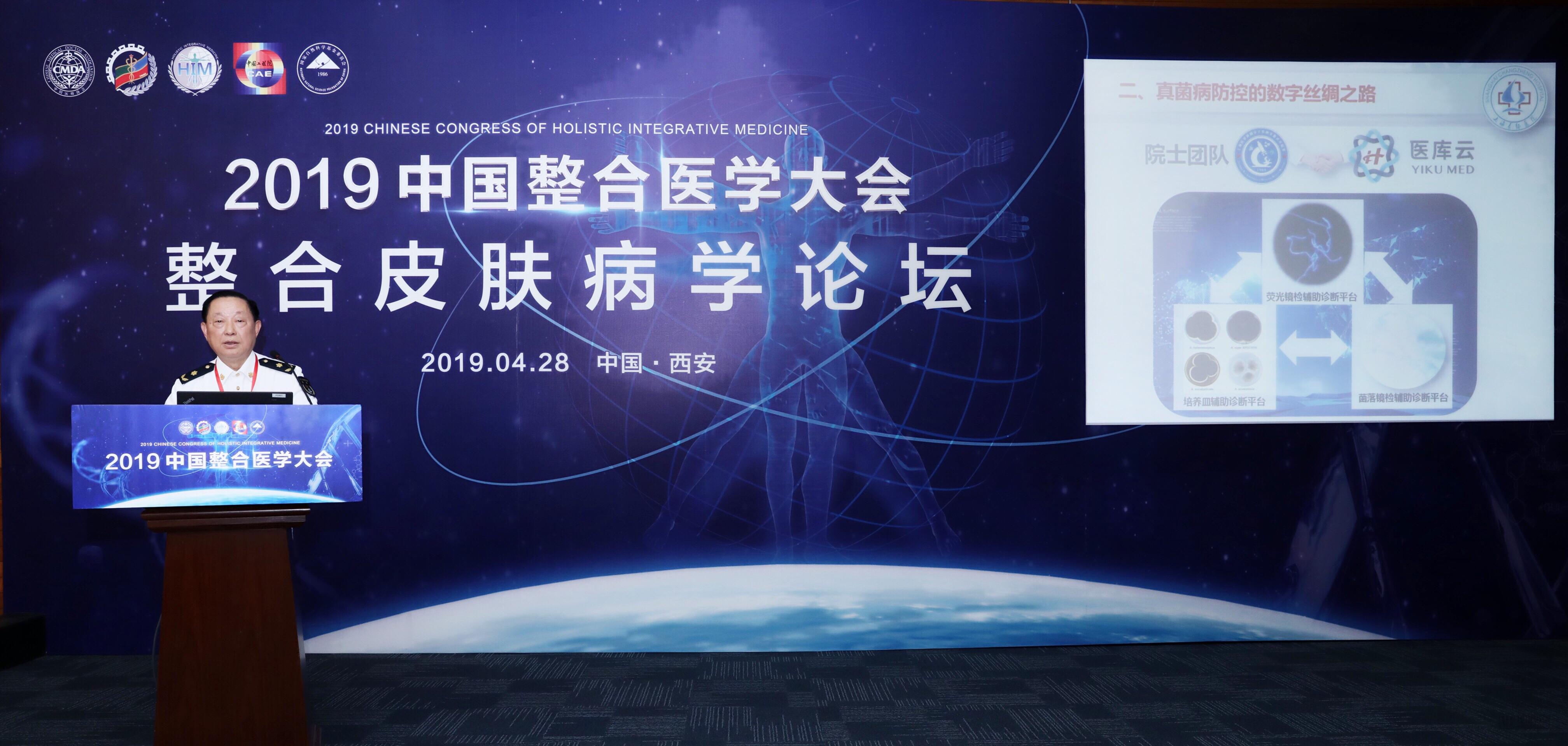
Academician Liao Wanqing Delivers Speech at the 2019 China Integrative Medicine Conference (Photo Provided by the Company)
Tens of millions of people worldwide suffer from medical fungal infections each year, with invasive fungal infections caused by pathogens resulting in 1.5 million deaths annually, posing a severe threat to human health. Rapid and accurate identification of medical fungal infections, particularly life-threatening ones, remains an urgent challenge for the global medical community. Currently, China faces a critical shortage of professionals skilled in medical fungal identification, leading to high misdiagnosis rates. Professional diagnostic instruments are largely absent in the more than 16,000 medical institutions below the secondary hospital level, leaving a significant gap in capabilities. More importantly, the relatively low level of primary healthcare in China makes it difficult to detect the "invisible killers" caused by invasive fungal pathogens.
There are approximately 2 million species of fungi in nature, with about 560 species being pathogenic to humans. The annual cost of diagnosis and treatment for fungal infections is approximately $2.6 billion. Superficial fungal diseases are widespread, primarily affecting the skin, hair, and fingernails/toenails, with a prevalence rate of around 47.6%. Invasive fungal infections pose severe risks, primarily affecting vital organs such as the heart, liver, spleen, lungs, kidneys, and brain, with mortality rates ranging from 30% to over 90%.
Academician Liao Wanqing has practiced medicine for over five decades, accumulating extensive clinical experience and achieving world-leading status in the field of medical mycology. The medical fungal repository he has established over the years houses more than 400 strains of medically relevant fungi, making it the largest such repository in Asia. Under the guidance of Academician Liao’s team, AI engineers from Yiku Cloud have developed artificial intelligence-based identification systems for dozens of medical fungal species, particularly achieving a 95% accuracy rate in identifying lethal fungi.
Equipping Primary Care Physicians with “Keen Eyes” to Identify Medical Fungi: Precisely Diagnosing and Treating the Invisible Killer of Deep Fungal Infections. Professor Zhang Qunhua, CEO of Yiku Cloud, stated that under the leadership of Academician Liao Wanqing as Chief Scientist, Yiku Cloud leverages AI and big data as its core, utilizing computer vision, natural language processing, and a fungal knowledge base to provide optimal algorithms for medical fungal image recognition. This technology enables AI-based identification even before colonies develop typical morphological features, reducing identification time by one-third.
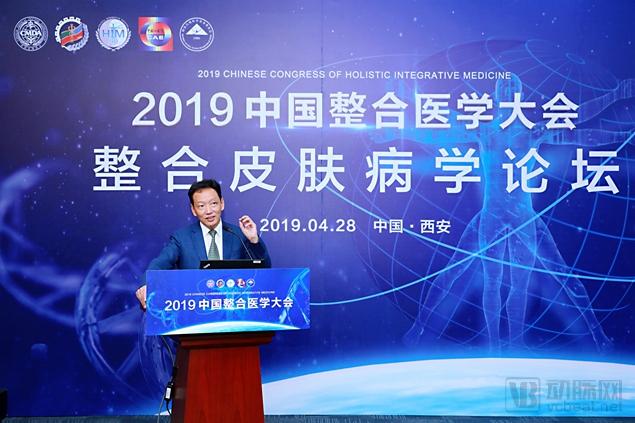
Yiku CEO Zhang Qunhua (Photo provided by the company)
Yiku Cloud is establishing China’s authoritative AI-based database of medical fungal protein profiles, providing optimal algorithms for the comparison of medical fungal profiles. Leveraging deep learning-based OCR technology and medical named entity recognition, it aims to automate the creation of structured electronic medical records and establish a case management system for patients with fungal infections.
The Yiku Cloud Platform employs artificial intelligence algorithms, including classification, clustering, and regression, to embed clinical research functionalities such as data mining analysis and data visualization into the medical record system. This enables in-depth exploration of patterns underlying big data on fungal infections, including population susceptibility, temporal evolution, and regional epidemiology. The platform provides comprehensive, cross-regional auxiliary early warning capabilities covering the entire cycle, from initial screening and real-time monitoring during treatment to cross-regional epidemic data sharing.
Zhang Qunhua stated that once grassroots hospitals are connected to this system in the future, it will be equivalent to introducing a senior infectious disease specialist and a laboratory technologist. Patients will no longer need to endure overcrowded conditions at large hospitals in major cities; instead, they can receive accurate diagnosis of deep fungal infections and effective treatment at county-level hospitals close to home. This development largely addresses the difficulty of accessing medical care, with patients being the primary beneficiaries.
To date, cases of infection with the superbug Candida auris have been reported in more than 30 countries across six continents. The United States has reported 587 cases, and the U.S. Centers for Disease Control and Prevention (CDC) has listed it among pathogens posing an “urgent threat.”
Since May 2018, when a Chinese research team announced the first case of Candida auris infection in China, 18 cases have been reported on the Chinese mainland. Zhang Qunhua stated that the “super fungus” is not to be feared, as AI can assist physicians in its identification. The AI tool developed by Yiku Cloud for identifying this super fungus facilitates precise treatment for patients.
It is worth mentioning that at the Integrative Medicine Conference, Academician Liao Wanqing also proposed an exploration of “Integrative Medicine for the Prevention and Control of Fungal Infections along the Maritime Silk Road,” noting a high degree of overlap between the distribution of superfungus incidence and the countries along China’s “Maritime Silk Road” initiative.
Academician Liao Wanqing believes that, in addition to integrating multidisciplinary clinical expertise from both traditional Chinese and Western medicine for the treatment of medical mycoses, the integration of artificial intelligence with medical mycology to establish a “Digital Silk Road” for the prevention and control of fungal diseases represents a significant contribution to the advancement of human medicine.
Zhang Qunhua emphasized that medicine knows no borders. The promotion and application of medical AI-driven fungal detection products in the prevention, control, diagnosis, and treatment of medical fungal infections along the Silk Road is expected to significantly reduce the high risks posed by such infections. This is because Yiku Cloud’s current products have achieved the capability to diagnose fungal diseases wherever there is mobile phone or internet connectivity, thereby contributing Chinese experience and wisdom to the prevention and control of medical fungal infections under the Belt and Road Initiative.
In the field of AI-based fungal identification, Yiku Cloud leverages natural language understanding, medical knowledge graphs, medical imaging, Bayesian networks, a medical inference engine, and clinical decision support and diagnostic engines. In addition to collaborating with the Department of Neurology at Huashan Hospital on R&D plans for AI-driven Parkinson’s disease solutions, Yiku Cloud has established a national AI R&D platform for liver cancer in partnership with West China Hospital. Furthermore, it has jointly developed the world’s first composite AI-powered Traditional Chinese Medicine (TCM) identifier product with Cai Tongde Tang Pharmaceutical. Professor Zhang Qunhua emphasized that the future direction of medical AI lies in building Yiku Cloud’s unique innovation ecosystem, which is led by cross-disciplinary physicians, driven by AI engineers, and centered on patients.