

2019 Healthcare Industry Outlook: Tech Giants Bullish, Apple Watch Gains Clinical Relevance, and Data Privacy Debates Persist
Recently, Venrock, the venture capital firm affiliated with the Rockefeller family, released the “2019 Healthcare Industry Forecast Report.” The report surveyed 250 participants in the healthcare industry, including technology startups, leading enterprises, insurance companies, academics, government entities, investment institutions, and professional service providers in the healthcare sector.
VCBeat (WeChat ID: vcbeat) has compiled and summarized the report, with key focuses primarily on the following aspects:
I. Development Trends of Medical Technology Companies: Overall Upward Trajectory, with Opportunities and Challenges Coexisting;
II. Prospects for Technology Application: Blockchain Cools Down, While Artificial Intelligence and Wearable Devices Gain Favor;
III. Policy Impact: The “Universal Health Insurance” Program Will Create New Growth Opportunities;
IV. Data Security and Privacy Issues: The Debate Will Continue;
Regarding the development trends of healthcare technology companies, Venrock’s survey primarily focuses on three aspects: changes in the number of health-tech firms, shifts in capital investment, and a reassessment of related investments made in 2018. The results indicate that while most respondents remain optimistic about the industry’s overall trajectory, investors will exercise increasing caution when making decisions on specific projects.
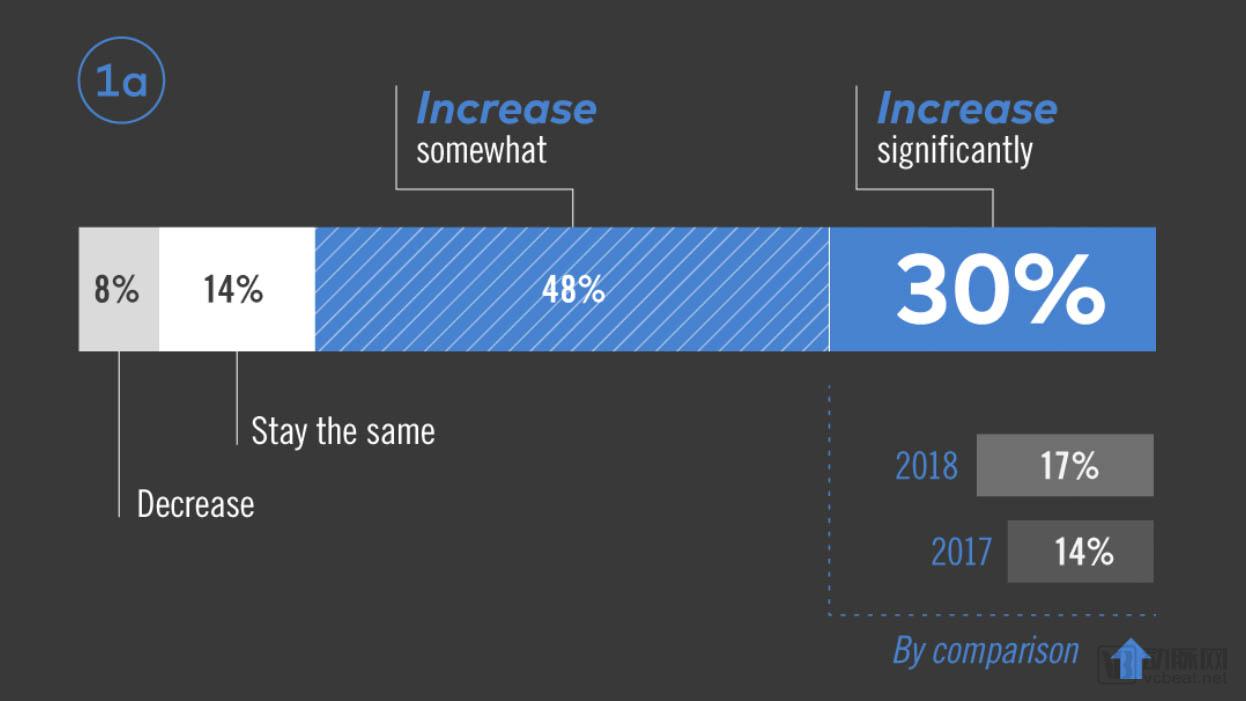
Will the number of medical technology companies increase? ((Image excerpted from the report)
First, most respondents hold a positive outlook on the change in the number of technology companies. Specifically, 30% of respondents believe that the number of new health tech companies will increase significantly in the next two years, 48% expect a moderate increase, 14% anticipate no change, and only 8% predict a decline in the number of new health tech companies.
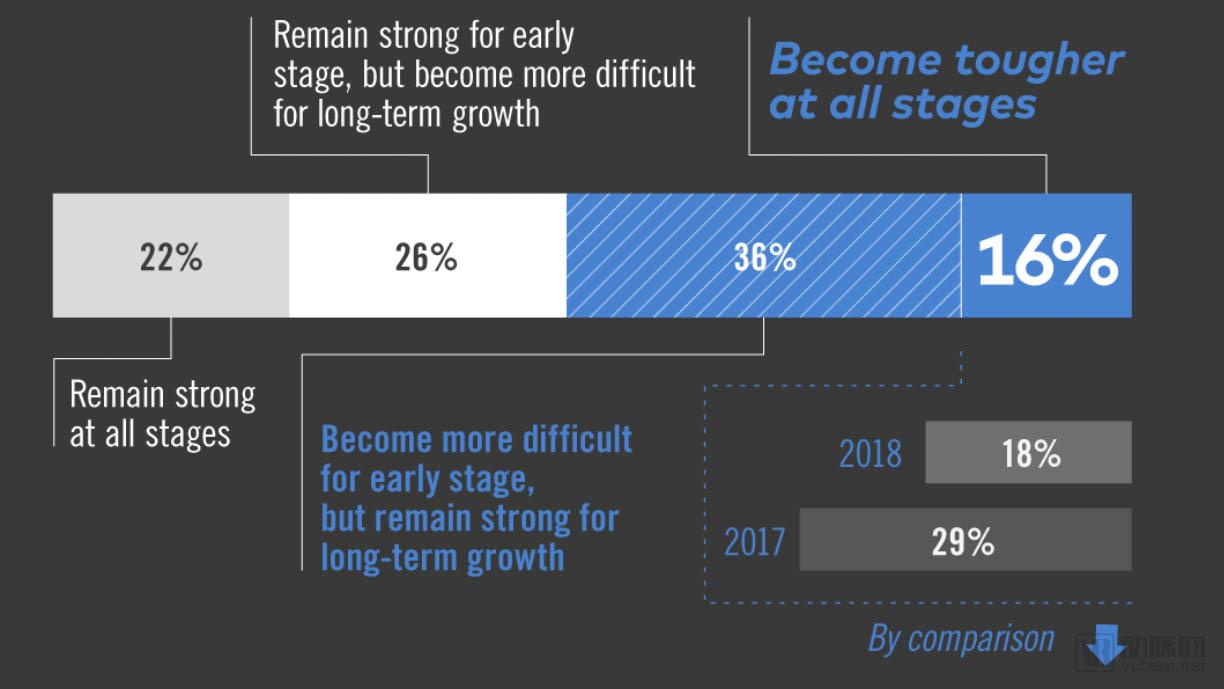
Will capital investment in medical technology increase? ((Image excerpted from the report)
Secondly, opinions among the 250 respondents varied regarding changes in capital investment in healthcare technology companies. Twenty-two percent of respondents believed that capital would maintain strong growth across all stages; 16% held the opposite view, considering future capital growth to be very difficult; the remaining respondents adopted a moderate stance, expecting the total amount of invested capital to rise slightly but fluctuate continuously across different stages.
Furthermore, respondents have reassessed healthcare technology investments made in 2018, generally agreeing that valuations for unicorn companies were overall inflated last year. Few expressed regret over missed investment opportunities during that period, indicating that investors will adopt a more cautious approach toward specific projects in 2019. Additionally, the survey revealed that the healthcare technology sector faces certain challenges in talent acquisition and funding.
Venrock surveyed 250 respondents on their views regarding the application prospects of currently popular technologies. The survey results revealed that artificial intelligence, wearable devices, and blockchain are facing vastly different fates.
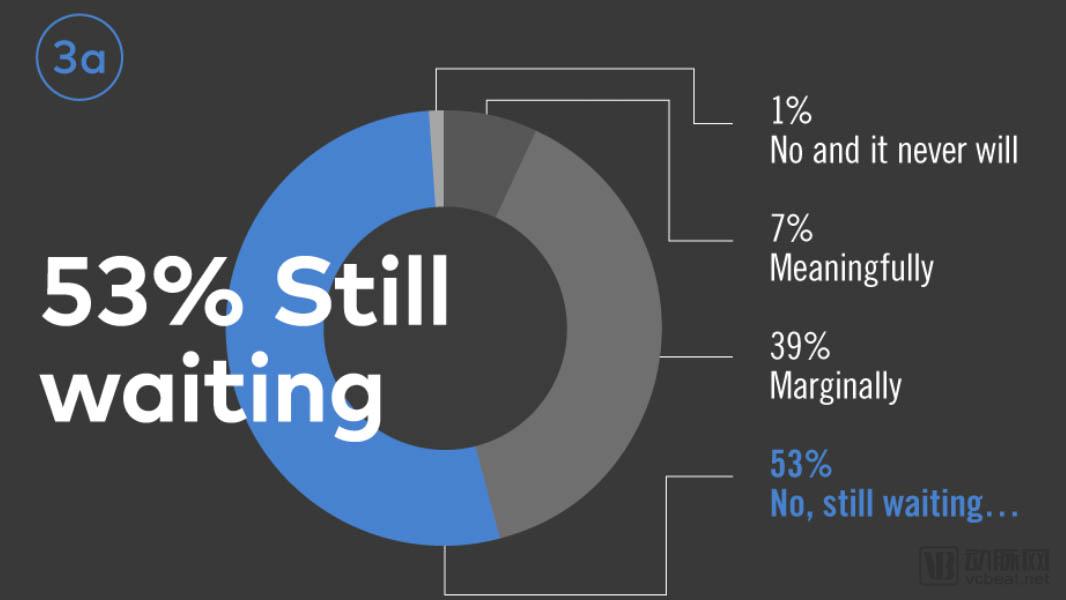
Has Artificial Intelligence Already Impacted the Healthcare Sector ((Image excerpted from the report)
First, artificial intelligence is gradually finding its place in the healthcare sector. Data shows that only 1% of respondents are pessimistic about the application prospects of AI, with the majority still expecting AI to make significant contributions in the medical field. However, this does not mean that AI has been widely accepted; respondents are still awaiting further breakthroughs, with only 7% believing that AI has already had a major impact on the healthcare industry.
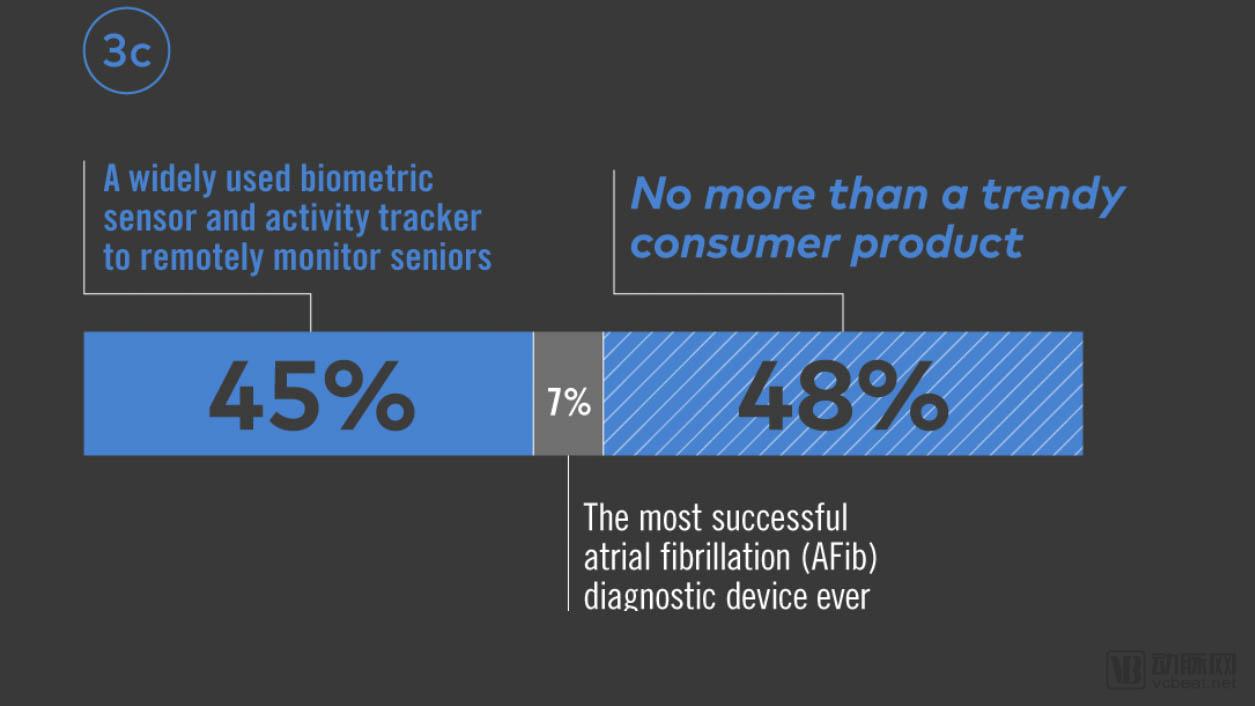
Is the Apple Watch a Fashion Product or a Medical Sensing Device? ((Image excerpted from the report)
Furthermore, more than half of the respondents believe that the Apple Watch can play a positive role in the medical field. Data shows that 48% of the respondents consider the Apple Watch merely a fashionable consumer product, while the remaining respondents regard it as a wearable biometric sensor and bio-tracker capable of being widely used for real-time monitoring of elderly individuals’ activities. Among them, 7% of the respondents further stated that the Apple Watch will be “the most successful atrial fibrillation monitoring device ever.”
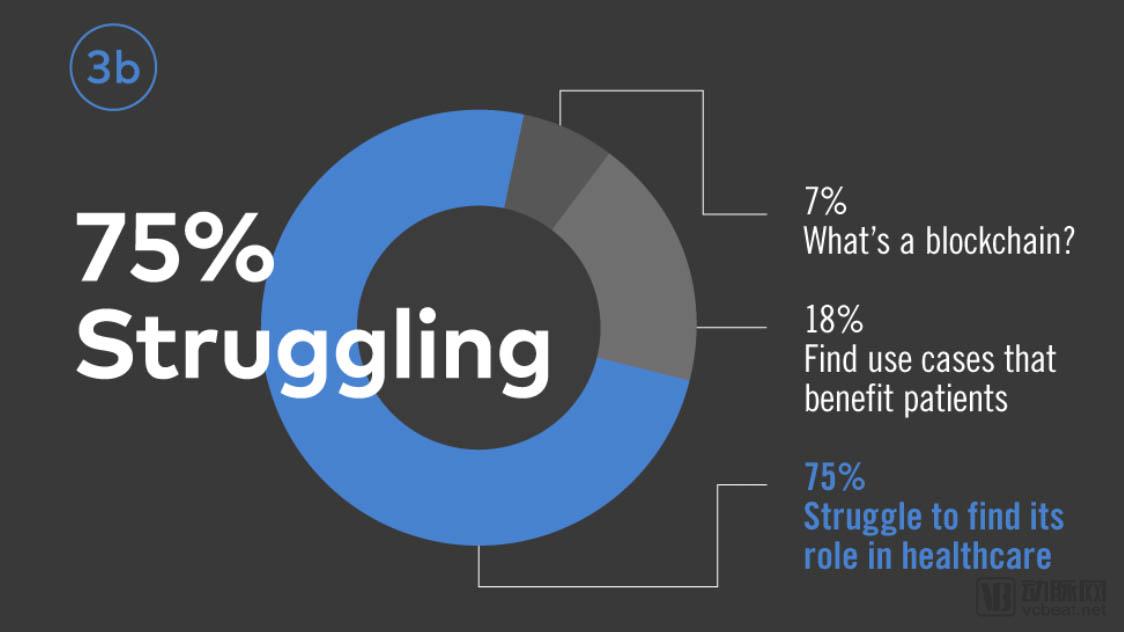
What Will the Application of Blockchain Look Like in the Future? ((Image excerpted from the report)
However, most respondents are not optimistic about the application of blockchain technology. Currently, the progress of blockchain in the healthcare industry is as sluggish as in other sectors. Venrock stated that, following market conventions, as new technological innovations gradually mature in the healthcare field, it will become increasingly difficult for undeveloped technologies to enter the market at that stage.
Venrock also surveyed respondents’ perspectives on political dimensions such as the “Medicare for All” proposal, the midterm elections, and drug pricing policies. The results indicated that respondents believe the “Medicare for All” proposal could present new growth opportunities, whereas the midterm elections and drug pricing policies would have limited impact on the development of health technology companies.

“Universal Health Coverage” Plan: Can It Offer New Growth Opportunities?(Image excerpted from the report)
In the report, most respondents indicated that a “universal healthcare” program open to all Americans would create new opportunities for business development; only 20% of respondents stated that such a program would pose an obstacle to growth.
Dr. Eric Topol, founder and director of The Scripps Research Institute (TSRI), stated that the initiative regards healthcare services as a fundamental right for all citizens and strives to foster innovation within the healthcare system. The United Kingdom, which maintains a national health insurance system while continuing to innovate, demonstrates that basic health coverage and innovation by healthcare enterprises are not mutually exclusive.
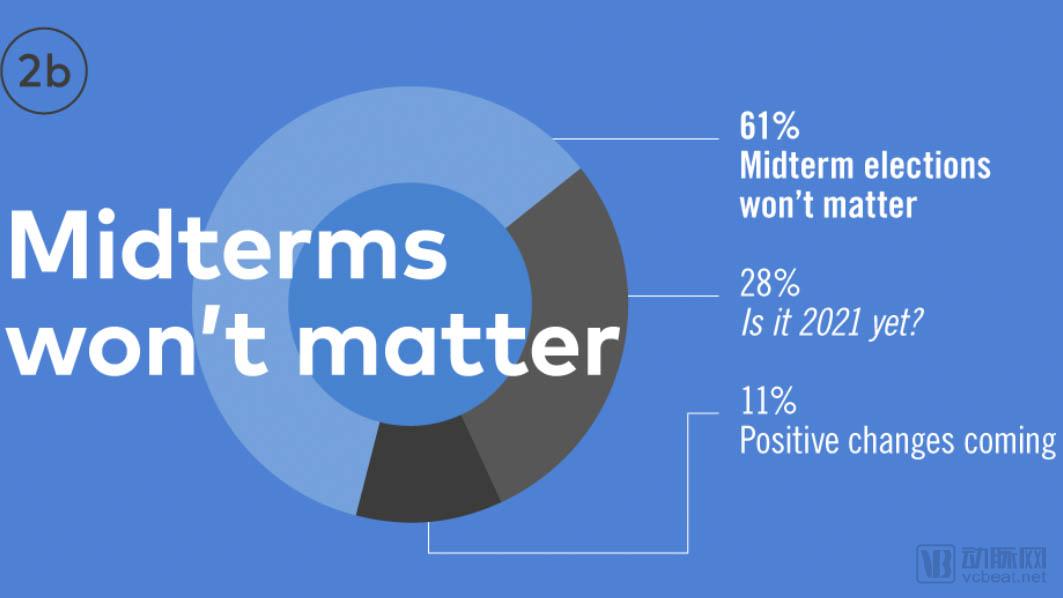
Will the Midterm Elections Affect the U.S. Healthcare System?(Image excerpted from the report)
Regarding the impact of the midterm elections on the future healthcare system, 61% of respondents believe that the midterm elections will have no effect on the healthcare system, 11% believe that the midterm elections will have a positive impact, and the remaining 28% say it is too early to judge.
Regarding drug pricing, driven by bipartisan policies in Congress, there is a growing belief that drug prices may face further restrictions. However, experts in the field generally agree that pharmaceutical companies will not easily compromise with these policies.
With the advent of the era of medical big data, public attention to patient information security and data privacy is continuously increasing. It is well known that while big data presents development opportunities for healthcare technology companies, it has also sparked a series of discussions on legal and ethical issues related to data security.
Will medical technology companies face boycotts in the future for violating user privacy, similar to Facebook? On this issue, 270 respondents were divided into two camps, offering sharply contrasting answers.

Will medical technology companies face backlash for leaking data privacy? ((Image excerpted from the report)
Half of the respondents believe that people will not forgo the benefits brought by big data in healthcare due to privacy concerns. They stated that healthcare IT companies are transforming the way patients communicate with hospitals and health insurance institutions. Patients have gained convenience from these advancements, which have not only streamlined the medical consultation process but also enhanced their understanding of their own conditions, thereby improving their overall healthcare experience.
The other half of the respondents held the opposite view, arguing that as awareness of health privacy protection rises, patients will develop a certain degree of resistance toward such medical technology companies. Coupled with the possibility that governments may enact stricter laws, medical data companies need to place greater emphasis on safeguarding patient data privacy.
In conclusion, the debate over medical data privacy and security will persist, with governments, enterprises, and all sectors of society continuing their efforts to devise solutions that balance technological advancement with privacy protection in the future.
Link to the original report: https://hcprognosis2019.venrock.com/
(Compiled by Wang Yue)