

Hanlikang®, China's First Biosimilar Rituximab, Approved for Market Launch, Filling Domestic Biosimilars Gap

Henlius
Innovative Biopharmaceutical Company
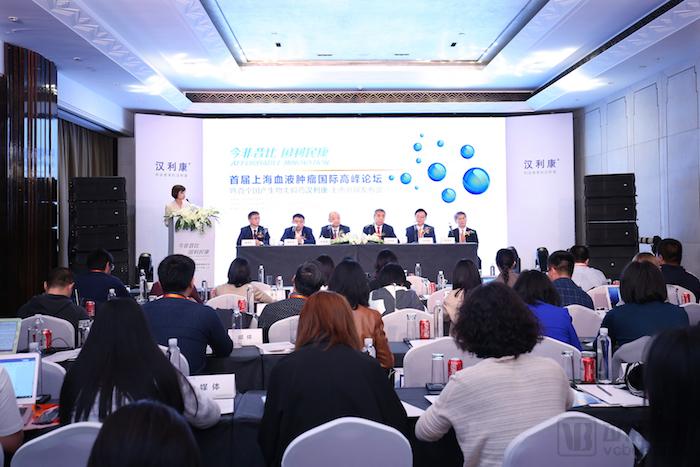
April 27, 2019: The First Shanghai International Summit Forum on Hematologic Oncology and Hanlikang, the First Domestically Produced Biosimilar®The listing ceremony was held in Shanghai.
Hanlikang, developed by Shanghai Henlius Biotech, Inc. (hereinafter referred to as “Henlius”)®(Rituximab Injection) is the first product in China developed and submitted for production approval via the biosimilar pathway, using the originator rituximab as the reference drug. It has received support from the National Major Science and Technology Special Project for Significant New Drug Development and was successfully included in the priority review and approval program.
Henlius, the biologics platform of Fosun Pharma, is headquartered in Shanghai. Since its establishment in 2010, the company has built and continuously expanded a comprehensive pipeline of biosimilars and innovative biologics, with products covering areas such as oncology and autoimmune diseases.
A so-called biosimilar refers to a therapeutic biological product that demonstrates similarity to an approved reference drug in terms of quality, safety, and efficacy. On February 22, 2019, the National Medical Products Administration (hereinafter referred to as the NMPA) officially approved Hanlikang®Production and market launch. This drug is China’s first biosimilar, filling the gap in the country’s biosimilar market.
Hanlikang at this launch meeting®Professor Shi Yuankai, Vice President of the Cancer Hospital, Chinese Academy of Medical Sciences, and Principal Investigator of the clinical trial, stated, “Hanlikang®Hanlikang was the first anti-tumor drug approved for marketing by China's drug regulatory authorities in 2019. It demonstrated favorable efficacy and safety during clinical trials, showing high similarity to the originator rituximab with no statistically significant clinical differences.®"The market launch helps improve the accessibility of biologics and also brings a new treatment option for lymphoma patients in China, especially those with non-Hodgkin's lymphoma."
Lymphoma is the most common blood cancer worldwide. According to data released by the National Cancer Center, the confirmed incidence rate of lymphoma in China was 5.94 per 100,000 people in 2014, with an estimated incidence rate of approximately 6.89 per 100,000 people in 2015. Currently, there is still room for improvement in the treatment outcomes of hematologic malignancies in China. For example, the five-year survival rate for adult lymphoma patients in the United States is as high as 68.1%, whereas in China it is only 38.3%.
Rituximab, the first monoclonal antibody approved by the FDA for cancer treatment, was originally developed by Genentech, a subsidiary of Roche. Its use in combination with chemotherapy (the R-CHOP regimen) has been proven to significantly improve patient survival rates.
Clinical trial results demonstrated that the combination of rituximab and CHOP chemotherapy increased the overall response rate to 83% and the complete response rate to 76% in patients with aggressive non-Hodgkin lymphoma. Since the market launch of rituximab, the mortality rate of non-Hodgkin lymphoma has reached a turning point, showing a significant decline.
Due to the high cost of originator drugs, many patients with non-Hodgkin lymphoma (NHL) cannot afford them, which has become one of the most significant factors affecting treatment outcomes. The 2018 Comparative Report on the Survival Status of Lymphoma Patients Globally and in China, jointly released by the International Lymphoma Coalition and Home for Lymphoma Patients, points out that, from the perspective of psychological impact during treatment, financial pressure is the primary concern for Chinese respondents. Specifically, 73% of Chinese patients reported experiencing substantial financial stress during their treatment, compared to only 48% of patients in other regions worldwide.
Therefore, how to extend the survival of Chinese lymphoma patients and address the issues of accessibility and affordability of therapeutic drugs for these patients has become a focal point of public concern.
In 2017, the Ministry of Human Resources and Social Security issued the “Notice on Including 36 Drugs in Category B of the National Basic Medical Insurance, Work-Related Injury Insurance, and Maternity Insurance Drug Lists” (Ren She Bu Fa [2017] No. 15). The originator product of rituximab was included in the Category B medical insurance list through negotiations, indicated for the treatment of non-Hodgkin lymphoma, with reimbursement covering up to eight courses of therapy.
In accordance with the requirements of the Ministry of Human Resources and Social Security, for negotiated products included in the National Reimbursement Drug List (NRDL), if a generic version of a negotiated drug is launched, the NRDL payment standard for that drug will be adjusted based on the price level of the generic. Therefore, as a drug sharing the same generic name, Hanlikang® will further advance its implementation across various local medical insurance schemes.
Regarding the significant importance of the market launch of Hanlikang®, Professor Shi Yuankai emphasized, “Although the originator drug has been included in Category B of the National Reimbursement Drug List through negotiations, it still imposes a substantial financial burden on both the government and individuals. Therefore, the development of biosimilars is an urgent issue that needs to be addressed. Biosimilars offer a price advantage; their use can, to a certain extent, improve drug accessibility and enable more patients to access high-quality medications. Hanlikang, China’s first biosimilar®...the launch of which has further met the demand of Chinese patients for rituximab and similar drugs.”
While encouraging innovation, major pharmaceutical powers worldwide have sought to enhance the accessibility of biologics by promoting the development of biosimilars, thereby minimizing patient financial burden and alleviating pressure on medical insurance funds. It is reported that the European biosimilar market is the most mature, with European countries actively supporting the use of biosimilars.
Song Ruilin, President of the China Association for Pharmaceutical Innovation, stated: “Hanlikang, the first biosimilar®“This approval marks a milestone in China’s pharmaceutical innovation and industry history, as the country officially enters the era of biosimilars.” Looking back at the overall development of biosimilars, Europe and the United States have consistently maintained a significant lead over China.
“However, we have received information today indicating that while there is approximately a twenty-year gap in the field of small-molecule drugs, the gap in the development of biosimilars has narrowed to just three to four years. This fills us with confidence in the future innovation of China’s pharmaceutical industry.” He continued, “As long as we remain focused and uphold the determination and perseverance embodied by the idiom ‘ten years to sharpen a sword,’ the prospects for pharmaceutical innovation in China will undoubtedly be bright.”
Due to manufacturing processes and the inherent characteristics of the molecules themselves, it is difficult for large-molecule biologic drugs to achieve identical structure and function to the originator products; they can only achieve similarity. Hence, they are referred to as biosimilars. The European Union, the United States, China, and the World Health Organization (WHO) have each provided definitions for biosimilars. Although these descriptions are not entirely identical, they all consistently emphasize three critical aspects of biosimilars: quality, safety, and efficacy.
In 2015, China issued the "Technical Guidelines for the Research and Development and Evaluation of Biosimilars (Trial)" to guide and standardize the research, development, and evaluation of biosimilars. According to the review and approval policies of the NMPA, biosimilars can undergo automatic indication extrapolation following head-to-head comparative studies. Currently, Hanlikang®It has obtained approval for the three indications of the originator drug in China and can completely replace the originator drug in the clinical treatment of non-Hodgkin lymphoma.
In March 2019, after the 10-working-day public notice period following its approved market launch, Hanlikang®Officially received the "Drug GMP Certificate" issued by the Shanghai Medical Products Administration. This marks that Henlius has established a production quality system compliant with GMP regulatory requirements, and is capable of ensuring the manufacturing of Hanlikang under specified quality conditions.®continuous production and market sales, effectively ensuring the public's medication safety.
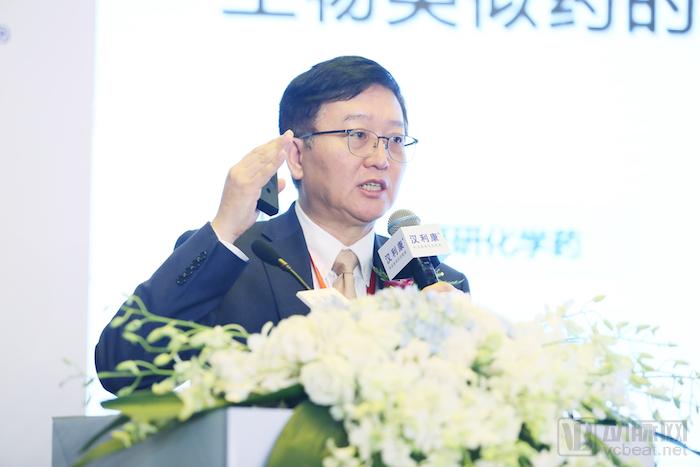
Dr. Jiang Weidong, Co-founder and Chief Scientific Officer of Henlius, stated: “Since its inception, Henlius has been committed to high standards, conducting quality research in accordance with the quality standards of the European Medicines Agency (EMA). Its manufacturing processes are aligned with international practices, setting a benchmark and playing a leading role in the monoclonal antibody industry. Henlius’s quality assurance team has established a high-standard, international quality system to ensure controllable quality, thereby effectively safeguarding the quality of every product batch.”
In February 2019, Henlius officially launched its public welfare initiative for lymphoma science popularization. Henlius will establish a dedicated charitable fund to jointly promote the development of public welfare undertakings. Leveraging the Fosun Foundation’s targeted poverty alleviation program for rural doctors, the initiative is committed to enhancing healthcare capabilities in impoverished areas and strengthening the prevention, diagnosis, and treatment of lymphoma.
Liu Shigao, Co-founder, President and CEO of Henlius, stated: “Hanlikang®"The successful approval and market launch would not have been possible without the strong support of national drug regulatory authorities, the unwavering efforts and dedication of our entire team, and Henlius’s relentless pursuit of quality." He stated that, as the first domestically approved manufacturer of biosimilars, Henlius is highly committed to working alongside physicians, regulators, and patients to promote public education on biosimilars, thereby broadly enhancing public understanding of these therapies.
“Hanlikang®“With its market approval as the starting point, we look forward to the swift entry of high-quality, trustworthy biosimilars into the pharmaceutical market, fostering healthy competition within the industry, providing physicians with more cost-effective therapeutic options, and delivering predictable cost savings,” he added.