

Trillion-Scale Antibody Libraries Launched by Sanyou Bio to Accelerate Innovative Antibody Drug Discovery
Sanyou Biopharmaceuticals
Innovative Antibody Drug Research and Development and Service Provider
Antibody drugs represent the fastest-growing segment of the global biopharmaceutical industry, giving rise to numerous “blockbuster” therapies and serving as a core driver of revenue growth for major pharmaceutical companies. According to statistics from the China Pharmaceutical Enterprise Development Promotion Association, as of September 2018, the National Medical Products Administration had approved 31 antibody drugs (including both domestically produced and imported products). Since 2010, the number of antibody drug applications has risen nearly linearly, a trend attributed partly to supportive national policies and partly to the expiration of patents on several foreign monoclonal antibodies.
The research and development (R&D) and manufacturing of antibody drugs constitute a technology-intensive process. However, for pharmaceutical R&D enterprises, early-stage antibody drug development requires robust technical platform support, while limited research funding and talent resources are insufficient to meet the demands of extensive new drug development.
Sanyou Biopharmaceuticals is dedicated to building an early-stage R&D platform for innovative antibody drugs. Its innovative platform encompasses more than 20 leading technical sub-platforms, including a fully human antibody library with a diversity of over 100 billion, a nanobody library at the hundred-billion level, comprehensive antigen preparation, diverse antibody generation, revolutionary antibody engineering, systematic antibody drug screening, efficient druggability evaluation, and integrated innovative antibody drug discovery. “We aim to provide pharmaceutical companies with source molecules for innovative antibody drugs,” said Lang Guojun, Founder and CEO of Sanyou Biopharmaceuticals, in an interview with a reporter from VCBeat New Medicine.
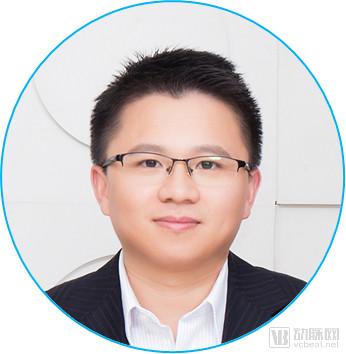
Dr. Lang Guojun
The development of antibody-based therapeutics spans nearly a century. In 1890, Behring and colleagues prepared polyclonal antibodies using animal serum; however, their application was limited due to strong human immune responses triggered by heterologous proteins. Monoclonal antibodies emerged in 1975. In 1982, Philip Karr successfully applied an anti-idiotype monoclonal antibody for the treatment of B-cell lymphoma, marking the first therapeutic use of monoclonal antibodies. Consequently, monoclonal antibody drugs rapidly became a focal point in the biopharmaceutical industry. Nevertheless, as most early monoclonal antibodies were murine-derived, repeated administration in humans often induced human anti-mouse antibody (HAMA) responses, which compromised efficacy and even caused allergic reactions.
In 1994, Winter prepared genetically engineered antibody drugs using genetic engineering methods, and gradually developed various types of genetically engineered antibodies, including chimeric antibodies, single-chain antibodies, humanized antibodies, fully human antibodies, and bispecific antibodies. Antibody drugs modified through genetic engineering have reduced the immunogenicity of murine antibodies, thereby alleviating immune responses in the human body. By 1997, the world welcomed the first chimeric monoclonal antibody drug for cancer treatment—Rituxan (MabThera). From polyclonal antibodies to genetically engineered antibody drugs, the research and development platform for antibody drugs has evolved toward greater diversity, specificity, and complexity.
“However, China lacks a comprehensive early-stage R&D platform for innovative antibody drugs,” stated Lang Guojun. “Early-stage research and development is a critical link in the entire R&D process of innovative antibody therapeutics.” The development of innovative antibody drugs involves several stages, including target research, drug discovery, preclinical studies, clinical trials, and marketing authorization applications. Specifically, during the early R&D phase, target research encompasses target screening, preparation and characterization of raw materials such as antigens, antibody generation, and affinity screening. Drug discovery includes in vitro efficacy screening, antibody engineering and rescreening, and animal developability assessment. Preclinical studies involve the confirmation of preclinical candidate (PCC) drugs, cell line construction, as well as pharmacological and pharmacokinetic studies. Due to the diversity of antibody therapeutics and the complexity of their early-stage development, numerous specialized early R&D platforms have emerged. Our goal is to collaborate with clients to develop innovative antibody drugs that demonstrate significantly superior efficacy compared to existing therapies.
After completing his Ph.D., Lang Guojun joined a pharmaceutical company to engage in the research and development (R&D) and commercialization of monoclonal antibody drugs, participating in the R&D of more than 10 innovative antibody drugs and biosimilars. Notably, the rituximab biosimilar, for which he served as a core R&D member, has been launched on the market. The biosimilars of trastuzumab, adalimumab, bevacizumab, and cetuximab, which he helped develop, are currently in Phase III clinical trials or at the stage of filing for marketing approval. With nearly a decade of experience in the R&D and marketing of antibody drugs, Lang Guojun observed that while domestic pharmaceutical companies each have their own strengths in early-stage R&D platforms for innovative antibody drugs, these platforms remain imperfect. Furthermore, although there is significant room for improvement in the early-stage R&D of innovative antibody drugs, pharmaceutical companies find it difficult to allocate additional human and financial resources to screen and develop innovative products with superior efficacy compared to existing antibody drugs as their R&D pipelines continue to expand. Instead, they focus more on clinical trials and drug manufacturing. In May 2015, Lang Guojun led the establishment of Sanyou Biopharmaceuticals Co., Ltd.
At its inception, Sanyou Biopharmaceuticals had only a handful of R&D personnel. “Our first revenue was approximately RMB 30,000,” recalled Lang Guojun, reflecting on the company’s entrepreneurial journey with considerable emotion. Over the past four years, however, Sanyou Biopharmaceuticals has achieved rapid progress through incremental steps. The company’s business has expanded from initial lead molecule screening and raw material preparation to a comprehensive early-stage antibody drug development platform. Currently, the company boasts a professional R&D team of over 100 antibody drug specialists, with team members averaging 5–10 years of R&D experience. This has laid a solid foundation for building a robust innovative antibody drug development platform, enabling the company to achieve break-even for the first time in 2018. Since its establishment, the company has also secured tens of millions of yuan in financing. “We sustain our operations through self-generated revenue and supplement the capital needed for growth through steady, incremental financing rounds,” stated Lang Guojun.
Sanyou Biopharmaceuticals primarily provides integrated solutions for innovative antibody drugs, while also offering technical services across stages such as raw material preparation, lead antibody generation, antibody drug screening, and antibody engineering. Among these, raw material preparation services mainly include the production of proteins, antibodies, and cell lines. The protein production system enables transient or stable expression of recombinant proteins; stable cell lines can achieve expression levels of 1–5 g/L with a success rate of up to 95%, while transient transfection typically yields 0.5–1 g/L with a success rate of up to 80%, significantly surpassing expression systems such as HEK293. Cell line development primarily utilizes Chinese Hamster Ovary (CHO) cells, the most commonly used host cells in genetic engineering, with expression levels reaching several grams per liter.
Antibody drug screening is conducted using multiple approaches, including phage display of fully human natural antibody libraries, MIT immune antibody libraries, phage display of single-domain antibody libraries, and phage display of common light chain antibody libraries. This yields a large number of antibody molecules, thereby increasing the likelihood of identifying functional antibodies with high affinity, strong specificity, and significant therapeutic potential. “We have establishedBillion-Scale Fully Human Antibody Library“, dozens to hundreds of lead molecules can be screened for most targets,” added Lang Guojun.
Sanyou Biopharmaceuticals also provides antibody engineering services, including deep humanization and antibody affinity maturation. The company’s expert antibody team has accumulated experience in over 40 deep humanization projects, with more than 30 designed antibodies currently at the stage of clinical trial application (IND) and seven undergoing clinical trials. By comprehensively applying technologies such as 3D humanization, mammalian cell expression, and developability assessment, Sanyou Biopharmaceuticals achieves a humanization level of over 95% for engineered antibodies; in some cases, the affinity of deeply humanized antibodies even exceeds that of chimeric control antibodies. Furthermore, by integrating advanced technologies—including large-capacity phage display antibody libraries, random mutagenesis, site-directed mutagenesis, combinatorial mutagenesis, higher-order structure simulation, amino acid composition analysis, high-throughput screening, stress screening, affinity kinetics analysis, physicochemical characterization, and stability studies—Sanyou Biopharmaceuticals can enhance the affinity of engineered antibodies by several-fold, tens of-fold, or even thousands of-fold.
Sanyou Biopharmaceuticals has also established high-quality tumor animal models for in vivo screening of anticancer drugs.
Recently, Sanyou Biopharmaceuticals launched the construction of a trillion-level nanobody library, which is aTrillion-Scale Phage Display Nanobody Semi-Synthetic Antibody Library, this antibody library is composed of dozens of sub-libraries, each containing tens of billions of unique antibodies with distinct designs. Meanwhile, the trillion-scale nanobody library construction initiative includes the establishment of a semi-automated high-throughput screening workstation, which offers high screening throughput and efficiency, laying the foundation for future fully automated screening.
“Screening for nanobodies is a major challenge,” said Lang Guojun. “By combining the use of nanobody immune antibody libraries with natural nanobody antibody libraries containing hundreds of billions of variants, it is typically possible to screen and obtain dozens to hundreds of lead antibody molecules. With the establishment of a trillion-scale antibody library, we anticipate obtaining hundreds to even thousands of nanobody lead molecules per target, which holds the promise of completely resolving the challenges associated with nanobody generation!”
On the other hand, Sanyou Biopharmaceuticals will concurrently advance a series of initiatives, including the construction of a “trillion-scale fully human semi-synthetic antibody library” and a “trillion-scale bispecific antibody library.” These efforts will further systematically address the challenges faced by clients and partners in new drug screening, while propelling Sanyou Biopharmaceuticals one step closer to becoming an “internationally leading innovative antibody drug R&D platform.”
Currently, Sanyou Biopharmaceuticals has established over 20 innovative antibody drug development platforms and more than 30 in vitro efficacy screening systems, providing diversified and personalized early-stage R&D services for innovative antibody drugs. A series of innovative antibody drug development platforms have been launched and promoted, including a fully human antibody library with over 100 billion clones, a nanobody library with over 100 billion clones, a common light chain bispecific antibody library with over 100 billion clones, a magnetic array mouse antibody library, 3D deep humanization of antibodies, and ultra-high affinity maturation of antibodies. Through project collaborations, project transfers, platform licensing, outsourcing services, patent licensing, and technology introduction, the company has partnered with more than 60 clients, including Hengrui Medicine, Qilu Pharmaceutical, Hisun Pharmaceutical, Chia Tai Tianqing, and I-Mab, while incubating hundreds of innovative antibody drug projects. In addition, the company has engaged in project and R&D collaborations with Sun Yat-sen University, Tongji University, the University of Science and Technology of China, and the Chinese Academy of Sciences.
Regarding future development, Lang Guojun stated that following the launch of the trillion-scale nanobody library, Sanyou Biopharmaceuticals will systematically advance the establishment of platforms for a trillion-scale fully human semi-synthetic antibody library, a trillion-scale bispecific antibody library, high-throughput functional screening of antibody drugs, as well as cell line construction and pilot-scale process development for antibody drug production.