

ChangSang Technology Achieves NMPA-Certified Continuous Non-Invasive Blood Pressure Monitoring with Vita H1
“The post-smartphone era is the age of smart hardware, which is inevitably closely tied to human physiological data.” In 2013, Wang Zhiyong, who had spent many years in R&D and management at Huawei, recognized this trend. Eager to embark on a new venture, he began discussing the idea with Wei Chuanmin, who had also worked in Huawei’s Strategy Department for 17 years.
The two hit it off immediately and proceeded to survey the smart hardware market. They discovered that devices for measuring ECG, blood oxygen saturation, heart rate, and body temperature had already transitioned from mechanical to digital formats, while the digitalization of blood pressure measurement remained a blank slate. Wei Chuanmin laughed over the phone, “This may well be the niche God has left for us.” In November 2013, the two founded Shenzhen Changsang Technology Co., Ltd. (hereinafter referred to as “Changsang Technology”).
VITA-COURSE TECHNOLOGIES CO.,LTD has pioneered blood pressure monitoring with the development of the Vita H1 blood pressure monitor, a project that took four years to complete. Based on fingertip pulse wave detection, the Vita H1 offers a non-invasive, pressure-free, and unobtrusive solution for continuous dynamic blood pressure monitoring. VCBeat (WeChat ID: vcbeat) has learned that the Vita H1 received certification from the National Medical Products Administration (NMPA), formerly the China Food and Drug Administration (CFDA), in May 2018, obtaining a Class II medical device registration certificate.
How Does Vita H1 from VITA-COURSE TECHNOLOGIES Achieve Non-Invasive, Dynamic, and Continuous Monitoring? What Is Its Core Technology? And What Is the Significance of Continuous Monitoring? With These Questions in Mind, VCBeat Conducted an Exclusive Interview with Wei Chuanmin, Founder of VITA-COURSE TECHNOLOGIES.
The Market Gap in Blood Pressure Digitalization
Jiang Lixin, Assistant to the Director of the National Center for Cardiovascular Diseases and Vice President of Fuwai Hospital, Chinese Academy of Medical Sciences, stated that hypertension is known as the “silent killer,” with most patients exhibiting no symptoms. Surveys indicate that 245 million adults in China suffer from hypertension, meaning one in every four adults is affected. The direct economic burden of hypertension accounts for 6.6% of China’s total health expenditure.
Currently, there are numerous challenges in the detection and monitoring of hypertension. Low monitoring frequency makes it difficult to identify conditions such as white-coat hypertension, masked hypertension, and isolated nocturnal hypertension, leading to missed diagnoses during monitoring intervals. In terms of monitoring methods, existing blood pressure measurement products on the market are either non-continuous or invasive, with a lack of mature continuous non-invasive blood pressure monitors.
Mainstream blood pressure monitors on the market require inflation of a cuff around the upper arm or wrist. This inflation compresses blood vessels, resulting in poor comfort, and only allows for single-point measurements. Wei Chuanmin told VCBeat, “The so-called continuous monitoring offered by a few products on the market merely involves repeated inflation and deflation, which essentially constitutes multiple single-point measurements with low frequency.” Hospital-grade continuous blood pressure monitoring devices require invasive catheterization to position the pressure sensor within the blood vessel; these devices are expensive and are commonly found in intensive care units (ICUs).
Guided by its original mission to digitize blood pressure, VITA-COURSE TECHNOLOGIES CO.,LTD embarked on research and development exploration. “Upon entering the field, we realized that blood pressure is actually quite complex. It is associated with human blood flow, emotions, as well as disease status and aging. Therefore, we had to consider how to digitize it,” said Wei Chuanmin.
Core algorithms and data modeling break through the technical barriers of traditional blood pressure monitoring.
Digitalization must identify its underlying model and uncover the principles governing blood pressure formation. How can the blood pressure process be described as a hemodynamic mathematical model?
VITA-COURSE has engaged professors specializing in statistics and fluid dynamics. Through close collaboration with its R&D team, the company has resolved issues concerning the accuracy and validity of its continuous non-invasive blood pressure technology across large population samples. By working closely with these professors to conduct in-depth analysis and research on extensive pulse wave data, VITA-COURSE has pioneered cardiovascular assessment methods and tools, as well as early warning, screening, and detection approaches for cardiovascular diseases, with waveform recognition and analysis as the core technology. Coincidentally, this approach shares underlying principles with one professor’s research topic: “Determining the Size and Shape of a Drum Based on Its Sound.”
Blood pressure monitoring is essentially a process of monitoring fluid dynamics within an elastic chamber. For instance, during cardiac ejection into the aorta, blood flows from the aorta toward the periphery; simultaneously, pulse waves generated by blood impacting the elastic arterial walls propagate from the aorta to the peripheral circulation. Conditions such as vascular occlusion or emotional fluctuations are reflected in the waveform characteristics. By analyzing pulse wave propagation and blood flow dynamics, and applying hemodynamic principles, vascular diameter, elasticity, and stiffness can be inversely derived. These parameters, combined with blood volume data, are used to calculate blood pressure.
VITA-COURSE TECHNOLOGIES has developed a model that calculates physiological parameters such as blood pressure by acquiring pulse volume wave signals. This model, which constitutes the core technological barrier of VITA-COURSE TECHNOLOGIES, was refined through four years of iterative interaction between machine learning algorithms and over 300,000 collected sample data points.
VITA-COURSE’s proprietary algorithms not only derive real-time blood pressure from pulse volume wave signals but also assess the health status of patients’ cardiovascular systems, providing timely medical consultation recommendations during monitoring.
Provides medical-grade 24-hour ambulatory blood pressure monitoring
The prevention and control of hypertension is a long-term, dynamic process. VITA-COURSE TECHNOLOGIES aims to identify issues from monitoring data, promptly assist patients in correcting their lifestyle habits, and guide them toward active treatment adherence and rational medication use, thereby achieving effective blood pressure control among the general population.
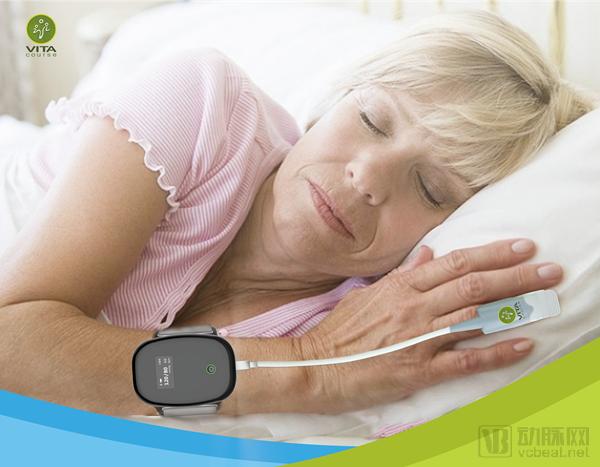
Vita H1 Blood Pressure Monitor (Image source: provided by the company)
Can Continuous Monitoring and Services Truly Improve Hypertension in Patients?
From February 2016 to August 2018, staff from VITA-COURSE TECHNOLOGIES CO.,LTD conducted two and a half years of blood pressure monitoring using cuffless blood pressure monitors and provided cardiovascular health management consultations for 1,256 residents aged 45 to 75 in Longzhu Garden and Longhu Villa, Shenzhen.
Staff conducted educational sessions on healthy lifestyles for patients with hypertension and further assisted this population in eliminating behaviors and habits detrimental to their physical and mental health. After two and a half years of health management, the average monthly systolic blood pressure among residents of Longzhu Garden decreased from 142.98 mmHg to 124.57 mmHg, and the average monthly diastolic blood pressure dropped from 86.48 mmHg to 81.46 mmHg. Residents of Longhu Shanzhuang also experienced a significant decline in average blood pressure, demonstrating the remarkable effectiveness of cardiovascular health management within these communities.
In addition to community-based monitoring and management, in-hospital monitoring is equally important. In hypertension wards, nurses are required to measure patients’ blood pressure every 30 minutes to prevent adverse events. The Vita H1 has enabled continuous blood pressure monitoring for patients in hypertension wards.
It is reported that VITA-COURSE TECHNOLOGIES CO.,LTD is currently collaborating with Fuwai Hospital of the Chinese Academy of Medical Sciences, Ruijin Hospital affiliated to Shanghai Jiao Tong University School of Medicine, and The First Affiliated Hospital of Sun Yat-sen University on national-level key scientific research projects.
It is worth noting that VITA-COURSE has achieved technology export, successfully integrating its technology into health devices from ZTE, Lenovo, Shenzhen Chuang Biotech, and Aidi Smart Medical. Furthermore, the company has partnered with senior living real estate developers such as Poly Real Estate, enabling continuous blood pressure monitoring for the elderly within their communities.