

SoYoung International Inc. Becomes First Internet Aesthetic Medicine Platform to List on Nasdaq
At 9:30 a.m. Eastern Time on May 2, Beijing New Oxygen Technology Co., Ltd. (hereinafter referred to as “New Oxygen Technology” or “New Oxygen”) officially listed on the Nasdaq Stock Market under the ticker symbol “SY.” The company issued 13 million American Depositary Shares (ADSs) at $13.80 per share, with each 13 ADSs representing 10 Class A ordinary shares. Assuming the underwriters do not exercise their over-allotment option, the total funds raised in this offering amount to approximately $179.4 million. Based on the offering price, New Oxygen Technology’s market capitalization stands at $1.38 billion.
As bells rang and confetti flew, Jin Xing, founder of New Oxygen Technology, was experiencing the highlight of his life—taking the company, which had been established for less than six years, to the Nasdaq Stock Exchange just as he turned forty. Although crowned with the halo of being the “first publicly traded internet-based medical aesthetics service platform,” the IPO marked merely a comma, not a full stop, for Jin Xing and New Oxygen.
As he stated in his address at the listing ceremony, “As this journey unfolds, we will face new challenges and also reap new rewards.”
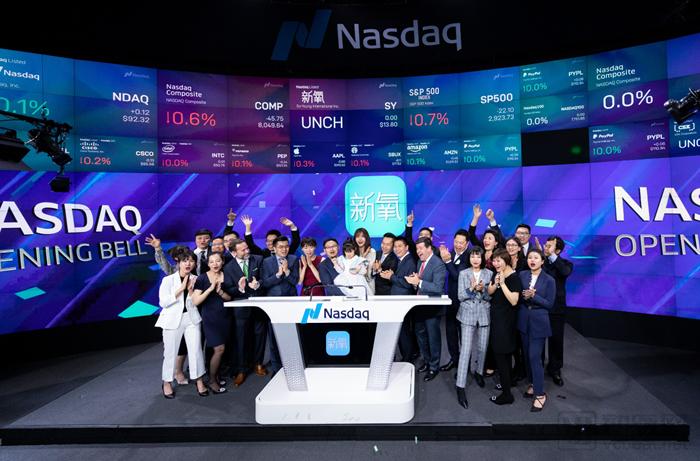
SoYoung Officially Lists on Nasdaq
Review of So-Young Technology’s IPO Timeline. In the early hours of April 9, So-Young Technology filed its prospectus with the U.S. Securities and Exchange Commission, planning to list on the Nasdaq under the ticker symbol SY.
On the early morning of April 23, New Oxygen Technology updated its prospectus for the U.S. initial public offering and announced the pricing range, with expected initial proceeds of $153 million to $179 million.
On May 2, So-Young officially listed on the Nasdaq. The long-standing rumors about So-Young’s IPO have finally materialized. “We aim to establish a rule set that benefits all parties, grow alongside the industry, and become its infrastructure,” said Jin Xing.
As an internet-based medical aesthetics service platform established less than six years ago, So-Young Technology achieved profitability in 2017, becoming the first startup in the industry to turn a profit. In 2018, it reported a net profit of RMB 55.08 million, representing a significant year-on-year increase of 220%.
Amid Fierce Competition, How Did New Oxygen Technology Achieve Nine Consecutive Quarters of Sequential and Year-on-Year Revenue Growth? VCBeat (WeChat ID: vcbeat) has tracked and reported on New Oxygen since its inception; how New Oxygen Technology evolves and grows post-IPO is worth studying.
The Essence of Business Models: Reorganizing Supply
Medical aesthetics falls within the broader category of “medical services,” possessing both “medical” and “service” attributes.
Jin Xing, founder of New Oxygen Technology, once highlighted the unique characteristics of the medical aesthetics industry during a public speech at CEIBS (China Europe International Business School): “New Oxygen Technology has been fortunate to operate precisely at the intersection of beauty and healthcare. It functions both as a medical institution and a service provider. This sets it apart from traditional healthcare and general service industries. Typically, patients do not expect high-touch service when seeking medical treatment. However, in the medical aesthetics sector, private institutions account for more than 80% of the market. Coupled with increasingly intense competition in recent years, medical aesthetics is considered an elective medical service rather than a necessity. Therefore, consumers expect clinics to provide excellent communication, high-quality service, and comprehensive post-procedure care.”
Compared with public healthcare, the medical aesthetics industry is highly marketized. Consumers undergo a prolonged decision-making process; unlike seeking medical treatment, where patients can simply choose a public hospital brand without the need for extensive promotion by the hospitals. In contrast, medical aesthetics providers, which are widespread, must continuously advertise to acquire customers. Consequently, the industry’s most significant pain points—high marketing costs for businesses and information asymmetry for consumers—have trapped the entire sector in a vicious cycle.
What Has Been the State of the Medical Aesthetics Industry Over the Past Decade? Wang Wei, Senior Investment Manager at Taihe Capital, once summarized it as follows: “In the past, medical aesthetics institutions relied heavily on traditional marketing channels, with online customer acquisition primarily driven by search engine bidding for ad placements. Industry estimates suggest that revenue generated from online marketing in the medical aesthetics sector reached tens of billions of yuan. However, this bidding-based market offers only one-way, purely promotional content, failing to eliminate information asymmetry or genuinely earn consumer trust. Consequently, competition among institutions has continuously driven up marketing costs.”
Such high customer acquisition costs are ultimately passed on to consumers, resulting in a focus on marketing over service, as well as overdevelopment and excessive marketing. As consumer experience deteriorates, trust in the industry further erodes, driving up decision-making costs and perpetuating a vicious cycle.
This has long been an anomalous reality in the medical aesthetics industry, and it is precisely here that New Oxygen Technology finds its opportunity. In its submitted prospectus, the company summarized its business model as consisting primarily of three mutually integrated components:
(i) Original, reliable, and professional content disseminated through major domestic social media networks and precisely targeted media platforms;
(ii) A highly active community with iconic user-generated content;
(ii) Transparent, convenient, and efficient online medical aesthetics appointment services.
Leveraging its platform’s reliable, comprehensive content and diverse social features, New Oxygen Technology helps users seeking medical aesthetic services discover products and services, evaluate their quality, and book appointments for those of interest. The first two capabilities constitute New Oxygen Technology’s “content pool” moat.
Compared with the comprehensive search engine model, what has New Oxygen Technology done right in terms of business model innovation? We believe that it has reorganized supply, organized production or facilitated transactions in a way that increases efficiency and reduces costs, namely, acquiring and retaining users through a high-quality "content pool" and maximizing monetization from the merchant side through intensive services and operations.
This closely aligns with the value propositions for “users” and “medical aesthetics service providers” emphasized in its prospectus. For the former, the focus is on reliability, transparency, and convenience; for the latter, So-Young Technology primarily addresses effective customer acquisition, differentiated brand building, and improved operational efficiency.
New Oxygen Technology’s business model integrates users’ desire for beauty with the platform’s personalized and emotionally resonant discovery and evaluation processes, ultimately to facilitate user decision-making and enhance user experience.
For reference, a set of data demonstrating the high user engagement of SoYoung’s technology community is its “Beauty Diaries.” As of December 31, 2018, more than 2 million Beauty Diaries had been published on the SoYoung platform, with each entry based on actual cases and accompanied by relevant case details.
Sean, a seasoned healthcare investor, shared the following views on So-Young Inc.’s growth potential and innovative nature: “So-Young operates as a platform within its industry chain, a segment with substantial development potential. By effectively leveraging internet-driven factors to further increase penetration among institutions, physicians, and users, addressing information transparency across multi-sided supply and demand, and strengthening overall operational capabilities, it is foreseeable that its future growth rate will outpace that of manufacturers and institutions in the same industry chain.”
Offline medical aesthetics institutions and online medical aesthetics platforms must drive each other forward. Only when users have a satisfactory service experience after making decisions via online medical aesthetics platforms will they continue to use them, which reflects platform stickiness. New Oxygen Technology serves as a link for information between supply and demand sides, improving decision-making efficiency and diversifying channels to reduce customer acquisition and consumption costs.
Sean also pointed out that multiple channels, including online social networking, medical aesthetics self-media, medical aesthetics SaaS platforms, and offline outlets, are rapidly expanding. How to balance investment, operational capabilities, and enhance market penetration will be the challenges currently facing internet-based medical aesthetics platforms.
We believe that, having established its current exclusive “content pool” moat, So-Young International Inc. must further strengthen its product and technological capabilities to continue excelling in precise patient acquisition and retention. It should even transition from a “traffic-centric mindset” to a “scenario-centric mindset,” emphasizing the integration of people, products, and settings. After all, for a platform-based community or product, long-term value hinges on data reflecting “user interaction behaviors” within the ecosystem, rather than solely on the single dimension of “user count.”
Profit Model: The Proportion of Information Service Fees Is Gradually Increasing
In terms of revenue model, So-Young International Inc. primarily generates income by charging medical aesthetic service providers information service fees and appointment booking service fees. Total revenue surged from RMB 49.09 million in 2016 to RMB 259.3 million in 2017, representing a year-over-year growth rate of 428.2%. In 2018, revenue further increased by 138.0% to RMB 617.2 million (approximately USD 89.8 million).
In 2018, So-Young Inc. reported a net profit of RMB 55.08 million (approximately USD 8 million), representing a significant year-on-year increase of 220%. In comparison, the net profit was RMB 17.2 million in 2017, whereas the company incurred a net loss of RMB 81 million in 2016.
The latest updated prospectus shows that as of the first quarter of 2019, New Oxygen Technology achieved a revenue of RMB 206 million (USD 30 million), an increase of 81.8% year-on-year; its net profit reached RMB 45.9 million (USD 6.7 million), a year-on-year increase of 49.9%.
In addition, the number of monthly active users on SoYoung’s mobile platform increased from 1.08 million in the first quarter of 2018 to 1.93 million in the first quarter of 2019, representing a substantial growth rate of 78.7%. The number of paying users also rose from 68,900 in the first quarter of 2018 to 127,300 in the first quarter of 2019, marking a significant increase of 84.9%.
As an internet-based medical aesthetics service platform established less than six years ago, New Oxygen Technology achieved profitability in 2017, becoming the first startup in the industry to do so. Notably, over the past nine quarters, New Oxygen Technology’s revenue has sustained continuous quarter-on-quarter and year-on-year growth.
Behind the rapid growth in performance is the solid support provided by So-Young Inc.'s market leadership position and its innovative business model. So-Young achieves profitability solely through online services, with its net profit continuing to grow rapidly—a feat that remains unparalleled even within the broader internet healthcare industry.
Looking back at the development of China’s internet healthcare industry, most surviving companies have actively served either public medical institutions or specialist physicians. Typical representatives of the former include WeDoctor and Ali Health, while those of the latter include Medlinker and DXY. Many other internet healthcare companies, despite benefiting from substantial user traffic, are still exploring viable business models.
Why Has So-Young Technology Achieved Such Rapid Profitability and Validated Its Business Model? We Believe There Are Three Key Factors:
First, this is related to the specific sector in which the medical aesthetics industry operates, which is concentrated in non-public healthcare. Unlike some platforms whose initial intent was primarily to address the challenges faced by public Grade 3A hospitals—where motivation is insufficient under the current system—private institutions in the medical aesthetics field are different. They have an intense desire for customer acquisition, efficiency improvement, and cost control, as these factors can directly determine their survival.
Second, patients’ acceptance of medical aesthetics is increasing. Compared with major diseases, medical aesthetic procedures are considered “add-on supplementary consumption,” characterized by relatively high frequency, lower privacy concerns, faster visible results, and a strong willingness to pay out-of-pocket. In the short term, this facilitates the accumulation of a core base of sticky community users, thereby enabling further diffusion.
Third, most internet healthcare projects are service-oriented and therefore require certain online or offline operational capabilities.
At its inception, New Oxygen Technology targeted the most widely sought-after non-surgical aesthetic procedures and physician-founded clinics that relied heavily on platform-driven patient referrals, continuously deepening and solidifying its presence in this niche sector. While the first two factors are readily apparent and understandable, New Oxygen Technology also places significant emphasis on intensive offline operations for its merchant partners. The company’s proprietary Hive system compares data among merchants within the same region, alerts them to changes in conversion rates at various stages, and analyzes the underlying causes and optimization strategies, enabling merchants to refine their operations in real time.
In terms of staffing, since last year, New Oxygen has also strengthened the recruitment and training of medical personnel to oversee community content, verifying the qualifications of doctors and hospitals, as well as ensuring that products such as injectables and implants are registered with Chinese authorities and carry original manufacturer certification.
According to the latest data, the number of paying medical institutions on the platform increased by 37.4%, from 1,966 in Q1 2018 to 2,701 in Q1 2019. The number of medical institutions paying information service fees surged by 136.4%, from 784 in Q1 2018 to 1,853 in Q1 2019. The gross merchandise value (GMV) of facilitated medical aesthetic services rose by 68.4%, from RMB 412 million in Q1 2018 to RMB 694 million in Q1 2019.
Regarding So-Young Inc.’s improved monetization rate in the future, Wang Wei, Senior Investment Manager at Taihe Capital, once wrote an article highlighting the following two points:
One is revenue from key merchants. As the platform continues to grow, user demand becomes increasingly segmented, and the platform’s ability to command premium pricing and enforce standards among merchants steadily improves. Large chain hospitals will also gradually join the platform, making it an important channel for major chain brands.
Second is the evolution of the business model. Initially relying on a CPS (Cost Per Sale) commission-based model to facilitate transactions, the monetization strategy shifted upstream as traffic became concentrated, adopting CPC (Cost Per Click) or CPT (Cost Per Time) models.
Relatively speaking, the year-on-year growth rate of information service revenue was higher than that of appointment service revenue. In 2018, the proportion of information service revenue in total revenue increased from 55% in the previous year to 67%, whereas this figure stood at only 40% in 2016. The share of appointment service revenue in total revenue declined from 45% in 2017 to 33%, compared with 60% in 2016.
This is also clearly stated in the prospectus: information service revenue, which constitutes a part of So-Young International’s revenue mix, grew at a faster rate than reserved service revenue (commonly understood as commission income). In the first quarter of 2019, information service revenue reached RMB 143 million.
Therefore, we believe that platform bargaining power and the overall monetization rate will also evolve as traffic concentrates: in terms of the charging model, this may initially manifest as a gradual increase in commissions; at a certain stage, the penetration rate of information services will grow rapidly, ultimately enhancing the overall monetization capability.
At this stage, New Oxygen Technology’s information service revenue is derived not only from medical aesthetics service providers but also from a broad range of consumer healthcare service providers.
In its prospectus, So-Young Technology stated that the company has generated a small portion of its revenue by helping other consumer healthcare service providers, beauty salons, and certain beauty product distributors distribute high-engagement content on the So-Young platform and social media networks.
Boosting Efficiency, Expanding Capacity: So-Young Inc. Is Gaining Momentum on Its Growth Path.
Financing and IPO: Strengthening the Structured Data Moat, Unlocking New Scenarios
Currently, New Oxygen’s business covers more than 300 cities across China, attracting nearly 4,000 certified medical aesthetic institutions for users to choose from, primarily including medical aesthetic hospitals, hospital outpatient departments, and clinics. In addition, New Oxygen serves nearly 6,000 consumer healthcare institutions, including those in the dental sector.
Prior to its initial public offering, So-Young Technology had completed multiple rounds of financing, attracting prominent investors such as Matrix Partners China, Aspara Group, and CDH Investments. Most recently, on September 4, 2018, the company announced the completion of a $70 million Series E financing round, led by Aspara Group, with participation from BOC International Holdings Limited, the China-Russia Investment Fund, and Matrix Partners China.
In the early hours of April 9, So-Young Technology filed its initial prospectus with the U.S. Securities and Exchange Commission. In the early hours of April 23, So-Young Technology updated its prospectus for the U.S. listing and announced the pricing range. The prospectus indicated that So-Young Technology planned to issue 13 million American Depositary Shares (ADSs) or 10 million Class A ordinary shares (with a 15% over-allotment option), with an offering price range of $11.8–$13.8 per share, and expected initial proceeds of $153 million–$179 million.
Why did we choose to list on the U.S. stock market? We believe that there are mature models in the U.S. market for benchmarking, such as RealSelf, which has also received significant investments from Elephant Partners and Capital World Investors.
The prospectus indicates that the funds raised by New Oxygen Technology will be primarily used for investments in technology and scientific research, brand marketing and customer acquisition, horizontal and vertical business expansion, further enrichment and enhancement of content output, as well as daily corporate operations and working capital supplementation.
As the Series A investor and a firm that continued to participate in Series B, D, and E funding rounds, how does Matrix Partners China explain its investment rationale for So-Young?
Wang Huadong, a partner at Matrix Partners China, stated: “The core rationale behind our investment in So-Young lies in the value of its community. Aesthetic medical consumption involves high-stakes decision-making, and the community reduces consumers’ cognitive burden when navigating unfamiliar territory. It helps ensure that consumers are not misled when making purchasing decisions, as authentic reviews and ‘Beauty Diaries’ provide users with genuine advice and reference points for decision-making. Behind each ‘Beauty Diary’ are medical institutions, physicians, procedures, and consumers. The multi-dimensional, holistic participation of these stakeholders builds a structured database through the community, evolving into a more granular review system. Once this structured database and community-based review system are established, So-Young can erect a sufficiently strong competitive moat.”
Matrix Partners China is willing to continuously cooperate with and make additional investments in So-Young, primarily because it values the So-Young team. Jin Xing and his team have achieved rapid growth over the past few years. Additionally, the company operates in a vast market with significant development potential. Lastly, So-Young has entered the industry with an innovative business model, and its core products boast high competitive barriers.
Of course, he also emphasized that So-Young Technology must continuously reinforce the value of its community. The community operates on a two-sided logic, wherein the participants in the review system (institutions and users) constitute the barrier to structuring So-Young’s data. Under traditional internet thinking, merely building a front-end user pool is insufficient to establish a robust competitive moat; the key lies in developing a more in-depth and comprehensive professional service mechanism.
Regarding the significance of So-Young’s IPO, Wang Huadong believes that it represents market affirmation of the So-Young model and holds important implications for the entire internet-based medical aesthetics industry. In the future, So-Young will devote greater efforts to safeguarding the authenticity of its structured review data and “Beauty Diaries” on the platform, providing more meticulous and in-depth service guarantees for medical institutions, physicians, and consumers, and delivering a comprehensive, all-scenario user service experience.
Following its public listing, New Oxygen is subject to greater oversight from capital markets, society, users, and the industry. This external scrutiny, in turn, drives the company to strengthen data verification, deepen its focus on uncovering user and social value, and commit to enhancing the credibility, transparency, and professionalism of platform information and services. Such efforts positively propel industry development, stimulate enthusiasm among participants in the medical aesthetics sector, and bolster confidence within the consumer healthcare industry and among its practitioners.
Wang Qianqing, CEO of Yicai, a leading provider of one-stop medical aesthetic services in Japan and a partner of New Oxygen Technology, stated that the listing of New Oxygen Technology has brought a ray of sunshine to the entire medical aesthetics industry:
First, the listing of New Oxygen Technology will inject a shot in the arm into the medical aesthetics industry amid the capital winter, allowing practitioners to see that medical aesthetics is truly a sunrise industry. Enterprises in the medical aesthetics field can go public, and they can do so as internet companies. In fact, it is much more difficult for an internet company to go public than for an offline hospital, because it lacks physical entities, and the platform must expend tremendous effort and demonstrate strong professionalism to gain recognition and support from upstream and downstream partners;
Second, it has also made professionals in the medical aesthetics industry realize that engaging in this field requires a high level of expertise. This effectively raises the barrier to entry for the industry; as the quality of service providers improves and the entry threshold increases, the industry naturally becomes more robust and well-developed.
Third, following its IPO, So-Young Inc. will attract greater capital inflows, enabling it to expand across more upstream and downstream segments. By emerging as a leader in the medical aesthetics industry, So-Young will drive industrial development and help establish a more standardized, professional, and fair market.
As per capita GDP continues to rise and consumer willingness to spend on medical aesthetics strengthens, the market capacity for medical aesthetics extends far beyond its current scale. New Oxygen Technology has taken the lead, establishing an oligopolistic market position. In the future, the continuous enhancement of industry transparency and regulatory compliance will still pose a significant test to New Oxygen Technology’s operational capabilities in the long run.
For New Oxygen Technology, going public represents a major step toward a new phase.