

From Heavily Indebted to Industry Titan: The Inspiring Journey of Edwards Lifesciences

Edwards Lifesciences
Cardiovascular Surgical Equipment Provider
Edwards Lifesciences is a U.S.-based medical device company specializing in artificial heart valves and hemodynamic monitoring. Focused on cardiac surgery, critical care, and the vascular system, it is a global leader in heart valve replacement and transcatheter heart valve therapies.
Reviewing its phased achievements for the first half of the year, Edwards Lifesciences held a conference call on April 23 local time to announce its quarterly financial results for the period ended March 31, 2019.
As of March 31, 2019, the Company’s quarterly net sales were $993 million, representing an 11% year-over-year increase, with organic net sales growth of 9%. Net sales from Transcatheter Aortic Valve Replacement (TAVR) in the third quarter were $598 million, an 8% increase compared to the first quarter of the prior year. Net sales from Surgical Structural Heart were $215 million, a 20% increase compared to the first quarter of the prior year. Net sales from Critical Care in the current quarter were $176 million, an 8% increase compared to the prior year.
The Company’s Prototype Incubated from the First Artificial Mitral Valve
Edwards Lifesciences Corporation traces its origins to 1958, when founder Miles Lowell Edwards was embarking on the development of the first artificial heart.
In 1958, Edwards was exactly 60 years old and had just retired from his position as an engineer, holding a total of 63 patents across multiple industries. Edwards’ fascination with cardiac treatment began in his adolescence, when he suffered two bouts of rheumatic fever that caused scarring of the heart valves, leading to heart failure.
Edwards, a former electrical engineer with a background in mechanical operations, believed that the human heart could be mechanized. He presented the concept of a “mechanical heart” to Dr. Albert Starr, a young surgeon at the University of Oregon Medical School, who encouraged him to develop an artificial heart valve—a pressing need in the industry at the time.
Starr received training in cardiac surgery in New York and was at the time engaged in an open-heart surgery program at the University of Oregon. When he met Edwards, he had already assembled a team that successfully performed open-heart surgeries on children with congenital heart defects. Edwards proposed that Starr collaborate with him to invent a mechanical heart capable of replacing a failing human heart. However, Starr persuaded Edwards to join forces in developing a prosthetic heart valve instead.
In 1960, the first Starr-Edwards prosthetic mitral valve was designed, manufactured, and tested, ultimately being successfully implanted in a patient. Newspapers around the world reported on this cardiac surgery, which they hailed as a “miracle.”
This innovative technology gave rise to a company named “Edwards Laboratories.” In 1961, the clinical success of the mitral valve enabled Edwards to establish a business producing high-quality prosthetic heart valves. He persuaded a trusted old friend to join the company as general manager. The founding team rented a small space in a building in Santa Ana, California, not far from the current headquarters of Edwards Lifesciences Corporation, and began manufacturing mitral valves with two employees.
In 1966, Edwards Laboratories was acquired by American Hospital Supply Corporation and renamed “American Edwards Laboratories.” In 1985, the company was acquired by Baxter International Inc. In early 2000, Edwards Lifesciences was spun off from Baxter and became an independent publicly traded company, listed on the New York Stock Exchange under the ticker symbol “EW.”
Following the company’s initial public offering, Michael A. Mussallem was appointed Chairman and Chief Executive Officer in 2000. At the time he assumed leadership, Edwards Lifesciences was Baxter International’s worst-performing division, carrying $550 million in debt and net assets of approximately $230 million.
Game Changer
A bold gamble in 2004 transformed Edwards’ predicament, turning it into a “game changer.” At this point, Edwards devoted all its efforts to the research and development of transcatheter aortic valve replacement.
This story begins with a race to develop alternatives to open-heart surgery for aortic valve stenosis.
Narrowing of the valve at the top of the aorta impedes blood flow, leading to fatigue, dizziness, shortness of breath, chest pain, congestive heart failure, and even death in patients. Before the development of transcatheter aortic valve replacement (TAVR), at least 100,000 elderly or frail patients in the United States were unable to tolerate the trauma associated with open-heart surgery, which requires opening the chest cavity and stopping the heart.
By the early 2000s, French physician Alain Cribier, in collaboration with an Israeli team, had refined this technology. Edwards was one of the competitors seeking to improve upon it. After intense internal debate over whether they would prevail, Edwards ultimately decided to acquire Alain Cribier’s company for $125 million.
In a 2018 media interview, CEO Michael A. Mussallem recalled this acquisition, which would determine the company’s fate, stating: “This acquisition placed a heavy financial burden on us. But our stance was that we ourselves must be the leader in this field.”
However, Edwards also faced significant skepticism. Leading cardiologists at the time asserted that transcatheter aortic valve replacement (TAVR) was ineffective. Amid this criticism, Edwards halted its preliminary trials in 2005. Meanwhile, the company found that most physicians lacked the proficiency to replicate Alain Cribier’s technique, specifically the ability to navigate catheters through the cardiac chambers into the aorta.
Despite significant investments of manpower and financial resources yielding minimal results, Edward decided to revise the plan.
In the early 1990s, a Danish cardiologist proposed inserting a collapsed prosthetic valve into the heart via a leg vein and then inflating a balloon to wedge the new valve into the aorta. If this approach proved effective, many critically ill patients would be saved.
This approach carried significant risks, but Edwards decided to go against the tide. As the technology continued to improve, clinical trials proceeded smoothly.
The company stated that over the past decade since the procedure was approved in Europe, more than 350,000 patients have undergone this non-invasive treatment, including former U.S. Secretary of State Henry Kissinger, now 95 years old.
Under the leadership of Michael A. Mussallem, Edwards Lifesciences successfully implemented a patient-centric innovation-driven development strategy, gradually establishing its position as a global leader in medical innovation. The company has developed critical life-saving and life-sustaining therapies, such as transcatheter aortic valve replacement, surgical heart valve replacement, and non-invasive hemodynamic monitoring.
In 2018, Edwards Lifesciences Corporation was named one of the World’s 250 Best-Managed Companies by The Wall Street Journal and the Drucker Institute, and was recognized as one of the “Seven Companies That Do Everything Well,” achieving high scores across all five dimensions of corporate performance. Chairman and Chief Executive Officer Michael A. Mussallem was inducted into the Corporate Directors Hall of Fame and received numerous honors, including the University of California, Irvine Medal, the Phoenix Conference Lifetime Achievement Award, and the Wenger Award for Excellence in Women’s Leadership.
After six decades of development, Edwards Lifesciences has grown into an international company with operations in approximately 100 countries worldwide, more than 13,000 employees, and a market capitalization exceeding $34 billion. Its Irvine headquarters spans 40 acres and has expanded to include 11 buildings. The company is dedicated to advancing Edwards’ original vision: helping clinicians, patients, and their families join forces to combat cardiovascular and critical illnesses.
Three Major Business Lines Dominate the Cardiovascular Market
Edwards Lifesciences’ cardiovascular business accounts for approximately 80% of the company’s total operations, making it the most prominent grower among its peers. Distinctively, Edwards Lifesciences was founded on heart valve technology and specializes in prosthetic heart valves and hemodynamic monitoring. The company’s cardiovascular business is further divided into Transcatheter Heart Valve Therapies (THVT) and Surgical Heart Valve Therapies (SHVT). Overall, Edwards Lifesciences’ business consists primarily of three segments:
Heart valve technology originated in 1960 with the first commercial heart valve, the Starr-Edwards. The company’s heart valve portfolio now includes tissue replacement heart valves and repair products, as well as transcatheter heart valve replacement for patients at moderate or higher risk for traditional surgical valve replacement.
The company-validated PERIMOUNT surgical valve series is the most commonly used implantable valve in the global medical industry. Decades of clinical experience and peer-reviewed data on the valves provide robust evidence of the long-term durability and proven hemodynamics of the PERIMOUNT valve platform.
Edwards Lifesciences’ leadership in transcatheter heart valve replacement, including its commitment to meaningful innovation, rigorous scientific research, extensive clinician training and education, and significant investment in new applications of the technology. The company’s three most important transcatheter heart valve products are:
1. SAPIEN 3 Ultra Transcatheter Heart Valve
The SAPIEN 3 Ultra system is designed to further simplify the TAVR procedure, featuring three key characteristics: an updated balloon-expandable valve, a streamlined delivery system, and a low-profile Axela sheath. The SAPIEN 3 Ultra system builds on the company’s decades of engineering expertise and experience in tissue heart valve development, as well as the proven advantages of the Edwards SAPIEN valve. This valve features a high-strength outer skirt design that eliminates the risk of paravalvular leak. The system incorporates a novel low-profile 14-French Axela expandable sheath with a “balloon” design, eliminating the need for valve alignment throughout the procedure.
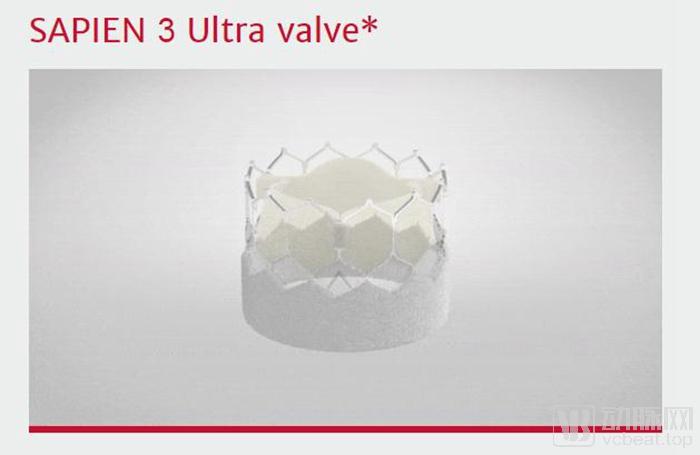
SAPIEN 3 Ultra Transcatheter Heart Valve (Image source: company website)
The SAPIEN 3 Ultra system received CE certification in the European Union last November and was launched in the European market. To ensure a high degree of procedural success with this advanced valve and delivery system, the company provided training to personnel at institutions adopting the system. In late December, the SAPIEN 3 Ultra system received U.S. FDA approval for transcatheter aortic valve replacement (TAVR) in patients with severe aortic stenosis who are determined to be at intermediate or greater risk for open-heart surgery.
2. Edwards SAPIEN 3 Transcatheter Heart Valve
Edwards SAPIEN 3 Transcatheter Heart Valve (SAPIEN 3 THV) consists of a catheter-based prosthetic heart valve and accessories for implanting the valve without open-heart surgery. The valve is made from bovine pericardial tissue mounted on a balloon-expandable cobalt-chromium frame for support.
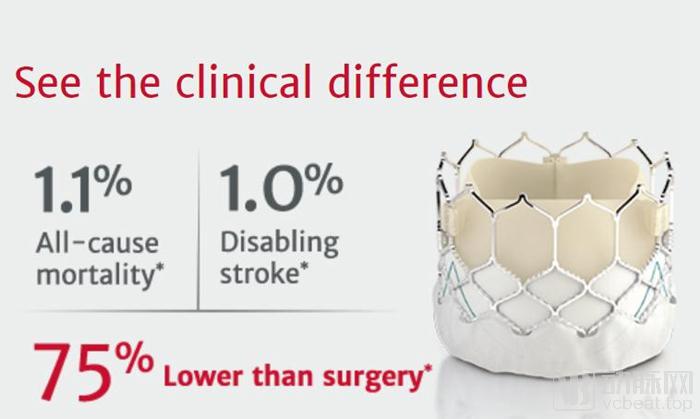
Edwards SAPIEN 3 Transcatheter Heart Valve (Image sourced from the company's official website)
The SAPIEN 3 transcatheter heart valve (THV) received U.S. FDA approval in June 2017 for patients who have previously undergone treatment with a tissue aortic or mitral valve that has since become narrowed, leaky, or both, resulting in impaired blood flow through the valve. Prior to this, the SAPIEN 3 THV had been approved for patients with native aortic valve stenosis.
Implantation of the SAPIEN 3 transcatheter heart valve (THV) can improve blood flow in patients with failed tissue aortic or mitral valves who require valve replacement but are at high or very high risk for open-heart surgery. Clinical evidence demonstrates that the SAPIEN 3 is reasonably safe and effective for these patients.
3. Edwards SAPIEN XT Transcatheter Heart Valve
The Edwards SAPIEN XT transcatheter heart valve is indicated for patients with symptomatic heart disease due to severe native calcific aortic stenosis, or failed surgical bioprosthetic aortic valves (stenosis, insufficiency, or combined) as determined by the heart team, who are at high risk for surgical therapy.
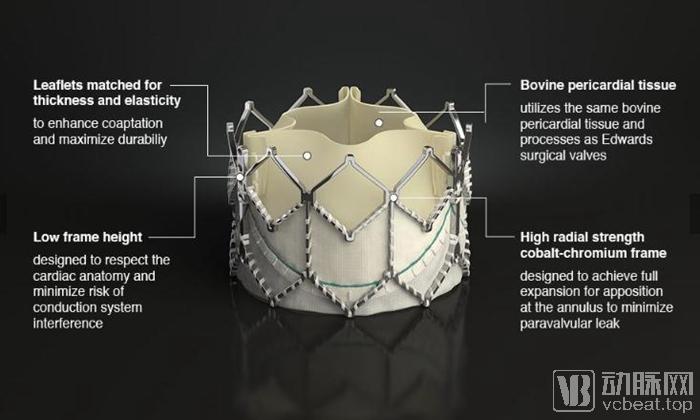
Edwards SAPIEN XT Transcatheter Heart Valve (Image source: company website)
In June 2014, the FDA approved the Sapien XT for high-risk patients with severe aortic stenosis. In October 2015, the FDA approved the Sapien XT for valve-in-valve procedures in the aortic position.
In March 2016, the FDA expanded its approval of the Sapien XT transcatheter heart valve for the treatment of patients undergoing pulmonary valve replacement due to pulmonary valve stenosis caused by congenital heart disease, as well as those with moderate or severe pulmonary regurgitation.
Edwards has two transcatheter mitral valve replacement platforms—the EVOQUE valve and the SAPIEN M3 valve, both utilizing the transseptal delivery approach currently under development—which can significantly expand treatment options for patients. Both products are currently in the early feasibility study phase. In 2018, the company achieved significant progress in initial patient experiences with its clinical partners, and Edwards plans to approve and launch at least one transformative therapy in 2019, 2020, and 2021.
In 2018, Edwards pioneered the Edwards INSPIRIS RESILIA aortic valve, a novel flexible bovine pericardial valve that incorporates advanced RESILIA tissue, including proprietary VFit technology. The RESILIA tissue valve is the world’s first and only surgical valve to combine improved anti-calcification performance, sustained hemodynamic performance, and dry storage capability.
Furthermore, in 2018, Edwards launched the EDWARDS INTUITY Elite in the United States and Europe, with its launch in Japan expected in 2019. The INTUITY Elite valve innovatively combines the company’s pericardial valve technology with transcatheter heart valve technology, representing a minimally invasive aortic heart valve system designed to accelerate surgical procedures, reduce cardiopulmonary bypass time, and minimize incision size.
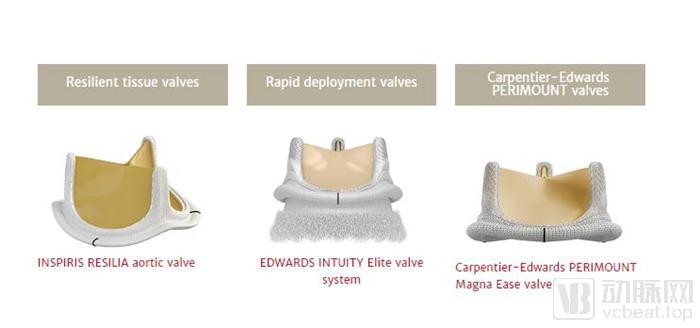
Product Portfolio (Image Source: Company Website)
Edwards also plans to commercialize the HARPOON system in Europe in 2019, which enables beating-heart mitral valve repair for patients with degenerative mitral regurgitation. This innovative system is designed to facilitate echocardiography-guided repair by stabilizing prolapsed mitral valve leaflets, thereby restoring leaflet coaptation and valve function. Additionally, the company will launch the KONECT RESILIA aortic valve conduit in the United States and Europe in 2019. The KONECT RESILIA conduit is the first and only directly implantable tissue valve conduit, simplifying complex aortic root and valve replacement procedures.
Edwards Lifesciences’ critical care division is a pioneer in intelligent monitoring innovations, designed to simplify and enhance the quality of care for millions of patients. Leveraging its global leadership in hemodynamic monitoring and its comprehensive portfolio, the company’s critical care solutions empower clinicians to make proactive clinical decisions for surgical and critically ill patients. These monitoring and management solutions play a vital role in strengthening the recovery of critically ill patients.
The HemoSphere Advanced Monitoring Platform is an integrated system that provides clear monitoring of patients’ hemodynamic status, enabling clinicians to make timely decisions for patient care. This platform lays the foundation for the development of intelligent monitoring and supports artificial intelligence capabilities. Clinicians can view patients’ physiological status via a high-resolution, user-friendly touchscreen interface. The system is compatible with Acumen IQ and FloTrac sensors, as well as Swan-Ganz pulmonary artery catheters and Edwards central venous oximetry catheters.
In 2018, Edwards Lifesciences’ Acumen Hypotension Prediction Index software received FDA clearance for use on the HemoSphere platform. Developed in collaboration with clinicians worldwide, the Acumen Hypotension Prediction Index software is a novel predictive monitoring product that joins the Acumen Fluid Management Advisor software and Acumen Analytics as part of the Acumen Intelligent Decision Support Suite, providing displays of the likelihood of patients developing hypotension or experiencing low blood pressure. This innovative predictive metric is designed to enable clinicians to respond earlier and more rapidly to changes in patient condition and to plan treatment courses accordingly.
Edwards offers a range of hemodynamic monitoring solutions. The minimally invasive FloTrac and Acumen IQ sensors connect to an arterial line to provide continuous monitoring, enabling more accurate assessment of patient status. The non-invasive ClearSight system provides more effective hemodynamic monitoring for a growing patient population. This system supports proactive clinical decision-making and continuity of care in volume management, including for moderate-to-high-risk surgical patients and perioperative patients facing changing clinical conditions across various care settings. However, this product is currently available only in Europe.
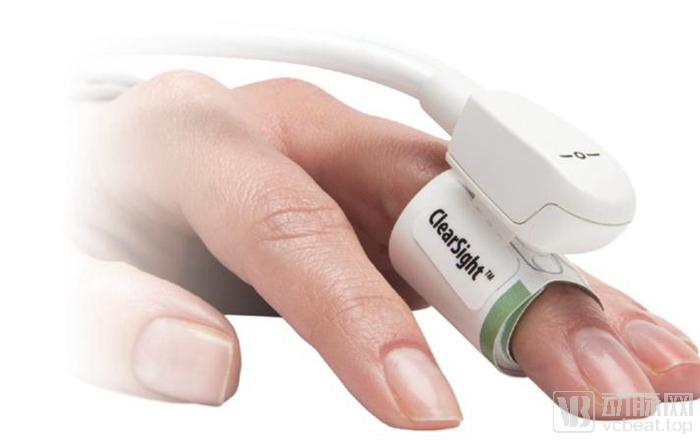
Non-invasive ClearSight System (Image source: company official website)
Strengthening Capabilities Through Mergers and Acquisitions
According to incomplete statistics from VCBeat, Edwards has completed nine mergers and acquisitions since its establishment. Listed below are several M&A transactions that have had a significant impact on the company’s development.
In March 2011, Edwards Lifesciences acquired Embrella Cardiovascular, a company headquartered in Pennsylvania, for $43 million. Embrella primarily manufactured embolic protection devices for coronary procedures, such as transcatheter valve replacement. This acquisition strengthened Edwards’ position in the transcatheter valve market.
In October 2012, Edwards Lifesciences acquired BMEYE BV for $42 million. BMEYE BV is a Dutch private company specializing in the development of non-invasive technologies for advanced hemodynamic monitoring. BMEYE’s unique non-invasive technology platform complements Edwards Lifesciences’ existing product portfolio, providing clinicians with critical and comprehensive hemodynamic monitoring data, extending the applicability of its products to a broader patient population, and strengthening the company’s non-invasive capabilities in hemodynamic monitoring.
In July 2015, Edwards Lifesciences Corporation announced the acquisition of CardiAQ Valve Technologies, a developer of transcatheter mitral valve replacement systems, for $350 million. CardiAQ had developed an early transcatheter mitral valve implantation (TMVI) system, and this acquisition was regarded as a robust complement to Edwards Lifesciences’ FORTIS TMVI device. Following the acquisition, Edwards Lifesciences launched its own transcatheter heart valve replacement program.
In November 2016, Edwards Lifesciences doubled down by acquiring the Israeli company Valtech Cardio for $690 million. Valtech Cardio possesses a technology called “CardiobandTMproducts of the “system” that can repair heart valves through transcatheter therapy. Edwards initially had no intention of acquiring a company solely to research mitral valve replacement technology. However, since Valtech Cardio could optimize CardiAQ’s valve, and Edwards was determined to accumulate resources in the field of heart valves, it ultimately decided to acquire Valtech.
In December 2017, Edwards Lifesciences acquired Harpoon Medical for $250 million. Since 2015, Edwards had been monitoring Harpoon and made structured early-stage investments in the company, including an exclusive acquisition option. Harpoon’s beating-heart repair procedure for mitral valve patients complements Edwards’ portfolio of structural heart disease therapies. This acquisition also demonstrates the company’s commitment to its surgical valve business as a key growth strategy.
In April this year, Edwards Lifesciences completed the acquisition of CAS Medical Systems (CASMED), a company dedicated to non-invasive monitoring technology for cerebral tissue oxygen saturation, for $98 million. Edwards has obtained 510(k) clearance in the United States to use smart cables and software modules to connect CASMED’s FORE-SIGHT cerebral oximeter with Edwards’ HemoSphere hemodynamic monitoring platform. This technology was co-developed by Edwards and CASMED and has received CE certification in Europe.
Katie Szyman, Vice President of Critical Care at Edwards Lifesciences, stated that the integration of CASMED’s forward-looking technology with Edwards’ leading hemodynamic monitoring platform, combined with Edwards’ predictive analytics capabilities, will strengthen Edwards’ leadership in intelligent monitoring technologies by providing physicians with a more comprehensive view of surgical and critically ill patients’ conditions.
Although Edwards has consistently pursued external acquisitions, it has also faced the risk of being acquired itself.
In September last year, a report by Barron’s indicated that Johnson & Johnson might acquire Edwards Lifesciences or Boston Scientific. Both companies have extensive portfolios in the cardiac and cardiovascular device sectors and compete with Abbott and Medtronic in this market.
Following the news, a Johnson & Johnson spokesperson did not immediately respond to requests for comment. A female spokesperson for Boston Scientific declined to comment on “market rumors and speculation” in an email to Investor’s Business Daily. A spokesperson for Edwards Lifesciences noted that the company “does not comment on speculation involving mergers and acquisitions.”
Johnson & Johnson Chairman and CEO Dominic Caruso stated that the company is interested in structural core areas. “In medical devices, Johnson & Johnson has strong capabilities in orthopedics and general surgery. While we have a robust electrophysiology business in the cardiovascular space, structural heart and other areas are also highly attractive to us.”
Some analysts suggest that Johnson & Johnson could directly enter the high-end market by acquiring Edwards Lifesciences. However, it remains uncertain whether Johnson & Johnson intends to acquire Edwards Lifesciences.
Upside Potential of Emerging Economies
The vast untapped potential of emerging markets is likely to serve as a catalyst for Edwards Lifesciences’ growth. The company is striving to strengthen its position in the Asian market, particularly in Japan. Management believes that Japan will remain the primary geographic focus for its expansion among key emerging countries.
Since the launch of the SAPIEN 3 valve in Japan in 2016, Edwards Lifesciences has witnessed its widespread adoption across the country. The company looks forward to launching the INSPIRIS RESILIA aortic valve in Japan this year.
Edwards entered China in 2002. In September 2012, the new headquarters of Edwards Lifesciences Corporation in China was officially established in Shanghai. China operations were spun off from its former Asia-Pacific headquarters to operate independently.
By Nie Guanghong
Source:
https://www.edwards.com/
https://www.crunchbase.com/organization/edwards-lifesciences
https://medcitynews.com/2016/10/jj-buy-edwards-lifesciences/?rf=1
https://www.ohsu.edu/historical-collections-archives/miles-lowell-edwards-1898-1982
https://www.ocregister.com/2018/12/23/most-influential-2018-edwards-lifesciences-ceo-mike-mussallem-leads-company-making-medical-breakthroughs/