

Babytree's Evolution and Monetization Strategy: A Deep Dive into Advertising, E-commerce, and Knowledge Payment Models
This report aims to deconstruct BabyTree’s “monetization model” by providing a comprehensive analysis of its business ecosystem, combined with in-depth financial data analysis. We will adopt a step-by-step approach, progressing from an overview of the business to its monetization operations and finally to strategic pathway choices, to systematically analyze BabyTree’s monetization model.
VCBeat seeks to answer three core questions for all readers:
1. How does BabyTree monetize its traffic;
2. What is BabyTree’s perspective on the three major monetization models: advertising, e-commerce, and paid knowledge?
3. How to Choose a More Suitable Path Among the Three Major Monetization Models: The Logic of BabyTree
I. Review of Basic Financial Data
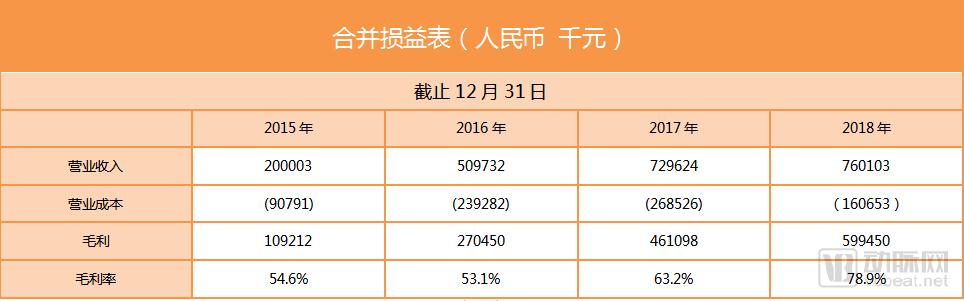
BabyTree’s 2018 prospectus and its latest 2018 annual report both provide an overview of the company’s operational performance from 2015 through December 31, 2018. Over this short four-year period, BabyTree achieved leapfrog growth in its operations. Annual revenue from its core business surged from approximately RMB 200 million at the end of 2015 to RMB 760 million by the end of 2017, representing a compound annual growth rate (CAGR) of 39.6%, indicative of rapid business expansion. Alongside this expansion, operating costs rose from RMB 90 million at the end of 2015 to RMB 160 million by the end of 2018, with a CAGR of 15.5%.
The growth rate of operating costs was significantly lower than that of operating revenue, with the gross profit margin showing a gradual upward trend. According to the latest data as of December 31, 2018, BabyTree’s gross profit margin reached 78.9%, a remarkably high figure in the capital market. Given its rapid business expansion and gross profit margin exceeding 70%, why does the capital market remain skeptical about BabyTree’s development? VCBeat will dissect BabyTree’s financial data step by step.
Market Concerns: Slowing Revenue Growth
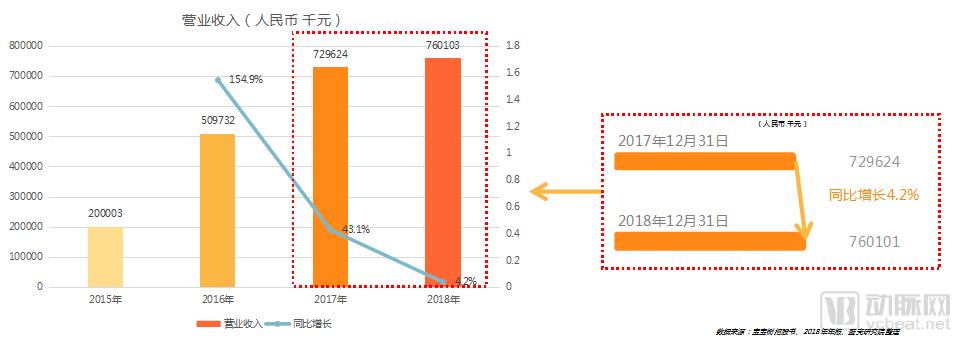
First, we conduct a preliminary analysis of operating revenue. From 2015 to 2018, BabyTree’s operating revenue achieved a compound annual growth rate (CAGR) of 39.6%, indicating very rapid growth. However, the key factor that shook investor confidence was the significant slowdown in growth momentum. Specifically, operating revenue rose from RMB 509 million in 2015–2016, representing an approximately 2.5-fold increase and a year-over-year growth rate of 154.9%. In contrast, for the 2016–2017 fiscal year, operating revenue reached RMB 730 million, with year-over-year growth of only 43.1%—less than one-third of the growth rate recorded in 2015–2016. Further raising market concerns, full-year operating revenue in 2018 amounted to RMB 760 million, reflecting a mere 4.2% year-over-year increase. This marked a further deceleration in growth, falling to less than 1/36th of the peak growth rate observed during the 2015–2016 period.
Data That Cannot Be Ignored: Significant Reduction in Operating Costs
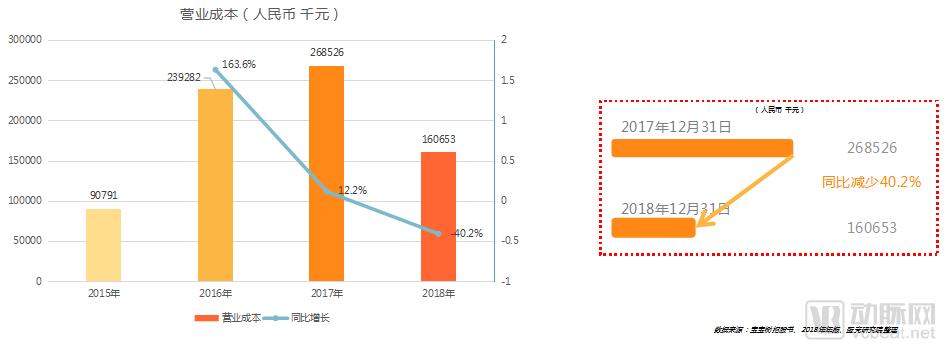
An increase in operating revenue inevitably drives up operating costs. Data shows that from 2015 to 2018, BabyTree’s compound annual growth rate (CAGR) for operating costs was approximately 15.5%. Upon closer analysis, we find:
1. The average growth rate of operating costs is significantly lower than the growth rate of operating revenue;
2. In 2018, despite a 4.2% year-on-year increase in operating revenue, operating costs achieved negative growth, decreasing significantly by 40.2%. The substantial reduction in operating costs amid revenue growth directly demonstrates a significant improvement in the company’s management capabilities and operational efficiency.
Earn More, with a Significant Surge in Gross Profit
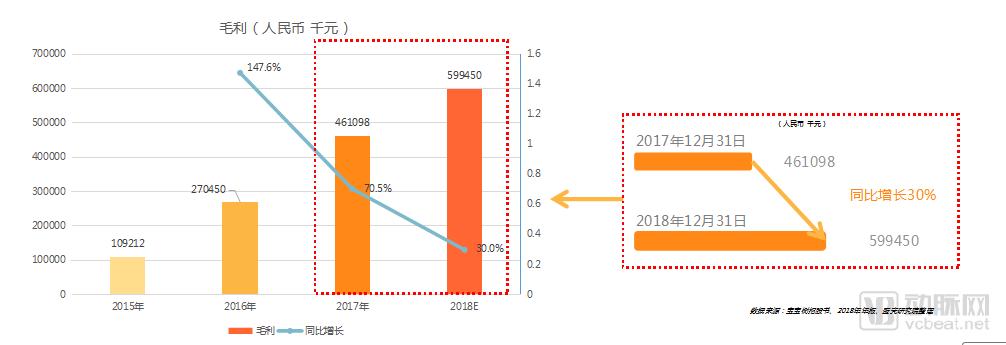
In 2017, the gross profit was RMB 461 million, with a gross margin of 63.2%; by 2018, the gross profit had risen to RMB 599 million, representing a year-on-year increase of 30%, while the gross margin reached 78.9%, an increase of 15.7 percentage points year on year. Business expansion inevitably leads to higher costs; however, due to changes in the business model (i.e., a shift in the monetization strategy, which will be analyzed in detail later), gross profit grew at a faster rate than revenue.
Building on our previous analysis of revenue and costs, although multiple factors have led to a certain degree of softness in revenue growth, the competitive market advantage derived from cost control has become more pronounced. As a result, both gross profit and gross margin have maintained robust growth despite the slowdown in operating revenue.
VCBeat Research Institute believes:Against the backdrop of slowing revenue growth, gross profit margin has continued to rise. In particular, data from 2018 shows that BabyTree’s gross profit margin reached 78.9%, a significant qualitative leap compared with 63.2% in 2017. For a company that already enjoys a high gross profit margin, further improvement is inevitably tied to major internal transformations. We believe this is directly attributable to BabyTree’s launch of new business monetization models in 2017.
II. Real Losses? Changes in Fair Value of Financial Liabilities
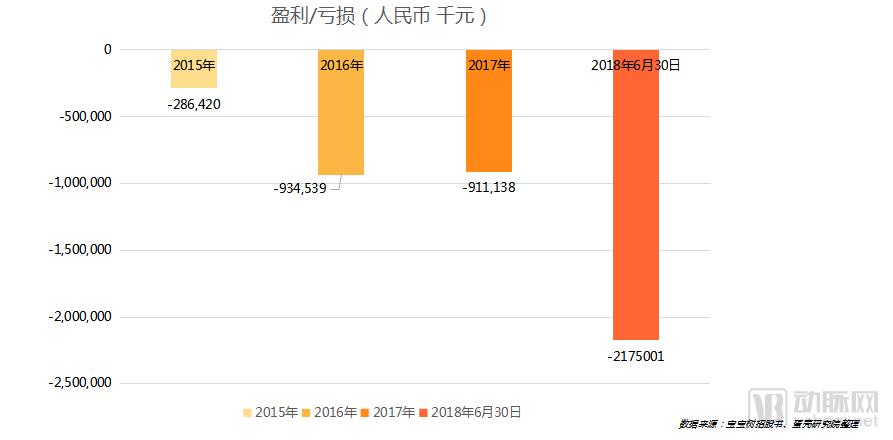
Market skepticism regarding Babytree’s operational performance stems primarily from its continuous losses since 2015, with the deficit widening each year. The latest data shows that Babytree recorded a book loss of RMB 2.175 billion in the first half of 2018 alone, far exceeding the full-year loss of RMB 911 million in 2017. However, in-depth analysis reveals that Babytree’s underlying profitability is sound; the reported book loss was mainly attributable to changes in the fair value of preferred shares.
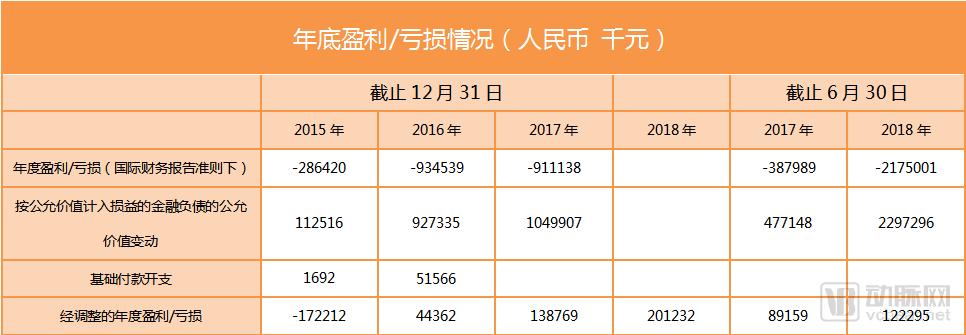
VCBeat. believes:Adjusted data show that BabyTree turned profitable in 2016, posting its first-ever profit of RMB 44.36 million; in 2017, its profit surged by 312.8% to RMB 138 million. Meanwhile, financial liabilities measured at fair value through profit or loss rose rapidly from RMB 112 million in 2015 to RMB 2.297 billion in the first half of 2018, primarily due to a substantial increase in the fair value of preferred shares driven by an overall rise in the company’s valuation, which resulted in significant fair-value change losses for the period.
Therefore, BabyTree’s operational performance is far superior to the perceptions held by some non-professionals in the market. As an internet unicorn that achieved profitability before going public, this accomplishment is highly commendable. Furthermore, the significant increase in the fair value of its preferred shares indirectly reflects the market’s recognition of BabyTree’s value.
BabyTree’s ecosystem is built upon two core assets: community and content. Over the past 11 years, BabyTree has established robust trust relationships with its users by creating and maintaining a powerful social network and integrating comprehensive content resources, thereby becoming the most trusted brand among young families.
During its corporate development, BabyTree has leveraged its community and content resources to accumulate a vast user base, from which it has developed a series of monetization models. Based on the preceding analysis of BabyTree’s entire business portfolio, its current monetization strategies primarily fall into three categories: advertising, paid knowledge services, and e-commerce.
I. Horizontal: Three Pathways from Traffic to Monetization
Advertising Monetization Accounts for Half the Sky
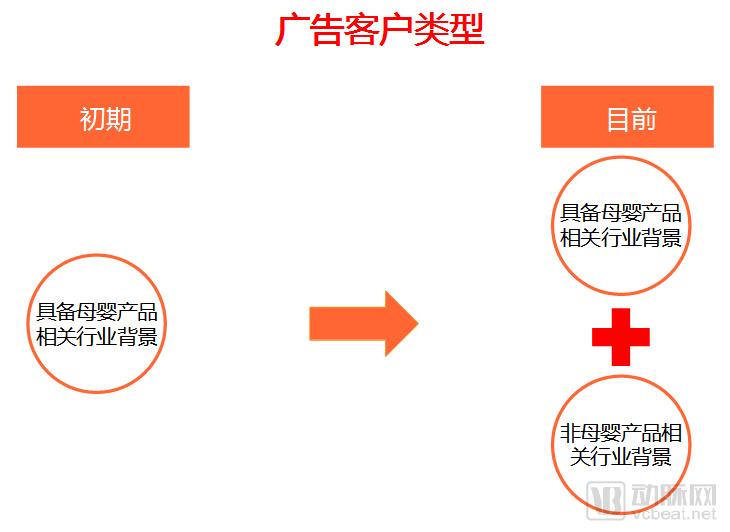
BabyTree offers advertising across its various platforms. Initially, most advertisers had backgrounds in the maternal and infant products industry. However, as the community has continued to grow, an increasing number of advertisers from non-maternal-and-infant sectors—such as pharmaceuticals, cosmetics, and skincare—have increased their advertising investments on BabyTree’s platforms.
For advertisers with a background in the maternal and infant products industry, BabyTree boasts the highest-quality customer base, with big data applications further enabling precise marketing campaigns. For advertisers from other industries, driven by their recognition of BabyTree’s user value, the aim is to leverage BabyTree’s various platforms to meet users’ needs at every stage of life, extending beyond just maternal and infant products.
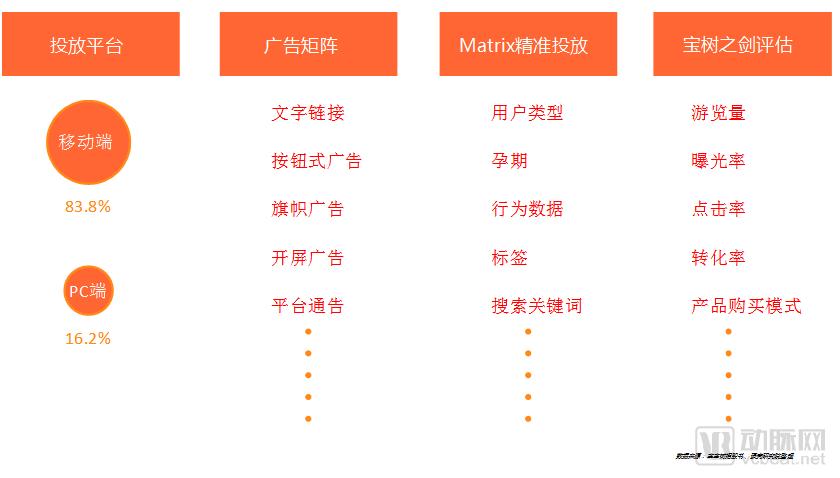
In terms of ad formats, BabyTree offers advertisers a diverse range of options, including text, images, push notifications, and matrix placements, while also providing comprehensive advertising solutions. The entire advertising business is built on Matrix, a big data-driven system that delivers precise advertising services by analyzing factors such as target customer profiles and behavioral preferences.
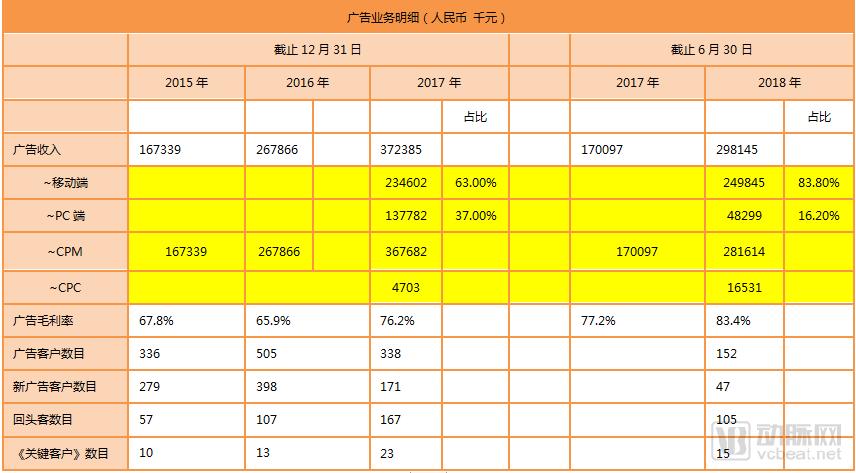
In terms of ad delivery platforms, as of June 30, 2018, Babytree’s advertising revenue was primarily driven by mobile placements, with mobile advertising accounting for 83.8% and PC-based advertising comprising 16.2%.
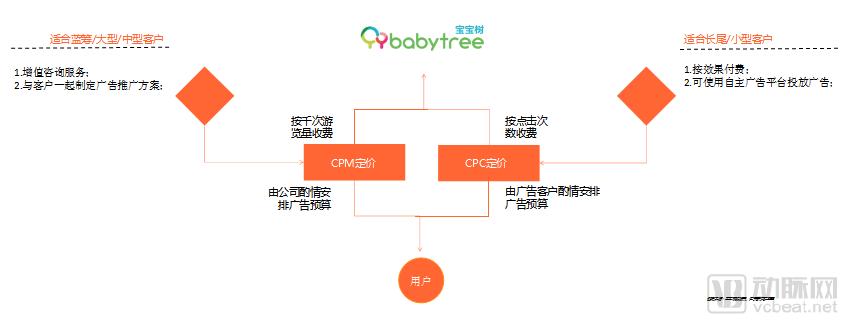
CPM, short for Cost Per Mille, refers to the "cost per thousand impressions" in advertising terminology. The CPM model is suitable for blue-chip, large, and mid-sized clients. Under this model, Babytree’s advertising department provides advertising consulting services and collaborates with clients to develop optimal promotional strategies. Charges are based on cost per thousand impressions, with ad placement and budget allocation determined at the company’s discretion. The core objective is to enhance brand awareness and establish brand visibility for advertisers.
CPC, short for Cost Per Click, refers to the "pay-per-click" model. The CPC model is suitable for long-tail or small-sized clients, with a greater emphasis on advertising conversion rates. Consumers who click on ads are directed to the advertiser’s corresponding website, and advertisers are charged based on the number of clicks. Under the CPC model, advertisers can publish ads through self-service advertising platforms, and they have the discretion to allocate their own advertising budgets.
“Community + E-commerce” Monetization: Is It Really That Difficult?
The maternal and infant market is widely regarded by the industry as a massive “gold mine” with future value in the trillions. However, in reality, this super-sized gold mine is not as easy to exploit as one might imagine. Leading comprehensive e-commerce platforms such as Taobao and JD.com have long targeted the maternal and infant sector, continuously leveraging their resources to capture market share. Meanwhile, most vertical e-commerce players specializing in maternal and infant products have faltered under “cash-burning” expansion strategies. The entire maternal and infant e-commerce industry is grappling with a critical question: What truly drives the development and sustainable growth of this sector? How can BabyTree’s e-commerce model not only “survive” but also “thrive” in the long run?
After eight years of accumulation, BabyTree began to venture into the maternal and infant e-commerce sector. Its platform, Meitun Mama, was officially launched in October 2014. Within just three years, from its official launch to the end of 2017, the platform’s annual e-commerce revenue reached RMB 332 million, achieving leapfrog growth in its e-commerce business. This rapid expansion was closely tied to the preceding eight years of community operation. It is this long-term community engagement that has endowed BabyTree with three unique advantages in the maternal and infant e-commerce landscape: traffic advantage, brand trust, and precision marketing powered by big data.
Traffic Advantage:Compared with many other maternal and infant e-commerce platforms that rely on high-cost customer acquisition, BabyTree’s years of community operations have enabled it to drive traffic from its community to its e-commerce platform with virtually no traffic acquisition costs.
Brand Trust:Some “community + e-commerce” platforms rush to build monetization models for their “e-commerce” operations as soon as their “community” initiatives get off the ground. This hasty approach often leads to a lack of user trust. In contrast, eight years of trust-building have enabled BabyTree to establish strong brand trust among its users, achieved through long-term accumulation and consolidation.
Big Data Precision Marketing:Traffic advantages and brand trust are largely attributable to big data-driven precision marketing. By leveraging big data to uncover customer needs, precision marketing has made it possible for Babytree to deliver exactly what users require. This ensures that Babytree consistently creates meaningful “intersections” between its products and users at the critical moments when consumer demand arises.
Currently, Babytree's e-commerce business operates under both a platform model and a direct-sales model.
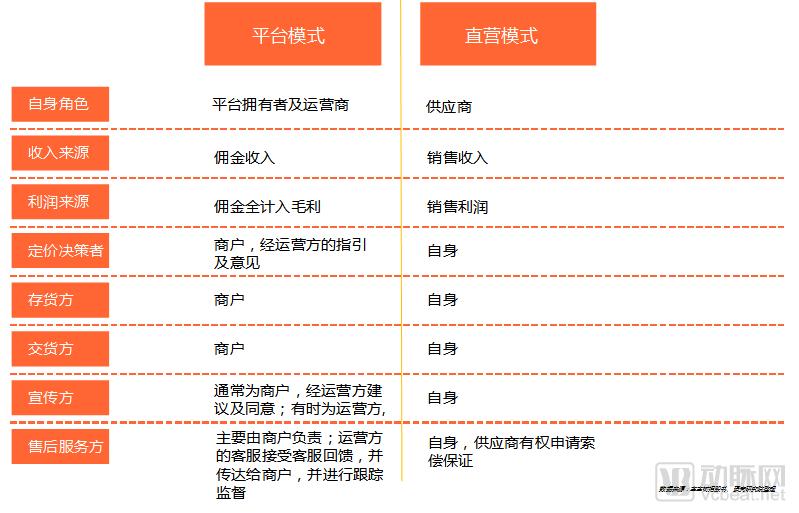
Platform Model:Third-party merchants join the Meitun Mama platform to offer products to customers. BabyTree provides all third-party merchants with product display, transaction, and billing services; in return, these merchants are required to pay a transaction commission of approximately 10% based on their sales volume. Regarding merchant admission standards, BabyTree has long adhered to high criteria, conducting rigorous screening across three dimensions—business qualifications, credit ratings, and comprehensive assessments—to ensure the provision of high-quality products to consumers. Under this platform model, Meitun Mama acts as the operator, deriving its revenue from commissions paid by participating merchants, with all commissions recognized as gross profit. While Meitun Mama offers reference recommendations on product pricing, inventory management, delivery, promotion, and after-sales service, the ultimate responsibility for these aspects lies with the participating merchants.
Direct Operation Model:BabyTree procures products from suppliers and sells them directly to customers under its own brand. This model is suitable for products that require high quality and safety standards, such as infant formula and diapers. It ensures a high degree of control over the entire process, enabling effective oversight of key steps including product procurement, inventory management, delivery, and after-sales service. Under this direct-sales model, Meitun Mama acts as the supplier itself, with revenue derived from product sales and profits recorded as gross profit. The platform assumes full responsibility for product pricing, inventory, delivery, marketing, and after-sales support.
Currently, Meitun Mama’s product offerings primarily cover four major categories of maternal and infant products: consumables, cleaning supplies, clothing, and food, with a total of 6 million SKUs available for sale. By the end of 2017, BabyTree’s e-commerce platform had cumulatively sold 543,000 SKUs. In the first six months of 2018, a total of 338,000 SKUs were sold.
Many e-commerce platforms currently aim to scale up, defining “big” as offering the most extensive product range and the most comprehensive selection. However, this very approach is often why many startup e-commerce platforms fail: regardless of how richly they advertise their product catalogs, they lack the competitiveness to challenge leading generalist e-commerce giants.
In contrast to the “people seeking products” model, which offers an extensive product library, BabyTree is more inclined to position itself as fulfilling segmented, personalized, and latent consumer needs. By adhering to a streamlined, rigorously curated selection strategy and introducing only the most superior and suitable products onto its e-commerce platform, it has established a “products seeking people” e-commerce model. The C2M (Consumer-to-Manufacturer) model emerged naturally under this “products seeking people” positioning.
The C2M business was officially launched in 2017. By leveraging the independently developed Babytree Index data analytics system to monitor trending keywords in published content in real time, the company obtains insights into users’ purchasing preferences. Through this data analytics system, Babytree identifies user needs, assesses the feasibility of developing related products to meet those needs, and then commissions manufacturing partners to bring the products to market. Currently, the new C2M business has established a relatively comprehensive internal process, covering early-stage product R&D planning and identification of feasible partners, mid-stage design, quality control, and production preparation, as well as late-stage product launch and post-launch tracking.
New Pathways: Explorations in Paid Knowledge
In 2016, BabyTree officially launched a new paid knowledge model, with this novel monetization approach stemming from PGC (Professionally Generated Content). Paid knowledge services are positioned for young families who place greater emphasis on high-quality, personalized answers and are willing to pay for superior insights from domain experts. This logic is built on the contemporary notion that young parents are more receptive to the idea that “paid content offers greater value than free content.”
Lecture:The "Lecture" feature was launched in April 2017, offering online lectures on health or wellness topics delivered by a physician and other experts (such as psychologists, relationship counselors, or health advisors).
Expert Answer:The "Expert Q&A" feature was launched in August 2016. Priced between RMB 20 and RMB 499, it allows users to pay a fee to submit questions directly to their preferred experts, who provide answers within 24 hours via 1–2 minute audio recordings.
Ask a Doctor Quickly:In May 2017, BabyTree launched the “Quick Doctor” public service. By partnering with third-party medical providers, it offers immediate answers to users’ urgent health inquiries.
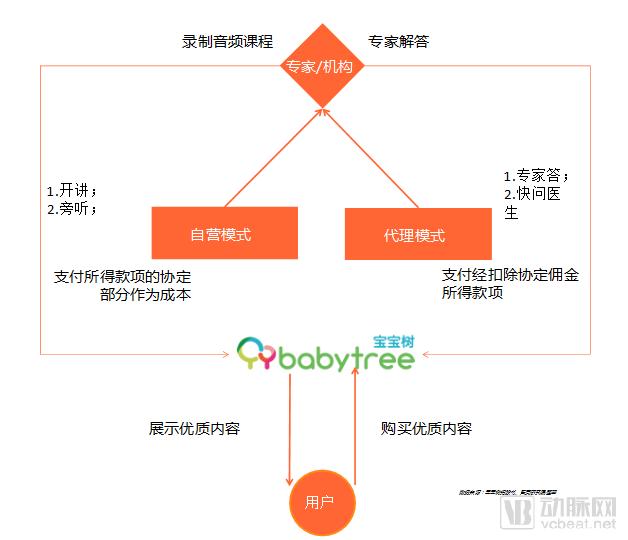
Classified by revenue model, current knowledge-payment revenue relies on two models: self-operated and agency. The knowledge-payment business primarily depends on three embedded features: "Lecture," "Expert Q&A," and "Quick Doctor Consultation." Among these, the "Audit" function within "Lecture" and "Expert Q&A" operates under the self-operated model, while the main body of "Expert Q&A" (excluding "Audit") and "Quick Doctor Consultation" adopt the agency model.
II. Depth: The Monetization Landscape Brought by “Small Moments”
As previously mentioned, Babytree’s monetization model primarily consists of advertising revenue, e-commerce revenue, and paid knowledge services. In reality, however, all the aforementioned operating revenues are derived from its core traffic platform, Babytree Pregnancy. Like many other enterprises, when a business reaches a bottleneck, expanding into new business lines is one viable solution. Fortunately, as the business model built around the Babytree Pregnancy platform entered its maturity stage, Babytree shifted its strategic focus to a new business line—Xiaoshiguang.
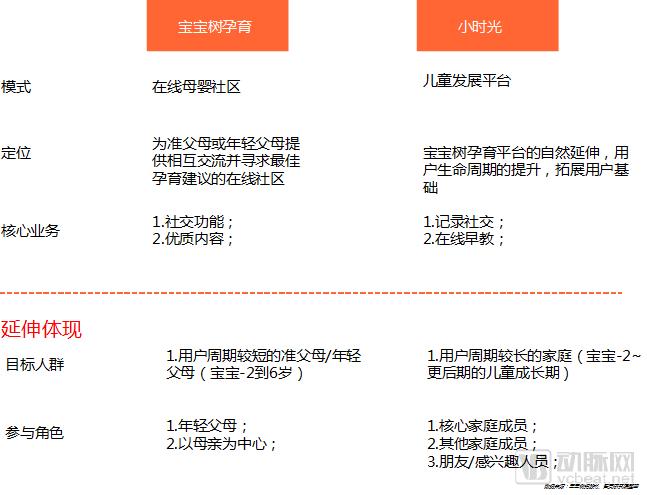
Functionally, BabyTree Pregnancy is an online maternal and infant community platform positioned to provide expectant or young parents with a space for mutual exchange and access to optimal pregnancy and parenting advice; in contrast, XiaoShiGuang is a child development platform positioned as a natural extension of BabyTree Pregnancy, aiming to enhance user lifecycle value and expand its user base. Although both platforms share social networking and content as their core functions, their distinct positioning results in fundamental differences in these core functionalities.
From a business extension perspective, the target audience of BabyTree Pregnancy consists of expectant and young parents. This user group has a relatively short usage cycle, typically spanning from pregnancy to when the child is 2–6 years old. The primary participants are both parents, with mothers being the predominant users. In contrast, Xiao Shiguang targets families as a whole. This user group has a longer usage cycle, extending from pregnancy through later stages of child development. Its participants include not only both parents but also other core family members and even friends.
Xiaoshiguang’s monetization model continues to rely primarily on advertising, e-commerce, and paid knowledge services. However, based on the aforementioned analysis, Xiaoshiguang, as a secondary platform, has further expanded the target audience for monetization beyond Babytree Pregnancy—the core traffic-generating platform—extending from expectant and new parents to the entire household involved in the child’s growth cycle. The target user base has also broadened from both parents to include other family members and friends, representing a fission-like expansion from a dual-party to a multi-party ecosystem. In other words, the Xiaoshiguang platform has significantly extended the user engagement lifecycle while substantially increasing the size of its target user base.
We will examine the essence of strategic shifts through data, conducting an in-depth analysis of various aspects of BabyTree’s monetization model based on empirical evidence.
Three Major Trends in Advertising Monetization
As a core monetization channel for BabyTree, advertising revenue has consistently remained one of its largest sources of income. By analyzing the details of its advertising operations, we interpret BabyTree’s strategic development in this sector. Among all advertising-related data, we have found that:
a. Advertising revenue increased from RMB 167 million in 2015 to RMB 298 million in the first half of 2018;
b. The gross profit margin of advertising has maintained stable long-term growth, rising from 67.8% in 2015 to 83.4% in the first half of 2018;
c. The number of advertisers fluctuated sharply, dropping from a peak of 505 in 2016 to 152 in the first half of 2018;
Amid a significant decline in the number of advertisers, BabyTree’s advertising revenue and gross profit margin have continued to achieve stable and rapid growth, driven by its alignment with three major trends in advertising monetization models.
How Does BabyTree, Which Operates on Both Mobile and PC/WAP Platforms, Choose Its Advertising Platforms? Before analyzing the advertising platform strategy, we first interpret the traffic data for the mobile and PC/WAP ends. BabyTree’s average monthly active users (MAU) grew from 133 million in 2015 to 175 million as of September 30, 2018.
Despite the significant decline in average monthly active users in 2017 and the first half of 2018 due to changes in popular search engine algorithms, the continuous growth in the total number of average monthly active users since mid-2018 has shown a rebound trend, indicating that BabyTree’s word-of-mouth dissemination and promotional efforts can help it cope with short-term fluctuations.
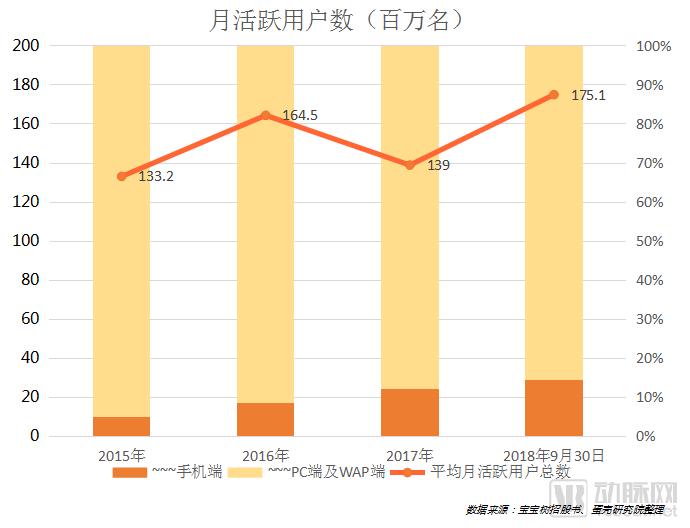
In terms of the composition of average monthly active users (MAU), while MAU on the PC/WAP platforms fluctuated, mobile MAU continued to grow steadily, rising from 6.4 million in 2015 to 25.2 million as of September 30, 2018. Meanwhile, we observed that during the second half of 2017 and the first half of 2018—a period when MAU was significantly impacted by algorithm changes—mobile MAU still bucked the trend, increasing from 13.8 million to 16.8 million, representing a growth rate of 21.7%. This indicates that an increasing number of users prefer to access BabyTree’s various features via its mobile app.
Meanwhile, VCBeat Research Institute further analyzed advertisers’ placement preferences. We found that although the monthly active users (MAU) on PC/WAP platforms exceed those on mobile apps, advertisers still show a clear and significant preference for placing ads on mobile apps.
In 2017, advertising revenue comprised 37% from PC/WAP platforms and 63% from mobile platforms; in the first half of 2018, it shifted to 16% from PC/WAP platforms and 84% from mobile platforms.
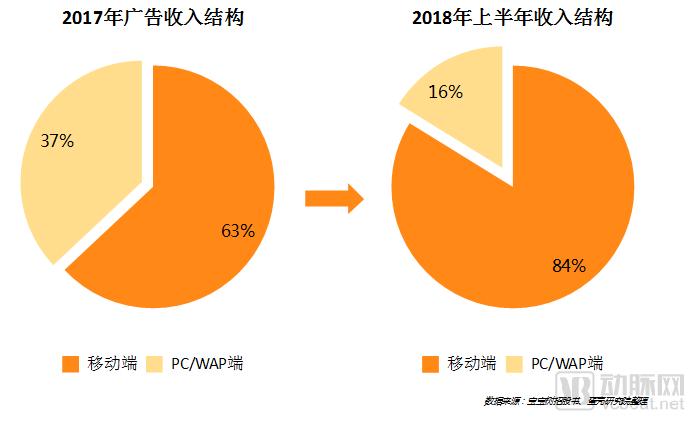
In light of the trend toward shifting user habits and advertisers’ preferences in ad placement, BabyTree has continued to prioritize mobile app development to further enhance its mobile traffic entry capabilities.
In terms of revenue model, BabyTree’s advertising business is transitioning from single CPM-based display advertising to a hybrid model of “CPC performance-based advertising + CPM.” Having previously provided a detailed analysis of CPM and CPC businesses, we now delve deeper into the underlying logic behind the shift from a pure CPM model to a “CPM + CPC” advertising model. At the core of BabyTree’s advertising business model lies the “20/80 rule.”
“The 20/80 Rule,” also known as the Pareto Principle, posits that in any given set of items, the most significant portion constitutes only a small fraction, approximately 20%, while the remaining 80%, though comprising the majority, is of lesser importance.
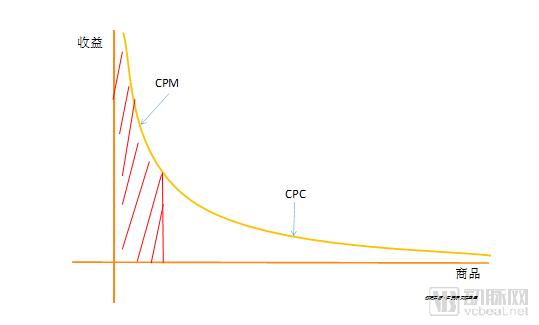
The 80/20 Rule is regarded as an iron law in the business world, with its core tenet being that 80% of a company’s performance derives from 20% of its products. With the widespread adoption of the internet, extensive sales channels have created selling opportunities for over 98% of goods, eliminating reliance solely on the 20% of flagship products. This counterargument to the “80/20 Rule” is known as the “Long Tail Effect.” Under the logic of the “Long Tail Effect,” the value generated by the 80% of non-hit products exceeds that contributed by the 20% of hit products.
In advertising and marketing, ordinary advertisers also place significant emphasis on promoting the 20% of core products. However, this does not mean that these advertisers have lost their willingness to develop the remaining 80% of non-hot-selling products. A high-quality internet platform can precisely help these advertisers achieve sales for the 80% of non-hot-selling products. Under the new advertising model, BabyTree will gradually develop advertisers with long-tail characteristics and provide them with customized advertising solutions.
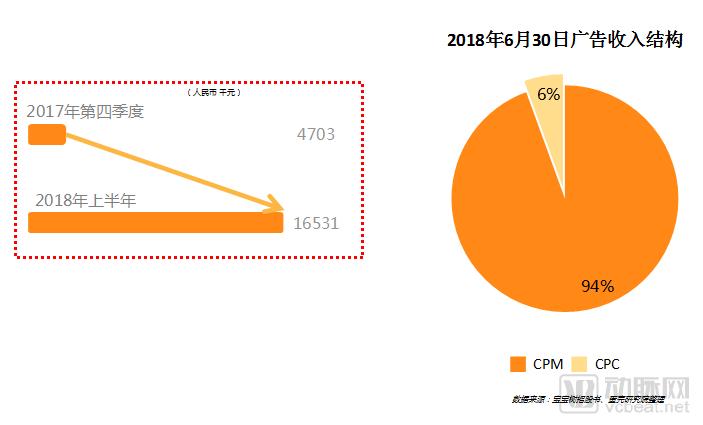
The CPC model was officially launched in September 2017, contributing RMB 4.703 million in operating revenue in the fourth quarter of 2017. In the first half of 2018, the CPC business further expanded, generating a total advertising revenue of RMB 16.531 million, with CPC revenue accounting for 6% of total advertising revenue.
The construction of the single “CPM” advertising model is based on the Pareto Principle (80/20 Rule), while the “CPM + CPC” model is built upon the Long Tail Theory. Therefore, BabyTree’s advertising business model is transitioning from the traditional “Pareto Principle” to the “Long Tail Theory,” which is better suited to the internet economy.
In BabyTree’s prospectus, VCBeat Research Institute identified several intriguing sets of data, which we will attempt to interpret.
Advertiser Data Shows:From 2015 to 2016, the number of advertisers increased from 336 to 505, a growth of 50.3%; however, from 2016 to 2017, the number of advertisers dropped significantly to 338, a decline of 33%. By the first half of 2018, the number of advertisers further shrank to 152.
New Advertiser Data Shows:From 2015 to 2016, the number of new advertisers increased from 279 to 398; from 2017 to 2018, the number of new advertisers declined to 171; in the first half of 2018, the number of new advertisers further contracted to 152.
Repeat Customer Data:From 2015 to 2016, the number of returning clients increased from 57 to 107; from 2017 to 2018, the number of returning advertising clients further grew to 167. In the first half of 2018, the number of returning advertising clients reached 105, and the full-year figure for 2018 is projected to exceed that of 2017.
Key Customer Data:From 2015 to 2016, the number of key clients increased from 10 to 13; from 2017 to 2018, the number of key advertising clients further grew to 23; in the first half of 2018, the number of key advertising clients reached 15, and it is projected that the full-year figure for 2018 will exceed that of 2017.
In the complete report《Babytree In-Depth Analysis: The Monetization Path of a Leading Maternal and Infant Community Platform》, we will continue to provide an in-depth analysis of Babytree’s monetization strategies across advertising, e-commerce, and paid knowledge services.
At the end of this article, we will synthesize all analyses to present eight core insights—the most essential takeaways of the entire piece—which offer valuable reference for “Internet+” maternal and infant platform enterprises on monetization strategies.
For more details, please refer to: 《BabyTree In-Depth Analysis: The Monetization Path of a Leading Maternal and Infant Community Platform 》
Below is the complete table of contents of the report. The full text consists of six chapters, totaling more than 29,000 words.Download the Full ReportRead.
Table of Contents
Chapter 1 Standing Out: A Brief History of BabyTree’s Development
I. Leading Maternal and Infant Community Platform—Babytree
II. Eight Rounds of Financing, Totaling Over RMB 5 Billion, with a Valuation Exceeding RMB 14 Billion
III. From “0” to “1”: The Emergence of Unicorns
Chapter 2 Interpretation of BabyTree’s Financial Data
I. Review of Basic Financial Data
II. Is It a Real Loss? Fair Value Changes in Financial Liabilities
Chapter 3: The System – One Core + Three Extensions
I. Comprehensive Analysis of the Business Model
II. Core Traffic Gateway – BabyTree Pregnancy
III. In-Depth Analysis of the Three Major Business Segments
(I) Little Moments
(2) E-commerce Platforms
(3) WeChat Ecosystem
Chapter 4: The Monetization History of the Leading Maternal and Infant Community Platform
I. Horizontal: Three Pathways from Traffic to Monetization
(I) Advertising Monetization Supports Half the Sky
(II) Is “Community + E-commerce” Monetization Really Too Difficult?
(III) New Pathways: Explorations in Paid Knowledge
II. Depth: The Monetization Landscape Brought by “Small Times”
Chapter 5: In-Depth Analysis of BabyTree’s Monetization Model
I. Three Major Trends in Ad Monetization
(1) Placement Preference: Mobile Is the Better Choice
(II) In-depth Development: Unlocking the “Long Tail” Model
(3) Enhanced Bargaining Power: Precision Marketing That Prioritizes Quality Over Quantity
II. E-commerce Business: Evolution of Core Competitiveness Across Three Stages
(1) Phase 1: Building a “Community + E-commerce” Model
(II) Phase II: Establishing the Second Revenue Curve via the “Direct Sales + Platform Model”
(3) Phase Three: Strategic Cooperation with Alibaba
III. The Knowledge Payment Model: The Logic Behind the New Choice
(1) Self-operated or Agency: Gross Profit Margin Reaches 90.4%
(II) Shift in Sales Strategy: 89.4% of Market Potential Remains Untapped
Chapter 6: Eight Core Perspectives on Traffic Monetization
I. Ad Monetization
II. E-commerce Monetization
III. Paid Knowledge