

Zhengtitan Health Service Robot: Building a Full Closed-Loop Elderly Health Ecosystem Through AI-Powered Robotics
A few years ago, children who were still searching for suitable nannies at domestic service agencies to care for their elderly parents’ daily needs could hardly have imagined that technological advancements would integrate tasks once requiring manual labor into a compact device, which also serves as a gateway to a variety of health services.
Recently, Mangu Technology, a company dedicated to the AI + general health industry, held a press conference in Beijing and officially launched its core product, the “Zhengtai Health Service Robot.”
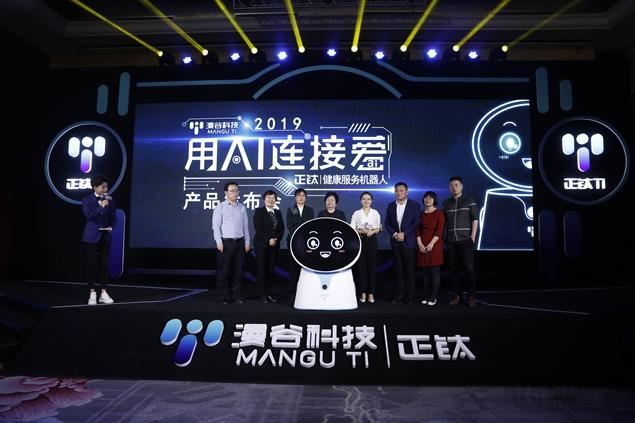
It has been a year from research and development to the launch event. According to Zou Jinglu, Co-founder and CEO of Mangu Technology, this launch is “just the starting point, not the end.” In addition to the Zhengtai Health Service Robot, developed with the mission of fostering family connections through health-focused innovation, the company plans to introduce more lightweight smart products centered around health consumption scenarios, such as smart pillboxes, aiming to build a complete ecosystem.
“Medical Care, Nutrition, Mobility, and Emotional Well-being”: A One-Stop Service Building a Family Health Information Service Platform
It is projected that by 2050, the elderly population will reach nearly 500 million; from 2040 to 2050, the proportion of elderly consumption in GDP will rise from 8% to 33%. Despite such a vast demographic base and consumer market, services currently remain heavily reliant on manual labor.
For those who frequently need to care for their parents, the first priority is to monitor the elderly’s physical health, the second is to attend to their mental well-being, and the third is to facilitate their social participation and reintegration. This is precisely why Mangu Technology has entered the field of eldercare robotics.
According to Zou Jinglu, the Zhengtai Health Service Robot cares for the elderly through technology from two dimensions:
First is the dimension of physical health, which includes health services such as 24/7 one-on-one online consultations, online appointment registration, online medication purchase with home delivery, vital signs monitoring, and personalized health knowledge recommendations. These services cover three major stages: disease consultation, assisted diagnosis and treatment, and post-illness rehabilitation.
24/7 data resources can generate physical health reports for the elderly and simultaneously push them to their children’s mobile devices. By leveraging health information to bridge the distance between children and parents, this approach enables children to stay informed about their parents’ health status at all times while providing additional opportunities to express care and concern.
Second, in the dimension of mental health, Zhengtai Health Service Robot is committed to becoming China’s first AI-powered integrated platform focused on the psychological well-being of the elderly. Zou Jinglu stated, “In the future, we will also collaborate with psychological clinics and psychology experts to jointly build an AI-synchronized mental health platform.”
To address the pain points of monotonous lifestyles and lack of recreational activities among the elderly, the Zhengtai Health Service Robot is equipped with a vast library of entertainment resources. Seniors can access content such as traditional storytelling and folk arts, news updates, and karaoke through voice commands.
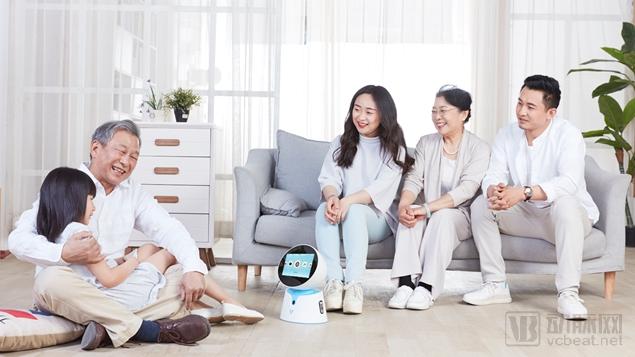
Furthermore, by analyzing behavioral preferences through health knowledge questionnaires completed by the elderly, a knowledge graph of entertainment preferences is constructed within the robot. This enables the analysis and recommendation of personalized needs for the elderly, as well as the generation of entertainment reports for their children. These reports facilitate tailored engagement that aligns with the elderly’s interests, thereby strengthening familial bonds.
From the perspective of product application, different time points and development stages impose varying requirements on products. The current trend highlights a shift from products achieving breakthroughs in isolated areas to comprehensive solution providers.
Under the vision of Zhang Jianyong, CTO of Mangu Technology, the Zhengtai Health Service Robot—which integrates vital signs monitoring, online consultations, appointment registration, online medication purchasing, patient education, health Q&A, emergency alerts, video calls, and children’s education—essentially uses the robot as an entry point to collect various health data and provide users with personalized health intervention plans, ultimately delivering a closed-loop solution for comprehensive health management.
“We believe this represents a typical application trend within the medical scenarios of holistic health management, and we have also observed that Zhengtai has accurately gauged this trend,” said Jin Naili, Dean of iResearch Institute and Partner at iResearch Consulting.
Therefore, to realize all these functions, we must mention the technology embedded within—artificial intelligence.
“AI with Warmth”: Meeting the Multilevel Needs of the Elderly
In industries characterized by uneven resource distribution and significant labor shortages, AI is often employed as an assistive technology to enhance efficiency and mitigate losses attributable to human resource constraints. Qu Yi, Chief Strategy Officer (CSO) of Mangu Technology, stated that as the most prominent technology of our time, AI has permeated every aspect of daily life. “Data shows that over 90% of AI companies focus on consumer scenarios such as children, families, automobiles, and lifestyle, with only 10% dedicated to healthcare. Within this 10%, merely 3% are AI products genuinely focused on the health of the elderly. Mangu Technology is one of these few. Therefore, I believe that artificial intelligence will inevitably help address certain challenges associated with population aging. ‘Aging + AI’ equals the future.”
Yi Yang, an Associate Professor and postdoctoral fellow in integrated traditional Chinese and Western medicine at the 301 Hospital (PLA General Hospital), highlighted a stark reality when discussing the challenges and opportunities within the industry: “Securing a spot for one’s parents in a public elderly care facility in Beijing could require a wait of up to 30 years.” The scarcity of beds in public institutions, coupled with the high entry fees charged by private facilities, has left the majority of seniors—who either cannot access or afford nursing homes—living alone. Against the backdrop of the global aging crisis, the development of smart elderly care has naturally become a priority.
Compared with other AI-powered content, the elderly population exhibits distinct characteristics. The gradual decline in physical function leads to higher demands for assistive technologies in daily life, while also necessitating readiness for potential medical needs that may arise at any time. Furthermore, particularly in China, empty-nest seniors face not only mobility challenges but also have more pronounced emotional needs.
Zou Jinglu stated, “We aim to leverage a suite of AI technologies—including computer vision, natural language processing, and knowledge graphs—while integrating our existing internet-based medical service capabilities with the offline operational strengths of the broader health industry. Through a flagship product and a series of related offerings, we intend to establish new product forms and entry points that collectively constitute our core theme: the Next-Generation Family Health Information Synchronization Platform.”
Long Mengzhu, CMO of AISpeech, pointed out, “In AI-plus-healthcare scenarios, voice technology is a low-priority need, primarily used for patient triage, electronic medical records, and Q&A services. The true must-have technology in the medical field should be imaging technology. However, in elderly care scenarios, seniors’ needs are diverse. Precisely because these needs are both varied and essential, we are more optimistic about the future potential of AI-plus-elderly-care than the uncertainties surrounding the future of AI in healthcare.”
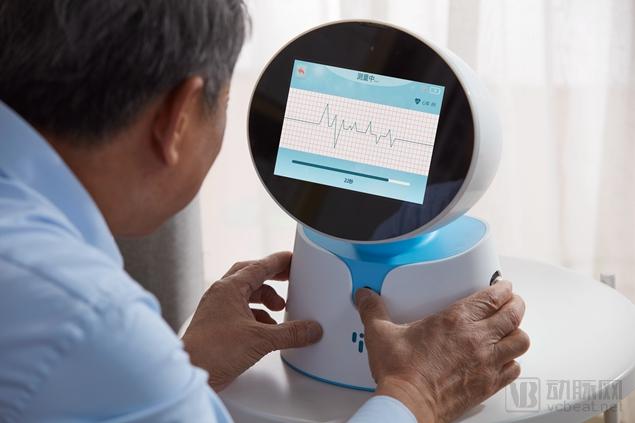
It is reported that Zhengtai Health’s service robots, in collaboration with AISpeech on voice technology, enable elderly users to learn at “zero cost” and engage in conversational interactions with the robots, thereby achieving simplified operations tailored to seniors.
For example, during vital signs monitoring, the elderly user only needs to say “I want a check-up” to Zhengtai. Following the prompts, the user can complete the examination by simply placing their hand on the robot.
Additionally, functions such as online medical consultations, online medication purchases, calls with children, and playback of relevant entertainment content can all be completed by issuing voice commands.
Although AISpeech had previously developed smart products such as Tmall Genie, these were largely smart home devices. Its collaboration with Mangu Technology marks its first foray into the elderly care robot sector. Long Mengzhu stated, “When we encountered Mangu Technology, we observed their substantial industrial accumulation, technological and team expertise, as well as their deep understanding of the elderly care industry and the family health sector, which led us to choose them as our partner.”
At the press conference, Long Mengzhu stated that voice interaction encompasses naming-based dialogue, generative dialogue, question-and-answer dialogue, and, most importantly, task-oriented dialogue. “In the field of home-based elderly care, we aim for robots to go beyond merely handling Q&A sessions; instead, they should achieve a deeper understanding of seniors’ intentions to help them accomplish specific tasks. This is what we call ‘task-oriented dialogue.’”
In terms of semantic recognition requirements, special groups such as children and the elderly have their “own worlds,” with distinct logic, usage habits, and conversational styles that differ from those of typical smart hardware users. “We need to collaborate with companies that understand user behavior to implement extensive customized optimizations for the elderly market, thereby achieving more precise ‘humanized interaction’ as intended.”
Zhang Jianyong emphasized that the Zhengtai Health Service Robot is not a “cold” machine, nor is it “hard tech” in the traditional sense. “We aim to create scenarios for high-frequency home use, where AI can bridge the emotional gap between children and their elderly parents, while also helping both seniors and young people cultivate healthy and positive lifestyle habits.”
Technical support tailored to the habitual preferences of the elderly presents technical challenges and demands greater patience from developers. As Dr. Yi Yang stated, Zhengtai’s health service robots are striving to create an “AI with warmth.”
Fully open e-commerce channels and launch a customized version of the Zhengtai Health Service Robot for B2B clients
The AI era has arrived. Population aging, a long-discussed issue, is driving a surge in demand for healthcare, companionship, and medical services among the elderly, which will be one of the major challenges facing future society.
To meet household needs, the Zhengtai Health Service Robot is now available for purchase through online channels such as Huawei, Xiaomi, and JD.com e-commerce platforms, as well as WeChat Mini Programs. Offline distribution through agents and retail stores is also being gradually rolled out, enabling an omnichannel sales strategy that integrates both online and offline avenues.
Furthermore, not only does every household require intelligent robots to assist the elderly, but nursing homes currently on the market also generally need technological support to compensate for the shortage of care staff.
Therefore, in addition to addressing consumer-side (C-end) household demands, Manggu Technology will also strategically expand into the business-side (B-end) market, adopting a “dual-pronged” approach. Qu Yi stated that, for industry partners such as physical examination centers, medical institutions, and health management centers, Manggu Technology will launch customized versions of its Zhengtai Health Service Robots, providing technological empowerment for smart healthcare.
The customized version of Zhengtai can deliver fully tailored product features based on client requirements, such as personalized content delivery, health tips, upload of medical examination reports, and purchase of health checkup packages, thereby enhancing user engagement and loyalty for healthcare institutions. Meanwhile, it leverages intelligent technologies to seamlessly connect hardware terminals with backend cloud data centers, integrate high-quality internet-based medical resources for external distribution, and provide technology-driven smart health empowerment to partners in the broader health industry, offering a one-stop intelligent solution.