

Lilly China Advances Toward Zero Time Lag in Global Drug Development Under Dr. Wang Li’s Leadership
Editor’s Note: This article is republished from R&D Ke, authored by Xu Weijia. VCBeat has been authorized to republish it.
From the strategic realignment of global new drug R&D strategies to the establishment of the Eli Lilly China Center for Collaboration and Innovation; from the global patent cliff crisis facing mature products to Eli Lilly China’s launch plan of “40 new products and indications in 10 years”; and from an internal R&D-led model to a dual-track approach combining internal R&D with external collaborations—Eli Lilly and Company has been continuously adjusting and accelerating its progress over the past two years, thereby redefining the value of Eli Lilly China.
Eli Lilly and Company’s Chairman and CEO, David A. Ricks, who previously served as General Manager of Eli Lilly China, has placed high expectations on both the Chinese market and the Eli Lilly China team. On his first day in office, Mr. Ricks implemented sweeping organizational reforms, separating Eli Lilly China from the Emerging Markets region to become a subsidiary that reports directly to headquarters, alongside Eli Lilly USA and Eli Lilly Japan. This change has enabled more efficient and rapid decision-making regarding China, fully underscoring the company’s strong commitment to the Chinese market.
Recently, the author met with Dr. Li Wang, Senior Vice President of Eli Lilly China and Head of the Drug Development and Medical Affairs Center, in Shanghai. Our interview with Dr. Wang began with a discussion on the importance of the Chinese market.
In June 2017, after China officially became a member of the International Council for Harmonisation of Technical Requirements for Pharmaceuticals for Human Use (ICH), its drug regulatory and approval system has been striving to align with international standards in terms of both technical specifications and quality requirements, adopting international norms as its benchmark. In June 2018, China further became a member of the ICH Management Committee, signifying that China is not merely an implementer of international drug development regulations but also qualified to participate in the formulation of such global rules. These developments present a once-in-a-century opportunity for both the Chinese subsidiaries of multinational corporations and domestic innovative enterprises.
In Dr. Wang Li’s view, the sweeping reforms of China’s pharmaceutical regulatory system in recent years and the step taken on the global stage of new drug development are highly significant. The new landscape and era have created new possibilities, prompting multinational pharmaceutical companies to reassess the role and weight of their Chinese markets within their global development strategies. “Drug development by major multinational corporations in China will shift from its previous focus on registering new drugs for market launch to becoming one of the countries conducting synchronous innovative drug R&D alongside Europe and the United States, thereby positioning China as a potential global hub for pharmaceutical innovation,” said Dr. Wang Li. She noted that in the past, new drugs already approved abroad by multinational pharmaceutical companies often faced a 5–8 year delay before entering the Chinese market. The key reasons included an immature domestic new drug review and approval system, lack of transparency in communication during the review process, and discrepancies between local requirements and international standards. Additionally, headquarters of multinational companies were reluctant to include China in global drug development plans due to concerns over the uncertainty of Chinese registration policies. Even when there was interest in including China, local teams risked missing the global enrollment window due to prolonged approval processes.
“This is also why multinational pharmaceutical companies have always maintained a cautious approach to their investment in the Chinese market, despite China having become the world’s second-largest economy. With the continuous standardization and internationalization of domestic registration policies and standards, as well as the increasing transparency and scientific rigor of communication channels, it has become inevitable for multinational pharmaceutical companies to integrate China into their global synchronized development,” said Dr. Wang Li.
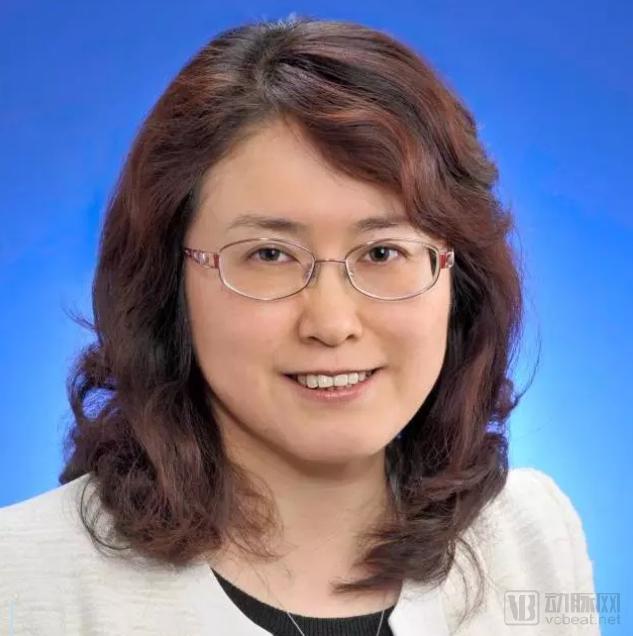
Dr. Li Wang
On July 10, 2018, the National Medical Products Administration (NMPA) issued the Technical Guidelines for Accepting Overseas Clinical Trial Data of Drugs, which clearly specified the technical requirements and acceptance criteria for overseas clinical trial data. In October of the same year, the Center for Drug Evaluation (CDE) published a list of 48 new drugs urgently needed for clinical use that had already been marketed abroad, with Eli Lilly’s psoriasis treatment Taltz included on the list.
These positive changes in China’s regulatory environment have made Eli Lilly’s dream of achieving synchronized global R&D for innovative drugs in China a reality. In the past, Eli Lilly’s China team would apply to headquarters for inclusion in global R&D projects; now, during the CEO’s visits to China, review of the “Negative List for Clinical Studies” is required, and any project that fails to achieve synchronized R&D between China and other countries must be accompanied by a reasonable justification. This strategic shift has placed considerable pressure on both the headquarters’ drug R&D team and the China team, while also serving as a powerful motivator. In an interview, Dr. Wang Li candidly stated, “It will take time for the overall drug R&D environment in China to mature, including the implementation and adoption of ICH guidelines and the development of a robust clinical research ecosystem. However, Eli Lilly’s efforts to promote synchronized R&D between China and the rest of the world will not stall as a result.”
Dr. Wang Li introduced that the Eli Lilly China Drug Development and Medical Affairs Center, which she leads, is one of the only two medical teams within Eli Lilly and Company—with the other being its Japanese affiliate—to possess a full-value-chain capability. The team’s responsibilities encompass strategy formulation and project implementation for clinical trials in China, ranging from early-stage studies to late-stage registration trials, as well as regulatory submissions and medical affairs activities. This team is not only responsible for introducing Eli Lilly’s global innovative medicines to the Chinese market but also collaborates with domestic innovative pharmaceutical companies to develop new drugs tailored to the needs of the Chinese market.
Currently, Eli Lilly’s pipeline focuses on four therapeutic areas: diabetes, oncology, autoimmune diseases, and pain. In a 2017 media interview, CEO David Ricks announced that Eli Lilly China aimed to launch 30 new drugs (including new indications) over ten years. More recently, Dr. Li Wang shared an even more ambitious target of 40 new drugs (including new indications) over the same period.
“The expansion in the number of new products and new indications is driven by the convergence of three key factors: First, Eli Lilly China will closely align with global R&D efforts, introducing new products to the Chinese market that previously lagged behind headquarters’ launches. Second, with changes in China’s regulatory environment and strategic support from Eli Lilly’s headquarters for synchronized R&D in China, future pipeline projects will be conducted simultaneously in China, aiming to achieve zero time lag between product launches in China and abroad. Third, collaborations between Eli Lilly China and Hutchison MediPharma as well as Innovent Biologics have further enriched Eli Lilly China’s product portfolio.”
Since September 2018, Eli Lilly has secured regulatory approvals in China for multiple new drugs and new indications, including fruquintinib (for the treatment of metastatic colorectal cancer) in collaboration with Hutchison MediPharma; sintilimab injection, a PD-1 inhibitor (for the treatment of Hodgkin’s lymphoma) in collaboration with Innovent Biologics; and Glyxambi (generic name: metformin and empagliflozin tablets, for improving glycemic control in adults with type 2 diabetes) in collaboration with Boehringer Ingelheim.
In February this year, dulaglutide, a once-weekly GLP-1 receptor agonist independently developed by Eli Lilly, was approved for launch in China for glycemic control in adults with type 2 diabetes, including as monotherapy and in patients who have not achieved adequate glycemic control with metformin and/or sulfonylureas. In addition, Cymbalta, a classic medication widely used by Eli Lilly China in the neuropsychiatric field, received approval from the National Medical Products Administration (NMPA) in the second half of last year for a new indication in chronic musculoskeletal pain, while Strattera, a treatment for attention-deficit/hyperactivity disorder (ADHD), also gained NMPA approval for its pediatric formulation.
When discussing the anticipation surrounding new drug launches, Dr. Wang Li’s eyes shone with confidence, her speech brisk yet resolute. “The slide our team most enjoys updating is the company’s roadmap for new drug launches in China. Watching the names of the new drugs we are diligently developing stack up on the launch timeline like bricks in a wall fills us all with an profound sense of responsibility, worth, and pride. We also frequently use it to motivate colleagues in other departments: the goal of launching 40 new drugs and new indications is no longer a distant dream—it is truly within our reach.”
Regarding the launch timeline of Taltz, Dr. Wang Li revealed that Eli Lilly submitted its New Drug Application (NDA) in March this year. According to the accelerated review timeline communicated by the National Medical Products Administration (NMPA), approval is expected approximately six months after submission. “We were both pleasantly surprised and taken aback that Taltz was selected for inclusion in China’s List of 48 Clinically Urgent Drugs. Initially, the industry largely believed that only drugs in the oncology sector would benefit from such policy incentives. In reality, the drug regulatory authorities fully recognized the lack of effective treatments for psoriasis in China, which is why both Eli Lilly’s Taltz and Novartis’ Cosentyx were granted this special opportunity.” Just one day prior to the interview, Novartis’ Cosentyx received approval in China, with the NMPA fulfilling its six-month commitment from submission to approval, thereby providing a reference point for Taltz’s launch schedule.
Following the Center for Drug Evaluation’s (CDE) release of the list of 48 urgently needed new drugs already marketed overseas, there has been industry discussion on whether such overseas-marketed drugs still need to undergo clinical trials in China. After the issuance of the relevant guidelines, the author also invited multiple industry experts to share their insights.
At that time, Dr. Wang Li clearly articulated her views. She believed that accelerating the review process does not mean that the drug regulatory authorities agree to allow companies to directly omit the collection of efficacy and safety data in the Chinese population. Rather, under the premise that the drug’s global data are sufficient and it has already been approved for marketing elsewhere, and based on trust in the existing data and confidence in the absence of significant ethnic differences, consensus is reached through “pre-NDA meetings” with the company. The drug is granted initial approval for marketing, with the requirement that the company submit supplementary data from Chinese patients post-marketing. Depending on the characteristics of the disease, the adequacy of existing data, the extent of ethnic differences, and the difficulty of recruiting such patients, the NMPA may require different forms and sample sizes of post-marketing commitment studies for each drug.
Facts have also validated Dr. Wang Li’s viewpoint. Prior to Taltz, developed by Eli Lilly, qualifying for the “Acceptance of Overseas Data to Expedite Marketing Authorization Applications” pathway, Eli Lilly had already initiated its Phase III registration clinical trials in China. Among the 48 drugs, many exhibited similar circumstances, with some having even completed their registration clinical trials. “The National Medical Products Administration’s (NMPA) new policy, which accelerates the approval and market launch in China of clinically urgent medicines, enables Chinese patients to gain earlier access to novel therapies that are already available globally but lag in availability in China. During pre-NDA meetings held between the NMPA and pharmaceutical companies, discussions address the product’s global data, potential ethnic differences between Chinese and other national populations, and the post-approval studies the company plans to conduct to supplement local data. Only after these procedures are completed can pharmaceutical companies submit a New Drug Application (NDA). The NMPA will grant approval within six months of accepting the application.”
In early 2019, Eli Lilly’s $8 billion acquisition of Loxo Oncology signaled to the industry its renewed strategic push into oncology. Years earlier, Eli Lilly had launched two oncology drugs, Gemzar and Alimta, but subsequently remained largely inactive in this therapeutic area for many years. Dr. Li Wang openly acknowledged that Eli Lilly had indeed missed the era of molecular targeted therapy. “Going forward, we will place greater emphasis on precision medicine. At the recently concluded AACR Annual Meeting, Dr. Levi Garraway, who oversees Eli Lilly’s oncology R&D and novel target discovery, was invited to deliver the opening keynote address titled ‘Where Is the Path of Precision Medicine Heading?’ This demonstrates the confidence of the U.S. oncology community in Eli Lilly’s resurgence in the field.”
“The company aims to focus its R&D efforts on developing best-in-class or first-in-class therapeutic agents through three approaches: internal research and development, external collaborations, and external acquisitions,” added Dr. Wang Li. According to Dr. Wang, in addition to Loxo Oncology, Eli Lilly acquired Armo BioSciences for $1.6 billion in 2018. Currently, Eli Lilly’s research initiatives in China span multiple tumor types, including gastric cancer, colorectal cancer, liver cancer, lung cancer, and breast cancer. Looking ahead, Eli Lilly’s oncology strategy will be anchored by chemotherapy drugs and guided by precision medicine, aiming to revitalize the field of cancer treatment.
What was particularly striking was the October 2016 announcement that solanezumab, Eli Lilly’s Phase III clinical drug for Alzheimer’s disease, had failed, delivering a significant blow to the entire industry. Currently, none of the four major therapeutic areas prioritized by Eli Lilly include projects focused on Alzheimer’s disease research, leading external observers to question whether the company has abandoned its nearly three decades of investment and efforts in this field.
In response, Dr. Wang Li clarified the author’s confusion. “Eli Lilly’s commitment to developing new treatments for Alzheimer’s disease remains unwavering. Although the failure of solanezumab represents a temporary setback in advancing candidates into late-stage clinical trials, it does not diminish Eli Lilly’s resolve to continue exploring novel mechanisms and therapies for Alzheimer’s disease. In fact, Eli Lilly has more than ten candidate therapeutics for Alzheimer’s disease in early-stage research, three of which have already entered Phase II clinical trials, including novel agents targeting neurotransmitter-related pathways and Tau protein.” According to Dr. Wang Li, over 300 scientists at Eli Lilly’s headquarters are currently dedicated to Alzheimer’s disease research. If early-stage drug candidates progress smoothly, China will consider participating in global synchronized late-stage clinical trials.
As the interview drew to a close, we revisited the topic of talent management in pharmaceutical companies. The Eli Lilly Drug Development and Medical Affairs Center currently employs nearly 400 people and continues to expand. Changes in China’s regulatory registration environment over the past two years have created numerous opportunities for multinational corporations and spurred the emergence of a large number of domestic innovative pharmaceutical enterprises. “According to the latest survey report released by RDPAC (The Research-Based Pharmaceutical Association Committee), there is a severe imbalance between the supply and demand of R&D and medical affairs talent in the pharmaceutical industry. Taking the position of Medical Advisor as an example, there are only 800 Medical Advisors with diverse backgrounds and varying levels of experience across China, whereas the actual demand from pharmaceutical companies stands at approximately 1,600.”
Talent acquisition, development, and growth are significant challenges faced by both multinational corporations and emerging state-owned enterprises. In talent acquisition, Dr. Wang Li has always adhered to the principle of “quality over quantity,” prioritizing educational background, work experience, and growth potential as the three key criteria for selecting candidates. This commitment has helped build Eli Lilly’s renowned high-caliber medical team in the industry.
Regarding how to retain team talent in the fiercely competitive war for talent, particularly against domestic innovative pharmaceutical companies, Dr. Wang Li believes that each individual’s intrinsic motivation determines their career choices. Multinational corporations offer diverse and robust R&D pipelines, mature new drug development capabilities, high-standard quality and compliance systems, comprehensive cross-functional collaboration environments, and structured talent development platforms—these constitute the core competitive advantages for multinational enterprises in attracting and retaining talent. “In today’s intensely competitive talent market, we place greater emphasis on selecting young professionals whose intrinsic motivations align with our culture, who seek systematic training, and who are willing to pursue long-term career development on a mature platform.”