

CWI China Files IPO Prospectus: Scaling a Proven Lifestyle Medicine Model to Tackle Chronic Diseases and Reduce Healthcare Costs
Chronic diseases impose a significant burden on both government public health expenditures and out-of-pocket patient spending.
Nowadays, to address the aging trend in China, rehabilitation and health management for chronic diseases have become important issues. Learning from others’ experiences can help improve our own practices. Although no specific model has yet been directly proven to significantly control chronic diseases in China, the practice model of the Canadian Wellness Institute (CWI) demonstrates that systematic management of chronic diseases can contribute to improving national health.
Twenty years ago, Canada experienced a high prevalence of chronic diseases driven by population aging, resulting in persistently high total healthcare expenditures—a predicament strikingly similar to the challenges currently facing China’s healthcare system. Evidence has demonstrated that the only effective solution is to shift the focus upstream in disease management, transitioning from a treatment-centered model to a prevention-centered one, thereby reducing healthcare costs in a rational and effective manner.
The CWI Model Saves Approximately CAD 400 Million in Healthcare Expenditures
In 1996, the Health Management Center of Seven Oaks General Hospital was officially established. Leveraging advanced medical fitness facilities and a professional medical team, and grounded in clinical evidence-based medicine, the center formulates personalized lifestyle medicine prescriptions. It provides Canadians with an innovative health management model for chronic disease prevention and rehabilitative healing, integrating medical care, exercise, nutrition, sleep, and psychological well-being.
After more than 20 years of development, Seven Oaks General Hospital’s Health Centre, as Canada’s first accredited hospital dedicated to the prevention and treatment of chronic diseases through lifestyle medicine, ranks first in North America and has received numerous international and domestic accolades, including the World Health Organization’s award for Best Health-Promoting Hospital.

Seven Oaks General Hospital, Canada (Source: CWI Official Website)
CWI Model1 (Canada Wellness Institute) excels in its community-based, lifestyle medicine health management model that is closely integrated with the healthcare delivery system. This model is primarily built upon eight core components:
1. Certified and authorized cross-disciplinary work teams;
2. Medical supervision and close coordination with the healthcare system;
3. Personalized Health Assessment and Lifestyle Medicine Intervention Prescription;
4. Recommendations for reducing health risks, as well as service offerings developed to support chronic disease management and prevention;
5. Evidence-based project development, continuous evaluation, and tracking;
6. Robust security and emergency response mechanisms, plans, and training;
7. Strict quality assurance and performance evaluation measures;
8. Committed to improving the overall health of the community;
Building on the widely adopted lifestyle medicine concepts in North America, CWI has developed its "Lifestyle Medicine" model. Adhering to the principles of evidence-based medicine, this approach emphasizes systematic health management across the entire lifespan. It provides comprehensive intervention and management for individuals who are healthy, in a sub-health state, or living with chronic diseases, addressing multiple dimensions including exercise, nutrition, stress, sleep, and psychological well-being.

Actual View of the Canadian Health Management Center (Source: CWI Official Website)
Evidence has shown that the CWI model has achieved significant success in Canada. Data indicate that over the past 22 years, CWI has provided health management services to more than 6 million individuals, effectively preventing 9,853 heart attacks and helping participants in its weight-loss programs lose a total of 121,065 pounds. Meanwhile, the incidence rates of various chronic diseases in the community have shown a substantial downward trend.
In terms of total healthcare expenditures, annual medical spending can be reduced by CAD 18.26 million (approximately RMB 90 million). Notably, the management of chronic kidney disease through lifestyle medicine interventions alone has saved the Canadian government over CAD 400 million (approximately RMB 2 billion) in healthcare costs. These figures lay a solid foundation for the implementation of the CWI model in China.
CWI Model Lands in China, Exploring a New Paradigm
Introducing the CWI model to China has long been an aspiration of More Health, a company dedicated to providing national health services. However, due to differences in national conditions between the two countries, simply replicating the Canadian model would encounter three major challenges:
First, there are multifaceted differences in the physical conditions of the populations in the two countries, necessitating time for population-based validation. Second, disparities between the healthcare systems of the two countries create policy barriers to replicating the CWI model. Third, at the current stage, there is still a gap in the Chinese population’s awareness of the importance of health management, requiring further market education. Fourth, the vast population base means that offline-only health management services cannot meet market demand.
To address the challenge of “acclimatization,” CWI has established close partnerships over the past two to three years with relevant domestic industry associations, Grade A tertiary hospitals, and enterprises. These partners include the Chinese Hospital Association, Chinese Medical Association, Chinese Medical Doctor Association, China-Canada Health Management Association, Xuanwu Hospital, the PLA General Hospital (301 Hospital), Peking Union Medical College Hospital, Rizhao University of Traditional Chinese Medicine, Shiyan Taihe Hospital in Hubei Province, the National Institute of Sports Science and Technology, Jinmao Hotel Group, and Oriental Culture and Tourism Group. These collaborations have not only laid a solid academic foundation for CWI’s entry into the Chinese market but also provided support for the localization of its business model in China.
On March 19, 2018, the Canada Health Management Center (China), jointly established by CWI and Miao Health, was officially launched. Building upon CWI’s existing model, the Canada Health Management Center (China) has developed a digital health management platform centered on lifestyle medicine intervention programs. By integrating CWI’s extensive offline clinical expertise with Miao Health’s internet-based health management approaches, the platform combines health behavior data, lifestyle medicine-driven health management, and artificial intelligence to explore innovative models of health management.
Users can receive health prescriptions and professional guidance from certified health managers at offline health management centers, completing on-site courses and chronic disease intervention programs. After leaving the facility, they can continue to monitor their physical condition and sleep using CWI-equipped smart hardware, while receiving online health interventions. This enables comprehensive, round-the-clock, and continuous health management that integrates “online + offline” and “on-site + off-site” services. This new model not only better serves users but also empowers communities, medical institutions, and healthcare projects, thereby supporting the operation of tiered medical services and commercial healthcare initiatives.
To date, Miao Health has accumulated over 60 million users through its closed-loop online solutions built on the Miao+, Miao Cloud, and Miao Health App platforms. This strategic partnership between Chinese and Canadian entities will enable the provision of high-quality, efficient chronic disease management and rehabilitation services to a broader segment of the Chinese population, thereby significantly reducing healthcare expenditures driven by the high prevalence of chronic diseases.
It is reported that CWI (China)’s first Lifestyle Medicine Center will open in Beijing in May, with plans to operate 400 offline Lifestyle Medicine Centers across China in the future. Currently, the services slated for launch include chronic disease management such as diabetes, hypertension, and chronic obstructive pulmonary disease (COPD), as well as rehabilitation programs for cardiovascular conditions, stroke, and sports injuries.
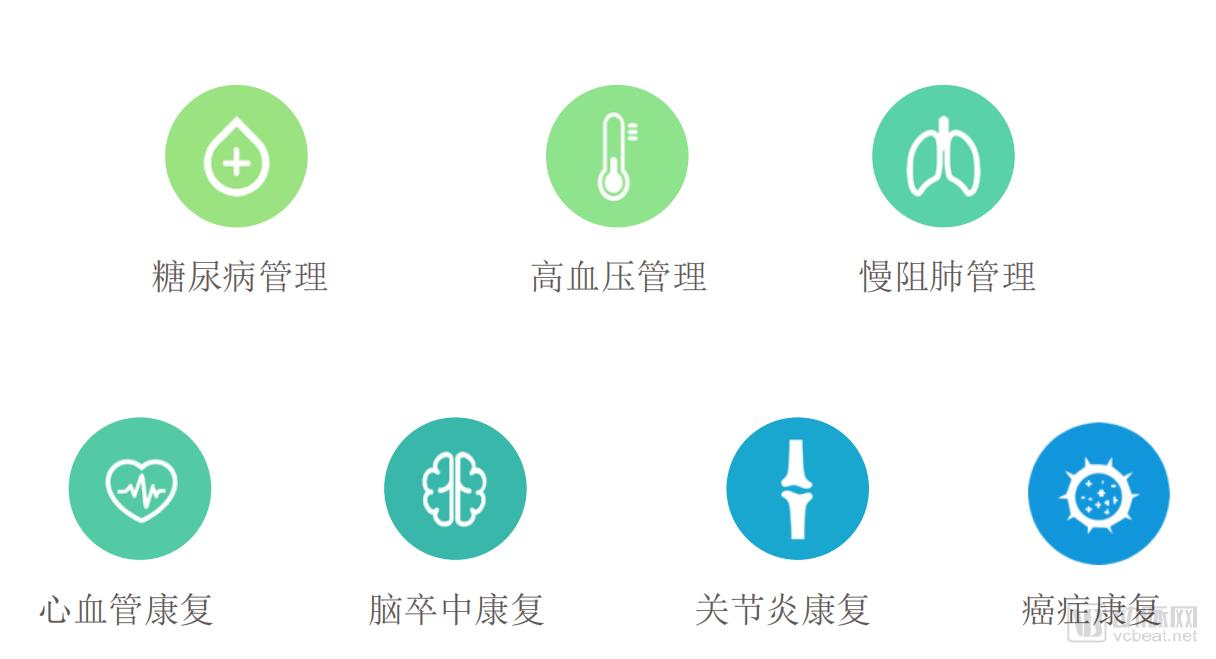
CWI (China) Special Management Projects to Be Implemented
The CWI (China) Lifestyle Medicine Center operates on a membership basis and provides periodic, continuous chronic disease management services to both members and non-members to ensure efficacy. Taking the 8-week hypertension management program as an example, this service includes the following multi-level components:
1. Comprehensive health assessments and risk screenings, with personalized prescriptions for exercise, nutrition, stress management, and sleep health;
2. Three 60-minute one-on-one exercise intervention sessions per week, along with supervised multiple group interventions and exercise classes;
3. Registered dietitians provide one-on-one nutritional counseling and assessment, develop hypertension-specific nutrition plans, and implement nutritional interventions;
4. One-on-one psychological counseling, stress reduction and relaxation, hypertension education, and self-management education courses conducted by certified health managers;
5. Provide project summary reports to medical institutions;
6. Integrate health risk screening questionnaires into the management service process to provide more personalized management services.
Over the next three years, CWI (China) will rapidly expand its scale through diverse forms of collaboration to meet the growing market demand for health management services. This includes partnering with hospitals to enhance their capabilities in chronic disease rehabilitation and help them establish rehabilitation centers aligned with international standards; collaborating with enterprises to build corporate health management centers and improve employee health outcomes; working with real estate developers to set up health management centers in shopping malls and commercial office buildings, thereby addressing scenario-based health management needs; and cooperating with communities to establish community health management clinics that cater to the daily health management needs of local residents.
Note1: The lifestyle medicine model for the prevention and treatment of chronic diseases, based on the Health Management Center of Seven Oaks General Hospital in Canada, is abbreviated as the "CWI Model".