

Four International Drug Take-Back Companies File IPO Prospectuses Amid Growing Focus on Expired and Unused Medication Disposal
Household medicine cabinets commonly contain a stockpile of medications, particularly in families with elderly members or young children who require extra care. Such households typically keep essential remedies on hand, including cold medications, antipyretics, and analgesics. The inventory is even more extensive in homes with patients suffering from chronic conditions such as diabetes and hypertension. However, many of these medications may never be used; tucked away in a corner of the medicine cabinet, they are often forgotten and quietly expire. On the other hand, pharmaceutical manufacturers and pharmacies also generate pharmaceutical waste or accumulate unsold inventory that eventually expires during production and sales processes. If not disposed of properly, these medications can lead to serious consequences. For instance, expired or unused drugs may be accidentally ingested by others. If discarded indiscriminately, they may be collected and resold by illicit actors, leading to drug abuse. Furthermore, untreated pharmaceutical waste can cause environmental pollution.
Recently, the U.S. FDA issued guidelines for the take-back of unused and expired household medications. Overall, the volume of household medication returns is low and dispersed, making disposal relatively straightforward. There are three primary methods for disposing of unused and expired medications: 1) medical take-back programs; 2) disposal with household trash; and 3) flushing certain potentially hazardous medications down the toilet into the sewer system.
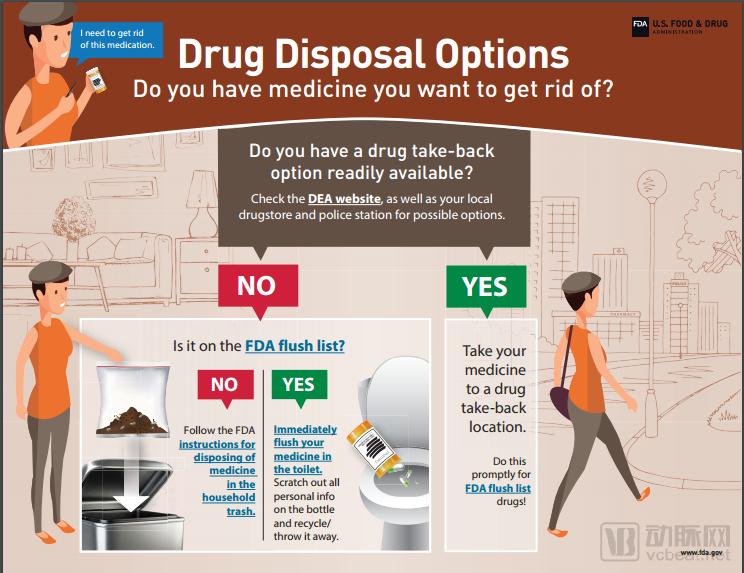
Generally, medical take-back programs are the preferred method for the safe disposal of most unused medications. The U.S. Drug Enforcement Administration (DEA) regularly holds National Prescription Drug Take Back Days and establishes temporary collection sites in communities across the country to safely dispose of these unused or prescription drugs. The DEA is a law enforcement agency under the U.S. Department of Justice, with its primary mission being to combat illegal drug trafficking and use within the United States. The DEA was formed through the merger of the Bureau of Narcotics and Dangerous Drugs, the Office of Drug Abuse Law Enforcement, and other federal agencies, serving as the U.S. regulatory authority for narcotics and dangerous drugs.
In addition, consumers may dispose of medications at authorized permanent collection sites, such as medication take-back locations situated at retail pharmacies, hospitals, or clinics in local communities. DEA drug disposal personnel will regularly collect and centrally process controlled substances and other medications.
If there are no medication take-back programs or permanent drug disposal sites available in the consumer’s area, and the medication package insert does not specify particular disposal instructions, consumers may dispose of the medications as household waste after simple preparation. The specific procedures are as follows: Do not crush capsules, tablets, or other solid dosage forms; instead, mix them with dust, cat litter, or coffee grounds before discarding. Powdered medications should be placed in sealed plastic bags or airtight containers before being thrown into the trash. For oral liquid medications and empty medication containers, remove any personal information and prescription numbers from the labels prior to disposal.
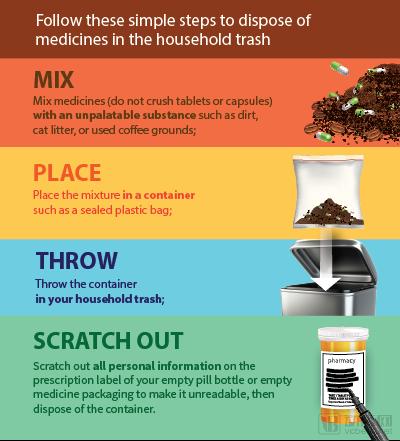
For a small number of medications with specific instructions and potential hazards, consumers should immediately flush them down the toilet when they are no longer needed. Improper disposal may lead to serious consequences. For example, fentanyl is an opioid receptor agonist and a potent narcotic analgesic commonly used for clinical surgical anesthesia. It can also be formulated as transdermal patches to alleviate moderate to severe chronic pain. However, fentanyl has a structure similar to morphine and can cause respiratory depression, bradycardia, and drug dependence, making it a precursor substance for illicit drug manufacturing. Reportedly, in 2016, approximately 64,000 people in the United States died from drug overdoses, with more than 20,000 deaths attributed to fentanyl-related substances. Therefore, unused fentanyl should be disposed of promptly to prevent accidental contact or ingestion by children or others. In addition to fentanyl, the U.S. Food and Drug Administration (FDA) has published a list of medications that should be flushed down the drain.
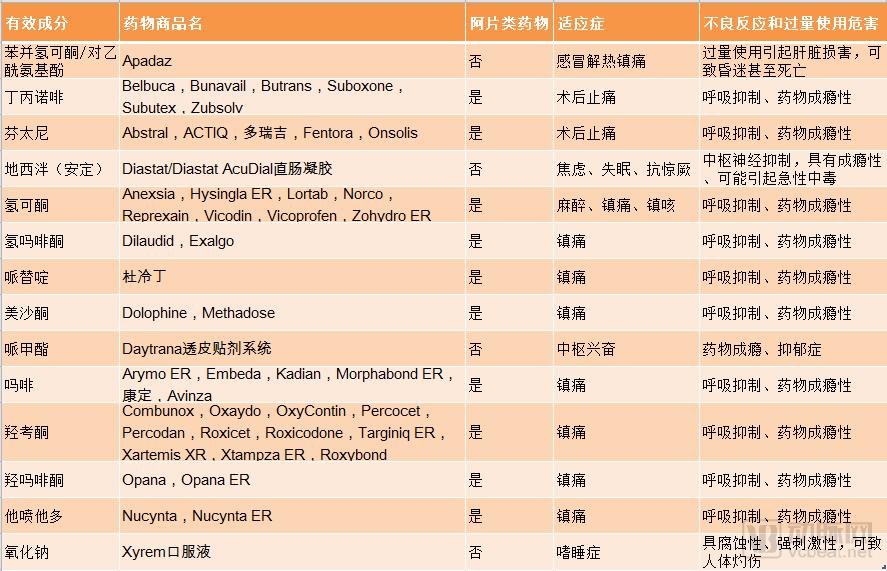
FDAList of Medications Requiring Flushing into the Sewer System
The list indicates that opioids are a key focus of FDA regulation. Although the FDA has long established channels for opioid disposal, data from the prestigious journal JAMA Surgery show that the FDA’s drug take-back program remains in its early stages of implementation, with fewer than 9% of patients using the disposal methods recommended by the FDA. This partially explains the opioid abuse crisis in the United States. It is reported that in the U.S., 130 people die each day from opioid misuse, and 70% of individuals obtain these drugs through non-medical channels. In 2016, there were more than 64,000 drug overdose deaths in the United States, a 21% increase from the previous year, with more than two-thirds of these deaths involving opioids.
Opioids have become a social crisis in the United States, but drug take-back is not solely the responsibility of the Drug Enforcement Administration (DEA); pharmaceutical waste management companies also play a role. The U.S. Environmental Protection Agency (EPA) previously established regulations under the Resource Conservation and Recovery Act (RCRA), classifying drugs not regulated by RCRA as “non-RCRA hazardous pharmaceuticals.” The EPA requires pharmaceutical manufacturers to properly dispose of non-RCRA hazardous pharmaceuticals; violations of the EPA’s pharmaceutical waste disposal regulations can result in fines of $37,500 per day. Pharmaceutical waste management companies address the drug take-back challenges faced by pharmacies and manufacturing facilities by providing pharmaceutical waste disposal services and facilitating the return of unused and expired medications.
Overall, whether dealing with expired or unused medications, the common disposal methods involve flushing them down the drain, incineration, or landfill burial. In fact, these methods still cause environmental pollution, as some drugs are not easily dissolved or filtered. There is also considerable controversy in the United States regarding the practice of flushing medications. A 2008 investigation by the Associated Press found that hospitals and nursing facilities flush 250 million pounds of pharmaceuticals annually. Significant levels of pharmaceuticals, including antibiotics, anticonvulsants, mood stabilizers, and sex hormones, have been detected in the drinking water supplies of at least 41 million Americans. Are there alternative recycling pathways for expired and unused medications?
Studies have shown that in 2012, approximately one-quarter of American adults (about 50 million people) did not use prescribed medications when ill due to the high cost and unaffordability of drugs. This figure reached as high as 43% among uninsured adults. For certain expensive prescription medications, such as cancer drugs, they are typically no longer usable after a patient is either cured or passes away.
According to the National Conference of State Legislatures, as of 2012, at least 38 states had enacted drug donation laws. States such as Colorado, Florida, Kentucky, Michigan, Nebraska, and Wisconsin have established programs specifically designed to collect and redistribute cancer-related prescription medications to eligible patients. However, donations are typically accepted only from healthcare institutions or pharmacies; medications must be in unopened, sealed packaging or unit-dose packaging, and expired drugs or controlled substances are not accepted. Individuals wishing to donate medications may consider contacting authorized organizations, including: World Medical Relief, GoodPill.org, Volunteers In Medicine (accepts only sealed, unused medication packages), and Memorial Sloan Kettering Cancer Center (accepts donated anticancer medications).
MedSafe Waste
Medsafe Waste specializes in the collection and disposal of medical waste, offering a range of services including medical waste treatment, pharmaceutical waste management, and training on medical waste segregation. In the area of medication take-back, Medsafe Waste primarily provides on-site pharmaceutical waste disposal services for manufacturing facilities, as well as return services for expired and unused medications from pharmacies. As a DEA-licensed reverse distributor, the company is authorized to handle the return of all medications, including DEA-controlled opioids.
Stericycle
Stericycle is a well-established waste recycling company in the United States, founded in 1989, with over 25 years of experience in the collection and disposal of medical, industrial, and household waste. Stericycle provides a range of services to healthcare institutions and retail pharmacies, primarily including drug recalls, drug retrieval, returns of expired and damaged medications, and pharmaceutical waste disposal services. In accordance with EPA regulations and local laws, Stericycle classifies and processes different types of pharmaceutical waste. For instance, non-RCRA hazardous pharmaceutical waste is disposed of through incineration, while other discarded medications are segregated and processed via alternative methods.
Deterra
Deterra is dedicated to developing scientifically validated research solutions to mitigate the negative environmental impacts of drug abuse and discarded medications. Supported by the Small Business Innovation Research (SBIR) program initiated by the National Institute on Drug Abuse (NIDA), a subsidiary of the National Institutes of Health (NIH), Deterra distinguishes itself from other drug take-back companies through its patented Verde platform, which incorporates MAT 12 molecular adsorption technology to develop the Deterra Drug Deactivation Bag. Made from eco-friendly materials, the bag uses activated carbon to adsorb medications placed inside; ultimately, both the drugs and the bag decompose into water and carbon dioxide. This drug deactivation bag can be used in various settings, including households, healthcare facilities, and pharmacies. Its low cost enables expired or unused medications to be disposed of through simple landfill burial rather than incineration.
Sirum
In many cases, healthcare institutions and pharmacies choose to destroy medications rather than collect, sort, and recycle them. Given the extremely stringent requirements and high costs associated with drug recycling, direct destruction is often preferred over attempting to meet rigorous reuse standards. Each year, hospitals, pharmacies, pharmaceutical manufacturers, and nursing homes destroy billions of dollars’ worth of medications. Sirum aims to change this status quo by enabling healthcare institutions and pharmacies to donate medications with ease. Founded by three Stanford University graduates—George Wang, Adam Kircher, and Kiah Williams—Sirum tracks medications using the National Average Drug Acquisition Cost (NADAC) database and has built a platform that connects donors with recipients while coordinating donation logistics, including obtaining medication inventories, tracking, and transportation. By donating their unused medications instead of destroying them, donors save on disposal time and gain financial benefits, while recipients can afford their medication costs within their economic means.
Overall, pharmaceutical waste recycling remains a subset of medical waste management and has not yet evolved into an independent niche sector. The reuse of unused medications is currently sustained by non-profit organizations such as Sirum. In China, however, drug recycling—particularly for high-cost medications—has become an illicit black-market industry. Despite facing challenges such as stringent government regulations and high operational costs, the pharmaceutical recycling and reuse sector may give rise to new business models and emerge as a breeding ground for innovative enterprises, driven by the ongoing refinement of drug recycling laws and the growing unmet medical demand for expensive treatments, including oncology drugs.