

The 2% Survival Strategy: SeaSpine's Playbook Against Medical Device Giants

SeaSpine
Spinal Disease Solutions Provider

Implanet
Biotechnology Company
In the business world, competition among enterprises often follows “Murphy’s Law”: the strong grow stronger, while the weak remain weak. However, for an industry to continue advancing, it must break through the monolithic market dominated by giants. Thus, the breakthrough experiences of small and medium-sized enterprises become particularly valuable.
According to recent data released by Spine Market Group, Medtronic holds a firm leading position in the global spinal implant market with nearly one-third of the market share, followed closely by NuVasive and Stryker Corporation. DePuy Synthes (a subsidiary of Johnson & Johnson), Globus Medical, Zimmer Spine, Aesculap, and Alphatec Holdings also maintain solid positions in the industry rankings.
This means that industry giants, led by Medtronic, collectively account for more than 70% of the global spinal implant market. Against this backdrop, SeaSpine holds a mere 2% market share in this sector. VCBeat (WeChat ID: vcbeat), through a review of SeaSpine’s development history, has found that the company exemplifies the typical survival and competitive dynamics characterizing the “love-hate” relationship between small and medium-sized enterprises and industry behemoths:
1. Acquired by industry giants. This raises a broader question: Is this the ultimate fate for small and medium-sized enterprises?
2. Achieving a breakthrough in a specific area through core patented technologies. This raises the question: Under the shadow of industry giants, how can small and medium-sized enterprises find room for development? And after achieving technological breakthroughs, what path should they follow in the future?
Startup success is a low-probability event, and sustaining that success over time is even more challenging. For startups, being acquired by industry giants can be one viable exit strategy. SeaSpine, founded 17 years ago, once had such an opportunity.
In February 2002, Kirt Stephenson founded SeaSpine in California, USA, and personally served as the company’s President and Chief Executive Officer. Mr. Stephenson previously held leadership positions at Alphatec, a medical technology company specializing in spinal fusion technologies, and brings nearly two decades of industry experience in the spine market.
SeaSpine is a medical device company focused on the development and commercialization of a portfolio of spinal fixation products, including hardware implants and biologics, for the treatment of spinal disorders, with its primary markets in the United States and select European countries.
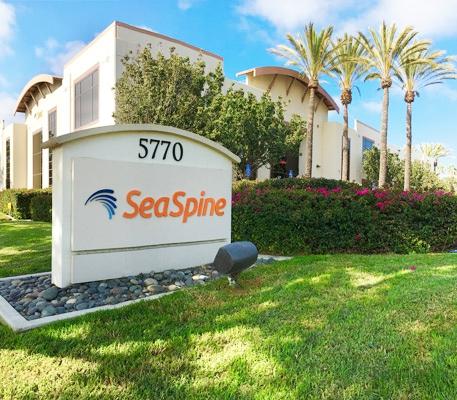
SeaSpine’s California Headquarters (Image from SeaSpine’s official website)
Under the leadership of Kirt Stephenson, SeaSpine has been consistently profitable every year since its inception. In 2010, SeaSpine’s revenue was approximately $50 million.
In 2011, Integra LifeSciences, a publicly listed comprehensive medical device company, took an interest in SeaSpine. To strengthen its market presence in the U.S. spinal industry, Integra LifeSciences acquired SeaSpine for $89 million, a price nearly twice SeaSpine’s revenue.
Although SeaSpine has joined a prestigious corporate family, it has brought with it a substantial dowry:
I. SeaSpine has brought new distributors and product customers to Integra LifeSciences, doubling the size of the latter’s existing distributor network and expanding its markets outside the United States.
II. SeaSpine has brought specialized spinal industry expertise and operational experience to Integra LifeSciences, along with additional resources such as a business training system and product development teams.
3. SeaSpine has enriched Integra LifeSciences’ product portfolio, enabling Integra LifeSciences to add spinal hardware products to its orthopedics segment, in addition to its existing neurosurgery and instrumentation offerings.
Of course, beyond strategic advantages, tangible market performance is SeaSpine’s strongest foundation.
Financial reports indicate that Integra LifeSciences’ total revenue in 2011 reached $780 million, a 6% increase from $732.1 million in 2010. Notably, revenue from spinal hardware products achieved double-digit growth, primarily driven by Integra LifeSciences’ acquisition of SeaSpine in May of that year.
In 2012, SeaSpine continued to play its role. Integra LifeSciences reported total revenue of $830 million for the year, with U.S. market sales increasing by approximately 9% compared to 2011.
A startup acquired by an industry giant within a decade of its founding, thanks to its strong profitability, may have reached a favorable outcome. For the founders, however, this could mean losing control of the company or even being required to depart; individuals vary in their choices and interpretations of such situations.
Following the acquisition, some founders choose to cash out and depart. At the very least, this was the path taken by the founders of other companies acquired by Integra LifeSciences.
SeaSpine founder Kirt Stephenson has decided to stay on as President of Integra LifeSciences’ U.S. spine business, overseeing R&D and sales of spinal hardware products. He will report to Brian Larkin, the company’s Global President of Spine & Orthopedics and Head of Strategic Development. The SeaSpine management team has also remained with Kirt Stephenson.
Stuart Essig, CEO of Integra LifeSciences, expressed satisfaction with the acquisition, describing it as an “ideal strategic choice” for the company. Kirt Stephenson, founder of SeaSpine, responded, “We are delighted to join Integra LifeSciences. Its extensive reach among U.S. hospitals and its group purchasing organization (GPO) agreements with sales agencies provide us with significant growth opportunities. We are confident that we will emerge as a leader in this rapidly consolidating market.”
Reality quickly threw cold water on Kirt Stephenson.
Although SeaSpine maintained the profitability it had achieved during its period of independent operations for the first two years, its performance has been consistently unprofitable since the third year. This downturn is largely attributable to Integra LifeSciences, which acquired SeaSpine.
Between 2012 and 2013, Integra LifeSciences’ manufacturing facilities in Plainsboro, New Jersey, and Puerto Rico, among other locations, each received multiple FDA warning letters regarding quality system issues.
To comply with FDA inspection requirements, Integra LifeSciences had to halt production lines at the aforementioned facility, implement corrective and preventive actions, and voluntarily recall certain products manufactured at its Puerto Rico plant in April 2013.
The substantial costs incurred from a series of actions, including plant shutdowns, product recalls, and facility repairs, severely impacted Integra LifeSciences’ revenue and gross margin in 2012 and 2013. Resources such as funding originally earmarked for SeaSpine were also significantly diverted.
In 2013, Integra LifeSciences reported total revenue of $836 million. However, due to inventory costs associated with extensive product recalls and quality-related expenses incurred from investing in improvements at three manufacturing facilities, the company ultimately recorded a net loss of $17 million for the year.
In 2014, Integra LifeSciences reported total revenue of $928 million, representing an 11% year-over-year increase. However, due to factors such as price declines, delays in new product launches, and distributor team growth falling short of expectations, the spine business contributed only $171.4 million in revenue in 2014, a 6% decrease from 2013.
Dragged down by its parent company, which in turn hindered its own development, a outcome that starkly contrasts with Kirt Stephenson’s initial expectations.
To allocate resources more effectively, halt declining revenues, and maintain the competitive advantage of its spine business, in November 2014, the Board of Directors of Integra LifeSciences decided that the company would divest its spine business in 2015 and rebalance its product portfolio, consolidating its existing five business segments into three.
Among them, two divisions are new business units for Integra LifeSciences globally, including a new division formed by merging neurosurgical implant products and instrumentation, as well as another new division created by integrating orthopedics, tissue technologies, and extremities businesses.
The third division is the spine business unit spun off from Integra LifeSciences.
Under the proposed spin-off plan, the spine business will be divested from Integra LifeSciences to operate as an independent publicly listed company. This entity, formed by combining IsoTis, Theken Spine, and SeaSpine—previously acquired by Integra LifeSciences—will be named SeaSpine Holdings Corporation (hereinafter referred to as “SeaSpine”).
In February 2015, the consolidated SeaSpine was incorporated in Delaware, with its headquarters located in California. Four months later, Integra LifeSciences completed the spin-off of its spinal business, with the demerger plan officially taking effect on July 1, 2015, as a tax-free transaction. Shareholders of Integra LifeSciences received one share of SeaSpine common stock for every three shares of Integra LifeSciences common stock held.
On July 2, 2015, SeaSpine’s stock commenced regular trading on the Nasdaq market.
Following the business spin-off, SeaSpine came under the leadership of Keith Valentine. Original founder Kirt Stephenson remains with this “genetically mutated” enterprise but has stepped into a secondary role as Non-Executive Chairman of the Board.
Before joining SeaSpine, Keith Valentine held senior management positions in marketing, development, and operations at prominent companies such as ORATEC Interventions (later acquired by Smith & Nephew) and Medtronic. He also played a key role in establishing two large, innovative spinal implant companies: Medtronic Spine and NuVasive.
Keith Valentine spent 14 years at NuVasive, serving in leadership roles such as President and Chief Operating Officer, and is a prominent figure in the spine field.

SeaSpine’s Current President and CEO Keith Valentine (Image from SeaSpine’s Official Website)
After a thorough review of the company’s existing business lines, Keith Valentine and his leadership team discovered that although sales of hardware spinal implant products had declined, biologic products maintained strong momentum, generating $67 million in revenue in 2014 alone and accounting for 50% of spinal business sales.
Meanwhile, in the niche market of demineralized bone matrix (DBM), SeaSpine holds a 12.3% market share. This indicates that SeaSpine still maintains a competitive advantage in the field of spinal biologics. However, as spinal hardware implants are indispensable for nearly every spinal case, this segment cannot be abandoned.
Keith Valentine, hailing from senior management at major corporations, understands how to avoid direct confrontation with industry giants and, more importantly, how to unlock a company’s inherent potential. In light of SeaSpine’s existing business landscape, he led his team in rapidly formulating a forward-looking market strategy: focusing on the promising spine biologics segment, while leveraging core technological advantages to develop hardware products for the treatment of degenerative disc disease (DDD), minimally invasive surgery (MIS), and spinal deformity correction procedures.
As a result, SeaSpine has established two major product lines: its Orthobiologics series and spinal hardware solutions. The company operates two facilities in California—Chula Vista and Irvine—each dedicated to one of these product lines. The Irvine, California facility is responsible for the design, development, manufacturing, and distribution of the Orthobiologics product series, while the Chula Vista, California facility primarily handles the design, development, procurement, and distribution of spinal fusion hardware products.
Core patented technologies are indispensable weapons for emerging companies to break through. Fortunately, SeaSpine holds two patented technologies: Accell Bone Matrix Technology and NanoMetalene Nanometal Technology. Since its re-listing, SeaSpine has launched multiple biologic products and hardware implant products based on these two core technologies, thereby establishing differentiated competition against its rivals.
Subsequent financial reports have validated Keith Valentine’s strategic vision. SeaSpine’s orthobiologics portfolio and spinal implant products have achieved profitability year after year, securing the company’s first-mover advantage in the industry.
Financial reports show that since 2016, the total revenue from SeaSpine’s orthobiologics product line has continued to rise, amounting to $66 million in 2016, $69 million in 2017, and $75 million in 2018. Notably, the growth rate reached 9% in 2018.
Spinal implant revenue has also been on a continuous upward trend since 2016. It stood at US$65.9 million in 2015, US$62.0 million in 2017, and US$68.0 million in 2018. In 2018, the growth rate for spinal implant products was 8%.
As mentioned above, SeaSpine holds approximately 2% of the global spinal business market share. Even with this modest share, breaking through the dominance of industry giants remains a challenge. To achieve this, SeaSpine primarily relies on refining and specializing its two core product lines—“biologics” and “metallic hardware implants”—to build a comprehensive product portfolio and deepen its market influence.
SeaSpine’s first product line is its orthobiologics series. This product portfolio includes demineralized bone matrix (DBM), collagen-ceramic matrices, and other bone graft substitutes. As innovative bone graft alternatives manufactured from natural biological proteins and synthetic materials, these products help reduce the need for autografts in spinal fusion surgeries.
The Orthobiologics product series encompasses a range of biological properties essential for bone growth, designed to address the key elements of bone regeneration—osteoinduction, osteoconduction, and osteogenesis—thereby enhancing bone fusion rates in spinal, hip, and extremity surgeries.
Among these, DBM formulations can provide proteins and other growth factors at different stages of the bone healing process. Orthobiologics’ demineralized bone matrix products utilize the company’s core patented Accell technology to convert particulate-based DBM into a dispersible form, thereby enhancing the bioavailability of bone proteins during early healing and improving the performance of the graft material.
Therefore, SeaSpine’s demineralized bone matrix (DBM) products under the Orthobiologics portfolio are also known as Accell Bone Matrix, such as Accell Evo3 and OsteoSurge 300. These products, which include Accell Bone Matrix and particulate demineralized matrix composites, provide osteoinductive proteins and are suitable for use in both early and late stages of surgical procedures. This distinguishes SeaSpine’s DBM offerings from those of its competitors and represents a key component of the company’s Orthobiologics product line.
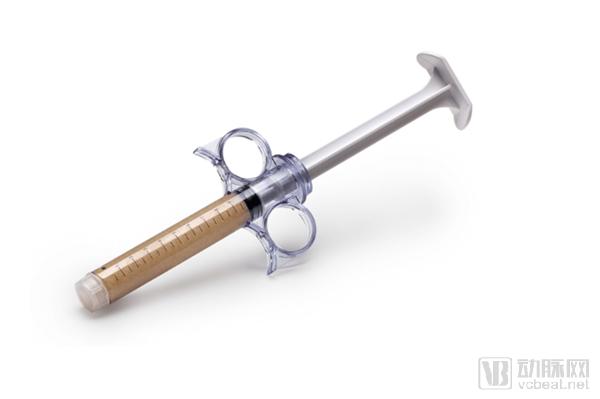
ACCELL EVO3 (Image from SeaSpine official website)
In 2017, SeaSpine launched the OsteoStrand™ and Strand™ demineralized bone fiber product lines, as well as the OsteoStrand Plus and Strand Plus product lines, all of which utilize SeaSpine’s proprietary Accell® bone matrix technology. These products provide 100% demineralized bone fibers, designed to promote and facilitate fusion by maximizing osteoinductive content while delivering an improved conductive matrix.
Also in 2017, SeaSpine launched OsteoBallast™ and Ballast™ demineralized bone matrix products, which are also designed to promote and assist fusion, simplify the graft placement process, prevent graft migration, and maximize DBM content.
It has proven that SeaSpine’s new strategy has yielded significant results. According to financial reports, SeaSpine’s demineralized bone matrix (DBM) holds a 14% share of the U.S. market, an increase from 12.3% in 2014.
In late 2019, SeaSpine planned to launch new packaging configurations for its OsteoStrand and OsteoStrand Plus demineralized bone fiber products to simplify the intraoperative hydration method for DBM fibers.
Furthermore, SeaSpine’s flagship products in the collagen-ceramic matrix space are IsoTis Mozaik and OsteoStrux. These products combine 20% type I bovine collagen with 80% highly purified β-TCP, engineered to mimic the composition and pore structure of natural human bone, with the aim of providing a porous scaffold architecture and osteoconductivity.
SeaSpine’s second product line is spinal hardware implant solutions. This solution includes implant products required for surgery, minimally invasive surgery (MIS) and spinal orthopedic surgical instruments, as well as disposable surgical supplies, primarily used for spinal decompression, alignment, and stabilization.
SeaSpine’s products in this field predominantly utilize NanoMetalene® nanometal technology, designed to maximize intraoperative flexibility. Key products include the Hollywood®, Hollywood® VI, and Ventura® interbody devices, the Cambria® interbody device, and the Shoreline® standalone anterior cervical system.
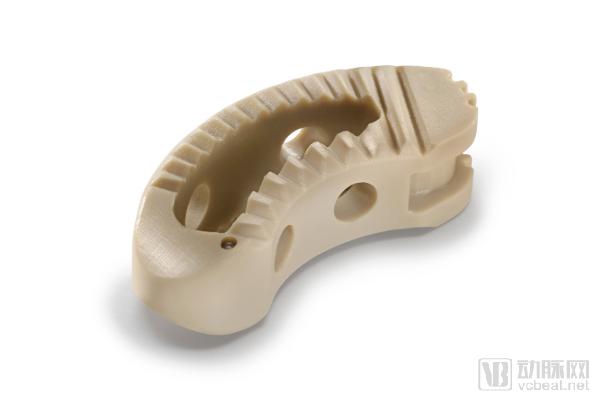
Hollywood™ VI System (Image from SeaSpine official website)
Keith Valentine, President and Chief Executive Officer of SeaSpine, stated that as the application of minimally invasive procedures in the treatment of degenerative spinal diseases continues to increase, SeaSpine will capture a larger market share by launching more new products.
Minimally invasive surgery causes less trauma than traditional open surgery; by reducing incision size and the area of tissue dissection, it can alleviate postoperative pain, accelerate healing, and reduce surgical complications.
During minimally invasive surgery, the surgeon makes a small incision and inserts a retractor through the skin and soft tissue to the spine, creating a corridor to the spine. Throughout the procedure, the retractor remains in place to keep the muscles open. Through this corridor, the surgeon uses specialized instruments to access the spine and implant the devices required for fusion.
SeaSpine’s iPassage™ Retractor and NewPort™ Tubular Retractor help alleviate pain caused by compression of the spinal cord or nerves. The NewPort implant, designed for minimally invasive procedures, provides two rod delivery channels through small incisions, while Coral® offers a muscle-splitting rod delivery channel for mini-open approaches.
SeaSpine’s MIS portfolio also includes a comprehensive set of decompression instruments, static and expandable interbody devices, and screw systems, designed to facilitate surgeon access to the treatment area while minimizing anatomical disruption.
To meet the diverse needs of surgeons performing deformity surgeries, SeaSpine offers a range of implants and instruments for correcting spinal curvature, such as the Daytona® product series. Among these, the Daytona® Small Stature Spinal System is suitable for adolescent idiopathic scoliosis, designed to meet the standards for complex deformity cases in small-statured patients who require low-profile constructs due to anatomical constraints.
In addition, SeaSpine offers implants in various configurations and materials to meet patient needs, including stainless steel, titanium alloy, and cobalt-chromium alloy pedicle screw systems. SeaSpine’s extension connectors and locking caps, along with its broader portfolio of implant products, enable surgeons to combine diverse therapeutic approaches and provide multiple treatment options for complex cases.
According to iData Research, the global spine market is valued at over $14.4 billion and is projected to approach $18 billion by 2023. Within this market, traditional spine procedures account for a 78% share, with the remainder attributed to the minimally invasive surgery (MIS) segment. As MIS applications increasingly encroach upon the domain of traditional treatments for spinal conditions, growth in the latter has begun to slow, while the former has emerged as the fastest-growing segment in the spine field, registering a compound annual growth rate (CAGR) of 3.6%.
Early entrants in this field are reaping benefits, with SeaSpine being one of them. This means that SeaSpine will have the opportunity to challenge the market leadership of giants such as Medtronic, DePuy Synthes, and NuVasive through MIS.
Chris Fair, former CEO and President of Amendia and Spine Elements, stated in 2018 that efficiency- and cost-control-focused companies such as SeaSpine would become the fast-growing backbone of the spinal market over the following five years.
In fact, SeaSpine is moving in line with expectations. As of December 31, 2018, SeaSpine’s total revenue was $140 million, with sales revenues from orthobiologics products and spinal hardware implants amounting to $75.3 million and $68.1 million, respectively. The revenue was primarily derived from North America, Europe, the Asia-Pacific region, and Latin America.
In its financial report, SeaSpine announced a new strategic layout: optimizing production processes to control product costs; increasing R&D investment to accelerate product innovation and drive sales revenue; and expanding collaborations with healthcare institutions to better understand customer needs and develop new products that improve clinical outcomes.
The latest news regarding SeaSpine dates back to February 2019, when SeaSpine signed an exclusive distribution agreement with the French medical technology company Implanet.
Implanet specializes in the development and manufacturing of vertebral and knee joint implants. Headquartered in Bordeaux, France, the company maintains a subsidiary in Boston, United States. Its flagship product, JAZZ™, is a next-generation implant designed to enhance the treatment of spinal conditions requiring spinal fusion surgery. Protected by four international patent families, JAZZ™ has obtained U.S. Food and Drug Administration (FDA) 510(k) clearance and European CE marking.
Under the agreement, SeaSpine holds the exclusive rights to market the Jazz® product line under its own brand in the United States. SeaSpine also has the right to sell JazzCap®, a proprietary implant specifically designed for the treatment of degenerative spinal trauma conditions.
Regarding this collaboration, Keith Valentine, President and Chief Executive Officer of SeaSpine, stated, “The Jazz® product line will serve as a significant strategic addition to our comprehensive portfolio of spinal implants. Moving forward, we intend to continue pursuing opportunities for collaborations and acquisitions to solidify and enhance our market position.”
It is evident that open collaboration and acquisitions will become the primary strategic focus for SeaSpine, a young publicly listed company, in the future.