

WeDoctor's Liao Jieyuan Outlines 'Three Integrations' Strategy for Internet+Healthcare Ahead of Hong Kong IPO
VCBeat (WeChat ID: vcbeat) has learned that on May 7, the Digital Health Sub-forum of the Second Digital China Summit was held in Fuzhou. The forum was co-hosted by the National Health Commission and the People's Government of Fujian Province.
Yu Xuejun, Deputy Director of the National Health Commission; vice governors in charge from Fujian, Jiangsu, Zhejiang, Shandong, Guangdong, and Guizhou provinces; Jin Xiaotao, President of the Chinese Society for Health Information and Medical Big Data; Mao Qunan, Director of the Department of Planning, Development and Information Technology under the National Health Commission; Dong Jiahong, Academician of the Chinese Academy of Engineering; Liao Jieyuan, Chairman of WeDoctor Group; and experts from government, industry, academia, and research institutions across China gathered together to discuss how digital technologies can empower healthcare and jointly build a new ecosystem for smart health.
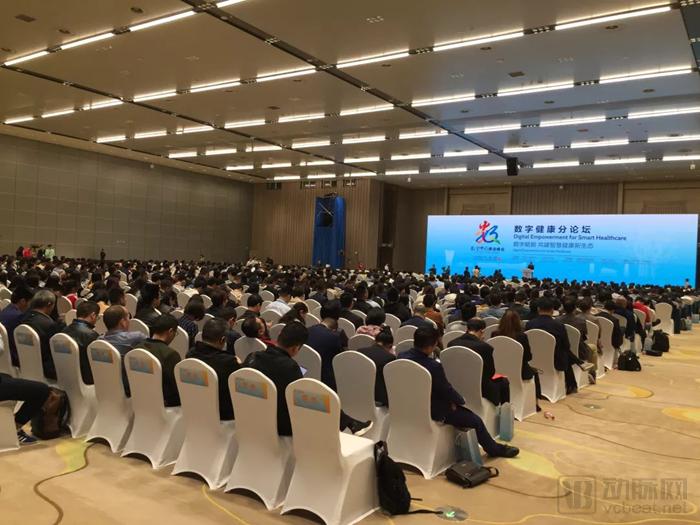
The Digital Health Sub-Forum of the 2nd Digital China Summit Was Held in Fuzhou
In recent years, the CPC Central Committee and the State Council have attached great importance to digitalization and informatization, placing people’s health in a strategic position of priority development. It is understood that this marks the first high-level dialogue in the medical and health sector held at the Digital China Summit, serving as a national-level platform for exchange in healthcare. This platform comprehensively and multi-dimensionally focuses on and showcases the remarkable achievements made in national health informatization since the 13th Five-Year Plan period.
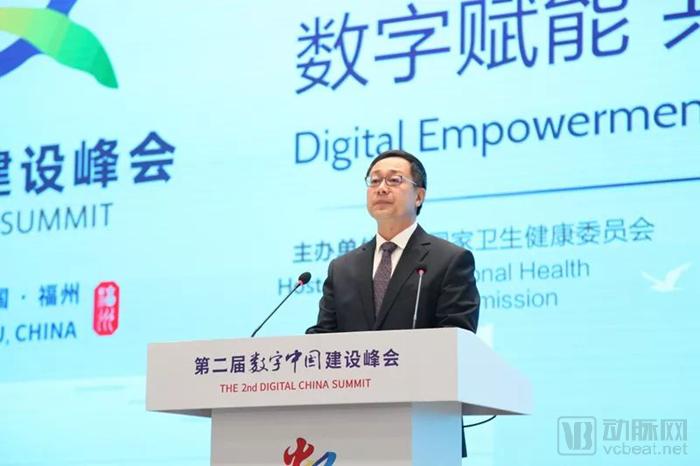
Address by Yu Xuejun, Deputy Director of the National Health Commission
The rapid development of information technologies, represented by the internet, big data, and artificial intelligence, is driving the deep integration of the digital economy with the healthcare industry. Yu Xuejun, Deputy Director of the National Health Commission, stated in his address: “Informatization is closely linked to comprehensive health services and holistic public health; their deep integration is revealing promising and boundless prospects.” This has given rise to new models and business formats under the “Internet + Healthcare” framework, which are rapidly accelerating industrial transformation and upgrading.
Mao Qunan, Director of the Department of Planning and Information under the National Health Commission, stated that in the year since the General Office of the State Council issued the “Opinions on Promoting the Development of ‘Internet + Healthcare’” (hereinafter referred to as the “Opinions”), all regions and departments have made every effort to ensure the effective implementation of the policies, resulting in strong momentum for the development of “Internet + Healthcare.” According to a survey by the State Information Center, “Internet + Healthcare” ranks among the most highly rated initiatives in public satisfaction assessments.
Notably, at this forum, the National Health Commission signed agreements with 10 provinces, including Zhejiang, Fujian, Tianjin, and Sichuan, to jointly establish “Internet + Healthcare” demonstration provinces, ushering in a new chapter in the development of “Internet + Healthcare” across China.
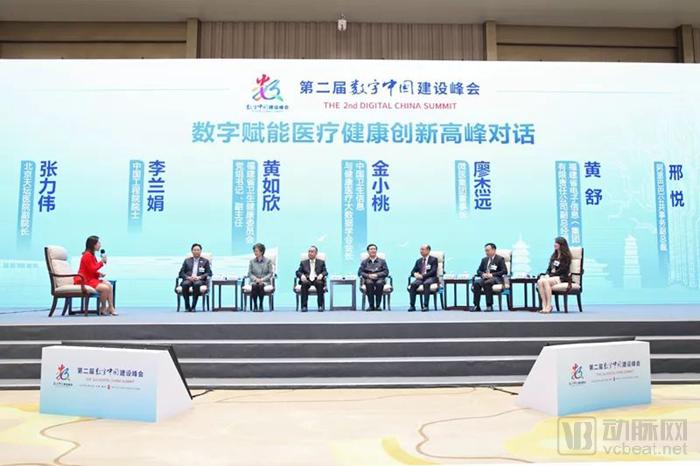
Digital Empowerment: High-Level Dialogue on Healthcare Innovation
“Over the year since the release of the Guidelines, the entire industry has been racing ahead at full speed, ushering in an unprecedented pace of development. This is inseparable from policy innovation and governmental inclusiveness,” remarked Liao Jieyuan, drawing on his years of exploratory practice, at the High-Level Dialogue on Digital Empowerment for Healthcare Innovation. Starting with appointment registration services in 2010, WeDoctor (formerly Guahaowang) spent nine years leveraging technology and digital capabilities to drive the upgrading of the entire digital healthcare industry.
Liao Jieyuan believes that to successfully navigate the development path of “Internet + Healthcare,” it is essential to achieve “three integrations”: First, integrate in-hospital and out-of-hospital services by connecting hospitals, doctors, and patients; second, bridge urban and rural areas—currently, Weiyi’s cloud clinic vehicles have reached over 600 townships across China and are projected to expand to nearly 2,000 townships by the end of this year; third, realize the integration of medical care, pharmaceuticals, and health insurance.
In November last year, WeDoctor joined forces with the Haixi Pharmaceutical Platform and Yilianzhong to establish “San Yi Lian,” the nation’s first integrated platform coordinating healthcare, medical insurance, and pharmaceutical services, thereby supporting the implementation of related reforms across provinces and municipalities nationwide. In March this year, it helped Xiamen become the first among the 11 pilot cities in China to implement the “4+7” centralized drug procurement and utilization program, achieving a maximum drug price reduction of 96%.
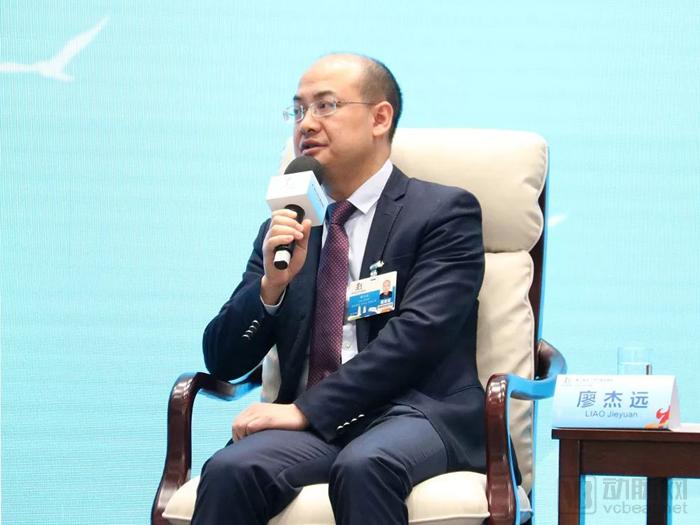
Liao Jieyuan, Chairman of WeDoctor, Shares Insights at the High-Level Dialogue
Only by achieving the “Three Integrations” can we attain the “One Goal,” namely, the implementation of tiered diagnosis and treatment, thereby genuinely advancing the transition from a healthcare-centered model to a health-centered one. Driven by digital forces, “In the future, 50% of common diseases among the general public can be managed at home, 35% can be handled at nearby primary care institutions, and only 15% of complex and severe cases will require referral to large hospitals,” stated Liao Jieyuan.
“Digital” and “healthcare” are key enabling elements for realizing the strategies of Digital China and Healthy China. Jin Xiaotao, President of the Chinese Society of Health Informatics and Medical Big Data, stated that the digital economy is injecting new momentum into the transformation and upgrading of the healthcare industry. It is essential to pool efforts from all sectors to create a “holographic digital human” that covers the entire life cycle, all aspects of daily life, and the full production process, thereby ensuring that the entire population truly shares in the benefits of Healthy China.