

Dr. Liu Xiaoqing, Former AI Lab Director of BGI, Joins Deepwise to Propel Next-Gen Medical AI Innovation

DeepWise
Developer of Artificial Intelligence Medical Imaging Diagnosis System
After the turbulence of 2017, medical artificial intelligence has gradually settled into calm. Yet beneath this seemingly tranquil surface lies another battlefield without smoke, where participants possess clearer directions and goals, as well as more defined industry strategies. Among these competitors, DeepWise undoubtedly stands out as a formidable new force, built on substantial accumulated strength. In 2018, DeepWise assembled an industry-leading R&D team headed by Professor Yizhou Yu, an IEEE Fellow, in record time. As 2019 reached its midpoint, Dr. Liu Xiaoqing, former Director of the BGI Artificial Intelligence Laboratory, officially joined DeepWise, injecting new vitality into its algorithm team. With coordinated efforts across Beijing, Hangzhou, and Shanghai, DeepWise has embarked on a new chapter in product research and development.
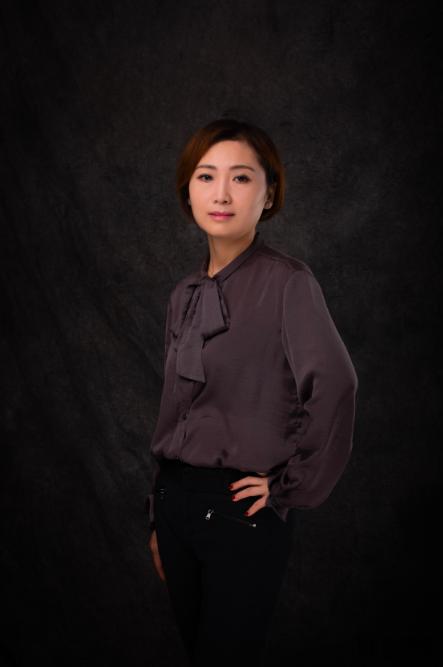
Dr. Liu Xiaoqing, Algorithm Director at DeepWise
Amid the global surge in artificial intelligence, Dr. Liu’s joining will undoubtedly enhance the overall strength of DeepWise’s algorithm team, leading to new breakthroughs in AI and machine learning algorithms. As a leader in the medical AI sector, DeepWise has deployed its AI-powered products in nearly 300 hospitals since its establishment in March 2017. DeepWise’s solutions are not only applied in tertiary Grade-A hospitals but also extensively utilized in primary care institutions, reflecting the company’s commitment to leveraging AI technology to benefit a broader patient population.
As a leader in the clinical research and application of medical AI, DeepWise is committed to promoting the deployment of medical AI at the primary care level, enhancing the diagnostic and treatment capabilities of primary healthcare institutions, enabling more people in grassroots communities to benefit from improved diagnostic and therapeutic experiences driven by technological advancements, and ultimately raising the overall quality and accessibility of medical resources. In 2019, DeepWise Medical will respond to the national call by continuing to support primary hospitals, constantly refining and evolving its products, and contributing to the building of a Healthy China. Below is the transcript of the interview:
“You have explored many fields of artificial intelligence. What was your original motivation for dedicating yourself to the healthcare sector?”
Liu Xiaoqing: The healthcare sector is inextricably linked to human development, sharing a closely intertwined fate. China faces a severe shortage and uneven distribution of medical resources. On one hand, physicians at top-tier (Grade 3A) hospitals in first-tier cities are burdened with repetitive, basic diagnostic tasks. On the other hand, remote areas suffer from a significant lack of high-quality medical resources. With the industrialization of intelligent healthcare, the burden on physicians can be substantially reduced, significantly improving work efficiency and diagnostic accuracy while lowering high labor costs. Meanwhile, it can also lower the threshold for accessing medical care, providing patients with more precise diagnoses and high-quality, personalized health services. Consequently, this helps alleviate the unequal distribution of medical resources, reduce societal healthcare costs, and improve the overall health status of the population.
What motivated you to join DeepWise?
My decision to join DeepWise was primarily driven by the company’s strong and diverse team. Lei Ming, Chairman of DeepWise and one of the “Seven Swordsmen of Baidu,” possesses a profound understanding of both technology and business. CEO Qiao Xin brings extensive medical expertise, having previously held key positions at top-tier tertiary hospitals in China and at Siemens Healthineers.
CTO Li Yiming previously worked at Baidu and AutoNavi Information Technology Co., Ltd., possessing profound expertise in big data and machine learning. Chief Scientist Professor Yu Yizhou demonstrates deep expertise and forward-looking vision in the fields of computer vision and machine learning. This diverse and integrated team enables DeepWise to approach problems from a truly clinical perspective, effectively balance commercial viability, and remain at the technological forefront—this is what truly attracts me.
What are your responsibilities and plans after joining DeepWise?
Dr. Liu: Joined DeepWise, primarily responsible for building the algorithm technology team and tackling key projects for DeepWise Medical in East China (Hangzhou, Shanghai). As the head of the technical team, he also collaborates with external universities, research institutes, and hospitals to conduct R&D on forward-looking technologies.
What do you consider to be the major challenges that medical AI needs to overcome at this stage?
Dr. Liu: Although artificial intelligence (AI) has seen increasingly widespread application across numerous healthcare domains—including medical imaging, clinical decision support, drug discovery, and pathology—and its technology continues to integrate more deeply with the medical field, the development of medical AI still faces new opportunities and challenges.
On the one hand, clinical medicine inherently demands extremely high robustness from AI algorithms. On the other hand, in diagnostic and therapeutic scenarios for diseases with insufficient data, artificial intelligence models relying on complex architectures and large-scale parameter training often yield unsatisfactory performance. However, in actual medical practice, data acquisition and standardized data annotation are frequently challenging. Therefore, under conditions of limited domain-specific data, it is imperative to develop machine learning applications capable of handling small and noisy datasets.
What are your views on the future development of AI in healthcare?
Dr. Liu: With the advent of the era of precision medicine, it has become possible to provide tailored, personalized healthcare service models for each patient. Not only clinical information, but also genetic, molecular, and pathological imaging data can be utilized for comprehensive diagnosis. Supported by the robust storage, sharing, and computational capabilities of medical big data platforms, and combined with advanced artificial intelligence technologies, multi-omics data—including genomics, radiomics, and disease phenotypes—are deeply mined and integrated. This enhances the ability to predict disease trends and patterns, making the integration of multi-omics data to assist clinical diagnosis a major trend in the healthcare industry in recent years.
Meanwhile, supported by large-scale multi-omics big data, analytical modeling methods in the field of artificial intelligence have undergone a qualitative transformation. Compared with traditional manual feature extraction, big data combined with deep learning is more capable of uncovering latent information within datasets. Furthermore, by leveraging deep learning-based visualization technologies, it helps physicians perceive vast amounts of information invisible to the naked eye, thereby intuitively assisting in diagnosis and building confidence among both physicians and patients in the application of AI technologies in the medical field.
About Dr. Liu Xiaoqing
Dr. Liu Xiaoqing, a graduate of the University of Western Ontario in Canada, has served as a project leader and core R&D specialist since 2008. Dr. Liu is dedicated to research and development in fields including machine learning, pattern recognition, computer vision, data analysis and mining, image analysis and understanding, image/signal processing, natural language processing, and big data visualization. The products developed under her leadership have been applied across multiple artificial intelligence domains, such as biomedicine, robotics, autonomous driving, and national defense technology.
Dr. Liu’s research findings have been successively published in more than 20 top-tier journals and conferences in the fields of machine learning and computer vision, such as IEEE Transactions on Pattern Analysis and Machine Intelligence (PAMI) and the Conference on Computer Vision and Pattern Recognition (CVPR). He has also been granted several U.S. national and international patents. The team led by Dr. Xiaoqing Liu won the Second Prize in the Special Competition on Vulnerable Plaque Identification Technology in Cardiovascular OCT at the China Conference on Computer Vision (CCCV 2017), a premier visual computing conference in China. At the 2018 China International Big Data Industry Expo, the team’s intelligent ophthalmic diagnosis system, DeepEye, received the Gold Award for Leading Scientific and Technological Achievements. In the 2018 Shenzhen International Competition on Innovative Applications of Healthcare Big Data, the team’s atrial fibrillation and myocardial infarction prediction system, based on ECG signals and deep learning algorithms, secured second place in the Innovative Application Category.