

WeDoctor's 'SanYiLian' Platform Showcased at Digital China Summit: Fujian Model Goes National Amid IPO Filing
VCBeat (WeChat ID: vcbeat) has learned that the 2nd Digital China Summit was held in Fuzhou from May 6 to 8, showcasing the achievements of China’s digital economy over the past year. As the one-year anniversary of the General Office of the State Council’s “Opinions on Promoting the Development of ‘Internet + Healthcare’” (hereinafter referred to as the “Opinions”) approaches, WeDoctor’s “Three-Medical Linkage” platform was exhibited at the summit as an innovative practice first fully implemented in Fujian Province. The debut of the “Three-Medical Linkage” platform at the Digital China Summit marks its expansion from Fujian to the rest of China, leveraging digitalization to integrate medical care, pharmaceuticals, and health insurance.
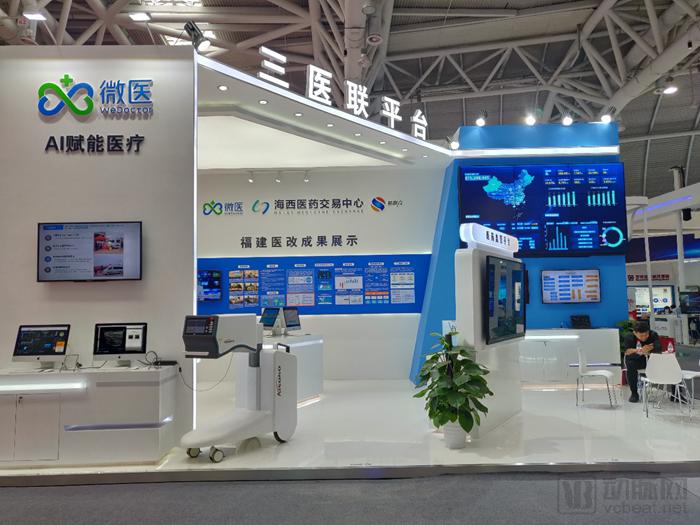
WeDoctor’s “Three-Medical Integration” Platform Debuts at the Second Digital China Summit
At the Digital Health Sub-forum held on the 7th of the conference, Yu Xuejun, Deputy Director of the National Health Commission, pointed out: “One year since the issuance of the ‘Opinions,’ ‘Internet + Medical Health’ has formed a good momentum for development. According to a survey by the State Information Center, ‘Internet + Medical Health’ ranks among the top in public satisfaction evaluations.”
“Internet + Healthcare” began its journey a decade ago and has witnessed rapid development in recent years. From integrating intra- and extra-hospital services and breaking down the “walls” of hospitals, to bridging data and service gaps between urban and rural areas, and streamlining healthcare delivery, pharmaceuticals, and health insurance to enhance efficiency, medical technology companies represented by WeDoctor Group have explored three major development pathways for “Internet + Healthcare.” The implementation of these practices has not only improved public satisfaction but also significantly accelerated industry reform and upgrading.
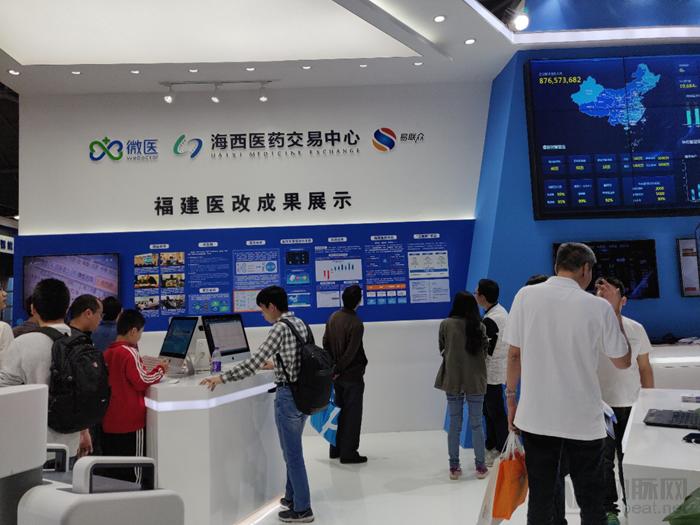
Fujian’s Integrated Medical, Insurance, and Pharmaceutical Reforms Draw Widespread Attention as the “Fujian Model” Goes National
It is reported that "San Yi Lian," the first national platform for the coordinated reform of healthcare, pharmaceuticals, and health insurance, was jointly established by WeDoctor, the Haixi Pharmaceutical Platform, and Yilianzhong. By integrating their respective strengths in medical care, pharmaceuticals, and health insurance, the platform assists provinces and municipalities across China in implementing the coordinated reform, breaking down silos among the three sectors, and building a people-centered service system for healthcare, pharmaceuticals, and health insurance.
“China’s healthcare reform looks to Fujian; Fujian’s healthcare reform looks to Sanming.” Currently, building on the successful experience of healthcare reform in Sanming, Fujian, the “Three-Medical Linkage” platform has established five core capabilities: tiered diagnosis and treatment, centralized procurement of pharmaceuticals and medical devices, smart health insurance, interoperability of data across medical services, health insurance, and pharmaceuticals, and commercial health insurance. This enables the rapid nationwide implementation of the successful model pioneered in Sanming.
In the pharmaceutical sector, the “Haixi Pharmaceutical Platform” has been deployed in 21 cities across 15 provinces. In 2018, its transaction volume exceeded RMB 48 billion. Over six years, it helped Sanming achieve cumulative cost savings of RMB 5.5 billion and assisted Xiamen in successfully executing the first national pilot order under the “4+7” centralized drug procurement program, with drug prices dropping by up to 96%. In terms of medical insurance, the platform has driven reforms in healthcare payment methods and plugged loopholes in insurance fund utilization by establishing an intelligent medical insurance administration system. To date, it has connected medical insurance data from 16 provinces, serving 250 million insured individuals.
Building on the comprehensive industrial development driven by healthcare, pharmaceuticals, and health insurance, Fujian Province has also achieved breakthrough progress in intelligent medical devices. Last September, the China (Tingzhou) Medical Device Innovation Platform was established in Changting, Fujian, creating a “fast track” for medical device registration and certification and actively attracting innovative companies in fields such as AI-assisted diagnosis and gene sequencing. Currently, the platform has introduced AI-powered mobile screening units for cervical and breast cancer to support screening efforts for women. As a result, nearly 200,000 women in Changting County have been among the first to benefit from the “health dividends” brought by the digital economy.
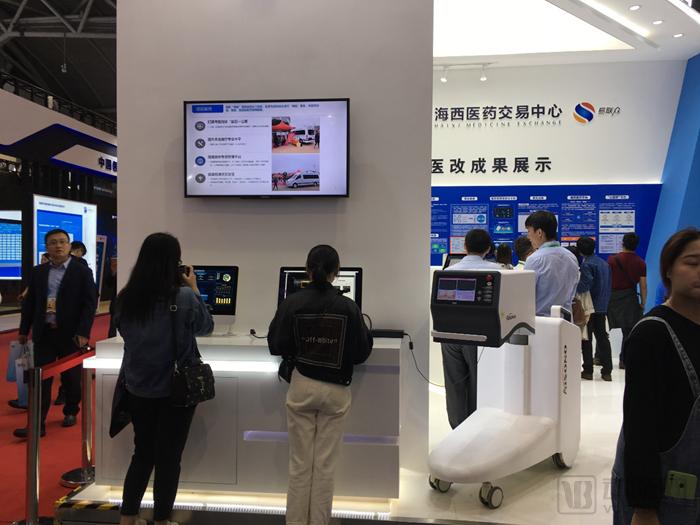
Women’s “Two-Cancer” Screening Equipment Debuts at Conference, Integrating Artificial Intelligence and Other Advanced Technologies
The achievements of the Fujian-Ningxia collaboration in “Internet + Healthcare” showcased at the conference also attracted widespread attention. It is reported that Professor Lin Shi, Dean of the School of Software at Minjiang University—a key university under construction in Fujian Province—established the first digital Fujian-Ningxia medical research institution during his tenure in Ningxia. He supported Weiyi in setting up an internet hospital and rural internet medical consultation points locally, thereby contributing to the development of Ningxia’s internet healthcare infrastructure.
Jin Xiaotao, President of the Chinese Society for Health Information and Big Data in Healthcare, stated at the forum: “After one year of implementing ‘Internet Plus’ medical and health services, and nearly two years of piloting the construction of big data centers and industrial parks for healthcare, substantial achievements have been made. The entire industry is striving to create a ‘holographic digital human’ that covers the full life cycle, all aspects of daily life, and the entire production process. In the future, we will continue to promote the shift from being ‘disease-centered’ to being ‘people’s health-centered.’”
“The three pathways for the development of ‘Internet + Healthcare’ are advancing toward the goal of a ‘health-centered tiered diagnosis and treatment system,’” said Liao Jieyuan, Chairman of WeDoctor Group, at the forum. Driven by the digital economy, it is expected that in the next decade, a pyramid-shaped tiered diagnosis and treatment system will be realized, where “50% of medical services are completed at home, 35% at the primary care level, and only 15%—for major, severe, and complex diseases—are handled at hospitals.”