

Granting Intelligence to Consumers: How Far Is Medical AI from C-Side Payment Adoption?

VoxelCloud
Developer of Intelligent Imaging Systems

Tencent
Internet Comprehensive Service Provider

Airdoc
Retinal Imaging Artificial Intelligence Field Product Developer
In the healthcare sector, AI systems based on apps and mini-programs are replacing traditional algorithms to provide technical support for applications. These AI systems often aggregate vast amounts of knowledge and are used to address health issues within a limited scope.
These products share a common feature: they directly provide AI-powered healthcare services to patients, integrating health monitoring and management into users’ daily lives. This enables patients to participate in health-related decision-making and interact with the system without undergoing cumbersome hospital procedures.
This may represent a viable path for the commercialization of medical AI: enabling patients to tangibly experience the convenience brought by artificial intelligence, thereby encouraging them to voluntarily pay for such services, or prompting hospitals to cover the costs of these patient-oriented services.
To this end, VCBeat interviewed several AI companies that provide services to patients, seeking viable paths from the experiences of these pioneers.
Overall, AI’s entry into the consumer market can be broadly categorized into three types of motivations.
The first motivation stems from the exploration of business models. Judging by the current trajectory of medical AI development, it is difficult to rapidly achieve success by relying solely on algorithmic breakthroughs in AI products to seek monetization. For most artificial intelligence enterprises targeting radiology departments, cash flow remains a challenging issue. On one hand, the prolonged delay in obtaining Class III medical device approvals continuously erodes the patience of both hospitals and investors; on the other hand, radiology departments at tertiary Grade A hospitals may not be ideal payers.
Therefore, some AI companies are beginning to experiment by either continuing to reduce the costs of their existing services or exploring new revenue streams to forge new paths in the consumer market.
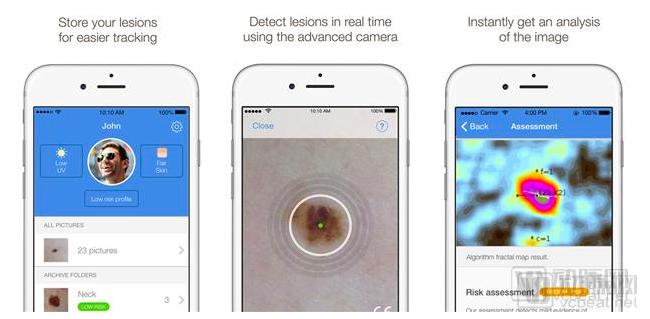
SkinVision, a Dutch company founded in 2012, took an early lead in this endeavor. Leveraging proprietary artificial intelligence algorithms, SkinVision calculates the fractal dimensions of skin lesions and surrounding tissue to construct structural maps of various growth patterns within the affected tissues. The software guides patients on how to monitor skin spots and provides a risk assessment within 30 seconds based on the uploaded images. Patients can purchase membership services via the SkinVision app (available for download in China) to receive diagnostic results, representing a direct-to-consumer service model that generates revenue directly from end users.
In China, some enterprises also aim to generate profits by charging users directly, providing light medical services from the supply side. For instance, Airdoc, a domestic AI company collaborating with Starry Vision, empowers fundus cameras, slit lamps, and automated multi-functional phoropters with AI technology. This enables comprehensive health risk assessments and eyewear recommendations for users, helping them prevent vision impairment caused by underlying health risks.
This is a standalone fee-based service. According to Airdoc, it is available at Baodao Optical, under the Vision Group brand, and comes in two versions priced at RMB 99 and RMB 199. Data show that more customers opted for the RMB 99 version.
Unlike directly seeking payment from patients, the primary model for AI’s entry into the healthcare sector is to generate revenue by reducing costs from the supply side; this is largely the underlying rationale for AI in radiology. The consumer-facing (C-end) market faces similar challenges: it is difficult to lower patients’ medical consultation costs while simultaneously requiring them to pay. Although intelligent triage services reduce patients’ time costs, the ultimate payer remains the hospital. Therefore, many enterprises that provide services directly to patients are driven by this second motive.
The second motivation stems from large enterprises’ strategic positioning within the healthcare ecosystem. To achieve comprehensive coverage of the entire healthcare ecosystem, patients constitute an indispensable component and serve as one of the primary payers along the service chain.
For example, Ping An Smart Healthcare has developed numerous chronic disease management platforms powered by AI. Its diabetes management platform serves over 500 patients, with a monthly active rate exceeding 70%. Patient reliance on the platform is on the rise, and their understanding of diabetes has significantly improved.
This is a crucial component of the smart healthcare ecosystem built by Ping An Smart Healthcare, which leverages the integration of the internet and artificial intelligence to provide patients with superior treatment and management.
Unlike Ping An’s approach to its Smart City initiatives, Tencent has launched Tencent Medical Dictionary, a product aimed at popularizing medical knowledge, which is increasingly becoming the cornerstone of Tencent’s healthcare strategy. Zhang Meng, Vice President of Tencent Healthcare, explicitly stated that this product is non-profit. Perhaps the internet healthcare market still requires further education.
The third motivation is to augment existing medical products. To distinguish it from SkinVision, this section uses VoxelCloud’s “VoxelSkin Insight” as a comparative example.
VoxelCloud Skin Insight was officially launched by VoxelCloud in December 2018. Hosted on a WeChat Mini Program, this consumer-facing AI product provides free image-based screening services directly to patients with skin conditions.
Specifically, patients can capture images of skin conditions using their smartphones and upload them to the cloud via Fuzhihui. VoxelCloud will then leverage its dermatology knowledge graph to provide reliable reference recommendations for skin disease detection.
Many patients develop skin conditions in private areas, making it difficult for them to speak openly about their symptoms. VoxelCloud’s Skin Knowledge Hub provides patients with an opportunity to self-assess their condition before seeking medical attention, thereby encouraging proactive consultation. Furthermore, patients supported by the Skin Knowledge Hub can describe their symptoms more clearly to physicians during diagnosis and treatment, which also serves to support online medical consultations.
According to Ding Xiaowei, founder of VoxelCloud, although internet-based consultation platforms enjoy policy support, there is still a need to improve efficiency. In particular, many patients struggle to accurately describe their conditions during the initial complaint stage. To address this pain point, VoxelCloud’s Skin Knowledge Hub enables physicians to promptly analyze patients’ dermatological information and allows patients to gain preliminary insights into their conditions. Therefore, the significance of this application lies in enhancing the quality of online consultations and facilitating subsequent follow-up visits and monitoring.
In addition, such apps/mini-programs also serve the implicit functions of patient education and brand dissemination. As patients use these apps/mini-programs, they naturally gain insights into their medical conditions and the solutions suggested by the software, while companies benefit from increased brand awareness through patient engagement.
Most of the aforementioned innovative products rely heavily on smartphones; therefore, to achieve breakthroughs in application scenarios, the functionalities of smartphones themselves urgently need to advance.
To date, select smartphones from Apple, Huawei, and Google have been equipped with AI chips tailored to their respective needs. Meanwhile, Horizon Robotics, Cambricon, and Deephi Tech, along with international chip giants, have spared no effort in pouring capital into AI chip R&D. These initiatives are driving the rapid advancement of AI technologies such as signal processing, neural networks, and pattern recognition, while multi-sensor fusion technology is gradually being adopted in smartphones.
Multi-sensor fusion technology leverages artificial intelligence to process time-series observational data from multiple sensors. By employing AI methods such as fuzzy logic theory, neural networks, and expert systems, it analyzes, integrates, controls, and applies the observational data according to specific criteria. This yields consistent interpretations and descriptions of measured physical quantities—such as temperature, altitude, and illuminance—thereby enabling corresponding decision-making and estimation to assist smartphones in performing functions like environmental perception and human-computer interaction.
This sensor technology has improved the collection and analysis of health data on mobile phones to a certain extent. The Viterbi School of Engineering at the University of Southern California (USC) previously developed an iOS-based application capable of detecting heart failure by measuring subtle vibrations beneath the skin (i.e., recording pulse waves). Using the same approach, they were able to determine arterial stiffness.
However, the sensors embedded in smartphones are inherently limited, and this centralized mindset has also constrained market development. Therefore, a better approach is to integrate more technologies into wearable devices that maintain real-time connectivity with users.
Compared to smartphones, wearable devices such as fitness bands and smartwatches can freely incorporate sensors without needing to heavily consider issues like sensor size.
With the expansion of sensor capabilities, the range of detectable medical scenarios has also broadened. Many FDA-cleared products can now monitor conditions with easily acquired signals, such as atrial fibrillation, epilepsy, Parkinson’s disease, and sleep apnea, making this area a central battleground for competition across various industries.
Therefore, to achieve a breakthrough in this area, it is not enough to merely draw up a blueprint for AI chips; we must also address security issues in smartphones and smart bands, cloud collaboration challenges, human-AI interaction models, and interoperability among intelligent terminals such as smartphones, while integrating with cutting-edge technologies including the Internet of Things (IoT), 5G, and VR/AR.
Thus, it is still a long road ahead for AI to gain a firm foothold in consumers’ lives and achieve C-end payment adoption.
Although the term “mature” remains far from applicable to the consumer market, certain practical applications have successfully entered the market with demonstrated strength, either allowing users to tangibly experience the power of technology or compelling them to pay with satisfaction.
Scenario 1: Triage
In the recently aired fifth season of “Connecting the Future,” a scene depicts that by midnight, long queues had already formed at the registration and cashier’s office of Shenzhen Maternity and Child Healthcare Hospital. Some family members, quite experienced in such matters, arrived early with round stools and power banks, fully prepared to stay up all night.
“Queues for departments with a severe shortage of doctors might start forming as early as midnight, while those for less scarce specialties may not see patients lining up until 6 a.m. Our daily outpatient volume ranges from 3,000 to 5,000, so patients have to arrive very early,” a doctor told reporters, describing the scene in the outpatient hall in the past.
Those bygone scenes are no more. Today, through the AI-powered triage mini-program developed by Tencent, patients can be accurately matched with a doctor in one second, completing online triage and registration in a single step. This not only provides patients with an appointment option but also saves them from the anxiety of waiting in long queues.
Of course, in addition to internet giants like Tencent, Zixun AI and Huake Zhibiao are also adopting similar approaches to alleviate pressure on outpatient lobbies and provide more attentive medical services to patients. This product enhances hospital operational efficiency and addresses key pain points, giving hospitals a clear rationale for paying for it.
Scenario 2: Follow-up Visits and Chronic Disease Management
Under the current healthcare system, there are two primary models of care: proactive care and reactive care. Follow-up is a component of proactive care, requiring physicians to actively monitor patients’ conditions. However, this raises a critical issue: given the severe shortage of medical resources in China, where even basic treatment for patients cannot be guaranteed, how can healthcare providers allocate the necessary energy and resources to conduct patient follow-ups?
Many patients, particularly those with chronic conditions, can only complete the clinical consultation phase at hospitals; most rehabilitation and recuperation must take place at home. Therefore, follow-up care entails more than a simple inquiry—it requires establishing long-term engagement with patients. Undoubtedly, mobile phones will serve as a critical medium in this process.
Hangzhou Jianhai Science and Technology Co., Ltd., a domestic health informatics enterprise, leverages software to link patients’ electronic medical records and manages their diseases through cloud-based follow-ups. Its underlying technical support is derived from “Jishi,” an AI-powered disease management system independently developed by Jianhai Technology.
The Jishi System is built on advanced big data infrastructure, having learned from follow-up data for over 3,000 diseases and incorporating the accumulated experience of more than 50 chronic disease management and operations teams. By leveraging deep learning techniques with fused neural network algorithms, the system enables batch patient follow-ups through multiple interaction channels, including WeChat, telephone, smart speakers, and robots. During the follow-up process, it provides intelligent auxiliary judgment for anomalies in follow-ups, test results, and feedback, as well as intelligent auxiliary processing such as automated Q&A and reminders.
Jianhai refers to this business model as “prescription-style follow-up,” whereby physicians can prescribe detailed follow-up service plans for patients in a manner similar to issuing medical prescriptions. In this process, patients pay the hospital, and the hospital, in turn, pays Jianhai.
“The key is to get listed in the hospital’s initial payment catalog,” said Wang Jian, CEO of Hangzhou Jianhai Science and Technology Co., Ltd. Surveys indicate that Jianhai’s products have entered hospitals such as Ningbo Yinzhou Second Hospital and Lanxi People’s Hospital through open tendering, successfully achieving profitability.
Scenario 3: Skin Detection
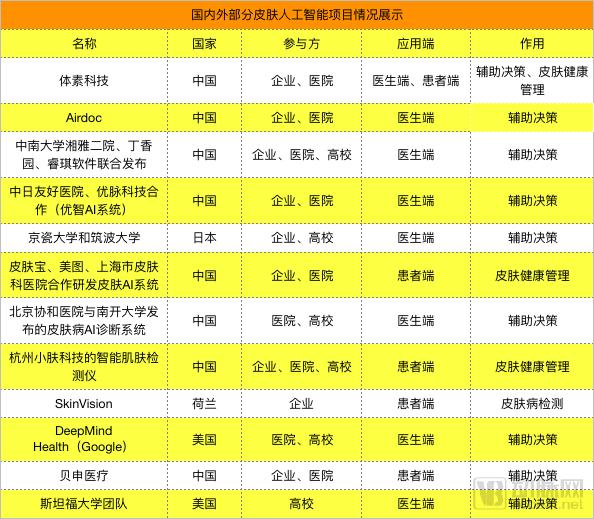
AI-powered products in dermatology have been advancing at a gradual pace over the past few years. In addition to VoxelCloud mentioned above, numerous outstanding AI-based skin detection solutions are gradually emerging both domestically and internationally.
As can be seen from the figure above, most AI companies initially focused on skin cancer (melanoma), but over time, more diverse and specialized dermatological detection programs have been developed.
Unlike VoxelCloud, which strives for breadth, Shenzhen Beishen Medical has chosen to focus on neonatal and pediatric jaundice. In mid-February this year, the “Nezha Baobei” application developed by Beishen Medical received the medical device registration certificate for “Mobile Software for Neonatal Jaundice Screening” issued by the Guangdong Provincial Medical Products Administration. This project marks China’s first medical device registration certificate granted to a mobile application (APP), as well as the first AI-based medical device to complete Good Clinical Practice (GCP) clinical trials.
Furthermore, as medical aesthetics continues to sweep across the mainland Chinese market, some enterprises and specialized hospitals have targeted the field of intelligent skin detection. The Chang’e Skin Decoding Robot, deployed in numerous plastic surgery hospitals, can perform quantitative analysis on indicators such as facial skin whitening level, sebum, pigmentation spots, UV spots, porphyrins, texture, pores, wrinkles, hemoglobin, and melanin, while providing diagnostic recommendations. Currently, this equipment occupies a significant amount of space in hospitals; therefore, portable home-use intelligent skin detection tools will be one of its future development directions.
Scenario 4: Ophthalmology
Hot spring resorts, shopping malls... smart scales are now ubiquitous. This model could serve as a reference. HeGu Intelligence, a Guangzhou-based company, previously showcased its AI-powered ophthalmic product to VCBeat and proposed promoting it in public spaces using a model similar to that of smart scales. This type of “software + hardware” intelligent device is comparable in size to the automated ID photo kiosks found at high-speed railway stations. Patients can scan a QR code to pay and then follow system prompts to undergo intelligent fundus screening.
Airdoc has also integrated its services into hospital billing schedules to charge patients. Given the vast ophthalmology market and large patient population, this value-added pricing model is equally worthy of discussion.
Scene 5: Intelligent Customer Service
In recent years, to reduce customer service costs and improve response rates, e-commerce platforms have increasingly adopted a “keyword-based search and automated response” approach to address consumers’ numerous product-related inquiries, euphemistically termed “intelligent customer service.” However, consumer queries often extend beyond simple keywords, and the desired outcomes typically require multi-turn interactions rather than single-response replies. Due to semantic complexity, e-commerce back-end systems frequently fail to retrieve relevant results for many questions; even when associated results are found, it remains difficult to match responses that accurately meet user needs.
In response, Beijing Laiye Network Technology Co., Ltd. developed an intelligent customer service system for Wyeth’s WeChat-based sales of maternal and infant products, enabling human-AI collaboration in handling customer inquiries on the platform. The underlying knowledge base comprises more than 1,500 knowledge points and contains over 20,000 questions, leveraging NLP technology to perform semantic analysis of customer queries and generate potential answers for customer service representatives.
With the assistance of artificial intelligence, the work of customer service representatives has shifted from “fill-in-the-blank” tasks to “multiple-choice” decisions, multiplying the speed at which consumer inquiries are handled. For consumers, interactions with intelligent customer service systems accelerate both information retrieval and issue resolution, thereby making the entire shopping process smoother.
In customer interactions, the chatbot continuously gathers data on consumers’ purchasing habits, spending power, and various needs. As this data accumulates, the consumer profile for Wyeth becomes increasingly well-defined.
Overall, entrepreneurs need to provide more opportunities for consumers to personally experience artificial intelligence and engage in its interactive applications, thereby fostering understanding and acceptance of the technology. This process relies on the synergy between AI and technologies such as the Internet of Things (IoT), 5G, and cloud services.
Furthermore, there is significant potential for market education among consumers. Therefore, if new consumer habits can be cultivated and established, it may be possible to create an entirely new market. As people become increasingly concerned about their health, there will always be a way to capture the hearts of the majority.
Therefore, although 2019 was not a favorable year for medical AI, the hurdles in commercialization do not mean that AI has reached a bottleneck. On the contrary, these obstacles are forcing entrepreneurs to view the industry from a more macroscopic and innovative perspective, with an increasing number of products that change our lives continuously coming into view.
In the past, few could have foreseen that computers and the internet would become such constant companions in our lives. Perhaps “Artificial Intelligence” may well become the name of this era.