

MMC Reports Doubling of Metabolic Composite Control and HbA1c Target Rates in Diabetes Management Breakthrough
China is the country with the largest number of diabetes patients worldwide. For many years, the co-management of diabetes with hypertension, dyslipidemia, and coronary heart disease has been a major challenge in comprehensive diabetes care, as well as the leading cause of diabetes-related mortality and disability. The establishment and operation of the National Metabolic Management Center (hereinafter referred to as MMC), guided by a patient-centered philosophy, have brought about transformative breakthroughs in diabetes prevention and control in China.
VCBeat (WeChat: vcbeat) has learned that on May 10, the MMC Annual Conference announced “surprising” results, with the comprehensive metabolic control rate among patients and the achievement rate of the “gold standard” for blood glucose both doubling. The comprehensive metabolic compliance rate increased from a baseline of 7.2% to 17.3%, while the HbA1c compliance rate rose from a baseline of 21.2% to 45.4%. Currently, more than 500 hospitals across China have registered to join the MMC network, with 245 already formally admitting patients. This new management model is penetrating deep into grassroots healthcare, improving access to medical services and enabling more patients to benefit from one-stop, comprehensive, multi-scenario disease management.
Breaking Through Two Major Challenges in Diabetes Management: MMC Creates a New Model for Blood Sugar Control
Historically, diabetes management has faced two major challenges: First, patients have tended to focus solely on preprandial or postprandial blood glucose levels while neglecting regular monitoring of glycated hemoglobin (HbA1c), the “gold standard” indicator. This has resulted in low HbA1c target attainment rates and suboptimal glycemic control. Second, patients have concentrated exclusively on blood glucose monitoring and management, overlooking the comprehensive management of comorbidities such as hypertension, hyperlipidemia, and coronary heart disease. Consequently, overall metabolic target attainment rates remain generally low, leading to an elevated risk of cardiovascular diseases and events.
Data show that the prevalence of diabetes in China has reached 11.6%, yet only 49.2% of patients receiving treatment achieve effective glycemic control. Furthermore, a significant proportion of patients with diabetes have comorbid cardiovascular diseases; among those managed by the MMC (Metabolic Management Center), 41.3% have hypertension, 33.7% have hyperlipidemia, and 9.4% have coronary heart disease.

Academician of the Chinese Academy of Engineering, Ning Guang
Academician Ning Guang of the Chinese Academy of Engineering stated, “To address these two major challenges, the MMC model emphasizes, first, the achievement rate of target glycated hemoglobin (HbA1c) levels, and second, the comprehensive metabolic control rate, which refers to the integrated management of blood glucose, blood pressure, and blood lipids. Glycated hemoglobin is the gold standard for assessing glycemic control. Unlike single-time-point measurements of fasting or postprandial blood glucose, it effectively reflects glycemic control over the preceding 1–2 months and serves as a critical tool in the diagnosis and management of diabetes.”
Furthermore, MMC has developed and launched the “Rui Ning Pre-Diabetes” Metabolic Index Assessment Tool. By entering just six data points—gender, age, weight, blood glucose, blood pressure, and blood lipids—patients can assess their probability of developing cardiovascular disease within three years, thereby enhancing their attention to achieving comprehensive metabolic targets and improving management adherence.
Innovative Integrated Diagnosis and Treatment Model: MMC Builds Multi-Scenario Comprehensive Management
In the traditional healthcare model, patients are required to register multiple times and shuttle repeatedly between different departments during medical visits, which not only wastes time but also contributes to low patient initiative in seeking care. Meanwhile, there is a disconnect among hospital-based care, community services, and home management. The lack of integrated tools for diabetes management that bridge in-hospital and out-of-hospital settings makes it difficult for patients to access complete data in a timely manner. This results in poor adherence to scientific lifestyle practices and health management protocols, while out-of-hospital disease progression remains uncontrolled, collectively posing significant challenges to comprehensive diabetes management.
MMC continuously integrates emerging concepts in prevention and control, forging an innovative model of intelligent management that enables comprehensive, multi-scenario care. Compared with traditional endocrinology departments, MMC offers more standardized diagnosis and treatment, facilitating efficient, end-to-end clinical care within the hospital and empowering patients with comprehensive self-management outside the hospital. Within the hospital, Bluetooth and AI technologies connect all workflow stages, truly achieving offline testing with online data transmission. Outside the hospital, patients can independently upload monitoring data—such as blood pressure, blood glucose, and blood lipid levels—via mobile apps and other platforms. By promptly reviewing these indicators, physicians can tailor prescriptions and provide targeted health education, thereby delivering genuine convenience to patients.
In addition, the Metabolic Center has developed an all-in-one metabolic analyzer, enabling patients to complete various diabetes-related complication screenings on a single device.
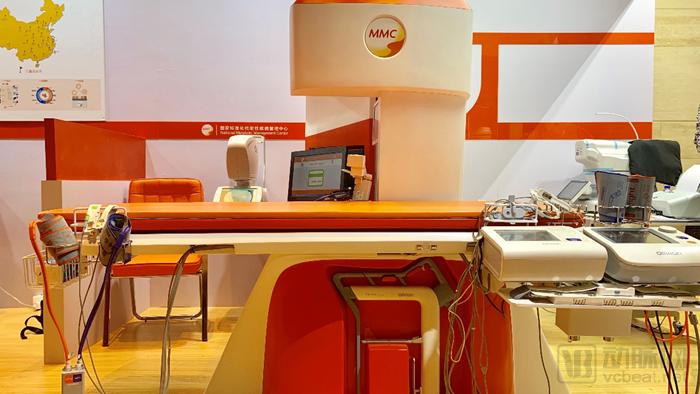
Metabolic Integrated SystemDisplay
Academician Ning Guang stated, “The mission of the MMC is to establish a diabetes prevention and control model across China characterized by ‘one center, one-stop service, and one standard.’ Patient-centered, the initiative continuously enhances service quality and efficiency with a focus on process optimization. It ensures that patients receive diagnosis and treatment according to a unified standard and enjoy one-stop services, regardless of whether they are at primary care hospitals or central hospitals. By building the MMC model, we aim to jointly create Chinese experience for global sharing.”
It is projected that by 2020, MMC will establish 1,000 centers across China, manage 10 million patients, and achieve the goals of reducing the incidence of diabetes by 1% and lowering complication rates by 10%.