

Beyond Meat IPO Prospectus Highlights: The Butterfly That Stirred the 'Artificial Meat' Hurricane
Like the butterfly that triggers a hurricane, Beyond Meat’s stock price has experienced significant volatility, reaching a high of $85.45 per share and currently closing at $66.22 per share, with a market capitalization of $3.861 billion. For a company with annual revenue under $100 million and ongoing losses, the boost from the “cultivated meat” concept speaks for itself.
The “artificial meat” storm continues to rage. Stock markets are diverging, and an increasing number of companies are entering the fray—a development that Beyond Meat, despite its recent IPO, could hardly have anticipated, particularly given the intense discussion, skepticism, and exploration of opportunities it has sparked across the Pacific.
Beyond Meat was founded by Ethan Brown, who was born in 1972. In the company’s IPO prospectus, he briefly recounted his upbringing and explained his motivation for establishing a food company focused on meat alternatives. As a child, Ethan Brown spent considerable time on a farm in western Maryland, where he enjoyed the companionship of peers, the livestock in the barns and fields, and the wildlife inhabiting the woods, streams, and ponds.
After completing his studies at Columbia Business School, Ethan Brown worked in the field of fuel cells, but he continually pondered, “How should we consume protein? Must it necessarily come from animals?” Research by environmentalists Robert Goodland and Jeff Anhang inspired Ethan Brown: greenhouse gas emissions from meat production and the slaughterhouse industry exceed those of any other sector. Humanity needs alternative meat products that are cleaner to produce and healthier to consume.
In 2009, Ethan Brown finally decided to seek answers. He founded Beyond Meat, which replicates animal protein from plant-based ingredients to create vegan meat alternatives, striving to reduce reliance on animal protein and mitigate the negative environmental impacts of its production.
In Ethan Brown’s view, meat is merely a combination of amino acids, lipids, trace minerals, vitamins, and water, which does not necessarily have to be sourced from animals. In other words, the core components of meat are not exclusive to animals and are also abundant in plants. Beyond Meat directly extracts these components from plants and “reconstructs” them according to the basic structure of animal meat.
Compared to the conventional production pathway of animal farming, slaughter, and meat processing, Ethan Brown believes that their production method is more humane and environmentally friendly, capable of reducing greenhouse gas emissions by 90%, water consumption by 99%, land use by 93%, and energy demand by 46%. Additionally, it offers a boon to animals by sparing them from slaughter.
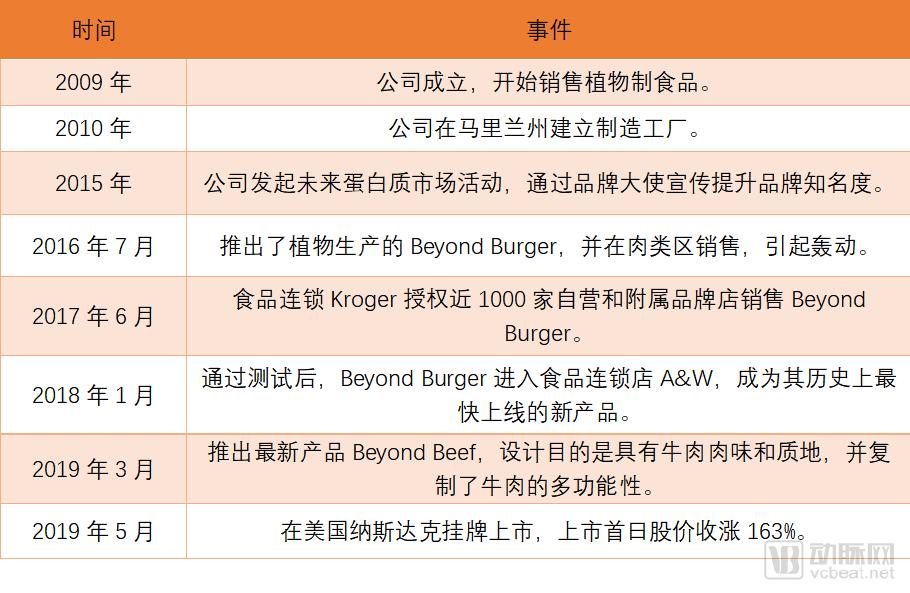
Beyond Meat’s History (Source: Guosheng Securities Research Institute, Beyond Meat Official Website)
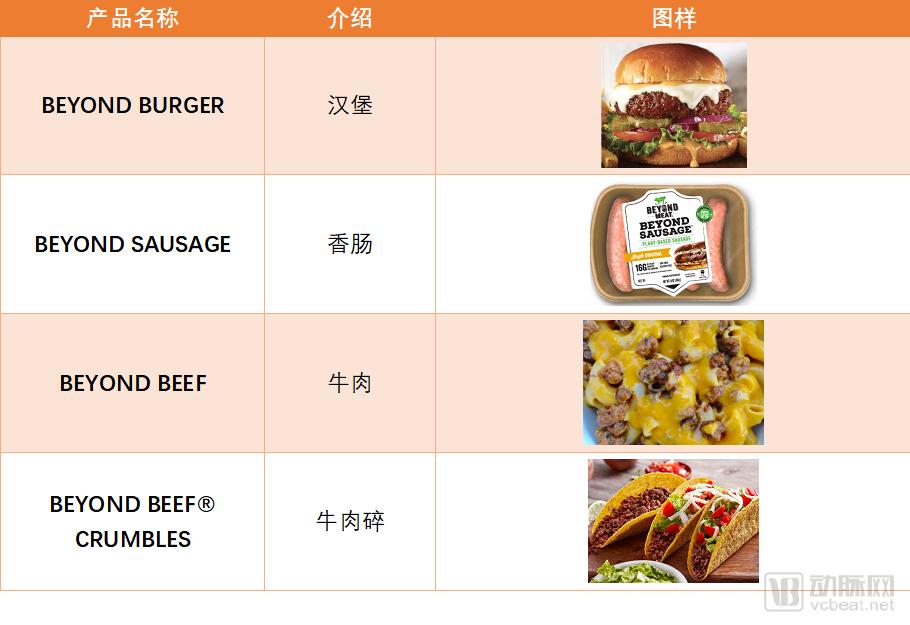
Beyond Meat Product Line (Source: Beyond Meat Official Website)
Beyond Meat’s product line is divided into two categories: “ready-to-eat” and “frozen.” The former includes burgers and sausages, while the latter comprises beef crumbles and chicken strips. Since the success of The Beyond Burger, Beyond Meat has established a strong presence among leading U.S. food retailers, such as Ahold, Kroger, Target, and Whole Foods Market. The Beyond Burger is currently available in approximately 11,000 restaurants and foodservice establishments.
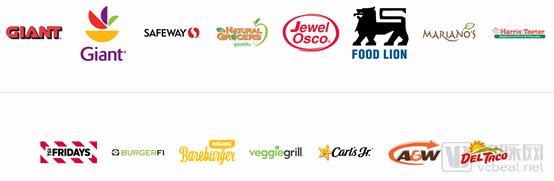
Beyond Meat’s Restaurant and Grocery Retail Coverage (Source: Beyond Meat Official Website)
Supermarket and hypermarket channels are Beyond Meat’s most important product sales channels. The annual report shows that in 2018, its top three channels were United Natural Foods (UNFI) at 38%, DOT Foods at 17%, and Sysco at 14%, collectively accounting for approximately 70% of procurement volume.
Beyond Meat’s sales revenue grew rapidly over the past three years, rising from $16.2 million in 2016 to $87.9 million in 2018. However, the company has consistently operated at a loss, with net losses of $25.1 million in 2016 and $29.9 million in 2018.
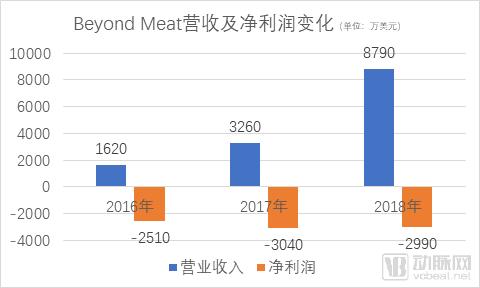
Data source: Beyond Meat prospectus
Beyond Meat has consistently prioritized research and development (R&D), with R&D expenditures totaling $5.8 million, $5.7 million, and $9.6 million over the past three years, respectively. As of September 29, 2018, the company employed 355 full-time staff members, including 233 in operations, 44 in innovation and R&D, 35 in sales and marketing, and 11 in finance.
Currently, Beyond Meat's pipeline includes:
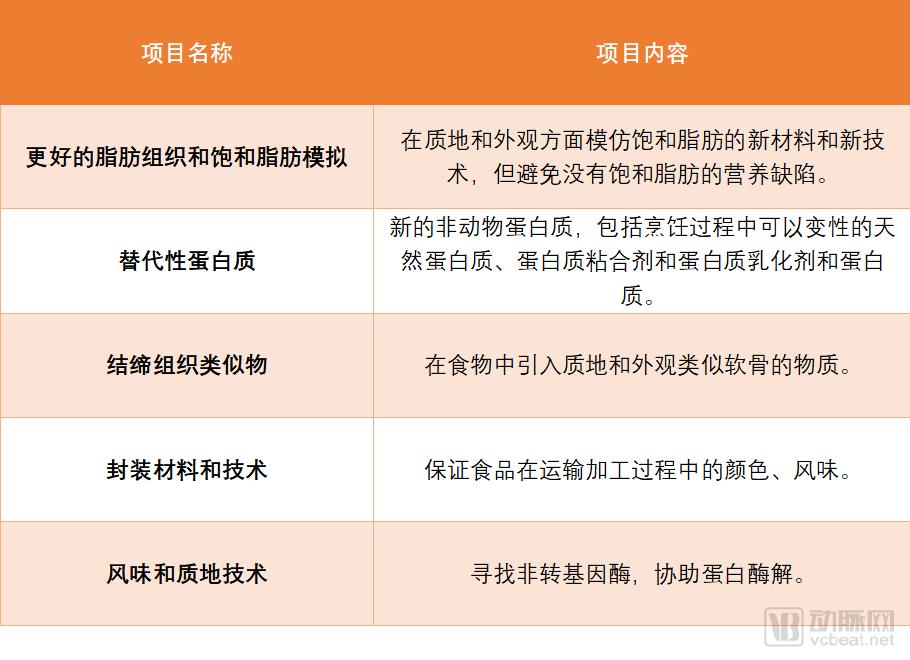
In its prospectus, Beyond Meat also disclosed details regarding its supply chain and production processes. The primary raw material used is yellow peas, with Roquette America Inc. serving as the largest supplier. Additionally, an unnamed Chinese supplier provides raw materials through a Canadian intermediary.
From a detailed production process perspective, first, a dry mixture containing pea protein is combined at Beyond Meat’s manufacturing facility. It then undergoes extrusion with the addition of water, and woven protein is obtained through methods such as heating, cooling, and pressure changes. Frozen woven protein serves as the base for all products, after which flavorings and other ingredients are added to form the final products for packaging and sale.
Beyond Meat believes that consumers’ growing awareness of the negative impacts of animal-based meat consumption on health, the environment, and animal welfare has led to a surge in demand for plant-based protein alternatives, with plant-based dairy products already accounting for approximately 13% of the overall dairy market.
The logic applies to the roughly $270 billion U.S. meat market, where plant-based meat alternatives are expected to capture a market share comparable to that of plant-based dairy products—a segment Beyond Meat estimates at $35 billion. As the market leader in plant-based meat, Beyond Meat is well-positioned to seize this opportunity.
In addition to Beyond Meat, Impossible Foods and Memphis Meats are also companies frequently mentioned in the “cultured meat” industry. In fact, more than ten companies in this sector have secured substantial financing. With varying technological approaches and product lines, they have attracted prominent business figures such as Bill Gates and Li Ka-shing, as well as investment institutions including Google Ventures and DFJ (Draper Fisher Jurvetson).
Across the broader food innovation landscape—including sectors such as plant-based milk, plant-based eggs, and vegetarian meal replacements—more than 30 companies have secured investment.
According to data from the agricultural investment firm AgFunder, the alternative food sector saw more than 70 investment deals in 2018, with total financing reaching $516 million. Although the funding amount decreased by 2% compared to the previous year, the number of transactions increased by 140%. In this sector, most alternative food companies and active venture capital firms are concentrated in the United States. Meanwhile, traditional food giants such as General Mills and Cargill have also made significant investments in this field.
Scanning Innovative Enterprises and Investment & Financing in the Food Industry
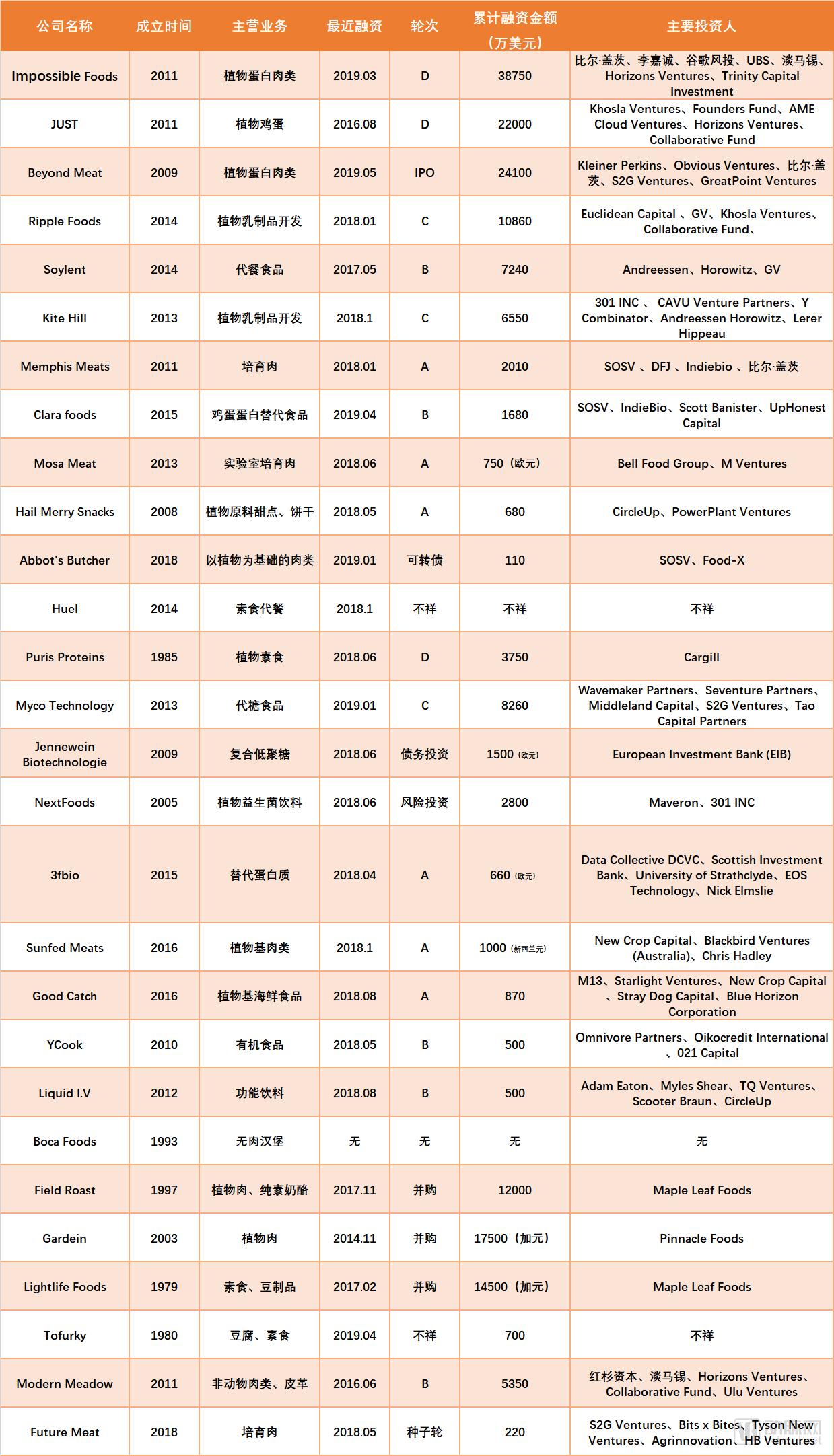
Data sources: Forbes, WSJ, Financial Times, Crunchbase, Guosheng Securities Research Institute, Tencent Finance, Beyond Meat Prospectus
Investment firms that have made multiple investments include Horizons Ventures, Collaborative Fund, SOSV, GV, IndieBio, and Bits x Bites, while traditional food giants have also acquired multiple targets in the food innovation sector.
Overall, the technological pathways for “cultured meat” can be broadly categorized into two types. The first is “plant-based meat” manufactured from plant proteins, amino acids, and other ingredients; the second involves extracting cells from live animals and then proliferating them in a culture medium. Representative companies in the former category include Beyond Meat and Impossible Foods, while the latter is being researched by companies such as Modern Meadow, Mosa Meat, and Memphis Meats.
Environmental friendliness, energy conservation, healthy diets, and sparing animals from slaughter are the most frequently cited advantages by “cultured meat” companies.
However, “artificial meat” also has a significant drawback: cost. Plant-based meat alternatives are slightly more expensive than conventional meat, with Beyond Meat and Impossible Foods pricing their patties at $12–$16 per pound, compared to around $9 per pound for ground beef in the United States. Moreover, economies of scale in livestock farming continue to drive down the price of conventional meat. While plant-based meat may capture some market share driven by curiosity and novelty-seeking behavior, it is unlikely to become an ideal choice for everyday consumption.
The cost of cell-cultured meat is even more exorbitant, reaching tens of thousands of dollars per pound, making large-scale production unfeasible in the near term. Data from Memphis Meats shows that in March 2017, the production cost for one pound of cultured meat was $9,000, and the company projected that by 2021, the price of lab-grown meat would drop to a level affordable for consumers.
Obtaining meat from cell proliferation evokes a chilling line of thought. If the primordial cells were derived from humans, would we be engaging in “cannibalism”? History recounts tales such as King Zhou of Shang boiling Boyikao to death and serving his flesh as stew to the Marquis of Xi (Ji Chang), and Yi Ya cooking his own son to present as porridge to Duke Huan of Qi. Once laboratory-cultured meat technology matures, the Marquis of Xi and Duke Huan of Qi will no longer be alone in their experiences.
Chinese people have a tradition of vegetarianism, which involves abstaining from meat and fish. As a result, there is a wide variety of meat substitutes in our diet, with soy products being the most common. These include various soy-based vegetarian foods, as well as “mock meats.”
China has long been engaged in research on “artificial meat.” In their 2003 academic article titled “Overview of the Production, Characteristics, and Applications of Soybean Protein Abroad,” Zhao Xinhuai and colleagues pointed out that soybean protein raw materials can form an insoluble solid matrix with a microporous structure after thermoplastic extrusion treatment, and this structure remains largely unchanged during subsequent processing. Furthermore, fibrous proteins produced from soy protein isolate can undergo a series of post-treatments to develop a physical structure similar to that of animal muscle, thereby becoming artificial meat in the true sense.
Texturized proteins provide the desired chewiness and elasticity, and can be processed into various shapes during production, such as granules, chunks, and slices. The primary applications of texturized soy protein include replacing animal protein in meat products (e.g., granular texturized protein) or mimicking meat products (chunky or fibrous texturized protein).
From an economic perspective, textured soy protein can replace approximately 30% of raw meat without compromising the quality of the final product. Furthermore, its high water- and fat-retention capacity contributes to improving the quality of high-fat food products.
We searched for the keyword “vegetarian” on e-commerce platforms and, sorting by sales volume, identified the following manufacturers and their representative products.
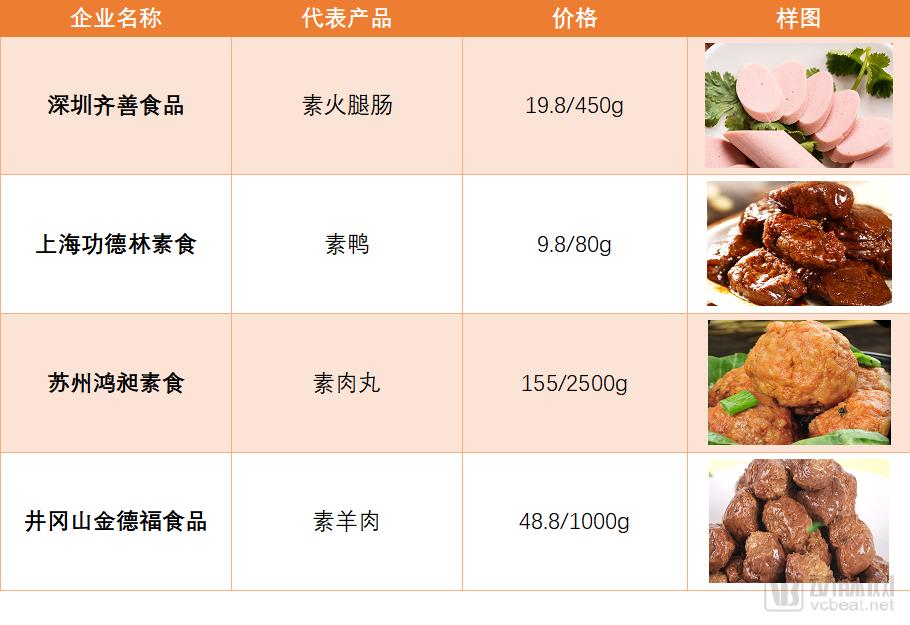
As can be seen, the variety of plant-based meat products in China is very rich, with appearances increasingly resembling real meat. These products are well-suited to Chinese cooking habits and are priced affordably.
The plant-based meat segment of the “artificial meat” industry chain primarily comprises soybean growers, processing and manufacturing enterprises, and distribution and wholesale companies. The recent surge in China’s A-share market has thoroughly capitalized on thematic stocks, including listed companies such as Shuangta Food, Dabeinong, Jinjian Cereals Industry, and Angel Yeast.
In the field of lab-grown meat, no domestic companies have been found to have made strategic investments. Several listed companies involved in the hype surrounding artificial meat have also issued announcements clarifying that they are not conducting research on "artificial meat."
As Haixin Foods pointed out: The company only uses a small amount of soy protein-based raw materials and does not produce “artificial meat” products. Its core business consists of frozen meat products, frozen fish products, and shelf-stable snack fish products, with no artificial meat offerings. Regarding the related products and technologies of Beyond Meat Inc. in the United States, the company currently has no reserves of talent or technology. Jiaoda Onlly also stated that it is not involved in the business of “plant-extract artificial meat” as reported by the media.
Market research firms remain optimistic about the prospects of the meat alternative market. According to a report by FAIRR, global annual sales of plant-based meat alternatives have grown at an average annual rate of 8% since 2010. Currently, this growth rate is approximately twice that of processed meat production, with annual sales reaching around $2 billion. By 2020, the plant-based meat market is projected to reach $5.2 billion. In the long term, it could account for one-third of the market by 2050.
Market Size of Plant-Based Meat Alternatives (Tofu, Plant Protein Products, etc.)
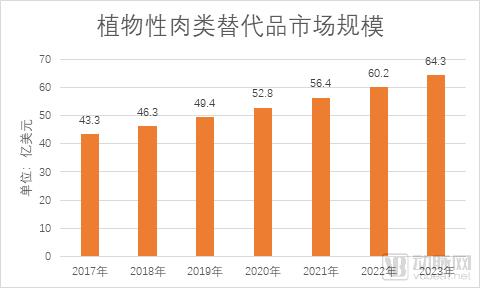
Data Source: MarketsandMarkets
Meat alternatives replace animal meat with plant-based protein products. Their largest consumer base consists of vegetarians, including those who follow vegetarian diets for religious or cultural reasons. The regions with the fastest-growing vegetarian populations globally include Nigeria, Pakistan, Indonesia, and the Philippines. Within the Chinese cultural sphere, vegetarianism is a significant feature of culinary traditions, regardless of whether consumers identify as vegetarians.
Driven by concerns such as environmental protection and healthy eating, an increasing number of people are turning to meat alternatives. Livestock farming contributes to greenhouse gas emissions and compromises the sustainable use of land, air, and water resources, whereas meat alternatives do not pose such risks. Derived from plant-based ingredients, meat alternatives avoid issues associated with animal rearing and slaughter, including the misuse of additives and bacterial contamination by common pathogens such as Escherichia coli and Salmonella.
Excessive meat consumption is often linked to cancer incidence. Despite the strong scientific evidence, this association continues to drive more people to choose meat alternatives. A 2016 study by the University of Oxford found that by 2050, a “healthy” diet (i.e., one with reduced meat intake) could prevent 5.1 million deaths globally each year. Meat-free protein products are no longer confined to a relatively narrow consumer segment or to vegetarians.
Plant-based beverages have also become a new market favorite, with soy and almond milk accounting for 10% of the entire dairy market. According to Euromonitor data, global sales of plant-based dairy alternatives more than doubled from 2009 to 2015, reaching $21 billion.
Transforming the human diet is no simple task. Whether it involves “cultivated meat” or plant-based dairy alternatives, technological maturity, cost, and commercialization capabilities remain obvious barriers. Moreover, traditional agriculture and food industry giants will inevitably adopt corresponding strategies in response to these emerging innovations.