

Fosun's Groundbreaking Health-Tech Entrepreneurship Camp, Favored by 'Peacock Plan' Talents, Files IPO Prospectus
"Liberal arts students are more emotional, while science students are more rational; liberal arts students rely on memorization, whereas science students depend on intuition. This kind of labeling was a significant source of fun during our student days."
After launching their startups, this cognitive pathway also shifts: founders with a technical background tend to prioritize data and focus on product development, while those from sales and marketing backgrounds place greater emphasis on resources and excel at leveraging connections.
What happens when you put tech-savvy entrepreneurs together with marketing-focused ones? Will they spark a chemical reaction?
Fosun’s Xing Weilai Capital is about to launch an initiative: establishing a startup incubator that brings together entrepreneurs from diverse backgrounds to build a “business + technology + healthcare” entrepreneurial community, turning entrepreneurship into a “course.”
The predecessor of Star Future Capital was the “Fosun Angel Investment Department,” established in 2015. It focuses on investing in early-stage and growth-stage projects in the healthcare sector, primarily covering four areas: biopharmaceuticals, medical devices, innovative services, and health tech. Currently, it manages nearly RMB 1 billion in assets and has participated in investments in more than 20 projects over the past few years.
According to Guan Tao, President of Star Future Capital, entrepreneurs with different backgrounds possess distinct characteristics. For instance, those with a marketing background tend to be more pragmatic, prioritizing corporate cash flow and sales operations; whereas those with a technical background are often more dedicated to technology and inclined to focus intensively on product development. Each group also has its respective shortcomings: the former may undervalue research and development (R&D), while the latter may face no issues during favorable capital market conditions but encounter constraints on corporate growth during a “capital winter.”
“The ideal scenario is for technical and market expertise to work in synergy and coordination, but it is difficult to find comprehensive, specialized talent. Therefore, we can enhance entrepreneurs’ overall capabilities through training and startup incubator programs,” said Guan Tao. This is also the original intention behind Xing Weilai’s establishment of its startup incubator program.
Entrepreneurs with technical backgrounds require greater attention. “Healthcare is a high-barrier, technology-driven industry, yet many individuals with technical expertise either refrain from launching startups or exhibit weaknesses in business acumen. We encourage technically trained entrepreneurs to overcome their apprehension toward commercial aspects and cultivate comprehensive capabilities, including understanding market trends, organizational structure, capital and finance, and commercialization,” Guan Tao told VCBeat. He noted that the backgrounds of healthcare entrepreneurs are becoming increasingly diversified, leading to stronger demand for startup incubation and supportive services.
Guan Tao is a seasoned investor in the healthcare and medical industry, with over ten years of experience in entrepreneurship and venture capital. He formerly served as Managing Partner and Investment Committee Member at Shenzhen Fenxiang Investment Management. His notable investments include Zhenyou Technology, Nanfang YinGu, Meinian Onehealth Healthcare, Pulirui, and Jicheng Medical.
Entrepreneurship training also has its “methodology.” For instance, Stanford’s Biodesign program brings together physicians, CEOs, and CTOs to facilitate mutual learning and exchange, thereby providing comprehensive experience in venture capital and entrepreneurship. Previously, while sharing insights on investment, Guan Tao also participated in organizing training programs for venture capital and entrepreneurship. After joining Star Future, he continued to apply these methods, with support from Fosun Group.
Compared with other investors, Fosun’s capital places greater emphasis on leveraging industrial resources. Fosun Group has extensive holdings in pharmaceuticals, healthcare services, and medical technology, boasting rich industrial resources that can generate significant synergies. This provides substantial support for the development of startups.
Star Future Institute is an incubation and investment platform focused on the broader healthcare sector, established by Star Future Capital with the support of Fosun Group and Fosun Pharma. It has pioneered a “community + incubation + investment” model to explore cutting-edge innovation, focus on entrepreneurial talent, and secure early-stage investments in future unicorns.
Chen Gong, founder of Shenzhen-based MileBot Robotics and a participant in the first cohort of the StarFuture Entrepreneurship Camp, told VCBeat that entrepreneurial training programs like StarFuture are essential, as they provide founders with comprehensive improvements in business, marketing, and interpersonal skills.
MaiBu Robotics targets the rehabilitation robotics market. Founded in 2016 by a team of overseas-returnee PhDs and seasoned robotics industry professionals, the company now employs over 50 people and has filed for or been granted 73 patents. Its product portfolio primarily consists of five models, including lower-limb rehabilitation exoskeleton robots, assistive exoskeleton robots, and navigation robots.
Chen Gong is a typical founder with a technical background. He earned his bachelor’s degree from the Department of Mechanical Engineering and Automation at Shanghai Jiao Tong University, and later completed his Ph.D. in Biomedical Engineering at the National University of Singapore. His doctoral research focused on rehabilitation exoskeleton robots and human-robot interaction using soft actuators. He subsequently conducted postdoctoral research on brain-controlled rehabilitation robotics. In 2017, he was recognized as an overseas high-level talent under Shenzhen’s “Peacock Plan.”
Against this backdrop of strong technical expertise, Chen Gong’s team also places significant emphasis on technology, regularly holding internal technical exchange sessions and prioritizing the individual technical growth of team members. Key approaches include “mentoring by senior staff, technical sharing sessions, and summarization of practical experience.”
“Founders with a technical background are rational, while those from sales backgrounds are emotional; the former rely on data and logic, remain relatively calm in the face of challenges, and prefer to solve problems through discussion and analysis, whereas the latter depend more on intuition, are driven by emotions, and demonstrate greater flexibility and speed when seizing market opportunities,” said Chen Gong. He noted that while such generalized perceptions and labeling approaches do exist for founders of different backgrounds, individual circumstances vary, and many outstanding entrepreneurs successfully integrate both modes of thinking.
“In our view, the most distinctive features of the entrepreneurship camp are its ‘practical approach’ and ‘groundedness,’ which can help address many challenges encountered by innovative startups during their actual development,” said Chen Gong. Taking MaiBu Robotics as an example, after several years of development, the company has now reached the stages of clinical validation, product approval, and market commercialization. As MaiBu’s team is primarily composed of technical professionals, there is still considerable work to be done in sales and marketing. Access to systematic experience and support could significantly boost the company’s growth.
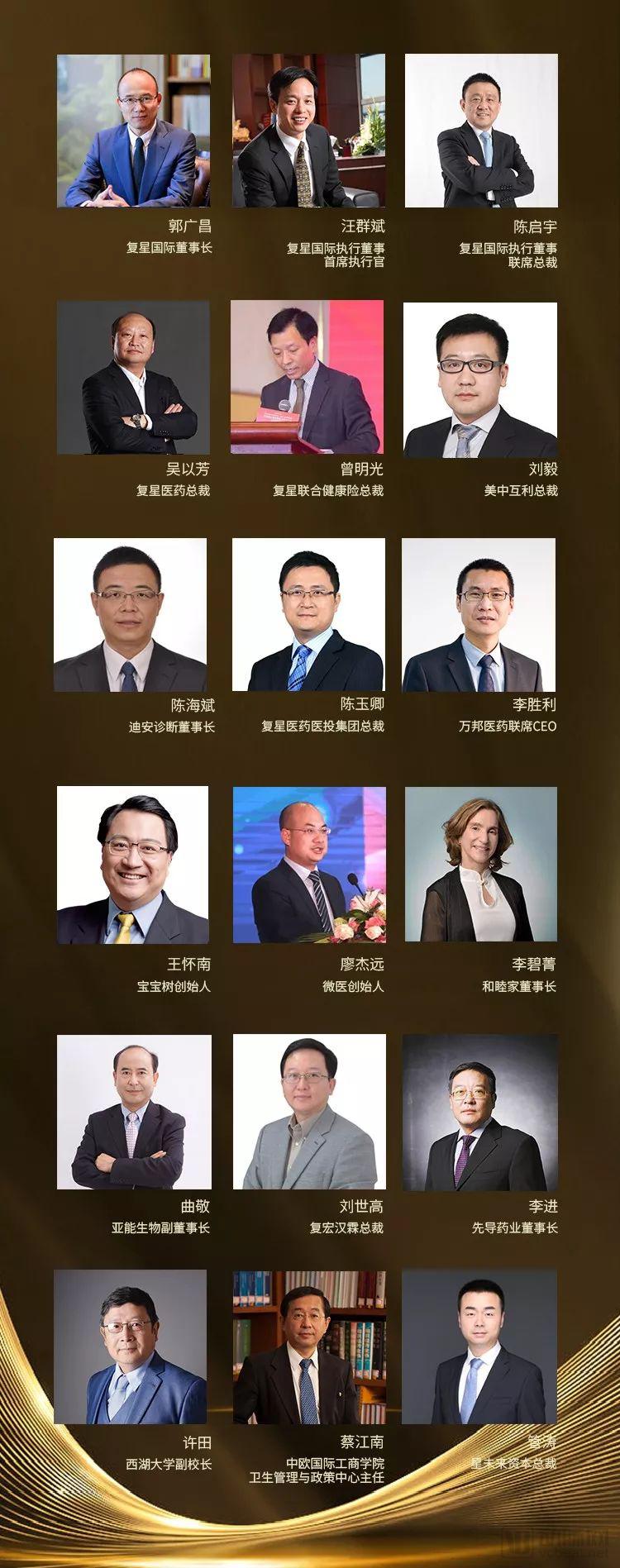
In light of this, a robust mentor team and curriculum system are key reasons why the Star Future Big Health Entrepreneurship Camp remains “grounded.” According to VCBeat, more than half of the camp’s instructors come from Fosun Group or its partner ecosystem, bringing extensive hands-on corporate experience and industry operational expertise.
Star Future Health & Wellness Entrepreneurship Camp Mentor Lineup
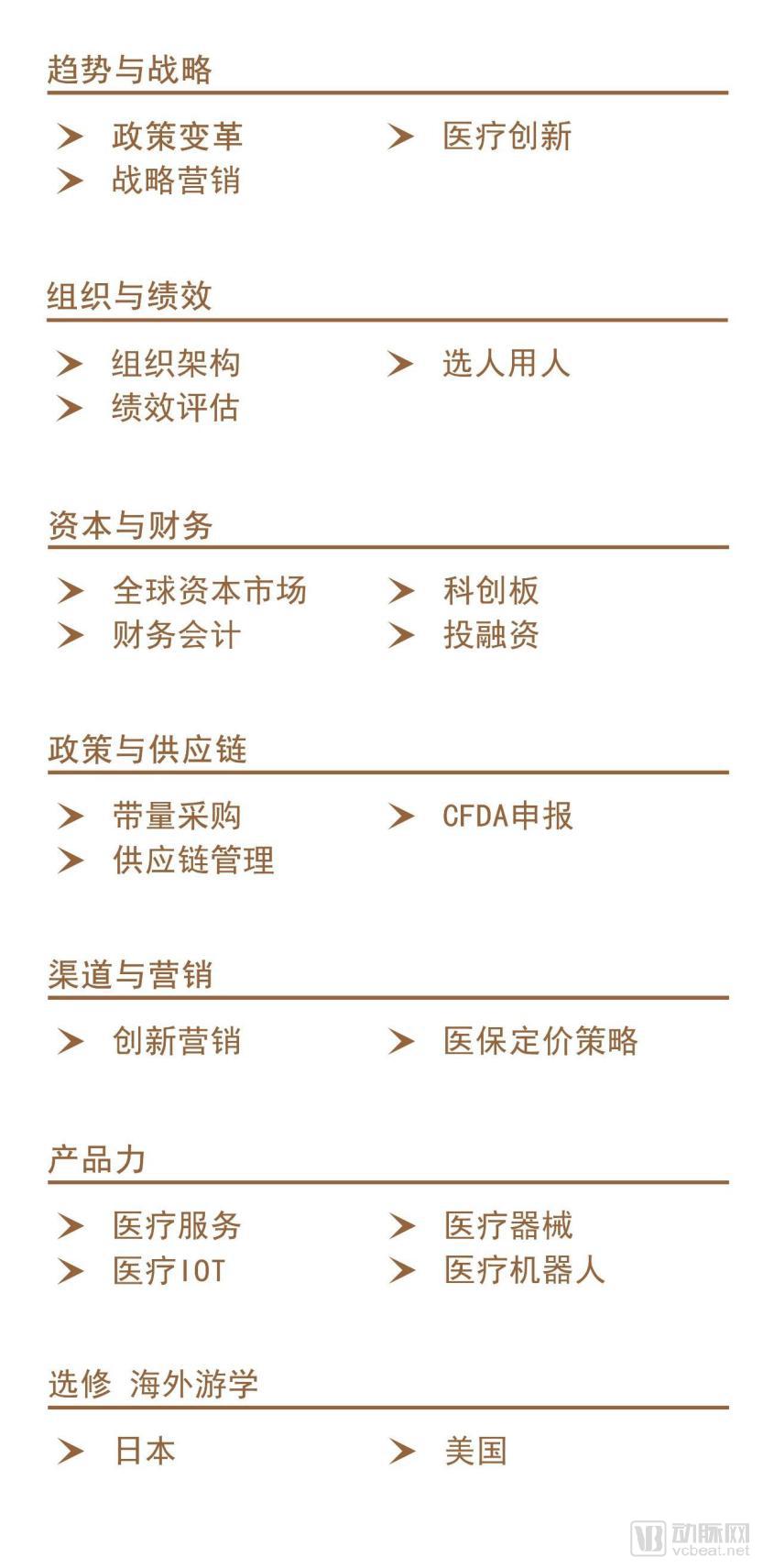
In terms of curriculum design, the entrepreneurship camp draws on the MBA course system, combining theoretical knowledge with practical insights. Key topics include industry trends and strategy, corporate organization and performance, capital and finance, among others.
Startup Camp Curriculum System
Fosun’s healthcare companies will provide key support to the Venture Camp program. More than 50 healthcare enterprises under the Fosun umbrella will open their doors to Venture Camp participants, facilitating in-depth communication and collaboration. Furthermore, the Venture Camp is fully open and not limited to internal Fosun entities; collaboration with external companies is also a core focus of the program.
“Fosun’s investment philosophy goes beyond mere capital allocation and financial returns; we are more inclined to invest in enterprises that can drive the development of the healthcare industry, supporting them to grow stronger and larger, even to the point of surpassing Fosun itself. Professional, multidisciplinary talent forms the foundation, and our entrepreneurship program serves as the ‘Whampoa Military Academy’ for the future of healthcare,” said Guan Tao.
▼ Click the link to register:http://u10016349.viewer.maka.im/k/THXNDDEE