

Link Smart Pharmacy Named One of 'Top 10 DTP Pharmacies of 2019' as Its DTP 3.0 Model Draws Industry Attention
The “2019 China DTP and Prescription Drug Retail Conference,” hosted by the China Pharmaceutical Material Association and organized by its DTP Branch and Saibailan, was held in Shanghai on May 9–10, 2019. Themed “Fusion · Rebirth,” the conference provided strong impetus for building an aggregated platform for DTP and prescription drug retail, promoting effective integration across all sectors, including pharmaceutical companies, products, distribution channels, terminals, tools, services, and government-enterprise relations.
At the conference, the “Top 10 DTP Pharmacies of 2019” were prominently announced, with Linke Smart Pharmacy successfully selected. From being listed among the “Top 5 DTP Pharmacies” in VCBeat’s “Future Healthcare 100,” to recently making the “Top 100 Potential Pharmacies” on the “2018–2019 China Pharmacy Value List,” and now earning a spot among the “Top 10 DTP Pharmacies of 2019,” Linke Smart Pharmacy has consecutively gained industry recognition, firmly establishing itself as a leader in the DTP brick-and-mortar sector.
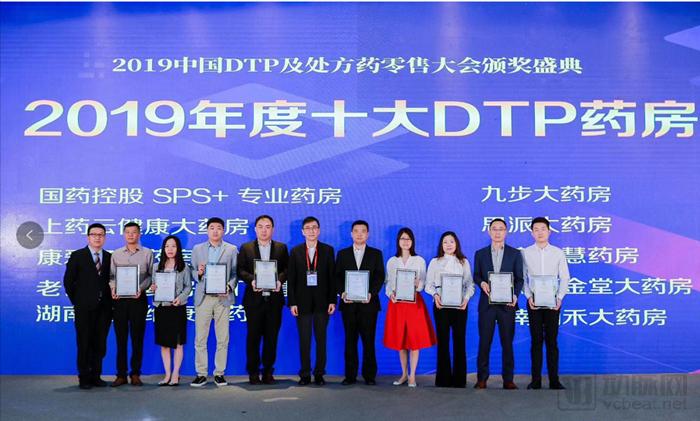
As a representative of innovative DTP pharmacies, Mr. Zhu Zhidong, General Manager of the Marketing Department at Linker Smart Pharmacy, delivered a keynote speech titled “DTP Pharmacies Based on Patient Big Data” to nearly 1,000 attendees at the invitation of the organizers.
Policies Continue to Drive Growth, Out-of-Hospital Market Gains Favor
From 2016 to 2018, multiple policy documents issued by the State Council and the National Health Commission mentioned the outflow of prescriptions. To date, 18 provinces, including Guangdong, Jiangsu, Zhejiang, Sichuan, Shandong, and Liaoning, have released implementation policies to actively develop “Internet + Healthcare” and promote prescription outflow.
Amid the substantial market expectations driven by the outflow of prescriptions, many well-known enterprises are actively strategizing and positioning themselves: pharmaceutical manufacturers, pharmaceutical distributors, retail pharmacies, DTP (Direct-to-Patient) pharmacies, hospital-adjacent stores, pharmaceutical e-commerce platforms, prescription circulation platform companies, technical service providers, and internet healthcare companies, all of which have entered this space.
Coupled with the implementation of the "4+7" volume-based procurement program, the traditional agency and medical representative models for pharmaceutical marketing have suffered severe setbacks under the new bidding and procurement system, leading to a significant decline in the hospital entry prices of prescription drugs. In addition to many pharmaceutical products failing to win bids, some pharmaceutical companies may also choose to voluntarily withdraw their bids after comprehensively evaluating policy, cost, and revenue factors. Prescription drugs that fail to win bids or are voluntarily withdrawn will shift towards expanding into the out-of-hospital market, which will significantly accelerate the outflow of prescriptions from hospitals.
It is evident that, against the backdrop of significantly enhanced innovation capabilities among domestic biopharmaceutical companies and the increasingly frequent introduction of international products, the only viable pathway for new and specialized drugs lies outside hospital settings.
Medical Big Data Fuels the Development of DTP in the 3.0 Era
The industry trend has become clear: prescription outflow is gaining momentum, channel terminals are undergoing transformation, the industrial chain is being revitalized, and pharmaceutical companies are breaking through to achieve rebirth. The traditional dual-channel model of hospitals and pharmacies for pharmaceutical companies is gradually moving towards integration. DTP (Direct-to-Patient) and prescription drug retail are entering the historical stage with a new posture.
It can be said that since DTP pharmacies entered China’s pharmaceutical retail market, the current period represents the “golden age” of DTP development.
Ping An Securities’ research report points out that DTP pharmacies are not merely simple channel endpoints, but rather platform-based entities connecting pharmaceutical companies, hospitals, and patients. They emphasize meeting the needs of pharmaceutical companies for promoting innovative drugs and collecting data; enabling hospitals to accommodate outpatient prescription outflows and assume medication management responsibilities; and allowing patients to conveniently access professional pharmaceutical products while receiving expert medication guidance services.
Linker·Smart Pharmacy is a typical representative of DTP 3.0-era pharmacies, which serve pharmaceutical companies, fulfill hospital prescriptions, and meet patients’ needs for pharmaceutical care services. It is reported that this model differs significantly from the Retail Pharmacy 1.0 era, characterized by undifferentiated drug sales, and the conventional DTP 2.0 era, which combined drug sales with general specialized medical guidance. The DTP 3.0 era focuses on providing patients with personalized, full-cycle, one-stop health management services.
Supported by LinkDoc’s medical big data and clinical expertise, Linker Smart Pharmacy delivers greater interactive value to patients, pharmaceutical companies, and hospitals. This distinguishes it from traditional DTP pharmacies and embodies the significance of the DTP 3.0 era, characterized by “dual-driven medical and patient education, with data empowering new retail.”
Zhu Zhidong stated that leveraging medical big data technology to help pharmaceutical companies and patients seek out-of-hospital solutions must be premised on ensuring data security and patient privacy, with the goal of recognizing and building a new healthcare ecosystem that is “value-based and patient-centric.” Furthermore, the ultimate outcome of applying medical big data in DTP (Direct-to-Patient) pharmacies should be to ensure that every patient receives proper medical care, uses the right medications, and can afford the costs. From initial pharmacy site selection to operational service support, Linke Smart Pharmacy has always taken patient needs as its starting point.
Leveraging LinkDoc Technology’s in-depth collaborations with numerous major pharmaceutical companies and top-tier hospitals both domestically and internationally, as well as the platform connectivity capabilities of Yinchuan LinkDoc Internet Hospital, Linke Smart Pharmacy has systematically analyzed patients’ varying needs across the disease combat phase, repair or progression phase, and recovery phase. The company has developed a patient management system with independent intellectual property rights. Recognizing that patients differ in disease severity, classification, and staging, the platform identifies key information such as treatment and medication regimens, disease control status, and medication discontinuation or switching. It then delivers personalized, precision educational content to patients through structured data pushes, including disease-related knowledge, guidance on managing medications and adverse reactions, and recommendations for the latest diagnostic tests.
Personalized disease-related content delivery for high-risk populations, recommendations for high-quality consultations, referrals, and authoritative treatment plans, as well as standardized online diagnosis and treatment coupled with medication tracking and medication safety monitoring. Meanwhile, Linke Smart Pharmacy places particular emphasis on patient follow-up. Unlike traditional DTP (Direct-to-Patient) pharmacies, where follow-ups are conducted by store managers or pharmacists, Linke’s follow-up services are carried out by LinkDoc Technology’s professional follow-up team. These services are tailored to different diseases and patient groups, adhering to specific follow-up models and protocols. Furthermore, the entire follow-up process is subject to quality control by a professional medical team to ensure scientific rigor and precision.