

Medlinker Files IPO Prospectus Highlighting Patient-Centric Internet Hospital Model Enhancing Healthcare Accessibility in Underserved Regions
On May 11, the 2019 International Forum on Leadership in Medical Science and Technology Innovation was held in Chengdu High-Tech Zone. The forum was hosted by the Chinese Academy of Medical Sciences & Peking Union Medical College, the Journal of the American Medical Association (JAMA), the Sichuan Medical Association, West China Hospital of Sichuan University, and Sichuan Provincial People’s Hospital (Sichuan Academy of Medical Sciences). It was co-organized by the Training Center of Peking Union Medical College and Medlinker, with support from the Chengdu High-Tech Industrial Development Zone.
As a key component of the forum, the Healthcare Industry Sub-Forum—held concurrently with the First Health New Economy Conference of Chengdu High-Tech Zone—took place on the afternoon of the same day. Li Yue, Vice President of Medlinker, delivered a keynote speech titled “Internet Hospitals Partnering with Public Welfare to Enhance Accessibility of Medical Services.”
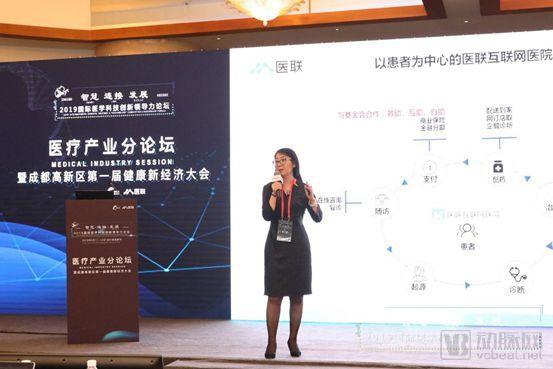
Li Yue, Vice President of Medlinker
Addressing the current realities in China, such as poverty caused or exacerbated by illness and the uneven distribution of medical resources, Li Yue stated that the innovative model of internet hospitals is widely favored by the industry. Its emergence serves as an extension of offline medical services, transferring the trust-based doctor-patient relationship to the online realm and enhancing diagnostic and treatment efficiency. After physicians complete the initial in-person consultation, their medical management services for patients can be extended beyond the hospital via the internet. This allows doctors to improve the efficiency of medical services and patient management, while enabling patients to communicate with their doctors at any time, avoiding the burdens of travel and facilitating convenient access to medication for those in need.
Medlink Internet Hospital covers many remote areas. Li Yue cited the example of Xinjiang, where patients can also receive standardized care, rational treatment plans, and the best therapeutic medications from physicians. This embodies healthcare equity, helping to narrow regional disparities more rapidly and ensuring that patients in different regions benefit from inclusive and convenient services.
Medlink initially launched an internet hospital specializing in liver diseases. While hepatitis C is curable, greater efforts in hepatitis B have focused on covering disease management and control throughout the patient’s lifecycle. Li Yue stated that not every hepatitis B patient clearly understands how to reduce the risk of liver cancer while undergoing treatment. Medlink Internet Hospital addresses this by providing patients with education along with a small tool for liver cancer screening, encouraging them to adhere to medical advice and persist with treatment to lower the risk of developing liver cancer. Even if a patient unfortunately develops liver cancer, we provide them with an insurance policy. This tripartite collaboration among medicine, healthcare, and insurance expands the effectiveness of the internet hospital.
Based on this, Medlinker Internet Hospital and the China Primary Health Care Foundation jointly established the first public welfare fund for internet hospitals in China. Li Yue believes that the establishment of this fund reflects Medlinker’s commitment to corporate social responsibility in collaboration with social public welfare organizations, and helps promote the development of industry standards for internet hospitals. From disease screening to physician education, this public welfare fund provides corresponding support and services. For physicians, it offers academic support to facilitate professional learning among primary care doctors and promote standardized treatment. For patients, it leverages the advantages of the internet to launch public welfare initiatives such as financial aid and mutual assistance, helping more patients effectively reduce their economic burden and thereby delivering greater value to society.
Finally, Li Yue emphasized that Medlinker aims to promote the training of grassroots medical talent through its internet hospital and industry resources. The emergence of more medical professionals means that more Chinese patients can benefit, which aligns with Medlinker’s longstanding vision of making healthcare “more professional, more efficient, and more convenient, thereby benefiting the public.”