

GE Healthcare Unveils 21 Innovative Solutions to Advance Smart Hospitals and Tiered Diagnosis Systems
May 14, 2019, Shanghai—At the 81st China International Medical Equipment Fair (Spring), GE Healthcare unveiled 21 high-value flagship new products and intelligent innovative solutions, coveringIntelligent Medical Imaging Equipment, Digital Applications and Services, High-End Hybrid Operating Rooms, Smart Critical Care, Mobile Diagnosticsand many other fields.
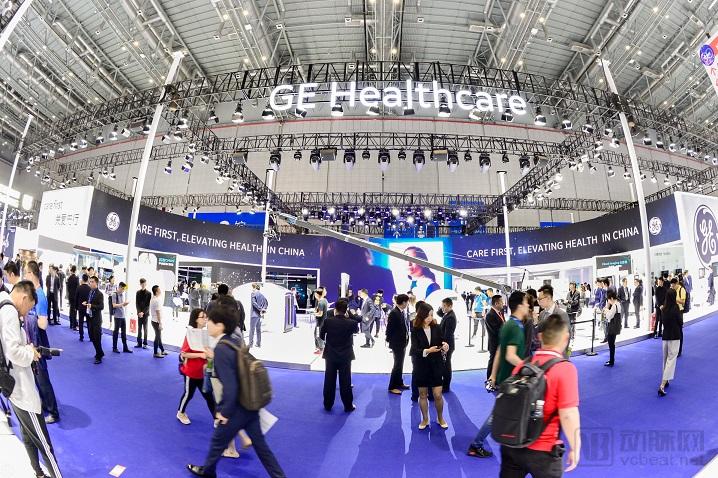
“Amid global trends in healthcare transformation, GE Healthcare remains at the forefront of the industry, leveraging its extensive operational expertise and global resource base to advance the implementation of personalized precision medicine. We are also focused on building localized global capabilities to meet the market demands of different regions. In China specifically, driven by a deep understanding of local market needs and a steadfast commitment to care, GE Healthcare continues to cultivate a fertile ground for technological and digital innovation, accelerates its own digital transformation, collaborates with industry partners to build a precision medicine ecosystem, and fully supports China’s transition toward smart healthcare services and the implementation of tiered diagnosis and treatment,” said Duan Xiaoying, Senior Vice President of GE Global, President and CEO of GE International Operations.
Digital Innovation Drives the Smart Transformation of Healthcare Services
Focusing on three key digital output areas—clinical diagnosis, asset management, and hospital construction—GE Healthcare launched its latest APM Asset Cloud Manager, Cloud ECG Solution, Cloud Imaging Solution, and Cardiac MRI Solution with integrated AI-assisted features at this CMEF. These innovations aim to enhance the efficiency and accessibility of medical services and accelerate the smart upgrade of healthcare delivery in China.
Cloud ECG Solution is a digital, integrated electrocardiogram solution based on cloud ECG architecture. It enables the establishment of regional ECG networks between tertiary hospitals and primary care facilities, facilitating high-precision data acquisition and integrated transmission. Leveraging internet-based big data and artificial intelligence algorithms for assisted analysis and diagnosis, the solution transmits expert diagnostic reports from remote Cloud ECG consultation centers back to primary Cloud ECG collection points. This allows patients to access high-quality diagnostic services from major Grade A tertiary hospitals locally, thereby supporting the improvement of county-centered comprehensive primary healthcare service systems and achieving the phased goal of tiered diagnosis and treatment where “major diseases are treated within the county.”
It is reported that Dalian Zhuanghe Hospital officially introduced GE Healthcare’s Cloud ECG Solution in June 2017, deploying specialized systems for ECG examination, monitoring, and data analysis to support the daily operations of its remote ECG consultation platform.
Leveraging GE Healthcare’s Cloud ECG Solution, the hospital has achieved one-click transmission of routine electrocardiogram (ECG) data. This user-friendly system simplifies operations for primary care physicians and facilitates seamless data transfer, enabling specialists at tertiary hospitals to access ECG data and provide routine diagnoses within five minutes. Furthermore, specialists can continuously monitor changes in patients’ ECGs, guiding primary care physicians in delivering appropriate rehabilitation treatments. By integrating grassroots training with patient follow-up, the hospital has significantly enhanced both diagnostic efficiency and service capacity.
By the end of 2018, the remote ECG consultation platform was operating normally, having performed nearly 30,000 remote ECG diagnoses for 24,000 patients. On average, it assisted primary care hospitals in treating 3–4 STEMI (ST-segment elevation myocardial infarction) patients per month. The hospital’s PCI procedure volume tripled within two years, and the rate of cardiovascular patient referrals to external facilities decreased from 17% in 2016 to 7%. In 2018 alone, nearly RMB 5 million was saved in medical insurance and rural cooperative medical scheme funds.
Chen Jinlei, Vice President of GE Healthcare China, stated, “The goal is to complete more pilot projects within the year, ensuring that the 290 million patients with cardiovascular disease can access high-quality medical services from specialists at major hospitals. Meanwhile, by integrating AI-based ECG predictive capabilities, we aim to reduce physicians’ repetitive tasks and enhance diagnostic and treatment efficiency. Primary care physicians will be able to conduct ECG follow-ups and provide treatment during the prognostic recovery phase under the guidance of tertiary referral hospitals, thereby strengthening primary care diagnostic and treatment capabilities.”
As GE Healthcare’s first digital initiative implemented in China, APM Asset Cloud Manager is a comprehensive intelligent management and optimization solution for medical equipment, customized by the Chinese team to meet local needs. The latest version showcased this year integrates modules such as the “Radiology Command Center” and “Equipment Management and Allocation Platform,” further addressing the needs of hospitals at all levels for medical quality control, operational cost containment, and efficiency improvement. In the future, APM Asset Cloud Manager will evolve into a more open ecosystem platform to support and integrate other equipment management applications, safeguarding data management for smart hospitals and government entities.
Meanwhile, to further optimize the allocation of high-quality medical resources, hospitals at all levels will primarily share medical resources via cloud-based platforms in the future. Leveraging the newly upgraded cloud imaging solution, medical images can be viewed, processed, and shared on the cloud in real time, enabling collaborative image interpretation with external experts and facilitating multidisciplinary consultations. This approach also reduces redundant patient examinations, improves diagnostic efficiency and accuracy, and supports resource coordination among primary healthcare institutions, private healthcare groups, or medical consortia, thereby enabling cross-regional and cross-campus professional diagnostic assistance.
Notably, the Cardio MR AI solution, an artificial intelligence-assisted diagnostic system for cardiac magnetic resonance imaging (MRI) leveraging cloud-based computing capabilities and already approved by the U.S. Food and Drug Administration (FDA), builds upon GE’s MRI technology. It enables comprehensive signal acquisition of the entire heart and thorax during free breathing, without the need for breath-holding, thereby achieving whole-thorax visualization and quantitative analysis. This approach provides a more intuitive depiction of cardiac morphology and structure, while its robust cloud-based post-processing computational power delivers results in real time. By assisting physicians with quantitative analysis, the system empowers clinical practice with efficient, high-quality diagnosis and treatment. It offers particular advantages in research on valvular heart disease and congenital heart disease.
Currently, this solution has been implemented and applied at multiple hospitals, including Fuwai Hospital of the Chinese Academy of Medical Sciences, Beijing Anzhen Hospital, and the Shanghai Children's Medical Center affiliated with Shanghai Jiao Tong University.
Technological Innovation Drives Personalized Precision Diagnosis and Treatment
As a global leader in medical technology innovation, GE Healthcare China, driven by its patient-care philosophy, has launched a range of new imaging equipment at this year’s CMEF by integrating specialized, segmented high-end medical devices and software algorithms with advanced applications such as image post-processing.
Including the world’s first cardiovascular-dedicated CT system, CardioGraphe; the high-end SIGNA™ Architect 3.0T MRI, equipped with industry-first air coils and intelligent sensing platform technology; the INTERACT Angio-CT Suite, an integrated intraoperative imaging platform focused on surgical intervention and management of solid tumors; and the hybrid operating room solution 7OR. These innovations are deeply aligned with clinical needs to meet the healthcare industry’s demands for more precise, efficient, and safe diagnosis and treatment.
For over a century, GE HealthCare has been dedicated to innovation in medical imaging. In recent years, it has consistently leveraged intelligent innovations in medical imaging equipment to provide powerful tools for clinical practice, early disease detection, and precise diagnosis. Showcased at this event are the AIR Technology Platform and the new high-end 3.0T SIGNA™ Architect MRI system equipped with intelligent sensing technology. These innovations introduce a technological transformation at the source of coil signal acquisition by adopting GE’s proprietary fiber-optic loop structure. This design not only makes the coils as light as a blanket, significantly improving the examination experience, but also enables broader and more effective signal acquisition, thereby achieving a higher image signal-to-noise ratio right from the acquisition source.
Regarding GE’s innovation challenges, Dai Ying, Chief Innovation Officer of GE Healthcare China, believes: First, it is essential to avoid being constrained by conventional thinking. Innovation entails disrupting the status quo and transcending previously accumulated experience. Many objectives do not necessarily need to be achieved through past models. Teams must find ways to think outside the box and explore new paradigms.
Second, for large enterprises, the challenge lies in their iteration speed. Innovation requires iteration in the market, which means continuously seeking market feedback on innovative efforts. As companies grow larger and teams expand, processes become increasingly complex. It is impossible to achieve biweekly iterations as small startups do, posing a significant challenge for us.
SIGNA™ Pioneer 3.0T: Case Study at The First Affiliated Hospital of Sun Yat-sen University
Founded in 1910, The First Affiliated Hospital of Sun Yat-sen University (hereinafter referred to as "the First Affiliated Hospital") has endured a century of trials and tribulations. While successfully diagnosing and treating numerous critical, complex, and rare cases, it has also filled many gaps in China’s medical field. It has now developed into one of the largest and most comprehensively powerful Grade A tertiary hospitals in China, serving as a key base in South China that integrates medical care, teaching, scientific research, preventive healthcare, and rehabilitation.
Headquartered in Guangdong, serving South China, and renowned across Southeast Asia for its “excellence in both medical expertise and ethical practice”—thanks to The First Affiliated Hospital of Sun Yat-sen University’s outstanding comprehensive diagnostic and therapeutic capabilities, the number of patients seeking care has continued to rise, with annual outpatient and emergency visits surpassing 4.9 million and a bed occupancy rate exceeding 95%. The steadily growing demand for diagnostic and treatment services not only underscores the hospital’s strong reputation but also poses significant challenges to its operational and clinical efficiency.
As a regional authority, The First Affiliated Hospital of Sun Yat-sen University naturally adheres to higher standards for imaging examinations and diagnostic information, with magnetic resonance imaging (MRI) being a prime example. In the case of routine knee MRI, standard protocols typically include four sequences: T1-weighted, T2-weighted/T2 fat-suppressed, axial, and coronal scans. In addition to these four standard sequences, The First Affiliated Hospital of Sun Yat-sen University also requires additional sequences, such as coronal T2-weighted plus T2 fat-suppressed scans and 3D multi-gradient echo scans, to obtain comprehensive diagnostic information from multiple angles and ensure precise diagnosis.
In the current reality of ever-increasing patient volumes and growing demand for examinations, such high standards and stringent requirements pose significant challenges to the processing speed, workflow efficiency, and image quality of MRI equipment.
The dilemma between quantity and quality has become a pressing concern for Li Ziping, Director of the Department of Radiology at The First Affiliated Hospital of Sun Yat-sen University. He admitted, “Although our hospital is equipped with five MRI scanners, even under the condition of operating around the clock from 7 a.m. to midnight and completing 250 scans per day, the average waiting time for inpatients remains five days, while outpatient appointments for MRI examinations can exceed one month. How to increase patient throughput, further optimize and accelerate the examination and reporting processes through advanced MRI technology, and thereby enhance diagnostic efficiency, is a practical challenge we are currently facing.”
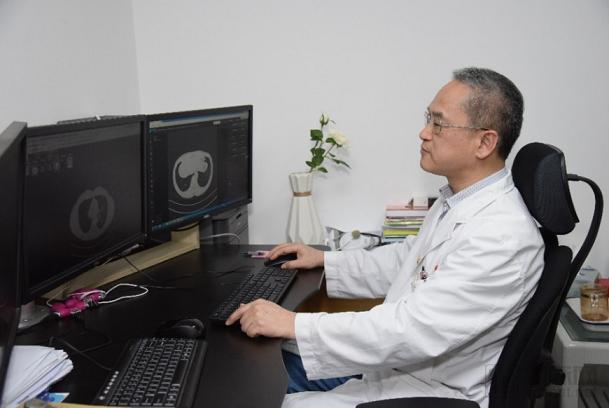
In 2019, The First Affiliated Hospital of Sun Yat-sen University newly installed GE Healthcare’s high-end SIGNA™ Pioneer 3.0T magnetic resonance imaging (MRI) system. Given the hospital’s large patient volume and stringent requirements for image quality, GE Healthcare extended an invitation to participate in its “Hundred Patients, Thousand Miles Victory: SIGNA™ Pioneer Ultra-Sense Pioneer Series Challenge” (hereinafter referred to as the “Hundred-Patient Challenge”). Leveraging the advantages of the SIGNA™ Pioneer 3.0T MRI system in scanning speed and imaging quality, the challenge aimed to perform as many routine and contrast-enhanced MRI scans as possible within a single day, through close collaboration among GE Healthcare’s training experts, on-site engineers, radiologic technologists, physicians, and nurses.
The challenge initiative is grounded in pragmatism yet holds profound value—by implementing practical operational measures, it aims to shatter the conventional assumption that MRI scanners can only perform 40–50 examinations per day. Simultaneously, it seeks to identify optimized solutions for MRI examination workflows and standards, thereby paving a viable path to reduce patient wait and scan times and unlock the operational potential of imaging departments and hospitals.
To ensure the smooth execution of the challenge, Director Li led his team in collaborating with GE Healthcare’s training team to carry out rigorous and comprehensive preparatory work:
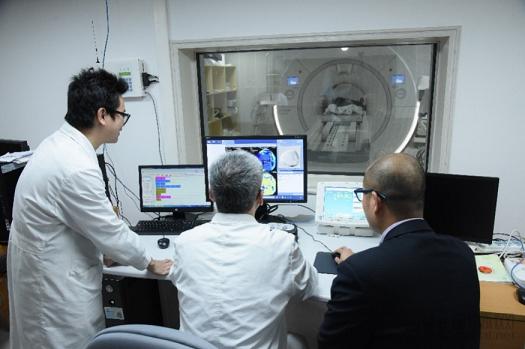
First, under the guidance of instructors from GE’s Training Department, radiologic technologists and radiologists underwent a 10-day “intensive training” program that included nearly 1,000 adjustments to scanning sequences and parameters.
Secondly, patients scheduled for scanning on the day were systematically categorized based on the scanning requirements of different anatomical regions. Under the leadership of Director Li and the Chief Technologist, comprehensive contingency planning and deployment were implemented to address potential emergencies, covering aspects such as patient transport, positioning, and the availability of emergency equipment. Until the day before the challenge, GE Healthcare’s training specialists worked closely with the department’s physicians and technologists to fine-tune more than 2,000 parameters involved in the challenge, ensuring they met the hospital’s image quality standards.
Leveraging the powerful “assist” of the Pioneer 3.0T scanner, along with the seamless collaboration among radiologists, technologists, nurses, and the GE Healthcare training team, the Department of Radiology at Zhongshan Hospital completed scans for a full day’s scheduled patients four hours ahead of schedule on the challenge day, from 8:00 AM to 9:00 PM. This included 80 non-contrast and 24 contrast-enhanced examinations, totaling 104 billable procedures.
The SIGNA™ Pioneer 3.0T, a key contributor to the successful challenge, delivered impressive results in both scanning speed and image quality.
Director Li stated, “The challenge has allowed us to witness enhancements in the inherent capabilities and technology of the equipment, as well as the potential for further increasing patient scanning throughput. We are confident that continued optimization of patient transport, examination, and reporting workflows will not only ensure the quality of images and reports but also boost throughput and improve diagnostic and treatment efficiency.”

Scan the QR code to enter the live stream, or click the live stream link:https://live.polyv.cn/splash/308186