

Peking University People's Hospital Launches China's First Smart Post-Visit Service Management System in a Tertiary Hospital
VCBeat (WeChat ID: vcbeat) has learned that on May 15, Peking University People’s Hospital (hereinafter referred to as “PKU People’s Hospital”) became the first in China to establish a smart post-consultation service management system. By providing convenient, safe, and accessible smart services, the hospital aims to address patients’ need for hospital visits solely for medication refills and enhance the quality of post-consultation medical care.
“At present, smart healthcare services have optimized medical processes during the pre-consultation and consultation phases, but significant inconveniences remain in post-consultation patient management,” stated Zhang Jun, Vice President of Peking University People’s Hospital. “As a medical institution bearing social responsibility, Peking University People’s Hospital is obligated to actively explore national policies on the development of ‘Internet + Healthcare.’ By establishing a post-consultation management system, we aim to enhance intelligent and convenient services for patients, including follow-up visits, remote monitoring, prescription renewals, and medication management.”
In the future, Peking University People’s Hospital will continue to explore and practice smart hospital services, setting a benchmark for the development of such services in hospitals across China by streamlining and reengineering the entire informatics-driven medical care process.
Since 2017, when the General Office of the State Council issued the Key Tasks for Deepening the Reform of the Medical and Healthcare System in 2016, it has been emphasized that various measures should be adopted to promote the separation of prescribing and dispensing. Hospitals are prohibited from restricting the outflow of prescriptions, allowing patients to freely choose whether to purchase medications at hospital outpatient pharmacies or at retail pharmacies with a prescription. In 2018, the General Office of the State Council released the Opinions on Promoting the Development of “Internet + Healthcare,” aiming to integrate the internet with healthcare services across areas such as medical care, pharmaceutical supply assurance, health insurance settlement, medical education, and artificial intelligence applications. Furthermore, in 2019, the National Health Commission issued the Graded Evaluation Standard System for Hospital Smart Services (Trial). Against the backdrop of the deepening integration of “Internet + Healthcare,” leveraging internet and big data technologies to advance hospital informatization and meet patients’ medical needs has become a critical issue in the current healthcare system reform. Notably, in post-consultation services, initiatives such as prescription outflow, follow-up visit management, and post-consultation follow-ups have become significant factors contributing positively to the graded evaluation of smart services.
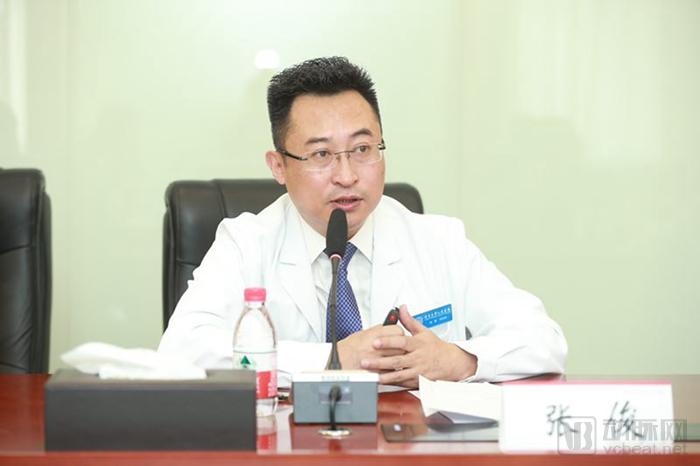
Zhang Jun, Vice President of Peking University People's Hospital
Zhang Jun, Vice President of Peking University People's Hospital, stated that at the current stage, the development of smart healthcare has optimized the quality of medical services during the pre-consultation and consultation phases, thereby enhancing patients' comfort during medical visits. However, there is also a need to explore and innovate smart services in post-consultation management. It is imperative to establish an intelligent system for patient follow-up visits and post-discharge care.
As China advances its tiered diagnosis and treatment system, the separation of acute and chronic disease management, and initiatives to improve medical services, the challenge of follow-up care has become increasingly prominent for patients with common diseases, chronic conditions, and special chronic diseases requiring long-term follow-up and treatment guidance, such as cancer. These patients face numerous issues in seeking medical care and purchasing medications, including “seeking medical care primarily to obtain prescriptions.” Consequently, the clinical demand for convenience in face-to-face consultations and medication purchases, prescription renewals during follow-up visits, and post-consultation services is growing. This calls for a “smart healthcare solution” for post-diagnosis care.
Peking University People’s Hospital, guided by problem- and need-oriented principles, has established a novel, convenient, and efficient smart post-diagnosis service management system through the upgrading of medical informatization. This initiative addresses the challenge of patients having to visit hospitals solely for medication prescriptions, compensates for deficiencies in the hospital’s post-diagnosis management infrastructure, and enhances both operational efficiency and the quality of medical services. By leveraging the Yifuzhen third-party prescription sharing platform, the hospital has achieved interoperability and real-time data exchange between institutional prescription information and retail pharmacy consumption data. This enables online circulation of prescriptions for patients, facilitating convenient medication access and follow-up visits through services such as nearby pickup, online ordering with in-store pickup, and online ordering with home delivery.
Leveraging the new “Post-Consultation Management” platform under smart healthcare services, patients can choose between in-person or online follow-up consultations. Based on the patient’s follow-up status and medication needs, physicians issue extended prescriptions, which are submitted to hospital pharmacists for review. Upon approval, the prescriptions are uploaded to the “Prescription Information Sharing Platform.” The platform then pushes prescription details to patients via SMS, allowing them to either pick up their medications at any affiliated pharmacy or opt for home delivery, thereby streamlining the follow-up consultation and medication procurement process. The third-party prescription sharing platform is directly integrated with the hospital’s Hospital Information System (HIS) and can be made accessible to government authorities such as medical insurance agencies, enabling effective regulatory oversight.
Currently, the hospital’s post-consultation management system has been integrated with more than 40 professional pharmacies capable of fulfilling hospital prescriptions. In the future, additional compliant professional pharmacies will join the platform to meet patients’ needs for convenient medication access. Since several hospital departments began operating on the platform a few months ago, there has been an orderly extension of prescriptions for certain follow-up visits and chronic disease medications. Patients can now choose services such as in-store pickup or home delivery, significantly reducing the time spent on medical visits and medication collection, thereby enhancing the convenience and overall satisfaction of the patient care experience.
The implementation of smart post-consultation management services at Peking University People’s Hospital will extend the reach of medical services, effectively alleviate outpatient pressure, and unlock high-quality medical resources. It will free hospital licensed pharmacists from tedious, repetitive tasks, enabling them to engage more in clinical medication guidance and prospective prescription reviews. This will enhance the rationality and accuracy of patient medication, enrich clinicians’ treatment plans, provide patients with the most up-to-date and rational pharmacotherapeutic regimens, and thereby amplify the hospital’s social benefits.
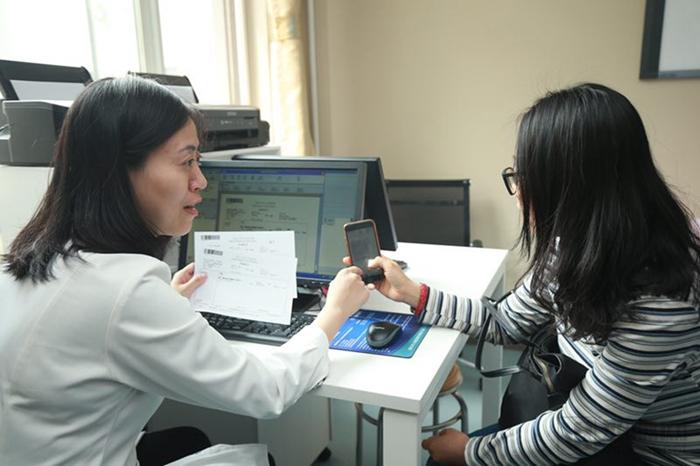
Zhang Jun, Vice President of Peking University People’s Hospital, stated that the initial effectiveness of the smart post-diagnosis service management system has become evident. Since its launch and operation, the platform has provided significant convenience to patients, enhanced their healthcare experience, and received widespread recognition and acclaim from patients. As an explorer and leader in implementing national public hospital reforms, Peking University People’s Hospital adheres to the humanistic medical philosophy of serving patients, creates innovative service models, and achieves full-cycle patient care management through information technology and smart services, thereby improving service efficiency, medical quality, and safety. Meanwhile, the establishment of the smart post-diagnosis service management system facilitates the digital retention and accumulation of clinical follow-up data, which also helps the hospital further strengthen discipline construction and advance clinical research.
The demonstration effect generated by the implementation of Peking University People’s Hospital’s smart service-based post-diagnosis management system will inspire more hospitals to explore the integration of medical services with intelligent applications. This trend will gradually establish a comprehensive, full-cycle disease management framework covering pre-diagnosis, intra-diagnosis, and post-diagnosis stages, thereby further enhancing medical services, strengthening hospitals’ core competencies, and providing patients with a more convenient healthcare experience. Ultimately, this will drive the sustainable, high-quality development of healthcare services.