

Meinian Onehealth Participates in the Sinaan Summit, Joining Academicians to Advance 'Healthy China' Initiative

health 100
Medical Examination Service Provider
VCBeat (WeChat ID: vcbeat) has learned that the inaugural “Healthy China Sinan Summit” was grandly held in Shanghai on May 9, 2019. Themed “Value Investment Leading the Innovative Development of the Healthcare Industry,” the summit aimed to implement General Secretary Xi Jinping’s three new major tasks assigned to Shanghai, support the national strategy for the integrated development of the Yangtze River Delta region and the advancement of the STAR Market, and build a comprehensive medical technology translation platform integrating government, academia, industry, and investment.
Co-hosted by the Huangpu District People’s Government and Ruijin Hospital, Shanghai Jiao Tong University School of Medicine, the summit brings together top-tier scholars and experts for in-depth discussions. Guided by the commitment to jointly strategize for the industry, lead its development, and pool efforts for the translation of scientific and technological achievements into practical applications, and leveraging the inherent market advantages of the STAR Market, the event creates a health and medical industry ecosystem conference with the participation of academicians, government regulatory authorities, medical institutions, healthcare investment firms, and leading biomedical enterprises.
Yu Rong, Chairman of Meinian Onehealth (SZ: 002044), China’s leading enterprise in preventive medicine, was invited to attend the summit. As a representative of the medical and health industry, he engaged in in-depth discussions with academicians from the Chinese Academy of Sciences and the Chinese Academy of Engineering—including Ge Junbo, Han Demin, and Ding Jian—on the theme of “How China Should Respond to the Advent of the Chronic Disease Era.” Data shows that in 2021, the global population aged 65 and above is projected to account for 11.5% of the total population. The prevalence of chronic diseases is on the rise, with incidence rates of cancer, heart disease, and diabetes climbing year by year. Global healthcare expenditure is expected to grow at an annual rate of 4.1% from 2017 to 2021, signaling that the era of chronic diseases has arrived.
Han Demin, an academician of the Chinese Academy of Engineering, believes that the era of chronic diseases arrived long ago, and we are once again feeling the pressure they bring. Effectively controlling chronic diseases is a critically important issue. The prevention and control of chronic diseases should first focus on source control, aiming to minimize or prevent disease occurrence. Second, health management must be strengthened to effectively control the disease progression. Third, new methods should be employed for effective control and intervention, reducing trauma and achieving successful health rehabilitation. Han Demin also emphasized the importance of family health management and health monitoring.
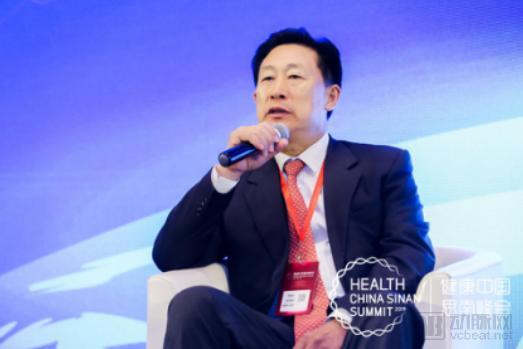
Han Demin, Academician of the Chinese Academy of Engineering
Academician of the Chinese Academy of Sciences, Ge Junbo, has long been engaged in research on cardiovascular diseases. He believes that cardiovascular and cerebrovascular diseases caused by chronic conditions represent the primary health challenge currently faced. Risk factors such as hypertension, hyperglycemia, and obesity can all lead to cardiovascular and cerebrovascular diseases; therefore, regular medical check-ups are crucial. Early detection and timely intervention can significantly improve quality of life. Ge Junbo also emphasized the importance of proactive health management, particularly highlighting the promising potential of wearable devices in acquiring big health data.

Academician Ge Junbo of the Chinese Academy of Sciences
Ding Jian, an academician of the Chinese Academy of Engineering, has long been dedicated to research on anti-tumor drugs and the development of medications for Alzheimer’s disease. He believes that effective chronic disease management first requires a comprehensive understanding of these conditions. For instance, Alzheimer’s disease is not merely a disorder of the brain but is also associated with the gut and systemic health. The concept of chronic diseases continues to expand; while it traditionally encompassed cardiovascular diseases, hypertension, and diabetes, it now includes malignant tumors. Current research suggests that malignant tumors can be managed and controlled similarly to hypertension, diabetes, and hyperlipidemia, making this goal achievable. Furthermore, Ding Jian emphasized the positive impact of lifestyle modifications, such as regular exercise, on chronic disease control, advocating for improved daily habits among the general public.
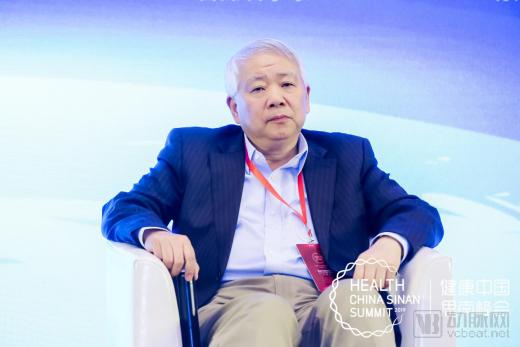
Academician Ding Jian of the Chinese Academy of Engineering
Yu Rong, Chairman of Meinian Onehealth, believes that the three key words for the health industry are aging, chronic diseases, and prevention. In the future, the greatest challenges and opportunities for China's health industry will stem from population aging, as well as the treatment and control of chronic diseases extended by aging. To cope with the era of chronic diseases, the first priority is to focus on early screening of high-risk populations and do a good job in health management.
For a long time, chronic diseases have consumed enormous public social resources. Taking diabetes as an example, this single condition alone accounts for nearly RMB 300 billion in annual expenditures from China’s basic medical insurance fund. Data from Meinian Onehealth shows that among the more than 30 million people who received professional health examination services last year, 30% exhibited abnormal blood glucose levels, with 10% diagnosed as diabetic patients. This indicates that 20% constitute a high-risk population with abnormal blood glucose levels who have not yet progressed to diabetes.
Yu Rong believes that it is of great significance to provide effective health management for individuals who have already exhibited high-risk indicators but have not yet developed into true chronic diseases. In the field of diabetes alone, if health management for the “prediabetic population” is properly implemented, it will save the country at least 500 billion yuan in medical expenses over the next decade.

Yu Rong, Chairman of Health 100
Yu Rong pointed out that regular health check-ups combined with high-frequency health management interventions, supplemented by precise and effective health insurance, constitute an effective scenario for future health management. The application of cutting-edge technologies such as big data and medical AI is highly beneficial for early disease screening and lifecycle health management. In the future, “data + technology” will continue to drive the industry’s sustained development. As a critical data entry point for preventive medicine in China, Health 100 will support the nation in bearing more innovations in the field of life sciences. Currently, it has prioritized technological breakthroughs in early warning systems for brain health conditions such as Alzheimer’s disease, as well as early screening and prevention for breast cancer, fundus diseases, ultrasound-based diagnostics, and other cancers. These areas also represent the direction of Health 100’s future technological innovation.
When discussing molecular testing technologies, Yu Rong introduced that Health 100’s molecular diagnostic techniques have already been applied to early screening for major diseases such as cancer, including gastrointestinal cancers, which are currently receiving widespread attention. Meanwhile, Health 100 conducts intelligent risk assessments by integrating physical examination data with genetic data; performs brain health warning screenings using MRI imaging systems; carries out AI-based gastric health diagnostics with capsule robot systems; screens for diabetic retinopathy using fundus-assisted diagnostic systems; detects small pulmonary nodules through low-dose spiral CT scans; and develops health management plans by combining professional physical examinations with TCM-enabled smart hardware, among other initiatives.
Furthermore, to better leverage the tens of millions of professional health checkup data points accumulated over the years by Health 100, Health 100 and the China Economic Information Service of Xinhua News Agency jointly compiled and released the “China Resident Health Checkup Index.” With professional academic guidance provided by the Meinian Public Health Research Institute of Peking University Health Science Center, the index aims to quantitatively evaluate the overall health status and health trends of Chinese residents. It focuses on assessing major types of chronic diseases in China as well as the health levels of residents across various provinces and cities. This initiative enables the early identification of the distribution, current status, and trends of chronic diseases among residents in different regions, playing a positive guiding role in improving and innovating China’s disease prevention system, while also providing a basis for decision-making by industry regulatory authorities.