

Can Smart Family Doctor Models Unlock a Billion-Dollar Market as Contracting Enters Deep-Water Phase?
Family doctor contract signing is a key component in the implementation of the national tiered diagnosis and treatment policy. Since 2018, a significant shift has occurred, with the focus of family doctor contract services moving from “quantity” to “quality.” In April this year, the General Office of the National Health Commission issued the Notice on Doing a Good Job in Family Doctor Contract Services in 2019, which continued to emphasize enhancing primary healthcare service capabilities, improving the satisfaction of contracted residents, and vigorously promoting “Internet+” contract services.
Under the tiered diagnosis and treatment policy, the general trend is that a large number of primary care patients have been diverted to community health centers, guided by healthcare reform policies. For primary care physicians, national policies have brought significant improvements, including enhanced training and professional development, as well as increased performance-based salary levels. However, these improvements have not truly matched the substantially increased workload resulting from the implementation of the tiered diagnosis and treatment system. Further adjustments at the institutional level are still required.
How to Empower and Enhance the Efficiency of Primary Care Physicians: Achieving Sustainable Development of Integrated Prevention and Treatment and Chronic Disease Management at the Grassroots LevelOne of the greatest challenges lies in resolving the issue of interoperability among platforms. As family doctors further advance toward health management and health intervention, it is essential to integrate public health data with clinical medical data, leveraging internet-based technologies for systemic restructuring.
According to data from the “Report on Smart Family Doctor Services Driven by Digitalization” by VCBeat and VBInsight, the potential market size for family doctor service consumption in 2020 was approximately RMB 170 billion. Smart family doctor solutions can address five major pain points: heavy workloads, poor contract fulfillment quality, low physician motivation, difficulties in regulatory assessment, and data silos. Interconnectivity and interoperability of multi-platform data are key focuses in the construction and operation of smart family doctor workstations.
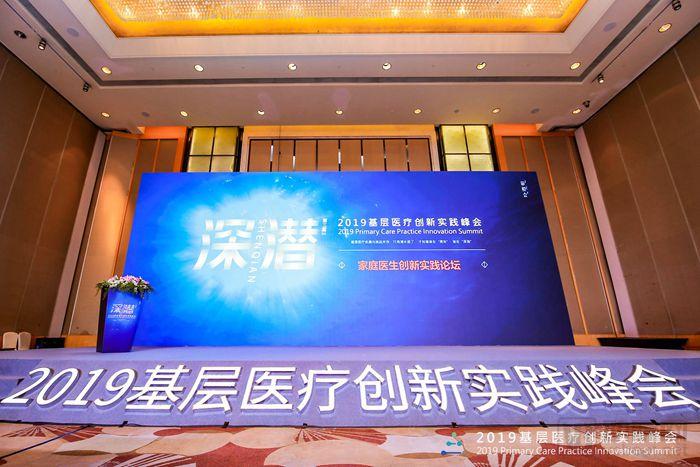
How Can Primary Care Institutions Effectively Implement Family Doctor Contract Services? What Role Should Family Doctors Play? How Does Digital Intelligence Empower Family Doctor Contracting? On May 15, at the Family Doctor Innovation Practice Forum held during the 2019 Primary Healthcare Summit, multiple guests shared their insights based on practical experience. The following is a curated collection of their viewpoints.
Digital Innovation in Contracted Services Driven by the Health Internet of Things
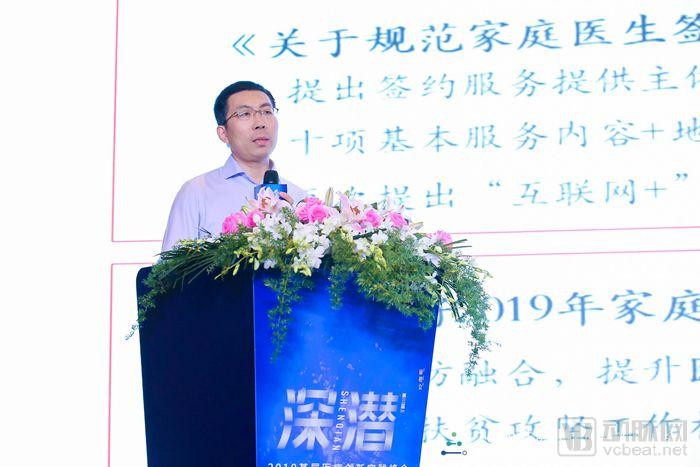
Representative of Yizheng CityLi Xu
From the government’s perspective, how should the planning and implementation of family doctor contract services be evaluated? From a policy standpoint, policies serve as the guiding framework for local competent authorities in charge of healthcare operations. The “Guiding Opinions on Promoting Family Doctor Contract Services” were formally introduced in 2016. Policy issuance intensified significantly in 2018, with four direct policy documents and numerous supporting measures released. Among these, the two most important policies are the “Notice on Doing a Good Job in Family Doctor Contract Services in 2018” and the “Guiding Opinions on Standardizing the Management of Family Doctor Contract Services.”
The former shifts the focus of family doctor contract services from “quantity” to “quality,” ensuring effective implementation of contracts and no longer pursuing contract signing rates—a significant transformation. It also proposes strengthening communication between primary care physicians and residents through information technology, specifically leveraging mobile solutions to bridge the distance between primary care providers and contracted residents. The latter emphasizes clarifying the responsible parties, target populations, and contractual agreements for signed services, implementing service fees, and other key points, while placing particular emphasis on building “Internet+”-enabled primary care platforms.
In late April, the General Office of the National Health Commission issued the “Notice on Doing a Good Job in Family Doctor Contracted Services in 2019,” aiming to improve the quality and efficiency of contracted services, strive to meet patients’ diagnosis and treatment needs within a single outpatient visit, focus on enhancing the satisfaction of contracted residents, and also mentioned the development of “Internet+” initiatives.
From a management perspective, the goal is to enhance operational efficiency at the primary care level. Primary care physicians face immense work pressure and handle highly complex tasks, including public health services, basic medical care, various medical poverty alleviation initiatives, and other performance assessments. How can we optimize efficiency, shift mindsets, and leverage new tools to ensure physicians have sufficient time to improve their clinical and service skills? With this objective clearly defined, Yizheng City has focused on achieving breakthroughs in the following four areas:
1. Uphold incentive support to enhance enthusiasm for contracted services. For residents enrolled in family doctor contract services, raise the annual outpatient reimbursement ceiling under the urban and rural resident basic medical insurance; launch the “Double Hundred, Double Stationing” initiative, whereby 100 key physicians from municipal-level hospitals are stationed in counterpart township health centers for supportive assistance, and 100 general practitioners from township health centers are stationed in village clinics to provide targeted support.
2. Adhere to quality-first principles to enhance the sense of benefit from contracted services. Diversify contracting methods, including first-visit contracting and grid-point contracting. Diversify service delivery by implementing the “1+6” service model, which consists of one contracted service agreement supported by a suite of service components, such as long-term prescriptions and a set of home-use medical devices.
3. Adhere to the principle of convenience and benefit for the public, and improve satisfaction with contracted services. This includes grid-based management and four free-of-charge measures: providing annual personalized service packages free of charge to low-income residents, offering free cancer screening, ensuring free supply of essential medications for patients with hypertension and diabetes, and waiving specialist outpatient fees for contracted residents. Additionally, integration of multiple certificates into one is implemented.
4. Uphold authenticity and practicality to enhance trust in contracted services. Strengthen informatization construction by integrating assessment with supervision.
At the operational level, in terms of platform construction, Yizheng City has adopted the family doctor contracting service platform provided by Kangshang Medical Group. We have put forward three requirements for its development: authenticity, efficiency, and interoperability. Authenticity means that the contracting work must be conducted in a factual and pragmatic manner, with tools ensuring the genuineness of contracted services. Efficiency implies that the system should not impose excessive workload, enabling tasks to be completed reasonably. Interoperability refers to using the population information platform as a link to fully integrate and connect all existing information systems, thereby achieving data sharing.
What functionalities has the contracted service platform implemented?
First, three-way interaction: Based on the medical Internet of Things (IoT) application platform, connections have been established among residents, contracted service teams, and competent authorities, enabling a series of integrated online and offline health services, including health consultations, health data monitoring, health reports, health interventions, online consultations, and health education.
Second, it features geotagged photography, facial recognition, handwritten signature capture, and automatic uploading of health measurement data, which cannot be manually altered, thereby ensuring authenticity;
Third, work tasks are decomposed and assigned, covering public health services, basic medical services, family doctor contract-based basic service packages, and personalized service packages. The platform has established a task reminder function. On the premise of solid delivery of basic services, offering fee-based services requires operational thinking and strategies for promoting service packages.
Fourth, integrating household or personal health IoT devices into service packages enables contracted residents to conduct self-monitoring and upload health data at home, thereby increasing the activation rate of electronic health records under physician-led health management.
Ultimately, basic medical care, public health services, contracted services, and medical data generated within hospitals are all fed back to residents through the platform. All of these fundamental data points can be queried via the official WeChat account, allowing residents to view information on hospital diagnostic and treatment institutions as well as contracted service providers. Furthermore, through follow-up visits and return visits, contracted services are gradually becoming more resident-centric. Yizheng City has made significant efforts to achieve this integration of data.
Yizheng City’s contract-based service model has received high-level national recognition, with its metrics for overall contract rate, key-population contract rate, and personalized contract rate ranking among the best in China. The work of family doctor contracted services remains a significant and long-term undertaking, requiring collaborative efforts between enterprises and the government to effectively integrate management and technological approaches.
Innovative Practices in Enhancing the General Practice Competencies of Primary Care Physicians
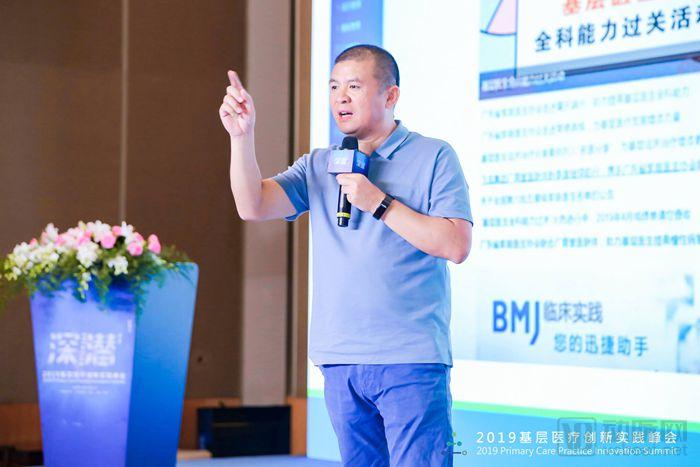
Wu Yuxiong, Executive Vice President of the Guangdong Family Doctor Association
Guangdong Family Doctor Association is the first and only provincial-level family doctor association in China. Established in 2014, it has been in operation for five years. The sole purpose of establishing the association is to assist the government in developing primary healthcare.
From the demand side, family doctors are an essential need. However, despite the significant financial investment and efforts by the government, why has the family doctor contract service failed to gain traction? The fundamental reason lies in the inadequate clinical competence of primary care providers. If residents do not even consult grassroots physicians for common ailments like colds and fevers, how can they be expected to engage them as family doctors? Therefore, to earn public trust, family doctors must first enhance their service capabilities.
How to Enhance Service Capacity? We have tried many approaches, such as online consultations and remote specialist care, but none have yielded significant results; they have been merely superficial solutions.
Finally, we undertook two initiatives. The first was clinical decision support, aimed at enhancing physicians’ diagnostic and therapeutic capabilities. This concept was inspired by automotive navigation systems. Just as navigation relies on a geographic database, we needed to build a comprehensive knowledge base of clinical medicine. Similar to digital maps, the primary challenge in maintaining a clinical medicine database lies in the rapidly evolving nature of medical knowledge. Data are constantly changing, with new drugs and diagnostic and treatment methods emerging daily, necessitating continuous updates—a task that is notoriously difficult to accomplish.
We have structured the Chinese version of Best Practice (BP), a clinical medicine knowledge base jointly launched by the UK’s BMJ and the Chinese Medical Association—where BP releases a new version quarterly, with major updates implemented on the same day—and integrated it into physicians’ diagnostic and treatment workflows. Centered on this resource, we developed an information system for clinics: the General Practice Information System.
After the system was finalized in 2017, we collaborated with the provincial and local Health and Family Planning Commissions to evaluate its potential benefit to physicians. We conducted a six-month follow-up study involving dozens of doctors in Gaozhou and Nanxiong, Guangdong Province. The results showed a significant improvement in their diagnostic and treatment capabilities, with outpatient volumes more than doubling. Consequently, we began promoting the system nationwide. Currently, approximately 10,000 clinics in Guangdong Province and over 10,000 clinics in other regions across China are using our system. As the service is completely free of charge, clinics can access it simply by registering for an account. In this way, we have successfully integrated Clinical Decision Support Systems (CDSS) into primary care clinics to enhance their diagnostic and treatment capabilities.
Furthermore, physicians require continuous training. We have made significant efforts to introduce the BMJ General Practice Training Platform, an online education platform that distinguishes itself from domestic platforms by focusing exclusively on clinical cases to cultivate physicians’ clinical reasoning and general practice competencies. No other online education platform in China offers such an extensive collection of cases. We also plan to collaborate with the Department of General Practice at Peking University Health Science Center to launch a nationwide initiative assessing the general practice competencies of primary care physicians. Physicians who pass the examination will receive a certificate of completion issued by the Department of General Practice at Peking University. Through clinical decision support and online general practice competency training, we aim to enhance the diagnostic and treatment capabilities of primary care physicians, enabling them to manage a broader range of clinical conditions.
The quality of medical care is determined by two factors: first, the clinical proficiency of physicians as mentioned above; and second, the appropriate use of medications. Even with highly skilled physicians, suboptimal medication practices will fail to resolve health issues. During our field surveys of clinics, we found that many primary-care clinics in Guangdong Province were reluctant to prescribe medicines from other regions. This hesitation stems from the lack of standardized production criteria for Chinese proprietary medicines in China, as well as the inconsistent quality of domestically produced generic drugs prior to consistency evaluations of their efficacy. As a result, primary-care physicians struggle to identify superior medications and face difficulties in making informed choices. To address this challenge, we must assist physicians in selecting the right medications and ensuring their proper use.
Consequently, we developed a drug evaluation feature on the General Practice Information System to guide clinic physicians in assessing medications based on safety, efficacy, and adverse effects. Given the close-knit nature of rural communities, primary care physicians can readily obtain real-world feedback on drug performance during follow-up visits. This substantial volume of evaluation data provides valuable insights for physicians, helping them avoid blind selection when prescribing or purchasing medications.
How to Use Medications Correctly? We encourage physicians to share cases of medications that have demonstrated efficacy and performed well during patient follow-up on the General Practice Information System, thereby informing their peers. By collecting a large number of typical treatment cases, we can guide physicians in designing combination therapy regimens and help them optimize medication use to achieve genuine therapeutic outcomes.
In summary, to enhance the diagnostic and treatment capabilities of primary care physicians, we have undertaken two key initiatives: first, providing clinicians with clinical decision support and an online education platform; and second, guiding physicians on the appropriate selection and optimal use of medications.
“Smart Family Doctor” Empowering Social Health Management
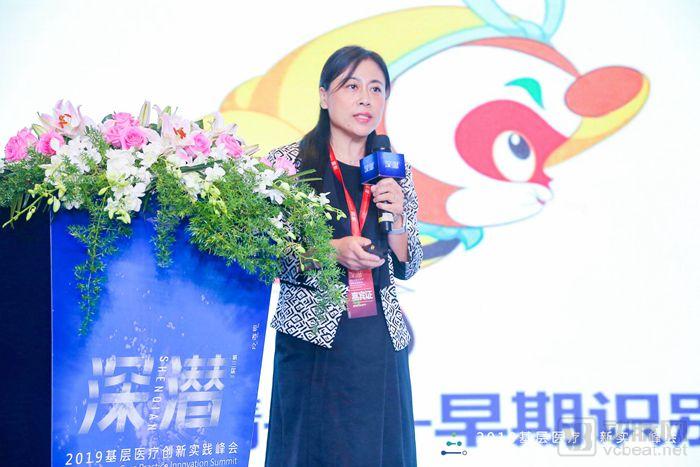
Liu Xinying, Deputy Director of Fangzhuang Community Health Service Center, Fengtai District, Beijing
Fangzhuang Community Health Service Center has 158 staff members, completed 448,000 outpatient visits last year, with per capita outpatient volume reaching the level of tertiary hospitals, and currently has 33,800 contracted residents.
Since 2016, we have been gradually exploring an optimized collaborative service model for smart family doctors. After signing contracts with patients, community physicians coordinate in-house resources to provide care during the stages of common and frequently occurring diseases. For instance, referrals to specialties such as dentistry or traditional Chinese medicine are led by general practitioners. In cases of critical or severe illness, patients are transferred to relevant hospitals through established channels. For other related issues, we collaborate with neighborhood committees, day-care centers, home health aides, and social volunteers to jointly ensure comprehensive patient care.
How do primary healthcare institutions empower community health management through the "Smart Family Doctor" model? At present, family doctors have needs such as early identification and detection of critical conditions in patients, standardized diagnosis and treatment, and reducing the burden on primary care. Moreover, it is difficult for general practitioners to effectively manage patient health on their own; they need to collaborate with specialists and community organizations to jointly safeguard the health of the public.
For the general public, family doctors primarily serve elderly patients who are exposed to a mix of reliable and unreliable health information, making it difficult for them to discern accuracy. In this context, empowering only physicians is insufficient. For doctors, we must “provide them with effective tools” to enhance the standardization of diagnosis and treatment, improve work efficiency, and strengthen service capabilities. For patients, we should “teach them how to fish” by equipping them with the skills and methods needed to easily access necessary resources and implement self-managed health care.
Based on the fixed service relationship between contracted physicians and residents, we leverage internet-based tools, along with supporting measures and corresponding incentive mechanisms, to safeguard residents’ health. The Beijing Municipal Health and Family Planning Commission has distilled the Fangzhuang Smart Family Doctor Optimized Collaborative Model into the framework of “One Fixed Relationship, Three Collaborations, Five Smart Elements.”
“One Fixed” is the core of the Fangzhuang Model. Once a contract is signed with a patient, the management relationship becomes fixed; whenever the patient seeks medical care at Fangzhuang, they are automatically triaged to their assigned family doctor for consultation. The family doctor coordinates all aspects of the patient’s public health management, including follow-up visits and physical examinations, thereby truly achieving the integration of medical care and disease prevention. “Three Collaborations” refer to: collaboration between doctors and nurses, where one doctor and one nurse are paired to manage 800–1,000 patients; collaboration between general practitioners and specialists; and collaboration between general practitioners and social resources. “Five Smart Solutions” denote the extensive application of health management information systems, such as smart diagnosis and treatment, smart health records, smart mobile apps, smart home visits, and smart performance evaluation.
Within the architecture of the Fangzhuang “Internet+” Community Health Management Information Platform, various in-hospital systems are integrated. Leveraging internet technologies, hospital services are extended to residents’ homes, enabling them to self-query all health management information provided by their physicians via WeChat, mobile phones, or interactive cable TV. We adhere to a core principle: no additional data entry by physicians is required. The underlying data source is the hospital’s internal health records or health ledgers, which encompass residents’ clinical diagnosis and treatment information as well as public health service data.
The Fangzhuang Model leverages family doctor contract services as the entry point, centers on fixed doctor-patient relationships, and fully utilizes information technology to achieve refined, high-quality, continuous, and dynamic health management for community residents. This approach optimizes medical and social resources, facilitates orderly healthcare-seeking behavior, and realizes the shared goal of collaborative construction and benefit-sharing in health management with universal participation.
Internet + Family Doctor: Practices and Reflections
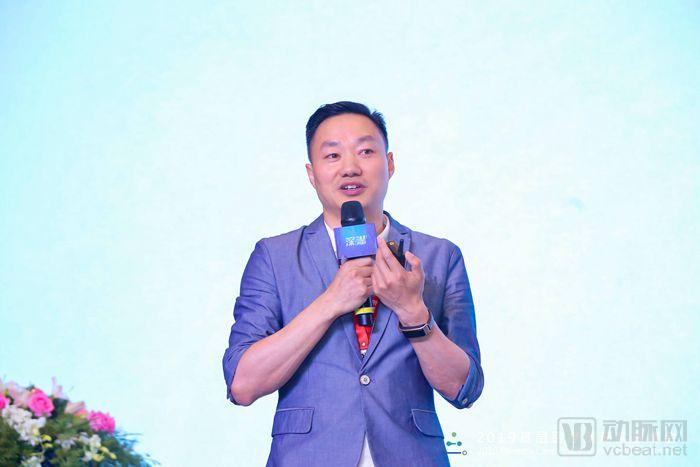
Jin Lei, Founder of Jianjian Family Doctor
Three years ago, I led my team into the primary healthcare sector. We discovered that this field is fraught with challenges yet brimming with opportunities, standing on the eve of a major market explosion. Family doctor contract services present clear pain points, well-defined scenarios, policy support, traffic flows, and user bases. Notably, since 2018, government authorities have shifted their focus from signing rates to service quality and contract fulfillment.
In the past, most internet companies entering the primary healthcare sector merely applied internet-centric thinking to build platforms, operating under the assumption that creating a sophisticated, high-end platform would suffice to address existing challenges. In reality, without reliable offline services, online platforms cannot achieve genuine user stickiness or conversion. So, how should we properly understand the value and significance of internet technology in empowering family doctors? We believe that the immediate priority is to address the most pressing pain point at the grassroots level—namely, “being overworked”—by leveraging information technology to improve efficiency and reduce costs.
The daily work of family doctors is mainly divided into two major sections: basic medical care and basic public health services. The core of basic public health services is health management. However, at present, the vast majority of grassroots health centers spend a significant amount of time on administrative tasks such as contract signing, record establishment, follow-ups, and physical examinations, with only a small fraction of personnel actually engaged in health management services. Among these basic public health services, follow-ups and physical examinations are the most troublesome and headache-inducing tasks.
First, regarding the follow-up component, the “Jianjian Family Doctor” Smart Workstation’s follow-up package leverages a tablet-centric smart follow-up kit to streamline the digitization of family doctor contracting, referrals, and follow-up management, while integrating with regional public health platforms to achieve interoperability.
We were the first to achieve interoperability on the Hubei Provincial Platform and remain the province’s only family doctor follow-up platform with such capability. Taking Shiyan, Hubei as an example, contract signing efficiency increased by an average of 4–5 times, while follow-up efficiency improved by over 30%. According to feedback from community health centers, this equates to saving the labor costs of two public health personnel, as well as eliminating expenses related to record storage, printing, and documentation. Physicians have become indispensable users of the system.
Physical examinations are more complex than follow-up visits. For in-hospital physical examinations, our primary solutions are the “Jianjian” Customer Service and the “Jianjian” Box. First, the “Jianjian” Customer Service uses AI to notify residents to come for their physical examinations, while enabling intelligent management of the examination process. Finally, medical examination reports are delivered to users promptly via a mini-program. In addition, we have independently developed the “Jianjian” Box, which resolves the interoperability issues between medical examination equipment and internet data platforms.
Furthermore, to address off-site physical examinations, we have introduced mobile examination vehicles. These units enable township health centers to extend examination services into communities, rural areas, and nursing homes, thereby expanding service boundaries while achieving seamless information interoperability. As a result, the workload that previously took a week can now be largely completed within three hours. Through these measures, we have helped liberate family doctors at the grassroots level from administrative burdens, allowing them to devote more energy to genuine resident health management and basic medical services, which naturally enhances residents’ sense of gain.
Therefore, in our view, “Internet + Family Doctor” is not a discourse centered on “traffic,” but rather a technology-driven transformation of the industry. By leveraging big data, machine learning, and business intelligence, we aim to enhance the operational efficiency of primary care, reduce its costs, and achieve a genuine leap in the quality of primary healthcare services. Jianjian Family Doctor is committed to becoming the most dedicated provider of family doctor services.
Resident Needs-Oriented: Making Signed Contracts Meaningful
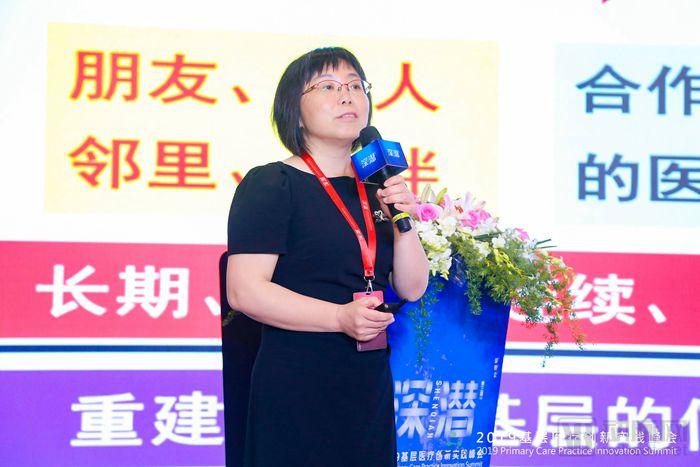
Hu Yiping, Director of the Huashi Community Health Service Center, Tianhe District, Guangzhou
What Exactly Does the Family Doctor Contract Service Entail?
The first is to transform the service model, build relationships with patients, and provide continuous, comprehensive, and proactive services to the public; establishing trust is the foundation of chronic disease management and tiered diagnosis and treatment.
The second aspect is integrating prevention with treatment, shifting the focus of disease prevention and control upstream, and transitioning from stage-based disease treatment to continuous disease management. This also aligns with the professional definition of family physicians in the United States. The American Academy of Family Physicians stipulates that family physicians should first establish a trusting relationship with patients, and then provide disease prevention, chronic disease management, disease screening, patient education, and health management.
Family doctors operate on “two legs”: one is basic medical care, and the other is public health services. Therefore, it is the mission of general practitioners to strengthen the integration of public health and clinical medicine. The Notice on Doing a Good Job in Family Doctor Contracted Services in 2019, issued by the General Office of the National Health Commission in April this year, specifically outlined the future direction of contracted services. It emphasized taking the management of chronic diseases such as hypertension and diabetes as a breakthrough point to reinforce the integration of medical care and prevention at the primary healthcare level. This involves completing various health follow-ups, health education, and public health tasks within clinical practice, thereby integrating them with clinical medical services.
Effective chronic disease management under the integrated medical-preventive care model represents the future direction of primary healthcare, and such integration is the true lever for optimizing family doctor contract services. How can we advance steadily on these “two legs”? Treatment philosophies, service models, strategic positioning, and service workflows must all be restructured.
How to Restructure? The first change required is a shift in mindset, integrating the concept of health management into medical services. The correct approach is based on health care within the framework of general practice, ensuring that the integration of medical treatment and prevention is accomplished during the clinical process, rather than merely dispatching teams to generate superficial momentum, which is ineffective.
The second change involves shifting the model from pure treatment to an integrated approach combining prevention and control. Most patients at the primary care level have clearly diagnosed chronic conditions that do not require consultation, diagnosis, or prescription, but rather information collection, assessment, and targeted interventions.
How to Achieve This? Primary care physicians must first adopt a screening mindset, provide proactive services, and facilitate early disease detection. Second, they should shift from a diagnostic mindset to an assessment-oriented approach, evaluating current health issues as well as potential future health risks. Third, they need to transition from a prescription-focused mindset to an intervention-based one, evolving from mere prescribers into providers of comprehensive health guidance. These transformations are achievable within the existing conditions of primary healthcare.
How to Initiate the Exploration and Practice of Community-Based Chronic Disease Management under the Integrated Medical and Preventive Care Model at the Huashi Community Health Service Center in Tianhe District? First, its positioning is very clear. The work targets two groups: individuals at high risk for chronic diseases and patients with stable chronic conditions, aiming to achieve early detection, early intervention, disease prevention, reduced incidence, and delayed onset.
Community health service centers have established family doctor contract service teams dedicated to the health management of individuals at high risk for diabetes. These teams conduct centralized screening, implement health management plans, and provide targeted interventions for those identified as truly high-risk. Patients are educated on dietary planning and exercise regimens, integrating prevention with treatment to maximize efficacy. Furthermore, the centers focus on the prevention and control of complications to promote integrated preventive care and ensure that signed contracts translate into tangible services. The selection of complication screening items is guided by the principles of cost-effectiveness, supplemented by evidence from literature and clinical guidelines. Based on these selected screening items, specialized equipment for complication screening has been introduced, screening indicators have been quantified, and the quality and standards of complication screening have been improved.
Furthermore, the center has established a screening room for diabetes complications and trained medical staff to enhance their skills. It has formed a multidisciplinary, cross-professional chronic disease management team centered on general practitioners to effectively deliver diabetes health management. Relying solely on physicians is insufficient; such a team is essential, with physicians, dietitians, and diabetes specialist nurses as its core, supplemented by other specialists. Accordingly, the center has initiated services such as dietary guidance clinics and medication counseling clinics. Finally, it is necessary to establish standardized workflows for complication screening, prevention, and treatment, clearly defining responsibilities for scheduling complication screenings and conducting risk assessments.
At the Huashi Community Health Service Center in Tianhe District, diabetes management is handled by two dedicated teams: one specializing in lifestyle guidance and the other focusing on the prevention and control of complications, thereby exploring self-management models for patients with chronic diseases.
Of course, the integration of medical care and prevention in chronic disease management is an endeavor of lasting significance, yet the road ahead is long and arduous. Current challenges include harnessing the initiative of healthcare professionals, enhancing and expanding their skill sets, advancing informatization, and improving smart healthcare products. Despite these formidable obstacles, we must take action. A journey of a thousand miles begins with a single step; we must accurately identify patient needs and earn their genuine trust.